 Anacortes Siding
 Deck Replacement in Ship Harbor
Ship Harbor sits close enough to the water that its homes take a different kind of weather beating than decks a few miles inland. Between the salt-laden air coming off the strait, the driving rain that blows in sideways during winter storms, and a moss season that can stretch from fall through spring, decks in this part of Anacortes wear out faster than most homeowners expect. A deck that would hold up for decades in a drier, inland climate can start failing structurally in half that time here if it wasn't built — or replaced — with this environment in mind.
This page covers what deck replacement actually involves for a Ship Harbor property: why decks fail here, what a correct replacement looks like, the material trade-offs that matter most in a marine climate, and what to expect when you work with a crew that already knows this neighborhood.
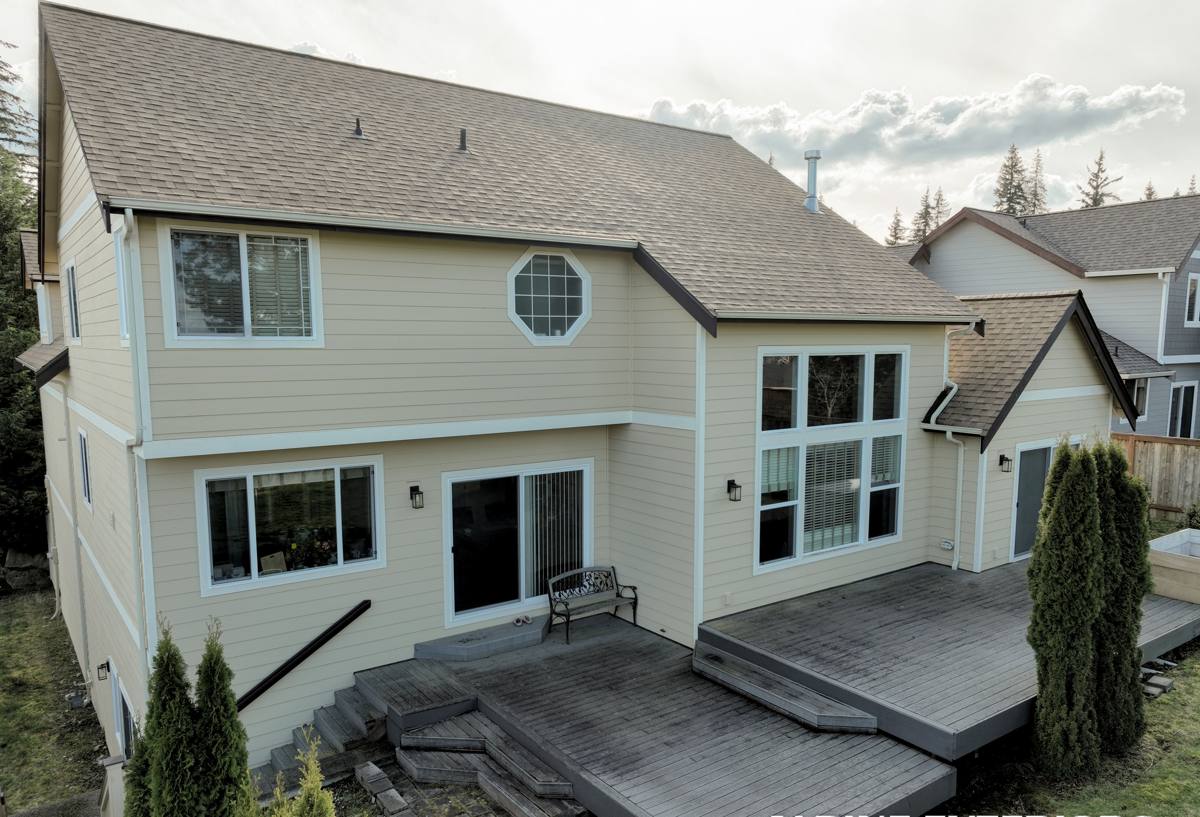
Why Decks Fail Faster Near Ship Harbor's Waterfront
Most deck failures aren't cosmetic — they start underneath, where nobody's looking, and only show up once the damage is advanced.
Salt Air and Metal Fasteners
Airborne salt accelerates corrosion on anything metal: nails, screws, joist hangers, bolts. Once a fastener starts rusting, it loses holding strength long before it looks obviously bad from the surface. On a deck close to the water, standard construction-grade hardware corrodes faster than manufacturers' ratings assume, which is why fastener choice matters more here than it does a few miles inland.
Driving Rain and Water Intrusion
Rain that comes in at an angle finds every gap in flashing, every unsealed screw hole, and every place decking meets the house. Once water gets behind a ledger board or under decking that isn't gapped properly, it doesn't dry out quickly in our climate — it sits, and that's where rot starts. A lot of deck damage isn't from rain falling on top of the deck; it's from rain getting underneath it and staying there.
Moss, Algae, and Trapped Moisture
A long moss season means organic growth gets a real foothold on horizontal surfaces, especially in shaded or low-airflow areas of a deck. Moss and algae hold moisture against the wood or composite surface, which keeps boards damp far longer than rain alone would. On wood decking this speeds up rot; on composite decking it can void warranty coverage if buildup isn't managed. Either way, moss isn't just an appearance problem — it's a moisture problem wearing a green coat.
Signs a Ship Harbor Deck Needs Replacement, Not Repair
Not every deck problem means starting over. But there are signs that point to replacement being the more honest recommendation than another round of patching:
- Soft, spongy, or bouncy spots in the decking or framing underfoot
- Rust streaks running down from fasteners or hardware
- A ledger board that's separating, staining, or soft where it meets the house
- Posts or footings that have shifted, settled, or show visible rot at ground contact
- Persistent moss or dark staining that comes back within weeks of cleaning
- Railings that flex or feel less solid than they should
- A deck original to a home over roughly 15-20 years old that's never had the structure inspected
If what you're seeing is limited to a few worn boards on an otherwise sound structure, repair may genuinely be the right call — we'll tell you that if it's true. Replacement becomes the honest recommendation when the framing, ledger connection, or footings are compromised, because no amount of new decking fixes a structure that isn't sound underneath.
What a Correct Deck Replacement Involves
A deck replacement done right isn't just swapping old boards for new ones. The parts nobody sees are what determine whether the new deck lasts.
Ledger Attachment and Flashing
Where the deck attaches to the house is the single most common failure point on any deck, and it's especially critical in a climate with driving rain. Proper flashing — installed so water sheds away from the house rather than behind the ledger — is non-negotiable. This is also the connection point that structurally ties the deck to the home, so it has to be fastened correctly, not just sealed.
Framing and Fastener Selection
In a salt-air environment, we spec corrosion-resistant hardware and fasteners rated for the exposure — this isn't an upsell, it's what keeps joist hangers and structural connections from failing quietly over the years. Framing lumber, spacing, and joist sizing are set to code and to the actual load the deck will see, not just to what the old deck happened to have.
Footings and Post Bases
Footings need to be sized and set below frost depth per code, with post bases that keep wood posts off wet concrete and out of standing water. A lot of older Ship Harbor decks were built with posts set directly in or on grade — a detail that reliably causes rot at the base over time and is worth correcting during a replacement rather than repeating.
Drainage and Airflow Underneath
Decks that sit low to the ground or over unventilated space trap moisture underneath, which feeds rot and moss both. Where possible, we build in airflow and grade the ground below to shed water rather than pool it, which matters more here than in a drier climate.
Decking Material Options for This Climate
There's no single "best" decking material for every home — it depends on budget, maintenance appetite, and how close the deck sits to salt air and shade. Here's how the common options actually compare for a Ship Harbor property:
| Material | Salt Air / Moisture Behavior | Moss & Algae Resistance | Maintenance |
|---|---|---|---|
| Pressure-treated wood | Good if properly sealed; fasteners must be corrosion-rated | Needs regular cleaning; moss takes hold if neglected | Annual sealing/staining recommended |
| Cedar | Naturally moisture-tolerant but softer; needs consistent finish maintenance | Susceptible without regular cleaning | Higher — refinishing on a regular cycle |
| Composite decking | Very good; doesn't absorb water like wood | Better resistance, but surface debris and shade still need periodic cleaning | Low — occasional washing |
| PVC decking | Excellent; fully synthetic, no wood fiber to absorb moisture | Best resistance among common options | Lowest — occasional washing |
Wood costs less upfront but asks for more of your time every year to stay ahead of moisture and moss — a real trade-off, not a flaw in the material itself. Composite and PVC cost more initially but reduce the maintenance burden considerably in a climate that doesn't give surfaces much chance to dry out. We'll walk through this trade-off honestly based on your budget and how much upkeep you actually want to do, rather than pushing one product line.
Our Deck Replacement Process
- On-site assessment. We inspect the existing deck's framing, ledger connection, footings, and posts to determine what's actually failing versus what's cosmetic.
- Honest scope and estimate. You get a clear picture of what needs full replacement, what can be reused if sound, and material options with real trade-offs — no inflated scope.
- Demolition and disposal. The old deck comes out, including any hardware or framing that's compromised, and debris is hauled off the property.
- Structural rebuild. New footings, framing, ledger flashing, and corrosion-resistant hardware go in to code, sized for the deck's actual use.
- Decking and railing installation. Your chosen material is installed with proper board spacing for drainage and airflow underneath.
- Final walkthrough. We go over the finished deck with you, including what maintenance it needs going forward given the local climate.
Permits and Code Considerations
Deck replacement work in Anacortes and unincorporated Skagit County typically requires a permit once you're doing structural work — new footings, ledger reattachment, or a deck built to a different size or height than the original. Permit requirements can vary depending on your deck's height, size, and exact location, so we handle the permitting conversation as part of the project rather than leaving you to figure it out. Skipping required permits on structural work isn't worth the risk — it can complicate a future home sale and, more importantly, means nobody with code knowledge has verified the structure is safe.
Maintaining a New Deck Through Moss Season
A correctly built deck still needs some seasonal attention in this climate — the goal is to make that upkeep manageable rather than a constant fight. A simple seasonal routine goes a long way:
- Sweep leaves and debris off the deck regularly through fall so they don't trap moisture against the surface
- Clean visible moss and algae promptly rather than letting it establish — it's much easier to remove early
- Check that gaps between boards stay clear so water can drain through rather than pool
- Inspect the ledger connection and any visible hardware once a year for rust or staining
- Keep gutters and downspouts near the deck clear so runoff isn't dumping extra water onto or under it
- For wood decking, stay on a sealing or staining schedule rather than waiting until it visibly needs it
None of this requires special equipment or a big time investment — it's mostly about not letting moisture and organic growth sit unaddressed through a long wet season.
Why Hire a Crew That Already Works Ship Harbor
A deck built to a generic spec sheet can technically meet code and still fail early in this environment if the person building it hasn't accounted for what salt air, driving rain, and moss actually do to a structure here. We work throughout Anacortes and Skagit County, and Ship Harbor's proximity to the water means we treat fastener selection, flashing details, and drainage as standard practice, not upgrades. That local familiarity is the difference between a deck that looks right on installation day and one that's still structurally sound a decade later.
If your deck is showing signs of wear, or you'd simply like an honest opinion on whether it needs repair or full replacement, we're happy to take a look. Reach out for a free, no-pressure estimate using the form below — we'll give you a straight assessment and let you decide from there.