 Anacortes Siding
 Why Edison Homes Need Siding That's Built for This Exact Climate
Edison sits close enough to Samish Bay and the surrounding tidal flats that salt-laden air is a constant presence on the exterior of every home, not an occasional visitor. Add in the steady, driving rain that moves through Skagit County most of the year and the long stretch of damp, low-light months that let moss and algae get a foothold on north- and west-facing walls, and you've got a combination that's genuinely harder on siding than what a house fifty miles inland deals with. This isn't a page about siding in general — it's about what actually holds up on an Edison home, and why James Hardie fiber cement is the only product we install here.
A lot of siding failures we get called out to inspect aren't really about the product being bad on paper. They're about a product that was fine for a drier climate, or a product that was installed without accounting for how much moisture this area pushes at a wall assembly year-round. Edison homes need a siding system engineered for exactly this kind of exposure, installed by people who understand it.
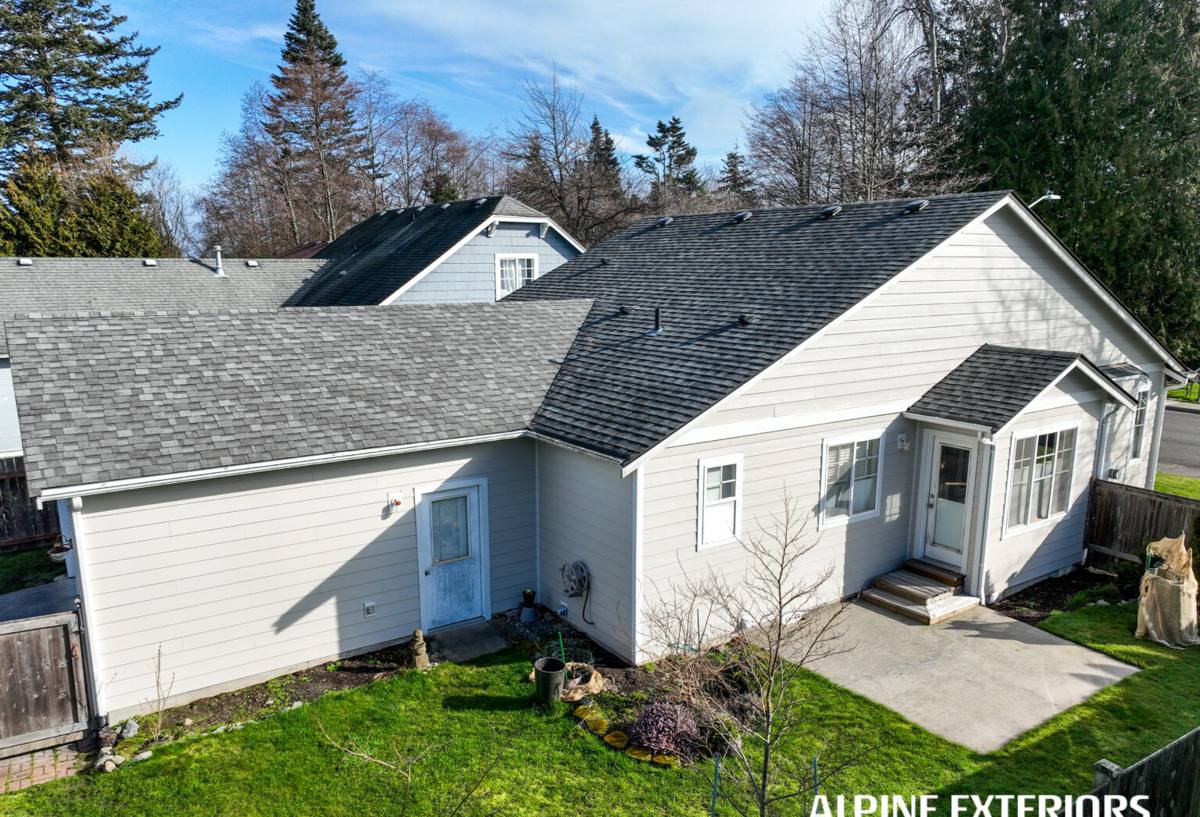
What Salt Air, Driving Rain, and Moss Season Actually Do to Siding
Each of these three factors stresses siding in a different way, and they compound each other over a Skagit County winter.
Salt Air
Airborne salt is corrosive to exposed metal fasteners, flashing, and trim connectors, and it accelerates the breakdown of lower-grade coatings and caulks. On wood-based or engineered wood products, salt-laden moisture speeds up swelling and softening at seams and cut edges.
Driving Rain
Wind-driven rain doesn't just run down a wall — it gets forced sideways and upward under laps, around penetrations, and into any gap in the water-resistive barrier. Siding that isn't installed with the right overlaps, flashing details, and drainage gap behind it will eventually let that water find wood sheathing.
Moss and Algae
Shaded, north-facing walls in this region stay damp for extended stretches, especially through fall and winter. Moss and algae growth on siding isn't just cosmetic — it holds moisture against the surface longer, which shortens the life of any product that isn't dimensionally stable and factory-sealed on all sides.
Put together, a home in Edison needs siding that resists moisture absorption at the core, holds a factory finish that doesn't need constant recoating, and uses hardware that won't corrode out from under it.
Why James Hardie Fiber Cement Fits This Climate
James Hardie siding is fiber cement — a mix of cement, sand, and cellulose fiber, engineered to be dimensionally stable and resistant to moisture-driven swelling, cracking, and rot in a way that wood-based and wood-composite products simply aren't. For a coastal Skagit County property, that matters in a few concrete ways:
- Non-combustible core — fiber cement doesn't feed a fire the way wood-based siding can, which matters given how many Edison properties border open farmland and dry summer grass.
- HZ5 engineered product line — James Hardie makes climate-specific formulations, and the HZ5 line is built for the freeze-thaw and moisture cycling common to the Pacific Northwest.
- ColorPlus factory finish — a baked-on finish applied under controlled conditions, which holds color and resists the fading, chalking, and peeling that field-applied paint struggles with in a damp climate.
- Dimensional stability — fiber cement doesn't swell and shrink with moisture the way wood and some wood-composite products do, so seams stay tighter over time and caulk joints don't get worked loose as fast.
None of this makes James Hardie maintenance-free — nothing on the exterior of an Edison home is — but it removes several of the failure points that we see repeatedly on other products in this climate.
The James Hardie Lines We Install
We install the full James Hardie system, matched to the style and exposure of the home rather than a one-size-fits-all approach.
| Product | Best Use | Why It Fits Edison |
|---|---|---|
| HardiePlank lap siding | Most common horizontal siding replacement | Wide range of exposures and textures; strong track record on Northwest homes |
| HardiePanel vertical siding | Modern facades, accent walls, gables | Clean drainage path when installed with proper furring and flashing |
| HardieShingle | Craftsman and cottage-style homes | Staggered or straight-edge shingle look without the maintenance of real cedar shingle |
| HardieTrim boards | Corners, window and door casing, fascia | Matches the siding's stability so trim joints don't open up over time |
What a Correct Installation Actually Involves
James Hardie siding is only as good as the installation behind it. Most of the premature failures we're asked to diagnose trace back to install shortcuts, not the product itself — especially in a climate that gives water this many chances to find a weak spot. A correct job on an Edison home includes:
- A properly lapped, continuous water-resistive barrier behind the siding, with all seams and penetrations sealed
- Correct flashing at every window, door, deck ledger, and roof-to-wall intersection — this is where the majority of hidden leaks originate
- A drainage gap or rainscreen detail so bulk water that gets behind the cladding can actually drain and dry out
- Fasteners installed per James Hardie's specification for exposure and substrate — over- or under-driven nails are one of the most common defects we find on other crews' work
- Correct clearance between the bottom of the siding and grade, decks, patios, and roof lines, so splash-back and standing moisture don't sit against the material
- Proper caulking at butt joints and trim intersections, using a sealant rated for the exposure — not a general-purpose caulk
- Field-cut edges sealed or primed per manufacturer specification before installation
Any one of these steps done wrong can undercut the whole system, regardless of how good the siding product itself is. This is the level of detail we hold every Edison job to.
Our Process, Start to Finish
1. On-Site Assessment
We walk the exterior with you, look at current siding condition, check for underlying moisture or rot issues, and talk through exposure on each side of the house — north/west walls dealing with moss and driving rain get different attention than a sheltered south side.
2. Product and Line Selection
We help you choose the right James Hardie product, texture, and ColorPlus finish for the home's style and this climate — not just what looks good on a sample board.
3. Written Estimate
You get a clear, itemized estimate covering removal, any sheathing repair, house wrap, flashing, siding, trim, and finish — no vague lump-sum guessing.
4. Tear-Off and Substrate Check
Once old siding comes off, we inspect the sheathing underneath. This is often the first real look anyone's had at hidden moisture damage, and we'll flag anything that needs repair before new siding goes on.
5. Installation to Manufacturer Spec
Weather barrier, flashing, drainage detailing, and James Hardie's fastening and clearance requirements — installed the way the manufacturer's warranty actually requires, not the way that's fastest.
6. Final Walkthrough
We go around the finished home with you, check every elevation, and make sure the work matches what was estimated.
What Affects the Cost of a Siding Project in Edison
| Factor | Why It Matters Here |
|---|---|
| Extent of hidden moisture damage | Homes exposed to salt air and driving rain more often need sheathing repair once old siding comes off |
| Home size and elevation complexity | Gables, dormers, and multiple rooflines add cutting, flashing, and labor time |
| Siding profile and texture chosen | Lap width, shingle detail, and panel vs. plank affect material and labor |
| Trim scope | Full trim replacement adds cost but keeps the whole exterior on one consistent, durable product |
| Accessibility | Site access, existing landscaping, and outbuildings common on Edison's rural lots can affect setup time |
We don't quote a number until we've actually seen the house — anything else is a guess. What we can tell you honestly is that skipping proper flashing, drainage detailing, or sheathing repair to hit a lower price almost always costs more later, once water finds its way behind the wall.
Why It Matters to Hire a Crew That Already Works This Area
Skagit County's coastal edge, including Edison and the surrounding Samish Bay area, behaves differently than siding jobs twenty or thirty miles inland. A crew that already works this specific stretch of the county knows what exposure to plan for on a north wall facing the water, understands how moss and algae actually behave on this coastline through the wet months, and isn't learning the region's flashing and drainage demands on your house. That local familiarity shows up in the details — the ones that determine whether siding is still performing in fifteen years or failing quietly behind a wall you can't see.
What to Ask Before You Hire Anyone for This Job
- Are you installing to James Hardie's published fastening and clearance specifications, not just "standard practice"?
- Will you inspect and document sheathing condition once old siding is removed, before covering it back up?
- What flashing details will you use at windows, doors, and roof intersections?
- Is your crew factory-trained or certified on James Hardie installation?
- What does the written warranty actually cover — material, labor, or both — and for how long?
If a contractor can't answer these clearly, that's worth knowing before, not after, the old siding comes off your house.
If you're weighing a siding replacement on an Edison home, we're glad to come take a look and give you a straight, no-pressure estimate — what we'd recommend, what it involves, and what it costs, based on your actual house rather than a generic quote. There's a form below to get that started.