 Anacortes Siding
 Roofing for a Waterfront Anacortes Neighborhood
Flounder Bay sits close enough to the water that homes here take a different kind of weathering than roofs a few miles inland. Salt-laden air moves through steadily, wind-driven rain finds every weak seam, and the shaded, moisture-heavy stretches of the year give moss and algae a long runway to take hold. An asphalt shingle roof that would coast along fine in a drier climate can start showing granule loss, algae streaking, and soft decking years ahead of schedule out here if it wasn't installed with this specific environment in mind.
We work on homes throughout Anacortes and Skagit County, and Flounder Bay roofs get the same attention to detail every time: correct ventilation, the right underlayment, and shingles chosen for how they'll actually hold up near the water — not just how they look on a sample board.
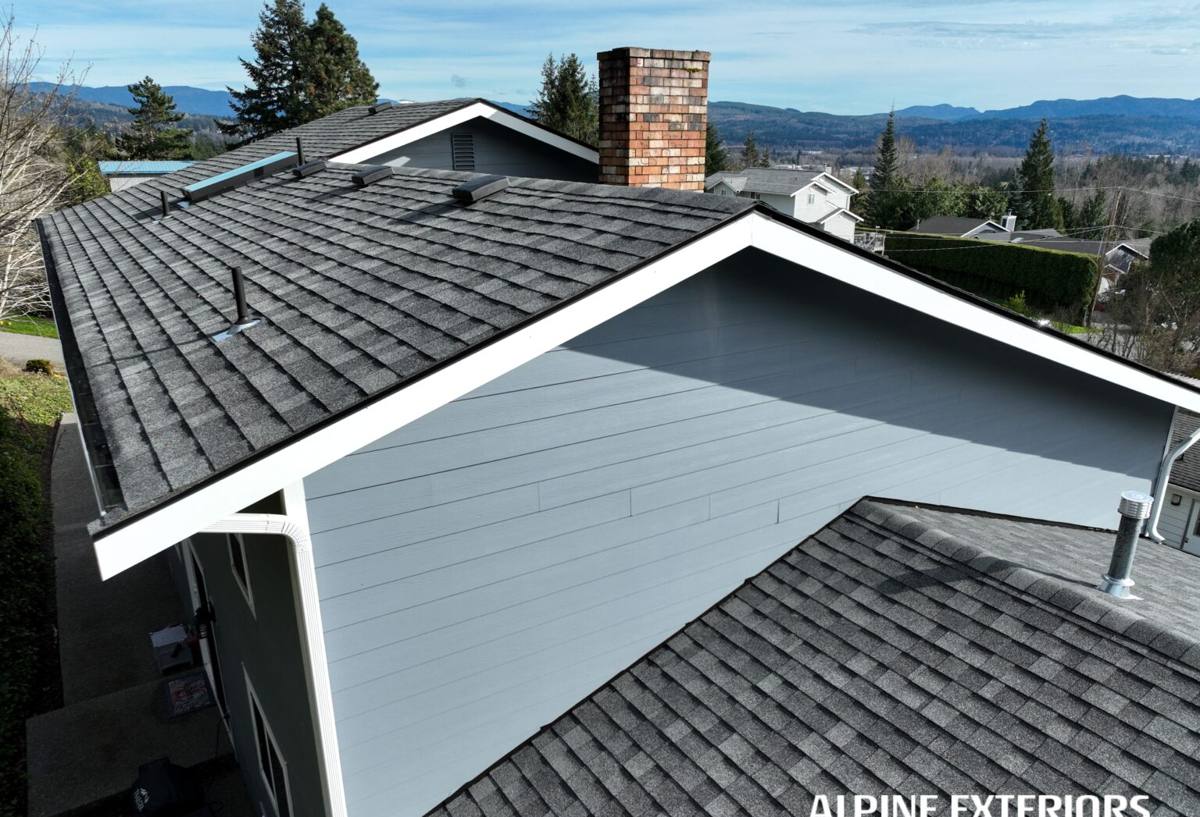
What Salt Air, Rain, and Moss Actually Do to a Shingle Roof
Salt Air and Metal Components
Salt in the air accelerates corrosion on any exposed metal — flashing, nail heads, drip edge, vent caps. A roof that skimps on corrosion-resistant fasteners and flashing metal will show rust streaks and eventually leak at those points well before the shingles themselves wear out. This is one of the most overlooked failure points on coastal roofs, because the shingles can look fine while the metal underneath them is quietly failing.
Driving Rain
Wind off the water doesn't let rain fall straight down — it pushes it sideways and up under shingle tabs, at valleys, and around penetrations like vents and chimneys. A roof detailed for calmer weather (minimal underlayment, standard nailing pattern, basic valley treatment) can pass fine in dry conditions and still leak during a real Skagit County wind-and-rain event.
Moss and Algae Season
Shaded roof sections, north-facing slopes, and areas under tree cover stay damp for extended stretches much of the year. That moisture is exactly what moss needs to establish itself in the granule layer, and once it does, it lifts shingle edges, holds water against the roof deck, and shortens the roof's life if it isn't addressed. Algae staining is mostly cosmetic, but moss growth is a structural concern if left alone.
What a Correctly Installed Roof Looks Like Here
A shingle roof built for Flounder Bay's conditions isn't a different product line — it's the same materials installed with coastal-specific decisions at every layer:
- Corrosion-resistant flashing and fasteners at all metal points, not standard galvanized in areas prone to salt exposure
- A full synthetic or ice-and-water underlayment system, with extra coverage at valleys, eaves, and roof penetrations
- Proper balanced attic ventilation (intake and exhaust) so moisture doesn't build up under the deck from the inside
- Algae-resistant (AR) shingles on any home with moss or algae history, or heavy shade exposure
- Careful nailing pattern and sealant placement rated for higher wind exposure
- Deck inspection and repair before shingles ever go down — a new roof over a soft or rotted deck fails early no matter how good the shingles are
None of this shows up on a shingle sample or a quick drive-by estimate. It's the difference between a roof that looks right on install day and one that's still performing correctly in fifteen years.
Our Process for a Flounder Bay Roof Replacement
1. On-Site Assessment
We walk the roof, not just look at it from the ground. That means checking the deck condition, ventilation setup, flashing condition, and any moss or algae patterns that tell us where moisture is collecting. We also look at tree cover and exposure, since that affects both shingle choice and how much maintenance the roof will need going forward.
2. A Straightforward Estimate
You get a written scope that spells out tear-off, deck repair allowances, underlayment system, shingle selection, flashing work, and ventilation — no vague line items. If your roof needs deck repair, we tell you that up front rather than discovering it mid-job and adding surprise charges.
3. Tear-Off and Deck Prep
Old roofing comes off down to the deck so we can actually see what's underneath. Any soft, rotted, or water-damaged sheathing gets replaced before anything new goes on — this step gets skipped by crews trying to move fast, and it's the single most common cause of early roof failure.
4. Underlayment, Flashing, and Ventilation First
Before a single shingle goes down, we get the water management layer right: ice-and-water membrane at vulnerable areas, synthetic underlayment across the field, new flashing at valleys, walls, and penetrations, and a ventilation setup that actually balances intake and exhaust.
5. Shingle Installation
Shingles go down to manufacturer spec for nailing pattern and exposure, with extra attention at edges, valleys, and any low-slope transitions where wind-driven rain is most likely to find a gap.
6. Cleanup and Walkthrough
Magnetic sweep for nails, full site cleanup, and a walkthrough so you understand what was done and what maintenance, if any, the new roof needs going forward.
Choosing a Shingle for This Climate
Not every asphalt shingle product is a good fit for a shaded, salt-air, high-moisture site. Here's how the main options compare for a Flounder Bay home:
| Shingle Type | Typical Lifespan | Moss/Algae Resistance | Best Fit |
|---|---|---|---|
| Standard 3-tab | 15–20 years | None unless AR-rated | Budget-focused projects with less shade exposure |
| Architectural (laminated) | 25–30 years | Better with AR granules | Most Flounder Bay homes — better wind rating and thicker profile |
| Algae-resistant (AR) upgrade | Same as base shingle | Copper/zinc granules resist streaking and moss | Any roof with shade, north exposure, or prior moss/algae history |
| Impact-rated / heavier laminate | 30+ years | Good with AR option | Homeowners wanting maximum durability and longer warranty |
For most homes in this area, we recommend at minimum an architectural shingle with algae-resistant granules. The upgrade cost over standard 3-tab is modest relative to the total job, and it directly addresses the moss and staining issue that's most common on shaded coastal roofs.
Cost Factors for a Flounder Bay Roof
| Factor | Why It Matters Here |
|---|---|
| Roof size and complexity | More valleys, penetrations, and slope changes mean more flashing and labor time |
| Deck condition | Water-damaged or soft sheathing found at tear-off adds material and labor |
| Shingle grade | Standard vs. architectural vs. AR-upgraded shingles carry different material costs |
| Ventilation upgrades | Adding or correcting intake/exhaust vents protects the new roof's warranty |
| Access and tree cover | Difficult access or heavy overhead branches can add setup and cleanup time |
We give exact numbers after seeing your specific roof — anyone quoting a firm price over the phone without walking the roof is guessing, and that guess usually gets corrected (upward) once work starts.
Moss and Algae: What You Can Do Between Roof Jobs
A well-installed AR shingle roof still benefits from basic upkeep in a climate like this. A simple annual routine goes a long way:
- Clear debris from valleys and gutters before fall rains set in
- Trim back overhanging branches to reduce shade and let the roof dry between rains
- Have moss physically brushed off (never pressure-washed) rather than left to grow into the granule layer
- Watch for granule buildup in gutters, which signals accelerated shingle wear
- Schedule a professional inspection every couple of years, especially after major windstorms
Why Local Experience Matters for This Job
A crew that regularly works Flounder Bay and the surrounding Anacortes waterfront knows which roof orientations collect moss first, which fastener and flashing grades hold up against salt exposure, and how the wind off the water behaves differently than it does a few miles inland. That's knowledge built from doing the work here repeatedly, not from a general roofing checklist. It shows up in the small decisions — where extra underlayment goes, which shingle line gets recommended, how ventilation gets balanced — that determine whether a roof performs for its full expected lifespan or needs attention again in half that time.
Signs Your Flounder Bay Roof Needs Attention
A few signals are worth acting on before they become a leak:
- Granules collecting in gutters or at downspout outlets
- Visible moss growth, especially on shaded or north-facing slopes
- Curling, cracking, or lifting shingle edges
- Dark streaking across the roof field (algae, mostly cosmetic but worth monitoring)
- Rust staining near flashing, vents, or nail heads
- Any sign of moisture, staining, or sagging on interior ceilings
If your roof is showing any of these, it's worth having someone look at it in person before deciding whether it's a repair or a full replacement.
If you're weighing repair versus replacement, or just want an honest look at where your Flounder Bay roof stands, we're happy to take a look. Fill out the form below for a free, no-pressure estimate.