 Anacortes Siding
 Why Flounder Bay Roofs Wear Differently Than Roofs Inland
Flounder Bay sits close enough to the water that the air itself is part of the maintenance equation. Salt-laden moisture off the water, wind-driven rain, and shaded, moss-friendly rooflines all combine to age a roof faster here than they would twenty or thirty miles inland. A roof that would last two more winters in a dry, sunny climate can already be showing granule loss, soft decking, or moss undermining the shingle edges here in Anacortes. Understanding why local roofs age the way they do is the first step in replacing one correctly instead of just swapping old shingles for new ones and hoping for a longer life.
Salt Air and Metal Components
Salt air accelerates corrosion on anything metal — flashing, fasteners, vent caps, and gutter hardware. Standard galvanized fasteners and cheap flashing can start rusting years before they would in a drier, non-coastal setting. That corrosion isn't cosmetic; a rusted-through nail or a flashing seam that's lost its coating is a leak path waiting to happen. Roofing hardware near the water needs to be chosen with that exposure in mind, not just picked off the shelf because it's the standard option.
Moss Season and Shaded Rooflines
Many homes near Flounder Bay sit under or near mature conifers, and the combination of shade, moisture, and cooler temperatures gives moss a long growing season — often nine months or more out of the year in Skagit County. Moss doesn't just look bad. Its root structure works under shingle tabs and lifts them slightly, which lets wind-driven rain get underneath. A roof that looks intact from the ground can already have moss compromising the shingle seal in spots you can't see from a ladder glance.
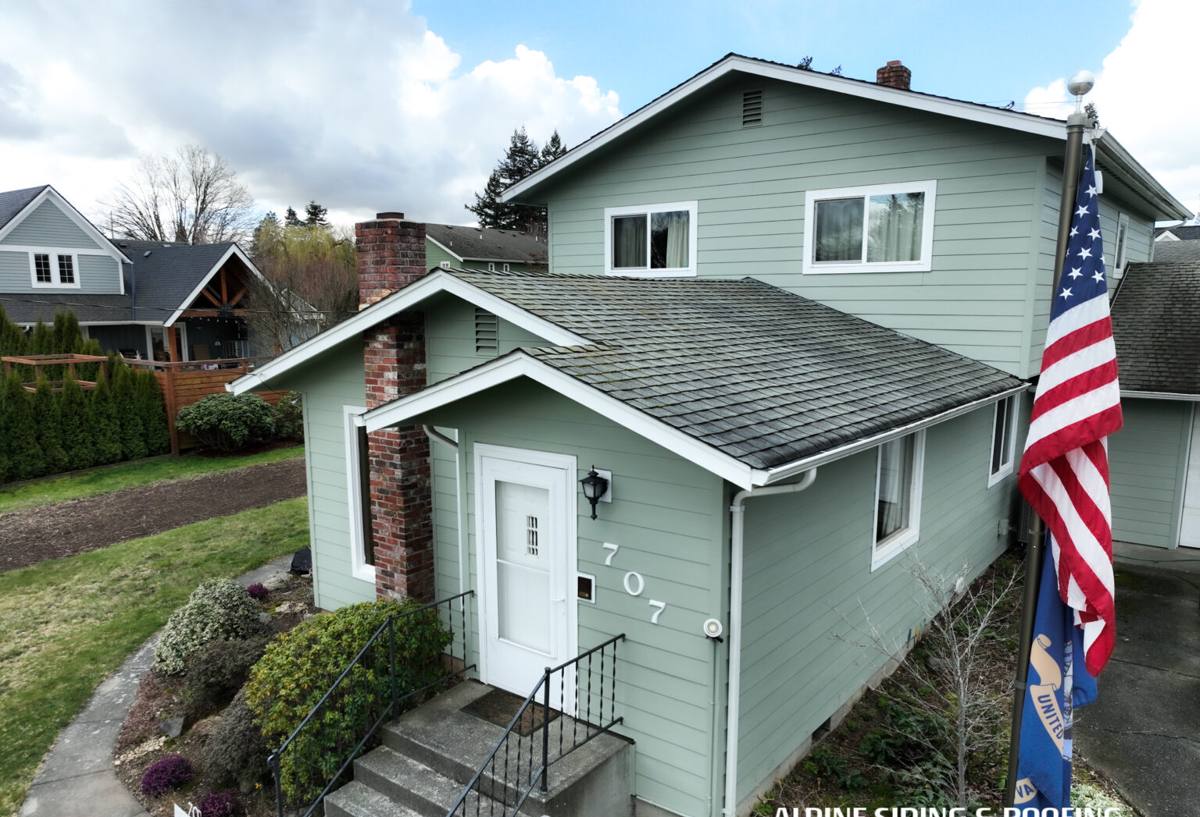
When a Roof Needs Full Replacement, Not Another Repair
Not every roofing problem calls for a full tear-off. But there's a point where patching individual leaks stops making sense — where the underlying materials are worn out across the whole roof, not just in one spot. Here's what we look for when deciding whether a Flounder Bay roof is a repair candidate or a replacement candidate:
- Granule loss heavy enough that you can see bare asphalt in multiple areas, not just one worn patch
- Shingles curling, cupping, or cracking across large sections rather than isolated spots
- Moss or algae growth that's lifted shingle edges, not just discolored the surface
- Soft or spongy decking felt underfoot during inspection, indicating water has reached the plywood
- Rusted, cracked, or separated flashing around chimneys, vents, and valleys
- Daylight visible through the roof deck from inside the attic
- A composition shingle roof that's 20-25+ years old, regardless of how it looks from the ground
- Repeated leak repairs in different locations each winter — a sign the whole system is failing, not just one section
If a roof is showing two or three of these signs, replacement is usually the more honest recommendation, even if a repair would technically buy another season.
What a Correct Replacement Actually Involves
A roof replacement is more than stripping old shingles and nailing down new ones. In a climate that sees this much rain and moisture, the layers underneath the shingles matter as much as the shingles themselves.
Tear-Off and Deck Inspection
We remove the old roofing down to the deck rather than layering over it. That's the only way to actually see the plywood or OSB underneath — soft spots, rot, or old water staining don't show up until the old material is off. Any damaged decking gets replaced before anything new goes down; installing new roofing over a compromised deck just hides the problem for another few years.
Underlayment and Water Barrier Detailing
Given how much wind-driven rain this area sees off the water, underlayment choice and installation matter more here than in drier parts of the state. Self-adhered ice-and-water barrier at eaves, valleys, and around penetrations gives an extra line of defense in the spots most likely to take on water, backed by synthetic underlayment across the rest of the field.
Flashing and Penetrations
Every chimney, vent pipe, and roof-to-wall transition is a place water can get in if the flashing isn't detailed correctly. Given the salt-air corrosion risk discussed above, we use flashing and fasteners rated for coastal exposure rather than standard-grade hardware that can start rusting within a few winters.
Attic Ventilation
A roof that isn't ventilated correctly traps moisture underneath the deck, which shortens the life of both the roof and the insulation below it. Balanced intake and exhaust ventilation is part of a correct replacement, not an optional add-on — especially in a climate where the air outside is already damp much of the year.
Choosing a Roofing Material for a Marine Climate
There's no single "best" roofing material for every home — it depends on budget, roof pitch, how much shade the property gets, and how the homeowner weighs upfront cost against long-term maintenance. Here's how the common options compare for a property in a salt-air, moss-prone setting like Flounder Bay:
| Material | Typical Lifespan Here | Moss/Moisture Behavior | Maintenance Burden |
|---|---|---|---|
| Composition (asphalt) shingle | 20-30 years, varies by product line | Prone to moss in shaded areas; manageable with periodic cleaning and zinc strips | Low to moderate — occasional moss treatment |
| Standing seam metal | 40-50+ years | Sheds moisture fast; sheer surface resists moss far better than shingles | Low — mainly fastener and sealant checks over time |
| Cedar shake | 20-30 years with upkeep | More moisture-sensitive; needs regular treatment to resist rot and moss in shaded, damp settings | Higher — periodic treatment and closer inspection recommended |
We're upfront that cedar shake, while attractive, asks more of a homeowner in a climate like this — it's more sensitive to sustained moisture and shade, which is exactly what a lot of Flounder Bay lots provide. That's not a knock on the material itself, just an honest trade-off worth knowing before you commit to it. Composition shingle remains the most common choice because it balances upfront cost with reasonable lifespan, while metal costs more initially but asks the least of you afterward in a moss-heavy setting.
Our Process for a Flounder Bay Roof Replacement
- On-site inspection: We walk the roof and the attic, not just look from the ground, to confirm whether replacement is actually the right call.
- Written estimate: A clear scope and price before any work starts — what's included, what materials, what the timeline looks like.
- Material selection: We walk through the trade-offs above based on your roof's shade exposure, pitch, and budget, so the choice fits the property, not just a sales sheet.
- Tear-off and deck repair: Full removal of old roofing, deck inspection, and replacement of any compromised plywood or OSB.
- Underlayment, flashing, and ventilation installed to the standard described above, with attention to the details that matter most in wind-driven rain.
- Final walkthrough: We go over the finished roof with you before calling the job done.
Permits, Weather Windows, and Scheduling in Skagit County
Roof replacement in Anacortes and the surrounding Skagit County area typically requires a building permit, and we handle that process as part of the job. Weather is the other scheduling factor that matters more here than in drier climates — a roof replacement is not a job you want to start and then have to leave partially open during a stretch of driving rain. We plan around the forecast and work in sections when needed so the home is never left more exposed than necessary partway through the job.
Why a Crew That Already Works This Area Matters
A roofing crew that regularly works in and around Flounder Bay has already seen how salt air treats fasteners over a few winters, how far moss creeps into shaded valleys on this kind of lot, and which detailing choices actually hold up against wind-driven rain off the water. That's different from general roofing knowledge — it's the difference between a roof that's built to a national average and one that's built for what this specific stretch of coastline actually does to a house year over year. Local knowledge doesn't replace good workmanship, but it does mean fewer surprises and fewer callbacks down the road.
Protecting the Investment After Replacement
A correctly installed roof still benefits from basic upkeep in this climate. Keeping gutters clear so water isn't backing up under the shingle edge, trimming back overhanging branches to cut down on shade and debris, and treating moss growth early before it has a chance to lift shingles all extend the life of a new roof considerably. None of this is intensive work, but skipping it in a moss-prone, damp climate tends to shorten a roof's life faster than people expect.
If your Flounder Bay roof is showing its age — or you just want an honest opinion on whether repair or replacement makes more sense — we're happy to take a look. The estimate is free, there's no pressure attached to it, and you'll get a straight answer either way. The form below is the easiest way to get started.