 Anacortes Siding
 James Hardie Siding for Burlington Homes
Burlington sits in the flood plain and farmland stretch of Skagit County, a few minutes inland from Anacortes and the salt water of Fidalgo Bay. That location matters more than most homeowners realize when it comes to siding. Burlington gets the same marine push of moisture off Puget Sound that Anacortes does, plus its own share of valley fog, standing humidity, and the long gray stretch from October through April when siding rarely gets a chance to fully dry out between storms. Whatever is on the outside of a Burlington home spends a good part of the year damp, and that's the condition that decides how long a siding product actually lasts.
We install James Hardie fiber cement siding exclusively. Not as one option among several, but as the only product we put on homes. This page is about what that means specifically for a Burlington property — not siding in general, and not a sales pitch for Hardie as a brand, but a straight explanation of what this climate does to siding and what a correct Hardie installation looks like here.
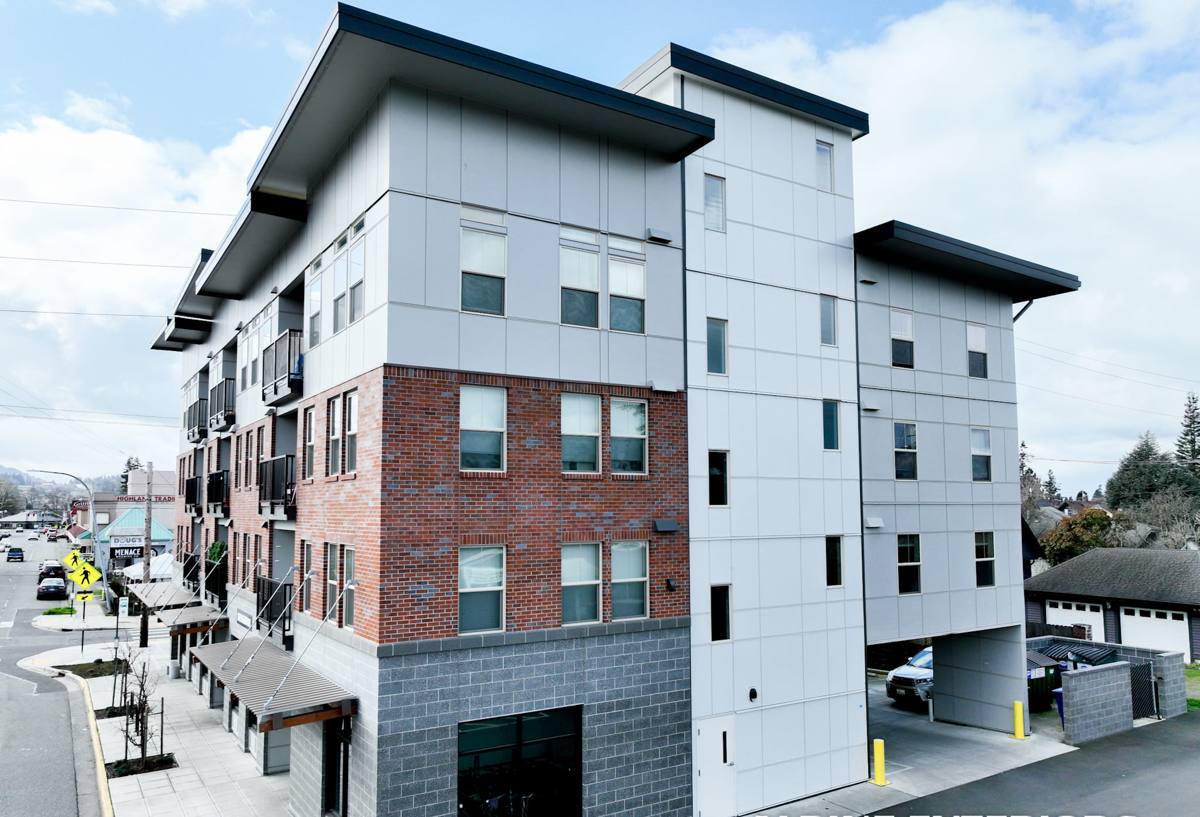
What Burlington's Climate Actually Does to Siding
Three things stack on top of each other in this part of Skagit County, and none of them are dramatic on their own, but together they wear siding down faster than most homeowners expect:
- Salt-influenced moisture: Burlington isn't waterfront, but it's close enough to Anacortes and the Sound that airborne salt still reaches siding, especially on the sides of a house facing west and northwest. Salt holds moisture against a surface longer than plain rainwater does.
- Driving rain: Wind off the water pushes rain sideways into wall assemblies, not just straight down. Siding on exposed elevations and around window and door trim takes the brunt of this, and it's usually where problems start first.
- Moss and organic growth: The long wet season means moss, algae, and mildew get real time to establish on any siding that holds moisture at the surface or has grain and texture for spores to grab onto. Once established, moss holds even more water against the material — it becomes self-perpetuating.
Wood-based products (cedar, primed spruce) absorb this moisture directly into the fiber, which is what drives swelling, cupping, and eventual rot. Vinyl doesn't absorb water, but it moves — expanding and contracting with temperature swings — and that movement opens seams over time, letting moisture behind the panel where it's much harder to dry out. James Hardie fiber cement doesn't absorb moisture the way wood does and doesn't move the way vinyl does, which is exactly why it holds up better through a Burlington winter.
Why We Only Install James Hardie
We get asked regularly why we don't offer LP SmartSide, vinyl, Cemplank, Allura, or cedar as options. It's not that those products don't work anywhere — it's that we've standardized on one product we can stand behind fully, install correctly every time, and warranty with confidence. A few of the specific reasons:
- Non-combustible core. Fiber cement doesn't burn, which matters increasingly in Washington as wildfire smoke and ember exposure become part of the conversation even west of the Cascades.
- Factory-applied ColorPlus finish. The color is baked on at the factory under controlled conditions, not site-applied. That finish resists fading and holds up to UV and moisture cycling far better than field-painted siding.
- Climate-engineered product lines. Hardie makes region-specific formulations (their HZ5 line is built for exactly this kind of wet, temperate climate), so the product itself is engineered for what Burlington weather does to a wall.
- A warranty that transfers. Hardie's warranty structure is transferable to a subsequent homeowner, which matters for resale — most competing products either don't offer this or make it difficult.
We're not going to tell you LP SmartSide or vinyl siding is garbage — plenty of homes have it and it's not falling apart. But when we weigh installation sensitivity, long-term moisture behavior, and warranty terms against what we're willing to put our name behind, Hardie is what wins every time. That's a professional standard, not a knock on the alternatives.
What a Correct Installation Involves
Fiber cement siding is only as good as the installation behind it. Hardie itself will tell you that most siding failures they see are installation failures, not product failures. For a Burlington home, given the moisture load, a few details matter more than usual:
Water Management Behind the Siding
A proper rain screen or drainage gap, correctly lapped weather-resistant barrier, and flashing at every penetration — windows, doors, hose bibs, light fixtures — has to happen before a single piece of siding goes up. In a driving-rain climate, siding is the second line of defense, not the only one. If water gets behind the cladding and has nowhere to drain or dry, it doesn't matter what's on the outside.
Fastening and Clearances
Hardie specifies exact nailing patterns, minimum clearances from grade, roof lines, decks, and horizontal surfaces, and specific gaps at butt joints for caulking or trim. Skipping these — over-driving nails, tight-butting boards, siding installed too close to grade — is how moisture finds its way in even with a good product on the wall.
Caulking and Sealant Choices
Not every sealant is compatible with fiber cement or holds up to this climate's UV and moisture cycling. The wrong caulk fails early and lets water track behind trim and joints.
Trim and Detail Work
Corners, window returns, and fascia transitions are where amateur installations show first — both visually and functionally. These details take more time to do right, and that time is where quality gets separated from a rushed job.
Our Process for a Burlington Job
- On-site assessment. We look at current siding condition, water staining, moss patterns (which tell us which elevations take the worst weather), trim and window flashing condition, and any rot or sheathing damage that needs addressing before new siding goes on.
- Written scope and product selection. We walk through Hardie's plank, panel, and shingle options, and the ColorPlus palette, and put together a scope that's specific to the house — not a generic package.
- Prep and water management. Removal of old siding, sheathing repair where needed, correct weather barrier and flashing installation. This is the stage that determines how the siding performs for the next 30+ years, and we don't rush it.
- Installation to Hardie spec. Correct fastening, clearances, joint treatment, and trim work, done by installers who've done this specific product on this specific kind of house repeatedly.
- Final walkthrough. We go over the finished work with the homeowner before calling the job done.
Why a Crew That Already Works Burlington Matters
Skagit County isn't one climate — Burlington's valley humidity and fog patterns aren't identical to Anacortes's direct waterfront exposure, and both are different from the drier east side of the state. A crew that already works this specific area knows which elevations on a typical Burlington lot take the worst wind-driven rain, how moss tends to establish here versus other parts of the county, and what the local building department expects for permitting and inspection. That local knowledge shows up in small decisions throughout a job — where extra flashing attention goes, how a scope is written, what gets flagged during the walk-through — that a crew unfamiliar with the area might miss entirely.
Cost Factors for a Burlington Siding Project
Every home is different, but the variables that move a project's cost up or down are consistent. We won't quote a number without seeing the house, but here's what drives the estimate:
| Factor | Why It Matters |
|---|---|
| Current siding condition | Rot or sheathing damage found during removal adds repair scope before new siding goes on |
| House size and complexity | More corners, gables, and trim detail means more labor time per square foot |
| Siding profile chosen | Lap, shingle, and panel products install at different rates and price points |
| Color option | Standard ColorPlus colors vs. custom or premium finishes affect material cost |
| Access and site conditions | Tight lots, landscaping, or multi-story sections affect staging and labor time |
| Existing water damage extent | Full sheathing replacement on affected walls adds material and labor beyond siding alone |
Signs a Burlington Home Needs Siding Attention
- Moss or dark staining that keeps returning after cleaning, especially on north- or west-facing walls
- Soft spots, bubbling, or visible swelling on wood-based siding
- Paint that's failing faster than it used to, or areas that won't hold paint at all
- Gaps opening at seams, corners, or trim joints
- Visible warping or cupping on individual boards
- Rising energy bills that could point to compromised wall insulation behind failing siding
If any of these sound familiar, it's worth having someone look before the underlying sheathing is affected — catching it at the siding stage is a far smaller job than catching it after rot has spread.
If you're weighing a siding replacement for a Burlington home, we're happy to come take a look and give you a straightforward, no-pressure estimate — no obligation, just an honest read on where things stand and what it would take to do the job right. Use the form below to get started.