 Anacortes Siding
 Roofing on March Point Is Its Own Challenge
March Point sits out on the water, and that changes what a roof has to survive. Homes here take wind off Fidalgo Bay and Padilla Bay, salt-laden air that speeds up corrosion on fasteners and flashing, and long stretches of wet, low-angle weather that keeps shaded roof sections damp for days at a time. Add in the moss and algae growth that Skagit County's mild, wet winters practically guarantee, and you've got a roofing environment that's harder on materials than most inland neighborhoods in Anacortes.
A roof that would hold up fine in a drier part of the state can fail early out here — not because the shingles were bad, but because the installation didn't account for the site conditions. That's the gap we focus on closing: new roof installations built specifically for what March Point weather actually does to a house.
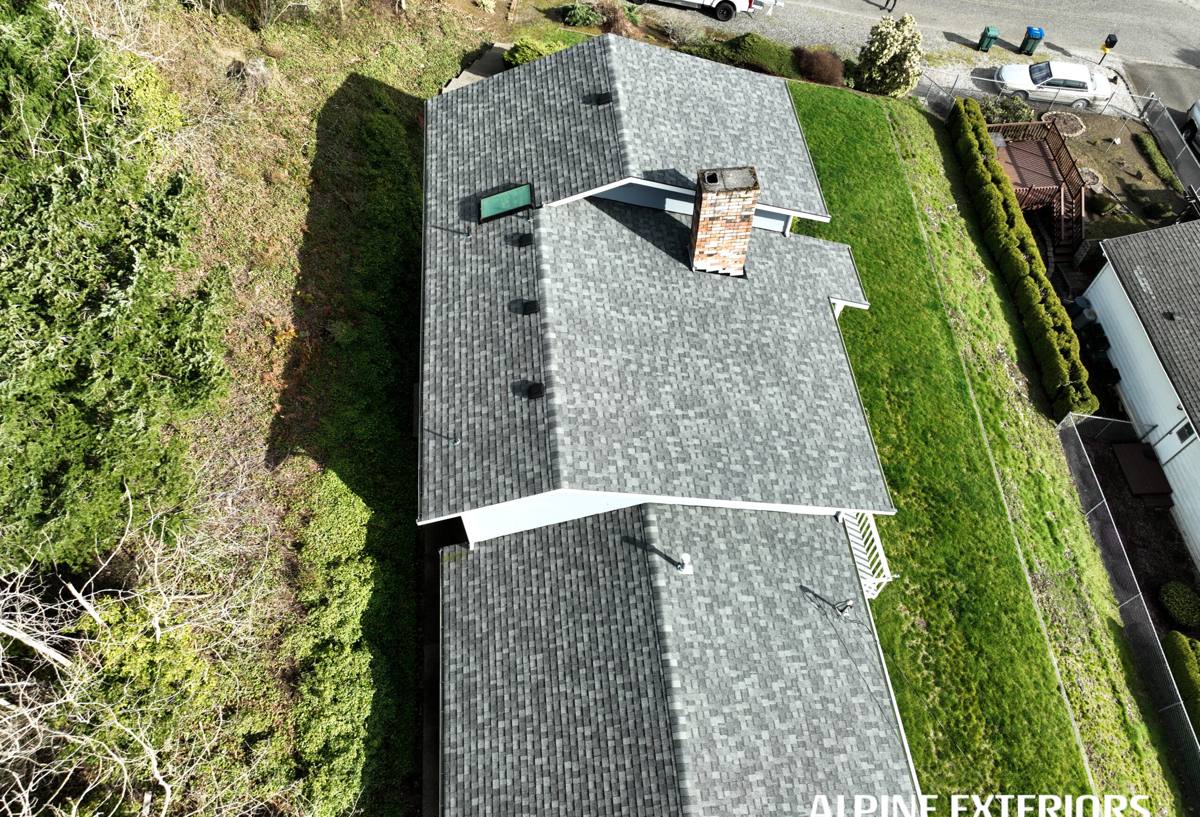
What "Correct" Actually Means on a New Roof Installation
A new roof isn't just shingles nailed to plywood. It's a system, and every layer has a job. On a waterfront or near-waterfront property, skipping or shortcutting any one of these layers is where premature leaks and rot start.
The Layers That Matter Most Here
- Deck inspection and repair — any soft, delaminated, or moisture-damaged sheathing gets replaced before anything goes back down. Roofing over a bad deck just hides the problem.
- Ice-and-water shield at eaves, valleys, and around every penetration — this is the layer that actually stops wind-driven rain from working its way backward under shingles, which is a real risk given how much sideways rain March Point gets off the water.
- Synthetic underlayment across the full field, not just the older felt paper, for a more consistent moisture barrier under long wet spells.
- Balanced ventilation — intake at the soffits, exhaust at the ridge — so trapped moisture doesn't condense in the attic and rot the deck from underneath.
- Flashing at every transition — chimneys, skylights, dormers, sidewalls — done in corrosion-resistant metal, since salt air is unkind to cheaper flashing over time.
- Fastening rated for coastal wind exposure, with corrosion-resistant nails and proper nailing patterns rather than the manufacturer's bare minimum.
Choosing a Roofing Material for a Salt-Air, High-Moss Site
There's no single "best" roofing material for every March Point home — it depends on your budget, your roof's slope and shading, and how much long-term maintenance you're willing to do. Here's how the common options actually compare under this specific climate load:
| Material | Salt Air / Corrosion | Moss & Algae Resistance | Typical Lifespan Here | Approx. Cost Range |
|---|---|---|---|---|
| Architectural asphalt shingle | Good — fasteners and flashing are the weak point, not the shingle itself | Moderate; algae-resistant (AR) shingles help but shaded areas still need upkeep | 20–25 years | $ |
| Standing seam metal | Very good with properly coated/fastened panels | Excellent — moss struggles to get purchase on smooth metal | 40–50+ years | $$$ |
| Cedar shake | Fair — needs consistent maintenance near salt air | Poor without active upkeep; shaded, damp roofs grow moss quickly | 20–30 years with maintenance | $$–$$$ |
| Synthetic/composite shingle | Good | Good, varies by product | 30–40 years | $$ |
For a lot of March Point homes, a quality architectural asphalt shingle with algae-resistant granules is a reasonable middle ground on cost and performance. For roofs with heavy shading, low slope, or a long history of moss problems, metal is worth serious consideration — not because asphalt is a bad product, but because a smooth, non-porous surface simply gives moss less to hold onto over the long run. We'll walk through the real trade-offs for your specific roof rather than push one material across the board.
Ventilation and Moisture Control Get Extra Weight Out Here
Inland, a marginal ventilation setup might go unnoticed for years. On March Point, where humidity sits higher and drying periods are shorter, a poorly ventilated attic traps moisture that condenses on the underside of the deck. Over a few winters, that shows up as soft sheathing, mold on the rafters, and shingles that fail from underneath before their surface even looks worn.
What We Check Before Installing New Ventilation
- Whether existing soffit vents are actually open and unblocked (insulation stuffed against soffits is a common, invisible problem)
- Whether intake and exhaust are balanced — too much exhaust with too little intake can pull conditioned air out of the house instead of venting the attic
- Bathroom and kitchen exhaust fans venting to the exterior, not just dumping into the attic space
- Ridge vent continuity and baffle placement at the eaves so insulation doesn't choke off airflow
Getting this right during a new roof installation is far cheaper than fixing rot damage after the fact.
Moss and Algae: Managing It From the Start, Not Just Reacting to It
Skagit County's moss season runs long — the combination of shade, moisture, and mild temperatures gives moss months to establish itself on north-facing and tree-shaded roof sections. Once moss takes hold, its roots work into shingle granules and seams, holding moisture against the roof surface and shortening the material's life. Left unaddressed, moss growth is one of the more common reasons a roof in this area fails years before it should.
We build moss prevention into the installation itself where it makes sense for the roof:
- Zinc or copper control strips near the ridge, which release trace metal ions during rain that inhibit moss and algae growth downslope
- Algae-resistant shingle products where asphalt is the chosen material
- Recommending branch trimming to open up sun exposure and airflow on chronically shaded sections
- An honest maintenance conversation — no roofing material is fully moss-proof in this climate, and a light annual cleaning goes a long way regardless of what's installed
Our Installation Process on March Point Jobs
- On-site inspection and estimate — we look at the existing roof, attic ventilation, deck condition where visible, and any moss or moisture history specific to your property.
- Material and scope walkthrough — we go over material options, what your roof's exposure and shading call for, and a written scope before any work starts.
- Tear-off and deck inspection — old roofing comes off completely, and the deck gets inspected and repaired as needed rather than roofed over.
- Underlayment and flashing installation — ice-and-water shield at vulnerable areas, full underlayment coverage, and new metal flashing at every penetration and transition.
- Ventilation correction — intake and exhaust balanced to current standards, not just matched to whatever was there before.
- Roofing material installation — installed to manufacturer specification with fastening patterns suited to coastal wind exposure.
- Final walkthrough — cleanup, magnetic nail sweep, and a review of the finished roof with you before we consider the job done.
Why Local Experience on March Point Specifically Matters
March Point isn't a typical suburban neighborhood — it's a low-lying peninsula with direct water exposure, which means wind loading, salt exposure, and drainage patterns that differ from roofs even a few miles inland in Anacortes. A crew that's worked this specific area knows to spec corrosion-resistant fasteners and flashing as standard, not an upsell; understands which roof orientations on the point tend to hold moss longest; and can plan around wind conditions off the water rather than treating every job the same as an interior job.
We also pull permits and build to current Skagit County and Washington State building code requirements, which matters more than homeowners sometimes realize — an under-permitted or code-shortcut roof can create real problems at resale or insurance time.
Signs Your March Point Roof May Need Attention
Roof damage in this climate doesn't always show up as an obvious leak first. Watch for:
- Moss or dark algae streaking on north-facing or shaded slopes
- Granules collecting in gutters or downspouts
- Shingles that look curled, cupped, or are missing entirely after wind events
- Soft spots or noticeable sagging when walking the attic (if safely accessible)
- Daylight visible through the roof deck from inside the attic
- Stains on interior ceilings, especially near chimneys, skylights, or roof valleys
- Rusted or deteriorating flashing around vents and chimneys
Catching these early is almost always cheaper than waiting for an active leak.
What a New Roof Actually Costs
Pricing depends on roof size, pitch, material choice, deck condition, and how much tear-off and repair is involved — we won't quote a number without seeing the roof. What we can tell you honestly: the cheapest bid on paper is often the one that skips underlayment upgrades, proper ventilation correction, or corrosion-resistant flashing — all things that matter more here than in a drier, inland climate. We'd rather walk you through exactly what's included and why before you commit to anything.
If you're planning a new roof installation on March Point or elsewhere in the Anacortes area, we're glad to take a look and give you a straightforward, no-pressure estimate using the form below.