 Anacortes Siding
 Building New on Guemes Island Changes the Window Conversation
Guemes Island sits just across the water from Anacortes, reachable only by ferry, and that one fact shapes almost everything about a new-construction project there. When you're framing a new home or a major addition on the island, the windows aren't something you swap out later if they're wrong — they get built into the wall assembly once, alongside the weather-resistant barrier, the flashing, and the siding, and that sequence either holds up for decades or it doesn't. This page is specifically about installing new-construction windows on Guemes Island: what the site conditions demand, what a correct install actually involves, and how we plan around building on an island in Skagit County.
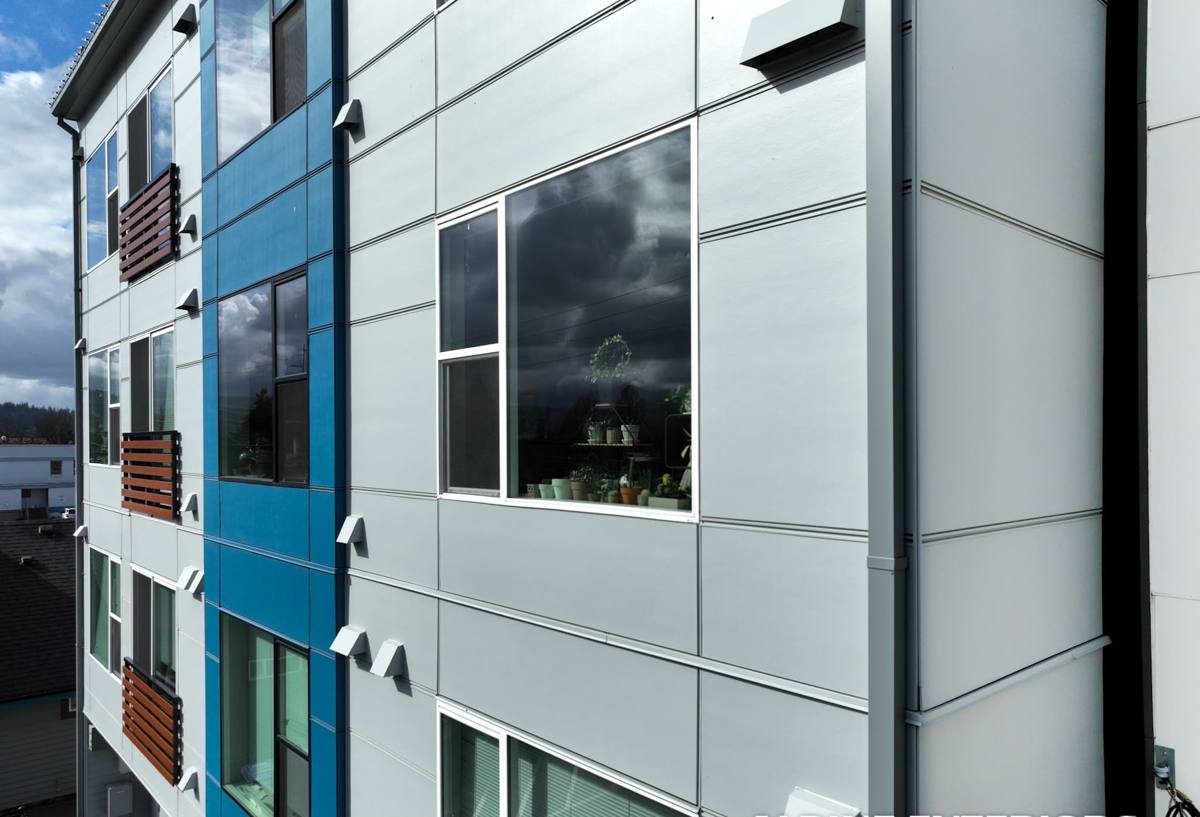
What Guemes Island's Climate Asks of New-Construction Windows
Guemes Island homes sit in the open, marine-influenced weather of the San Juan and Rosario Strait area. That environment is harder on a building envelope than most inland Skagit County sites, and window openings are one of the first places it shows.
Salt Air and Marine Corrosion
Airborne salt from the surrounding water accelerates corrosion on anything not built to handle it — bare steel fasteners, lower-grade hardware, and some aluminum components in particular. On a new build, this means choosing corrosion-resistant fasteners and frame hardware from the start, not discovering pitted screws and stiff locks five years in.
Wind-Driven Rain Off the Water
Open-water exposure means rain doesn't just fall on Guemes Island homes, it gets pushed sideways into wall assemblies during storms. New-construction windows on exposed elevations need flashing details built for wind-driven rain, not the minimum flashing that gets by on a sheltered inland lot.
A Long Moss Season
Skagit County's wet season runs long, and shaded, damp conditions on tree-covered island lots keep moss and algae active for much of the year. Around window openings, that means sills and trim need to shed water quickly and dry out between rains — trapped moisture near a window opening is exactly where moss gets a foothold and where rot eventually follows.
New Construction vs. Replacement: Why the Install Method Matters
New-construction windows are a different product and a different install method than replacement windows, and the distinction matters more on an exposed island site than almost anywhere else. New-construction windows have a nailing flange that gets integrated directly into the wall's weather-resistant barrier before siding goes on. Replacement windows, by contrast, get set into an existing frame after the siding is already in place, relying on the old opening's flashing.
On a new build, you get exactly one chance to integrate the window flange, the flashing, and the water-resistive barrier correctly, in the right order, before the wall is closed up. There's no siding to pull back and redo later. That's why we treat new-construction window installs as a sequencing job as much as a window job — every layer has to lap the one below it so water sheds outward no matter which direction the wind is coming from.
Getting the Water Management Right the First Time
A window opening is a hole in the building envelope, and every part of the install exists to make sure water that reaches that hole ends up outside the wall, not inside it. On a wind-exposed Guemes Island lot, we don't cut corners on any of these steps:
- Sloped sill pan flashing under the window, so any water that gets past the frame drains back outward instead of pooling on the sill
- Weather-resistant barrier integrated in proper shingle-lap order — sill first, then jambs, then head — so each layer overlaps the one below it
- Corrosion-resistant flashing tape and fasteners rated for coastal, salt-air exposure
- Head flashing that directs water past the window rather than letting it run down behind the trim
- Sealant placed only where it's supposed to carry the load — never used as a substitute for proper flashing
- A back-dam at the sill to stop any water that does get in from migrating further into the wall cavity
Done in the right order, this detailing is what keeps wind-driven rain out of the wall assembly during the kind of storms that come off the water regularly in this part of Skagit County.
Choosing Frame Materials and Glass for a Marine-Exposure Island Site
Frame material matters more on Guemes Island than it does on a sheltered inland lot, because salt air and moisture exposure are constant rather than occasional. There's no single right answer for every home, but the trade-offs are worth understanding before you order a window package.
| Frame Material | Salt-Air Durability | Maintenance | Typical Fit |
|---|---|---|---|
| Vinyl | Good — won't corrode or rust | Low, occasional cleaning | Budget-conscious builds, strong energy performance |
| Fiberglass | Very good — stable in temperature swings and moisture | Low | Higher-exposure elevations facing open water |
| Aluminum-clad wood | Depends on cladding quality; interior wood needs protection from condensation | Moderate — exterior low, interior wood needs care | Homeowners who want a wood interior look with exterior durability |
| Bare aluminum | Weakest in salt air — prone to pitting and corrosion over time | Higher, ongoing | We generally steer clients away from this on exposed island sites |
We'll walk through this table with you against your specific elevation and budget rather than defaulting to one product for every job. On glass, dual-pane units with a low-E coating are the standard for Washington's energy code, and on cooler, damp island sites we pay close attention to condensation resistance ratings — a window that fogs or sweats on the interior in winter is usually a sign of a lower-grade glass package, not just a cold snap.
Code, Permitting, and Exposure Ratings in Skagit County
New construction on Guemes Island goes through Skagit County permitting, and window specifications are part of that review. A few things matter specifically because of the island's exposure:
Design pressure (DP) ratings: homes on open-water-facing elevations need windows rated for higher wind loads than the same style window would need on a sheltered inland lot. We size DP ratings to the specific exposure of each elevation, not a single number for the whole house.
Washington State Energy Code: new construction has to meet current U-factor requirements for window assemblies, which affects frame and glass selection alongside the durability questions above.
Egress requirements: bedroom window openings have minimum size and sill height requirements for emergency escape, which needs to be locked in during framing, not adjusted after the rough opening is built.
Getting these right during the design and framing stage avoids the expensive alternative — a failed inspection or a window package that has to be reordered after openings are already framed.
Island Logistics: Scheduling Around the Ferry
Every material delivery, every trade visit, and every crew trip to a Guemes Island job site depends on ferry capacity and schedule. That's simply a fact of building on the island, and it has real consequences for a window install specifically. Custom window packages already carry manufacturer lead times of several weeks; on Guemes Island, we build in extra buffer for delivery scheduling and coordinate drop-off timing so materials aren't sitting exposed at a dock or staging area waiting on the next available crossing.
We also plan our crew's on-island time to get flashing, window setting, and initial weather protection done in as few trips as possible, rather than making repeated short crossings that eat into the schedule and the budget. That kind of planning only comes from having done it before.
Our Process for New-Construction Window Installs on Guemes Island
- Site visit and rough opening review — we confirm framing dimensions, elevation exposure, and any site-specific wind or moisture concerns before ordering.
- Window package selection — we go through frame material, glass package, and DP rating choices with you, elevation by elevation.
- Ordering with island lead time built in — factoring manufacturer production time plus ferry-scheduled delivery.
- Coordinated delivery — timed with your framing crew's schedule and ferry availability so materials arrive ready to install, not stockpiled and exposed.
- Flashing and window installation — sill pan, WRB integration, and head flashing done in the correct shingle-lap sequence before siding closes the wall.
- Handoff to siding and trim — we coordinate directly with the siding crew so the water management plane stays continuous from the window opening out to the finished wall.
- Final walkthrough — checking operation, sealant lines, and trim before we call the job done.
Why a Crew That Already Works Guemes Island Matters
A contractor who's already done new-construction window work on Guemes Island isn't guessing at ferry timing, isn't discovering exposure-specific flashing needs mid-project, and isn't pricing in surprise trips because a detail got missed the first time. We already know how Skagit County reviews new construction permits on the island, how exposed elevations here behave in a winter storm, and how to sequence a delivery so your framing crew isn't standing around waiting on a window package. That familiarity shows up as fewer delays and fewer callbacks — not as anything flashy, just a job that goes the way it's supposed to.
If you're planning a new build or addition on Guemes Island and want to talk through window selection, flashing details, or scheduling around the ferry, we're glad to walk the plans with you. Use the form below to request a free, no-pressure estimate — there's no obligation, just a straight conversation about what your project needs.