 Anacortes Siding
 New-Construction Windows in West Anacortes
West Anacortes is seeing a steady mix of new builds, additions, and full-envelope remodels, and the windows going into those projects are doing more than letting light in. On Fidalgo Island, a window opening is a joint in the building envelope that has to handle salt-laden air, wind-driven rain off the water, and months of damp, moss-friendly weather every single year. New-construction windows are installed before the siding and trim go on, which means the flashing and water management details around each opening only get done right once. Get that sequence wrong and the problem doesn't show up as a leak on day one — it shows up as rot, stained drywall, or a moldy sill two or three winters later, buried behind finished walls.
This page covers what a correct new-construction window install actually involves in West Anacortes specifically: the climate factors that change how we detail each opening, the difference between new-construction and replacement windows, our process on active build sites, and the cost factors homeowners and builders should understand before signing off on a window package.
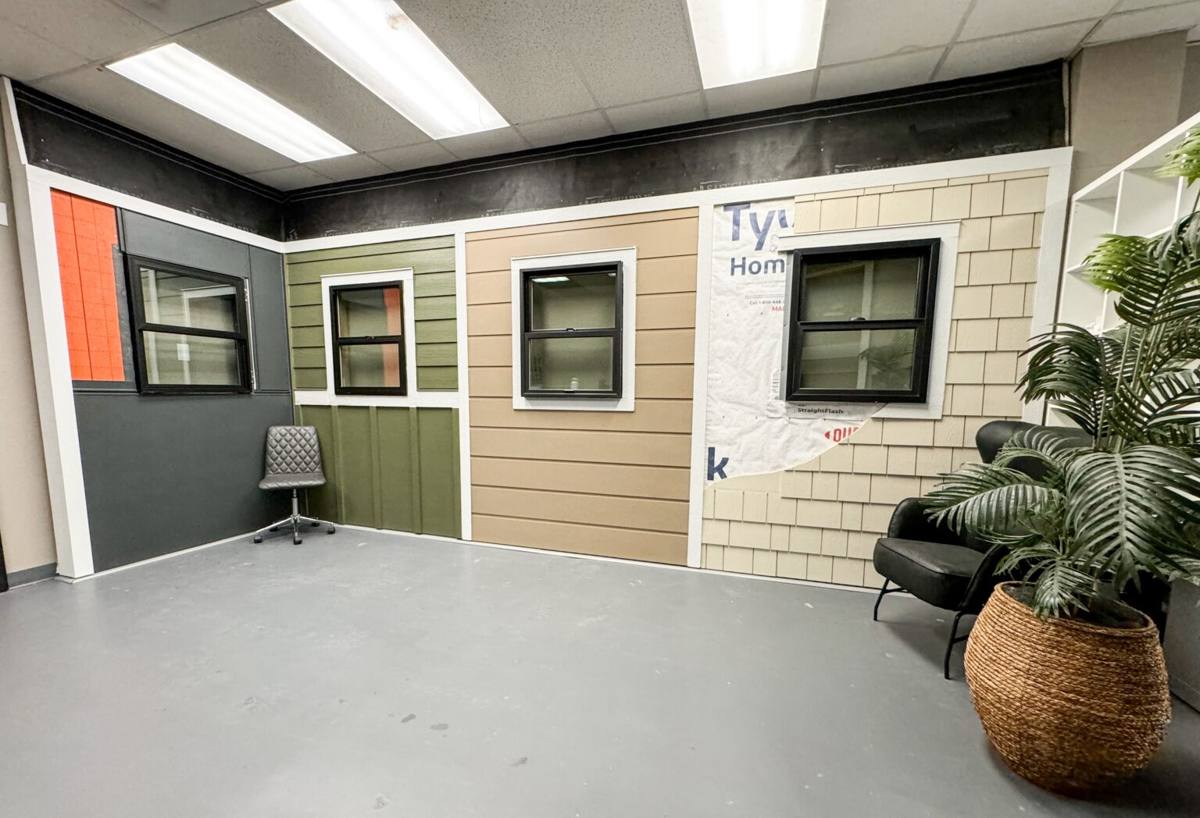
Why West Anacortes' Marine Climate Changes the Window Equation
Anacortes sits on Fidalgo Island in Skagit County, surrounded by saltwater on multiple sides, and that proximity to the water shapes almost every exterior decision on a home — windows included.
Salt Air and Hardware Corrosion
Airborne salt accelerates corrosion on anything metal: window hardware, fasteners, flashing, and even lesser-grade aluminum cladding. On a new build, this is the moment to spec corrosion-resistant fasteners and hardware finishes rather than dealing with pitted locks and stiff cranks a few years down the road.
Driving Rain and Wind Exposure
West Anacortes gets weather that doesn't just fall straight down — wind off the water pushes rain sideways into wall assemblies, especially on west- and south-facing elevations. New-construction windows need flashing details and sill pans engineered for wind-driven rain, not just a bead of caulk and a hope it holds.
Moss Season and Prolonged Dampness
Skagit County's long wet season keeps north-facing and shaded wall sections damp for extended stretches, which is exactly the environment moss and mildew need to take hold. Window sills, trim, and the housewrap-to-flange transition are common places we see moss and organic staining start on homes that weren't detailed with drainage in mind.
New-Construction vs. Replacement Windows: Know the Difference
Homeowners and even some builders use these terms loosely, but the products and installation methods are genuinely different, and getting the wrong one specified for your project causes real problems.
| Factor | New-Construction Window | Replacement (Retrofit) Window |
|---|---|---|
| Nailing flange | Yes — fastens directly to sheathing before siding | No flange — fits inside existing frame |
| Best used for | New builds, additions, full wall openings | Swapping a window in an existing finished wall |
| Water management | Full flashing and sill pan integrated with housewrap | Relies on the existing frame and sealant |
| Install timing | Before siding and exterior trim | Anytime, with minimal disruption to siding |
| Long-term coastal performance | Strongest — built-in drainage path | Adequate if original frame is sound |
If your project involves new framing, an addition, or a full siding tear-off, new-construction windows with a nailing flange are almost always the right call. They give us direct access to the sheathing and housewrap, which is what lets us build a proper drainage plane around each opening — something you can't fully achieve when you're working around an existing finished wall.
What a Correct Installation Actually Involves
A new-construction window install is a sequence, and skipping steps or doing them out of order is where most window failures start — regardless of how good the window itself is.
Sill Pan First
Before the window ever goes in, the rough opening gets a sloped sill pan so any water that does get past the window has somewhere to go — outward, not into the framing. This step is easy to skip and impossible to verify once the siding is up.
Flashing in the Right Order
Housewrap and flashing tape need to be layered shingle-style — each piece overlapping the one below it — so water always sheds downward and outward, never into a seam. Around the nailing flange specifically, this means sides first, then the top, so the top flashing laps over the side flashing.
Sealing Without Trapping Moisture
We seal the exterior perimeter to block wind-driven rain, but we don't seal the interior side airtight in a way that traps any moisture that does get through. A window opening needs to be able to dry to at least one side; sealing it completely on both sides is a common mistake that turns a minor leak into hidden rot.
Fastening and Squaring
The window has to be shimmed square and plumb before it's fastened — an out-of-square frame stresses the sash, causes air leaks around the weatherstripping, and can make operable windows bind within a year or two.
Choosing Windows and Glass for Coastal Skagit County Conditions
Material and glass choice matter more here than in drier, inland parts of the state.
Frame Materials
- Vinyl: Budget-friendly, low maintenance, and handles salt air well since it doesn't corrode — a solid default for most West Anacortes new-construction projects.
- Fiberglass: More dimensionally stable in temperature swings and holds paint well if you want a custom color; higher upfront cost.
- Wood-clad: Attractive interior wood look with an exterior-facing clad shell, but the cladding seams and any exposed wood need extra attention in a marine climate — we're honest with clients that this is the highest-maintenance option here, not because the product is flawed, but because wood components simply demand more upkeep in salt air and prolonged damp.
Glass Packages
Dual-pane, low-E glass with argon gas fill is the practical standard for new construction in this region — it cuts heat loss through the glass and helps control condensation on cold, damp mornings, which are common here. For west- and south-facing openings that catch more direct weather, we'll talk through upgraded weatherstripping and hardware finishes rated for coastal exposure.
Our Process for West Anacortes New-Construction Projects
- Plan review and site walk: We look at rough openings against the window schedule and flag anything — framing size, header height, orientation — that needs to be resolved before install day.
- Coordination with your builder or GC: On active job sites, we work the window install into the sequence between sheathing/housewrap and siding, so nothing gets covered up before it's inspected.
- Sill pan and flashing installation: Every opening gets a sloped sill pan and shingle-lapped flashing before the window is set — no shortcuts, regardless of which elevation it's on.
- Window setting, squaring, and fastening: Each unit is shimmed, squared, and fastened per manufacturer spec to keep the warranty intact.
- Exterior sealing and interior trim-out: We seal the exterior perimeter for wind-driven rain resistance and coordinate interior trim with your finish carpenter or crew.
- Final walkthrough: We check operation, hardware function, and visible sealant lines with you or your builder before we call the job done.
Mistakes We Commonly Catch on New-Construction Sites
A lot of the window callbacks we get asked to fix trace back to a handful of repeat issues. Watch for these when you're vetting any crew — including us:
- No sill pan, or a flat sill pan with no slope to drain water outward
- Flashing taped in the wrong order (top before sides), which reverses the intended drainage path
- Fully sealing both the interior and exterior of the opening, trapping moisture inside the wall
- Windows set out of square, causing early hardware wear or air infiltration
- Standard-grade fasteners and hardware used on west- or south-facing units exposed to salt air and driving rain
- Housewrap not properly integrated with the window flange, leaving a gap for water to track behind the siding
Cost Factors for New-Construction Window Projects
Every project is different, so we'd rather walk your specific openings and give you real numbers than quote a blind estimate — but these are the variables that move the price up or down.
| Factor | How It Affects Cost |
|---|---|
| Frame material | Vinyl is the most economical; fiberglass and wood-clad cost more upfront |
| Window size and count | Larger openings and higher unit counts scale cost directly |
| Glass package | Upgraded low-E coatings or tempered/safety glass (required near doors and low sills) add cost |
| Elevation exposure | West/south-facing openings may warrant upgraded hardware and sealant for wind-driven rain |
| Site coordination | Working around an active build schedule with other trades can affect labor timing |
| Access and framing condition | Non-standard rough openings or framing corrections add time and materials |
Why Hire a Crew That Already Works West Anacortes
New-construction window installation is sequence-dependent work — once the siding goes on, the flashing details underneath are hidden for good. A crew that regularly installs windows on Skagit County builds already knows how to detail an opening for salt air, wind-driven rain, and a long moss season, because they've seen what happens when those details get skipped on homes just like yours. We also know how to work cleanly within a builder's schedule, coordinating with framers, siding crews, and trim carpenters so your project keeps moving instead of stalling on a callback.
If you're planning new construction, an addition, or a window package for a build in West Anacortes, we'd be glad to walk the plans or the site with you and put together a straightforward, no-pressure estimate. Use the form below to get started.