 Anacortes Siding
 Fidalgo Island Puts Roofs Through a Different Kind of Wear
A roof on Fidalgo Island doesn't age the same way a roof does thirty miles inland. Being surrounded by Skagit Bay, Guemes Channel, and Rosario Strait means salt-laden air is a constant presence, working into fasteners, flashing, and any exposed metal on the structure. Add the steady marine rain that Anacortes and the rest of Skagit County see through fall, winter, and spring, plus the shaded, damp conditions that let moss and moisture-loving algae take hold on north-facing slopes, and you have a roof environment that punishes shortcuts. We've seen roofs that looked fine from the driveway but had years of slow water intrusion happening at a single bad flashing detail near a chimney or dormer.
Roof repair here isn't just patching a leak. It's understanding how salt air corrodes fasteners faster than it would elsewhere, how sustained moss growth holds moisture against shingles and shakes long after a storm has passed, and how wind-driven rain off the water finds its way under flashing that would hold up fine in a drier climate. That's the lens we bring to every repair on Fidalgo Island.
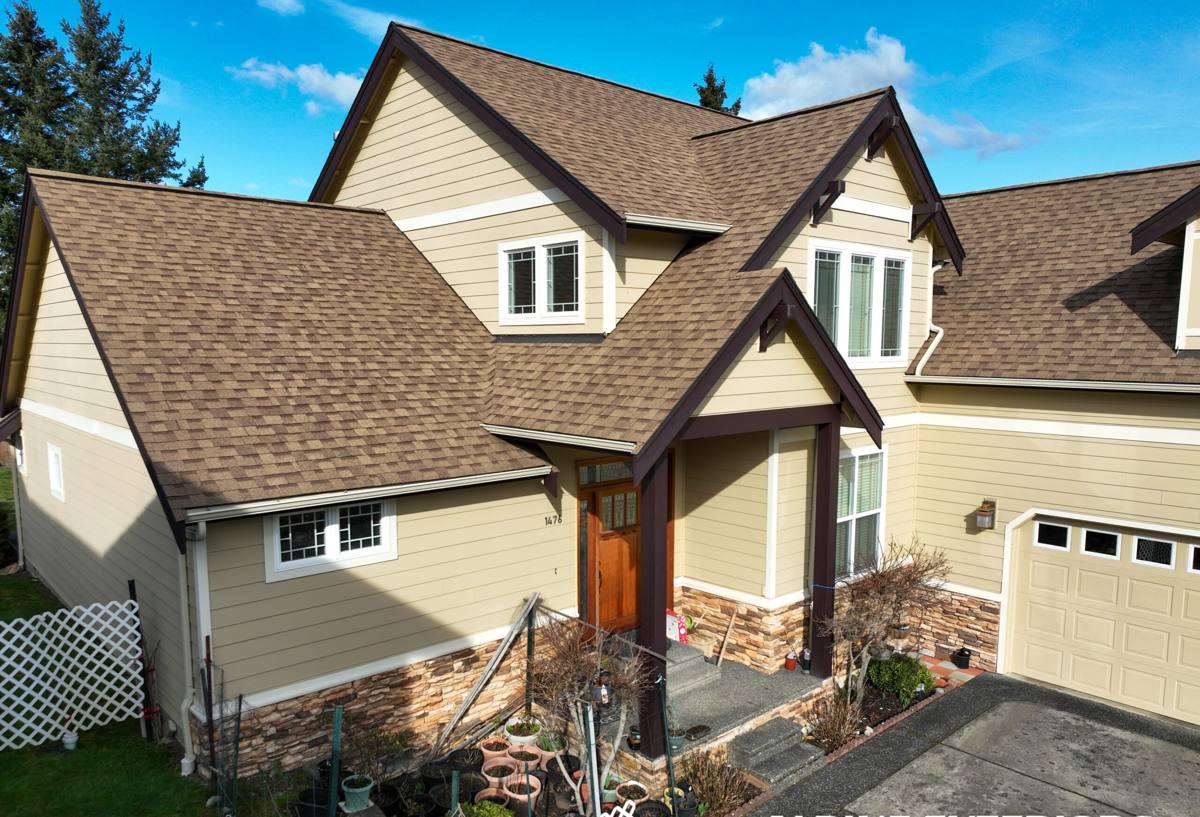
Signs a Fidalgo Island Roof Needs Attention
Most roof problems out here start small and stay hidden until they show up as a stain on a ceiling or a soft spot in the decking. Catching them early is almost always cheaper and less disruptive than waiting.
- Granule buildup in gutters or at downspout outlets, a sign asphalt shingles are wearing thin
- Dark streaking or thick moss patches, especially on shaded north- and west-facing slopes
- Curling, cracked, or lifted shingle edges after a windy winter
- Rusted or lifting flashing around chimneys, skylights, vent pipes, or where a roofline meets a sidewall
- Sagging sections along the roof plane, which can mean the decking underneath has taken on moisture
- Water stains on interior ceilings or in the attic, even faint or old-looking ones
- Daylight visible through the roof deck when viewed from inside the attic
- Gutters pulling away from the fascia or overflowing during heavy rain
Any one of these on its own might be minor. Several together usually mean it's time for a real inspection rather than a guess.
What a Correct Roof Repair Actually Involves
Flashing First, Shingles Second
Most leaks on this island don't start in the open field of the roof — they start at a transition: where a roof meets a wall, where a pipe pokes through, where two roof planes meet at a valley. Replacing shingles without correcting the flashing underneath them just buys a little time before the same leak returns. A proper repair traces the water path back to its actual entry point, which is often a few feet away from where the stain shows up inside the house.
Matching the Existing Roof
Repairs should blend into the surrounding material, not just stop the leak. That means using compatible shingle profiles and colors when patching asphalt roofs, and respecting the original layout and fastening pattern on cedar shake or shingle roofs so the repaired section sheds water the same way the rest of the roof does.
Dealing With What's Underneath
If the underlayment or decking has taken on moisture, covering it back up without addressing that moisture is a temporary fix at best. Soft, delaminated, or rotted decking gets replaced, not shingled over, because a sound repair depends on a sound substrate underneath it.
Where Roof Meets Siding
Because we work on the full exterior envelope, not just roofs in isolation, we pay close attention to the details where roofing and siding interact — kickout flashing above sidewalls, step flashing along dormers, and the transition at soffits and fascia. This is a spot where a lot of roofing-only crews stop at the shingle line and leave a wall-side vulnerability unresolved. A leak that shows up as siding damage or a stained soffit board is often actually a roof flashing problem, and vice versa.
Common Roof Materials on Fidalgo Island and How Repairs Differ
The right repair approach depends heavily on what's already on the roof. Here's how the most common materials we see on Anacortes and Fidalgo Island homes hold up and what repairing each one involves.
| Material | Typical Local Concern | Repair Considerations |
|---|---|---|
| Asphalt composition shingle | Granule loss and moss holding moisture against the surface | Straightforward to patch if matching shingles are available; older roofs may need color-matched replacement shingles from remaining stock or a nearby slope |
| Cedar shake or shingle | Moisture retention in shaded, mossy areas; salt air accelerates weathering | Requires matching the split or sawn profile and re-weaving into the existing coursing; rot-damaged shakes must be replaced individually, not just resealed |
| Standing seam or metal panel | Fastener corrosion and sealant failure at panel seams and penetrations | Repairs focus on re-sealing seams and penetrations with compatible sealants and hardware rated for coastal exposure |
| Low-slope or flat (torch-down/membrane) | Ponding water and seam failure after sustained rain | Seam repair and localized membrane patching; drainage correction if ponding is the root cause |
Our Repair Process on Fidalgo Island
We keep the process direct because homeowners dealing with a leak don't need extra steps between the problem and the fix.
- On-site inspection. We walk the roof and the attic where accessible, tracing suspected leaks back to their actual source rather than assuming the obvious spot is the cause.
- Honest assessment. We tell you plainly whether this is a repair situation or whether the roof's age and condition mean a repair would just be a short-term patch on a bigger problem.
- Written scope and estimate. You get a clear explanation of what we found, what we recommend, and why — no pressure, no upsell language.
- The repair itself. Flashing corrected, damaged decking replaced as needed, matching material installed, and the area cleaned up when we're done.
- Follow-up. If a repair is tied to a broader moss or drainage issue, we'll flag it so you can decide whether to address it now or keep an eye on it.
Moss, Algae, and Salt Air: The Long Game
Why Moss Keeps Coming Back
Moss doesn't just sit on a roof — its root structure works into shingle granules and shake grain, and it holds water against the roofing material long after the rest of the roof has dried out. On shaded slopes common in wooded Fidalgo Island lots, that moisture cycle repeats through most of the wet season, which is a big part of why moss-related repairs are so common here.
Salt Air's Slow Damage
Salt air doesn't announce itself the way a leak does. It works quietly on exposed nail heads, metal flashing, and gutter hardware, accelerating rust and corrosion compared to what the same materials would experience further inland. Over years, that corrosion can compromise flashing seals long before the shingles themselves look worn.
What Helps Between Repairs
- Keeping gutters and valleys clear of debris so water doesn't pool or back up under shingles
- Trimming back overhanging branches to reduce shade and debris buildup on north-facing slopes
- Having moss physically removed rather than just treated, since chemical treatment alone doesn't stop water retention in an active moss mat
- Periodic visual checks of flashing and fasteners, particularly after a windy winter storm
Repair or Replace? Making the Right Call
Not every roof problem calls for a full replacement, and not every leak is fixable with a simple patch. The honest answer depends on the roof's age, how widespread the damage is, and what's happening underneath the surface material.
| Factor | Favors Repair | Favors Replacement |
|---|---|---|
| Age of roof | Roof is within its expected service life | Roof is at or past the typical lifespan for its material |
| Extent of damage | Isolated to one area, flashing detail, or slope | Multiple leaks or widespread granule/shake deterioration across the roof |
| Decking condition | Sound and dry beneath the affected area | Soft, rotted, or moisture-damaged decking in several spots |
| Cost relative to remaining life | Repair cost is modest relative to years of service left | Repair cost approaches what a larger section replacement would cost |
As a rough sense of scale, a targeted flashing or shingle repair is often a modest, contained cost, while decking replacement or repairs spanning a large section of roof climb from there. We'll always tell you honestly which category your roof falls into rather than defaulting to the more expensive answer.
Why a Crew That Already Works Fidalgo Island Matters
A roofing crew that only occasionally works this area will treat Fidalgo Island like anywhere else. A crew based in Anacortes and working Skagit County day in and day out knows which details fail first in this climate — which flashing styles hold up against driving, wind-blown rain, which slopes need extra attention for moss, and which fastener and flashing materials are worth the marginal extra cost against salt air exposure. That local pattern recognition is the difference between a repair that lasts and one that reopens the same leak in two winters.
It also matters that we look at the roof as part of the whole exterior, not a separate system. Because we work on siding, trim, and the transitions between roof and wall as a matter of course, we catch envelope problems that a roof-only specialist can miss — and we won't recommend replacing something that just needs a correctly detailed repair.
Get a Straight Answer About Your Roof
If you're dealing with a leak, staining, moss buildup, or just want a second opinion on a roof's condition before selling or buying a home on Fidalgo Island, we're happy to take a look. There's no obligation and no pressure — just a clear, honest read on what's going on and what it would take to fix it. Use the form below to request a free estimate.