 Anacortes Siding
 Siding Repair for Sedro-Woolley Homes
Sedro-Woolley sits inland from Anacortes along the Skagit River valley, and while it doesn't get the direct salt spray that waterfront Anacortes properties deal with, the town still lives inside the same marine-influenced weather system that defines this part of Skagit County. Long wet winters, heavy tree cover on many lots, and river-valley humidity mean siding here takes a steady beating from moisture even when it never sees a drop of saltwater. We work siding repair calls across this area regularly, and the damage patterns we find are consistent enough that we can usually tell what's wrong before we finish walking the perimeter of a house.
This page is about one thing: repairing siding on homes in and around Sedro-Woolley. Not a full replacement pitch, not a generic "signs of damage" list you'd find on any contractor's site — what actually goes wrong with siding in this specific area, what a repair should and shouldn't involve, and how to tell when repair is still the right call versus when you're throwing money at a wall that needs to come off.
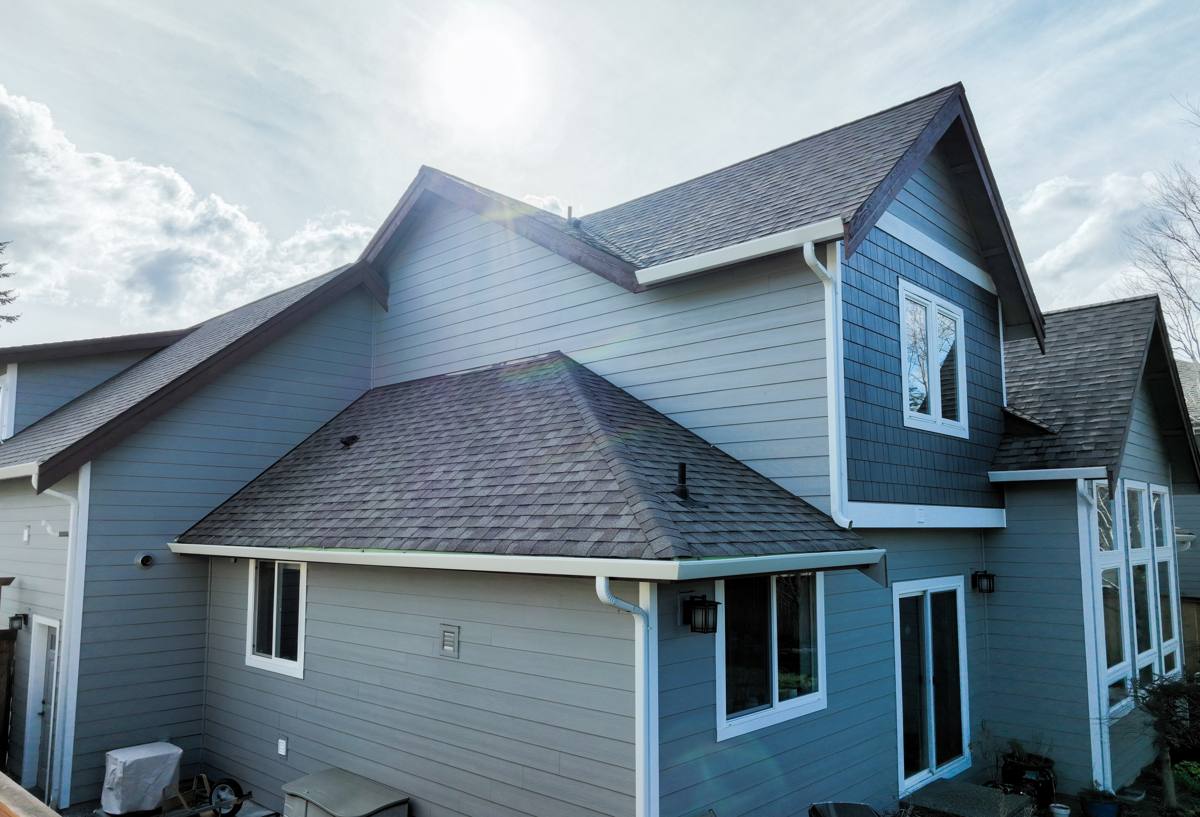
What the Local Climate Does to Siding
Three things drive most of the repair calls we get out this way:
Driving Rain and Wind-Blown Moisture
Skagit Valley storms don't just rain straight down — wind pushes water sideways into wall assemblies, especially on exposed gable ends and around window and door trim. Over years, that repeated wetting finds every gap in caulk, flashing, and butt joints. Once water gets behind the siding instead of running off the face of it, the damage moves from cosmetic to structural.
Shade, Tree Cover, and Slow-Drying Walls
A lot of Sedro-Woolley properties sit on wooded lots or have mature landscaping close to the house. That shade keeps siding from drying out between rain events, which is exactly the condition moss, algae, and mildew need to take hold. On wood-based and composite sidings, prolonged dampness is also what softens edges and starts rot at seams and bottom courses.
Freeze-Thaw Cycling
Winters here aren't brutally cold, but they're wet and they do dip below freezing often enough. Water that's already worked its way into a crack or a swollen seam expands when it freezes, then contracts when it thaws — widening the damage a little more each cycle. It's a slow process, which is part of why homeowners often don't notice a problem until it's already significant.
None of this is unique to Sedro-Woolley, but the combination of tree-shaded lots and consistent valley moisture makes it a place where siding problems tend to show up earlier than in drier, more open parts of the county.
Signs Your Siding Needs Repair
Most homeowners call us after noticing one of these. If you're seeing more than one at the same time, it's worth getting a professional look sooner rather than later.
- Visible cracking, chipping, or splitting along boards or panels, especially near corners and trim
- Soft or spongy spots when you press on the siding, particularly near the bottom of walls
- Persistent moss, algae, or dark streaking that comes back quickly after cleaning
- Gaps opening up at seams, butt joints, or where siding meets window and door trim
- Peeling or bubbling paint, or a chalky, faded finish that wasn't there a few years ago
- Warping, bowing, or boards that no longer sit flat against the wall
- Water stains or discoloration on interior walls near exterior corners — a sign moisture has already gotten past the siding
- Increased pest activity (carpenter ants, woodpeckers) around specific sections of wall
Repair vs. Replacement: How We Decide
Not every damaged section needs a full re-side, but not every problem can be patched either. We make this call based on how far the damage has spread and what's causing it, not on what's easiest to sell.
| Situation | Usually Repair | Usually Replace |
|---|---|---|
| Isolated cracked or damaged board, rest of wall is sound | Yes | No |
| Moss/algae staining with siding material still solid underneath | Yes | No |
| Soft, delaminating, or rotted material in multiple areas | No | Yes |
| Water intrusion has reached sheathing or framing | No | Yes |
| Siding is near end of expected service life (age-related failure) | Sometimes, short-term | Yes, long-term |
| Damage traces back to a material-specific weakness (edge swelling, seam failure common to the product) | Sometimes, short-term | Yes, long-term |
A single cracked panel on an otherwise healthy wall is a straightforward repair. A wall where three different sections have failed for the same underlying reason is usually telling you the material itself is reaching the end of what it can handle — and that repairing it again in two years is a real possibility.
What a Correct Siding Repair Actually Involves
A repair that just covers the visible damage without addressing what let water in isn't really a repair — it's a delay. Our process on repair calls in Sedro-Woolley includes:
1. Diagnosis Before Anything Else
We look past the damaged board itself to find out why it failed — bad caulk joint, missing or damaged flashing, poor drainage, or a material issue. Fixing the symptom without fixing the cause means the same spot fails again.
2. Checking What's Behind the Siding
If there's any sign moisture has gotten past the surface, we check the house wrap or building paper and the sheathing underneath before closing anything back up. Repairing over a wet or compromised substrate just traps the problem.
3. Matching Material and Finish
Patch repairs only look right, and hold up right, if the replacement piece matches the existing siding's profile, exposure, and finish. On James Hardie ColorPlus siding, that includes matching the factory finish so the repair doesn't stand out as a different shade a year later.
4. Correcting Flashing and Sealant Details
Most repeat failures we see trace back to flashing that was missing, installed wrong, or sealant that was never meant to be a long-term water barrier by itself. We correct these details as part of the repair, not just patch around them.
5. Verifying Drainage
Siding is a drainage system, not a waterproof seal. We make sure water that gets behind the cladding — which happens even with correctly installed siding — has a clear path back out instead of sitting against the wall.
Why We Only Work With James Hardie Fiber Cement
When a repair call turns into "this section needs to be replaced," what we install is James Hardie fiber cement, full stop. We don't install LP SmartSide, vinyl, Cemplank, Allura, primed spruce, or cedar, and it's worth explaining why in the context of repair specifically — because how a material fails, and how repairable that failure is, matters as much as how it looks new.
Wood-based and engineered wood sidings are more vulnerable to the exact conditions Sedro-Woolley deals with: sustained moisture and shaded, slow-drying wall sections. When those products take on water at a seam or cut edge, the damage tends to spread through the material rather than staying contained, which is why we often see repeat failures near the same spot. Vinyl handles moisture fine but is thin and prone to cracking or warping from impact and heat, and color-matching an aged, sun-faded panel to a new one is rarely seamless. Cedar looks great and can perform well, but it demands consistent maintenance — refinishing, caulking, moisture monitoring — that a lot of homeowners don't keep up with, especially on hard-to-reach upper stories.
James Hardie fiber cement is non-combustible, engineered specifically for moisture-heavy Pacific Northwest climates through its HZ5 product line, and holds its ColorPlus factory finish for years without the repaint cycle other materials need. It doesn't rot, and it isn't a food source for the moss and mildew that thrive under Sedro-Woolley's tree cover. When we repair a Hardie wall, we're patching a system that's designed to shed water correctly in the first place — which is a fundamentally different starting point than patching a material that's already fighting its environment.
Our Process for Sedro-Woolley Repair Calls
- Inspection and honest assessment — we look at the full elevation, not just the spot you called about, and tell you plainly whether it's a repair or something bigger
- Written scope and estimate — what's being repaired, what material is used, and what it costs before any work starts
- Repair work — matched materials, corrected flashing and sealant details, and substrate checked before it's closed up
- Cleanup and walkthrough — we show you what was done and why, so you understand the fix, not just see a bill
Cost Factors for Siding Repair
Every repair is priced on the actual scope, but these are the factors that move the number most:
| Factor | Why It Matters |
|---|---|
| Extent of damage | A single board vs. multiple sections vs. hidden substrate damage changes labor and material significantly |
| Accessibility | Second-story or steep-roofline sections take longer and require more equipment |
| Cause of failure | Flashing or drainage corrections add scope beyond just replacing the visible board |
| Material match | Matching an existing ColorPlus finish or discontinued profile can add sourcing time |
| Substrate condition | Wet or damaged sheathing behind the siding needs to be addressed before re-siding that section |
Why It Matters to Hire a Crew That Already Works This Area
Siding repair done wrong is worse than no repair at all, because it can trap moisture instead of letting it out. A crew that already works in Sedro-Woolley and the surrounding Skagit County area has seen the specific failure patterns this climate produces — where flashing tends to fail first, which wall orientations take the worst weather, how far moss and moisture damage typically spreads before it's visible from the ground. That's not something a crew unfamiliar with the region picks up on the first visit. It shows up as a faster, more accurate diagnosis and a repair that's built to actually hold in this climate, not just look fixed on the day the crew leaves.
If your siding is showing damage, staining, or soft spots, we're happy to take a look and give you a straight answer on what it needs — a targeted repair, or something more. Reach out for a free, no-pressure estimate using the form below.