 Anacortes Siding
 Siding Replacement for Sedro-Woolley Homes, From a Crew That Covers All of Skagit County
Sedro-Woolley sits inland from us, up the Skagit Valley, and it doesn't get hit with weather in quite the same way our home base in Anacortes does. But it's part of the same Skagit County exposure profile, and that matters more than most homeowners realize when it comes time to replace siding. We're an Anacortes-based crew, and we work Sedro-Woolley regularly enough to know that a siding system built for the coast and a siding system built for a valley town twenty-some miles inland need to solve some of the same problems, and a few different ones.
This page is specifically about siding replacement for Sedro-Woolley properties — not a generic overview. If you're comparing bids or trying to figure out why your current siding is failing early, the details below are the ones that actually matter for a home in this part of the county.
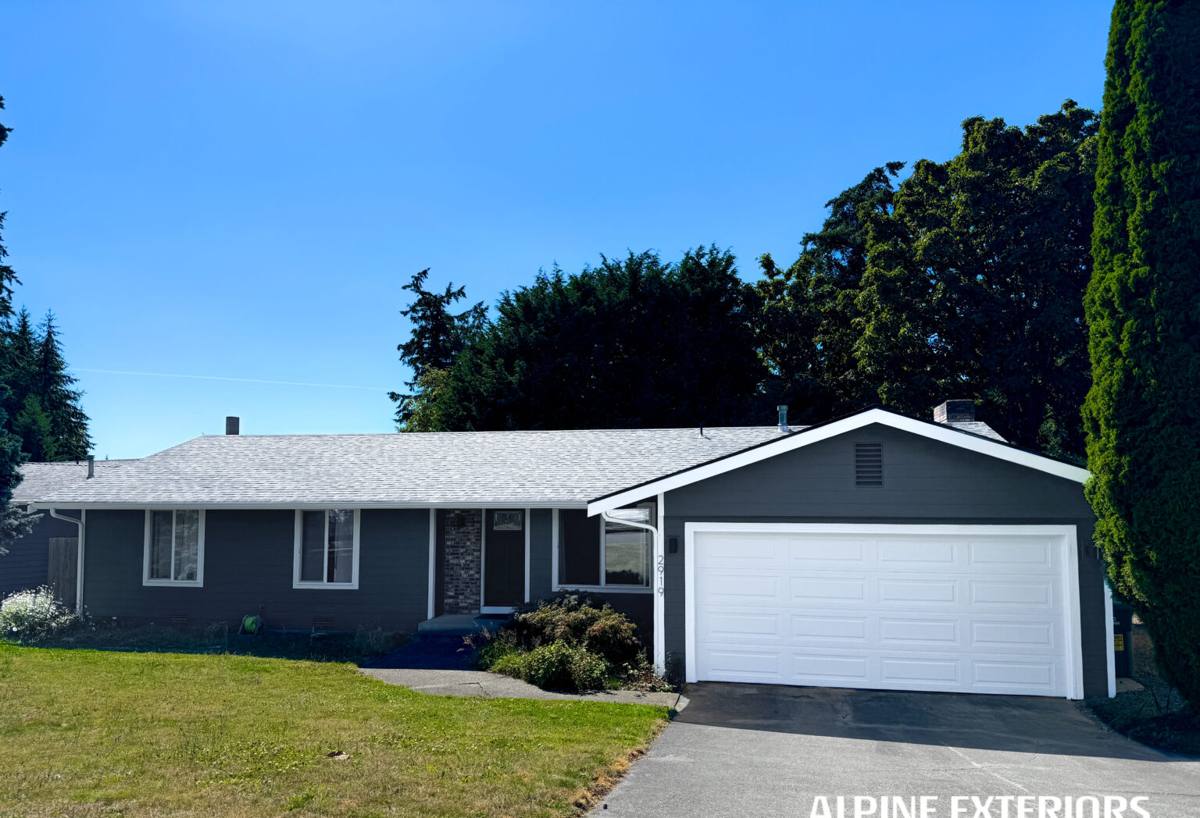
What Sedro-Woolley's Climate Does to Siding Over Time
Driving Rain That Doesn't Let Up
Storm systems moving through Skagit County tend to push wind-driven rain up the valley corridor, and Sedro-Woolley catches a real share of it. Driving rain behaves differently than a straight-down shower — it gets forced sideways into laps, seams, and trim joints, which is exactly where a marginal siding installation starts to leak first. Homes here don't dry out as fast between storms as more open, wind-swept sites do, which means siding spends more of the year sitting damp than a homeowner might assume just from looking at the forecast.
A Moss Season That Runs Most of the Year
Mild temperatures, tree cover, and moisture that lingers add up to a long moss and mildew window in this part of the county. It shows up first on north-facing walls, under eaves, and anywhere airflow is blocked by landscaping or a neighboring structure. Any siding material with even a little surface texture or porosity gives moss something to grab onto, and once it takes hold, it holds moisture against the wall behind it — which is when small problems start turning into rot.
Salt Air's Slower Reach Inland
Sedro-Woolley isn't waterfront, and it doesn't take the direct salt exposure that Anacortes and the more coastal parts of Skagit County deal with daily. But salt-laden air off Puget Sound still travels up the valley on the region's wetter, windier weather patterns, adding a mild but real corrosion load to fasteners and exposed metal over the years. It's a smaller factor here than it is at our home base, but it's part of why we don't spec generic, nationally-marketed siding systems for any home in this county, coastal or inland.
Freeze-Thaw Closer to the Foothills
Being closer to the Cascade foothills than most of the county's coastal towns, Sedro-Woolley sees a bit more overnight cold and freeze-thaw cycling through the winter months. Materials that soak up moisture and then freeze are prone to slow cracking and surface breakdown — a failure mode that's easy to miss until the siding is already compromised.
Why We Install Only James Hardie Fiber Cement
We didn't start out as a single-product company. We got here from tear-offs — pulling failed siding off homes and seeing the same moisture damage patterns show up on products that weren't built to handle sustained Pacific Northwest exposure. Here's what settled it for us:
- Non-combustible core: Fiber cement doesn't add fuel to a fire the way wood-based products can, which matters for safety and often for insurance.
- Factory-applied ColorPlus finish: The color coat is baked on in a controlled factory setting rather than brushed or sprayed on site, so it holds up more evenly against sun and repeated wet-dry cycling than field-applied paint.
- Climate-engineered HZ5 formulation: Built specifically for regions with significant moisture and freeze-thaw exposure — a better match for Skagit County than warmer-climate product lines.
- Dimensional stability: Fiber cement doesn't swell, cup, or warp when it takes on moisture, unlike some engineered wood products, which matters in a county that rarely gives siding a long dry stretch.
- A strong, transferable warranty: One of the more solid warranty structures in the industry, provided the installation meets manufacturer spec.
We don't install LP SmartSide, vinyl siding, Cemplank, Allura, primed spruce, or cedar. None of those are bad products across the board, and plenty of homeowners are happy with them. But we made a professional decision: given what this county's rain, moss, and salt exposure do to siding over a couple of decades, we don't want to put anything on a wall that asks a homeowner to keep up with more maintenance than we think is realistic.
What a Correct Siding Replacement Actually Involves
Inspecting Before We Quote
We walk the exterior first and read what the current siding is telling us — soft spots, staining patterns, failed caulk, and gaps at penetrations like vents and hose bibs. On Sedro-Woolley homes we pay particular attention to shaded walls and anywhere tree cover keeps a section of siding from ever fully drying.
Checking the Substrate, Not Just the Surface
Once the old siding comes off, we check the sheathing and framing underneath before anything new goes up. Water-damaged substrate gets repaired, not covered over. Skipping this step is the most common shortcut in low-bid siding work, and it's the reason a lot of "new" siding fails within a handful of years no matter what material went on top of it.
Installing to Manufacturer Specification
James Hardie siding is engineered around specific nailing patterns, clearance requirements above grade and roofline, and flashing details at every window, door, and penetration. The product itself is rarely the point of failure — installation shortcuts are what cause the moisture intrusion we get called out to fix on other companies' jobs.
Walking the Finished Job With You
We go over the completed work together — seams, trim, caulk lines — and talk through basic long-term care, mainly what to watch for with moss regrowth and what a normal maintenance rinse should look like on fiber cement.
Comparing Siding Options for a Sedro-Woolley Home
| Product | Moisture Behavior | Maintenance Burden | Typical Lifespan |
|---|---|---|---|
| James Hardie Fiber Cement | Engineered for sustained Pacific Northwest moisture exposure | Low — factory finish, minimal upkeep | 30+ years with correct installation |
| Vinyl | Moisture can collect and stay trapped behind panels | Low upfront, but prone to warping and UV fading | 15-25 years |
| LP SmartSide (engineered wood) | Vulnerable at cut edges and panel seams if not sealed and maintained | Moderate — seams and edges need ongoing attention | 15-30 years, variable |
| Cedar / Primed Spruce | Absorbs and holds moisture without diligent finishing | High — regular refinishing and inspection required | 10-20 years without consistent upkeep |
These are general industry ranges, not guarantees. Actual performance always comes down to installation quality, ongoing maintenance, and how exposed a given wall or elevation is to the elements.
What Drives Cost on a Sedro-Woolley Siding Project
We don't quote fixed prices sight unseen, but the variables that actually move the number are consistent from house to house:
- Total square footage and how complex the home's shape is — gables, dormers, and multi-story walls all add labor time
- Condition of the substrate underneath, and whether water-damaged sheathing needs repair before new siding goes on
- Amount of trim, corner detail, and custom work involved in the design
- Whether roofing, window, or deck work gets bundled into the same project
- Site access — tree cover, driveway space, and staging room vary widely on the larger, more rural lots common around Sedro-Woolley
Signs Your Current Siding Is Already Losing Ground
- Green or dark staining that returns within a few months of cleaning it off
- Soft or spongy spots when you press on siding near the bottom courses or below windows
- Paint that's peeling, bubbling, or chalking, especially on shaded or north-facing walls
- Visible gaps or separation at seams, corners, or trim joints
- Warping, cupping, or swelling in existing boards or panels
- Interior drafts or rising energy bills near exterior walls with no other explanation
Why It Matters That We Already Work This Area
A siding system built correctly for a wind-exposed, salt-air property right on the water isn't automatically right for a valley setting like Sedro-Woolley — and the reverse is just as true. Because we work both the Anacortes coastline and inland Skagit County towns like Sedro-Woolley on an ongoing basis, we're not guessing at which wall orientations dry slowest here, where moss establishes first, or how the valley's rain patterns actually play out over a full year rather than a single site visit. That's the kind of knowledge that shapes flashing details, clearances, and product decisions that hold up for decades, not just on the day the crew packs up.
It also means we're not hard to find afterward. We have a standing presence in this county, a reputation we care about protecting, and no interest in being a name you can't reach again once the invoice is paid.
Get a Free, No-Pressure Estimate
If your Sedro-Woolley home's siding is showing its age, or you'd rather plan ahead than wait for a small problem to become an expensive one, we're glad to come take a look and give you a straight read on what you're dealing with. No pressure, no scripted upsell — just an honest assessment from a crew that already knows this part of Skagit County. Use the form below to schedule your free estimate.