 Anacortes Siding
 Storm Damage Roof Repair Built for Ship Harbor's Coastal Weather
Ship Harbor sits right where Skagit County's marine climate does its most work on a roof. Homes here take wind off Rosario Strait, salt-laden air that never really lets up, and a wet season that stretches for months. When a windstorm rips off shingles or a hard rain finds its way through a weak spot, the damage rarely stays where it started. A missing shingle becomes a soaked layer of underlayment, which becomes a stain on a bedroom ceiling weeks later. Storm damage roof repair in this area isn't just about patching what's obviously broken — it's about understanding how coastal exposure compounds ordinary storm damage and catching what a quick look from the ground will miss.
We work roofs throughout Anacortes and Skagit County, and Ship Harbor's mix of older homes, waterfront exposure, and heavy tree cover gives it its own repair profile. This page covers what storm damage actually does to a roof out here, what a correct repair looks like, and how we handle the job from first call to final cleanup.
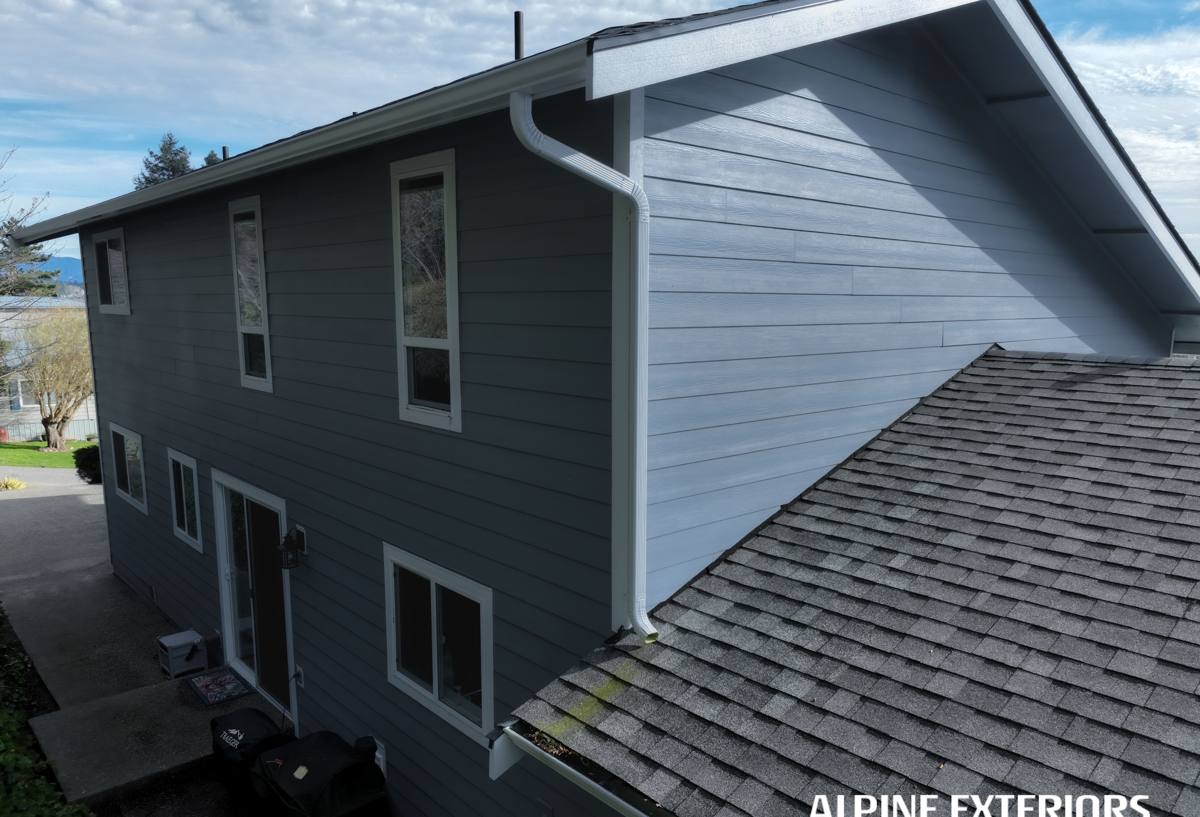
What Salt Air, Driving Rain, and Moss Season Do to a Ship Harbor Roof
Three things stack up against roofs in this part of Anacortes, and storms tend to expose all three at once.
Salt Air and Corrosion
Fasteners, flashing, and exposed metal components corrode faster this close to the water. A nail head that would last decades inland can start weeping rust stains within a few years here, and corroded fasteners lose their grip exactly when wind uplift needs them most. After a storm, we check fastener condition around the damaged area, not just the shingles themselves — a repair fastened with compromised nails will fail again.
Driving Rain and Wind-Driven Water
Storms coming off the Strait rarely drop rain straight down. Wind pushes it sideways and up under laps, edges, and flashing that would shed a normal rain fine. This is why storm damage here so often shows up as water intrusion at valleys, chimney flashing, and roof-to-wall transitions rather than a single obvious hole.
Moss and Trapped Moisture
Anacortes' long damp season keeps moss growing for most of the year on north-facing and shaded slopes. Moss holds moisture against the roofing material, works its way under shingle edges, and lifts them just enough for wind to finish the job during the next storm. A lot of "storm damage" we find in Ship Harbor is really moss-weakened shingles that a storm simply pushed past the breaking point.
Signs of Storm Damage Worth a Second Look
Some storm damage is obvious. Some sits quietly until it's caused real harm. After any significant wind or rain event, it's worth checking for:
- Shingles that are missing, curled, cracked, or visibly lifted at the edges
- Granules collecting in gutters or at downspout outlets
- Dented or creased metal flashing around chimneys, vents, and skylights
- New or worsening moss growth along shaded roof edges and valleys
- Water stains or discoloration on interior ceilings, especially near exterior walls
- Sagging or soft spots visible from a ladder or attic access
- Debris — branches, needles, gravel from roof coatings — built up in valleys or gutters
- Daylight visible through the roof deck from inside the attic
If any of these show up after a storm, it's worth having it looked at before the next round of weather rolls through. A small repair now is almost always cheaper than the water damage that follows if it sits.
What a Correct Storm Damage Repair Actually Involves
Full Inspection, Not a Spot Check
We start on the roof itself, not just at the point of visible damage. Storm forces travel — a gust that tears one shingle often loosens the ones around it, and wind-driven rain can push water well past the original entry point. We check the full slope, the flashing details, and the attic side where accessible, so the repair addresses everything the storm actually did, not just what's visible from the yard.
Temporary Protection When Needed
If a roof has active exposure — an open spot letting water in — the first move is stopping further damage, typically with tarping or temporary sealing, before the permanent repair is scheduled. This matters most during Skagit County's wetter months, when a delay of even a few days can mean a lot more water inside the home.
Matching the Repair to the Existing Roof
A patch that doesn't match the surrounding material's age, color, and exposure is more than a cosmetic problem — mismatched shingles can shed water differently and create new weak points at the seams. We work to match material and installation pattern to the existing roof as closely as possible, and we're upfront when an exact match isn't realistic due to product discontinuation or sun fading, so there are no surprises.
Flashing and Underlayment, Not Just Shingles
Replacing damaged shingles without checking the underlayment and flashing beneath them is a shortcut that shows up as a leak again within a season or two, especially on a driving-rain coastline like this one. A correct repair replaces compromised underlayment and resets or replaces flashing at valleys, penetrations, and wall transitions — not just the visible shingle layer.
How Our Ship Harbor Storm Repair Process Works
- Assessment — We inspect the full roof, document damage with photos, and identify both the storm damage and any pre-existing weak points (moss, worn flashing, prior patch jobs) that contributed to it.
- Clear scope and estimate — You get a written explanation of what's damaged, what needs repair versus what's still sound, and an honest cost range before any work starts.
- Insurance documentation — If you're filing a claim, we provide the photo documentation and damage description your adjuster needs. We don't handle the claim for you, but we make sure the paperwork reflects what we actually found on the roof.
- Repair — Work is scheduled around Skagit County's weather windows where possible, with temporary protection in place if there's any lag between assessment and repair.
- Cleanup and walkthrough — Debris, old materials, and stray fasteners are cleared from the roof and property, and we walk the finished repair with you before calling it done.
Repair or Replace? Weighing the Real Cost Factors
Not every storm-damaged roof needs full replacement, and not every repair is the right long-term call. The honest answer depends on a few concrete factors, not just how bad the damage looks from the driveway.
| Factor | Favors Repair | Favors Replacement |
|---|---|---|
| Age of existing roof | Under 10–15 years, otherwise in good shape | Nearing or past its expected service life |
| Extent of damage | Localized — one slope, one flashing detail | Widespread across multiple slopes |
| Underlying material condition | Deck and underlayment sound elsewhere | Deck rot or repeated past leaks found |
| Moss/moisture history | Isolated, manageable with treatment | Long-term moss damage across large areas |
| Material availability | Close match still available | Original product discontinued, mismatch unavoidable |
We'll always tell you honestly which side of that table your roof falls on. A repair that's likely to need another repair in two years isn't a good use of your money, and we'd rather say so upfront than have that conversation later.
Materials That Hold Up to Ship Harbor's Exposure
Because of the salt air and moisture load in this part of Anacortes, we pay close attention to a few material details on every repair:
- Fasteners — corrosion-resistant nails and screws sized and rated for the application, not just whatever matches the existing hole pattern
- Flashing metal — material selected to resist the accelerated corrosion coastal exposure causes over time
- Underlayment — synthetic or self-adhering underlayment at vulnerable points (valleys, eaves) where wind-driven rain is most likely to test the seal
- Sealants — rated for exterior UV and moisture exposure, applied at the right thickness rather than smeared on as a catch-all fix
None of this is exotic — it's standard good practice applied consistently, because a roof in Ship Harbor gets tested by conditions a roof twenty miles inland never sees.
Why Local Experience in Ship Harbor Matters
A crew that already works this neighborhood knows which slopes hold moss longest, which older home styles tend to have specific flashing quirks, and how the wind off the water actually moves through the area during a storm. That's not something you get from a general damage estimate — it comes from having been on Ship Harbor roofs before, in the same weather that caused the damage you're calling about. It also means we're not guessing at material matches or guessing at how a repair will hold up next winter; we've seen how similar repairs perform in this exact climate.
Skagit County's storms aren't going anywhere, and neither is the salt air or the moss season. A repair done right the first time, with materials and methods suited to this specific exposure, is what keeps a small storm event from turning into a bigger interior repair down the line.
If a recent storm left your Ship Harbor roof with missing shingles, a leak, or damage you're not sure how serious it is, we're glad to take a look. Reach out for a free, no-pressure estimate using the form below — we'll give you a straight assessment of what's actually going on and what it takes to fix it right.