 Anacortes Siding
 Guemes Island Siding Has a Harder Job Than Most
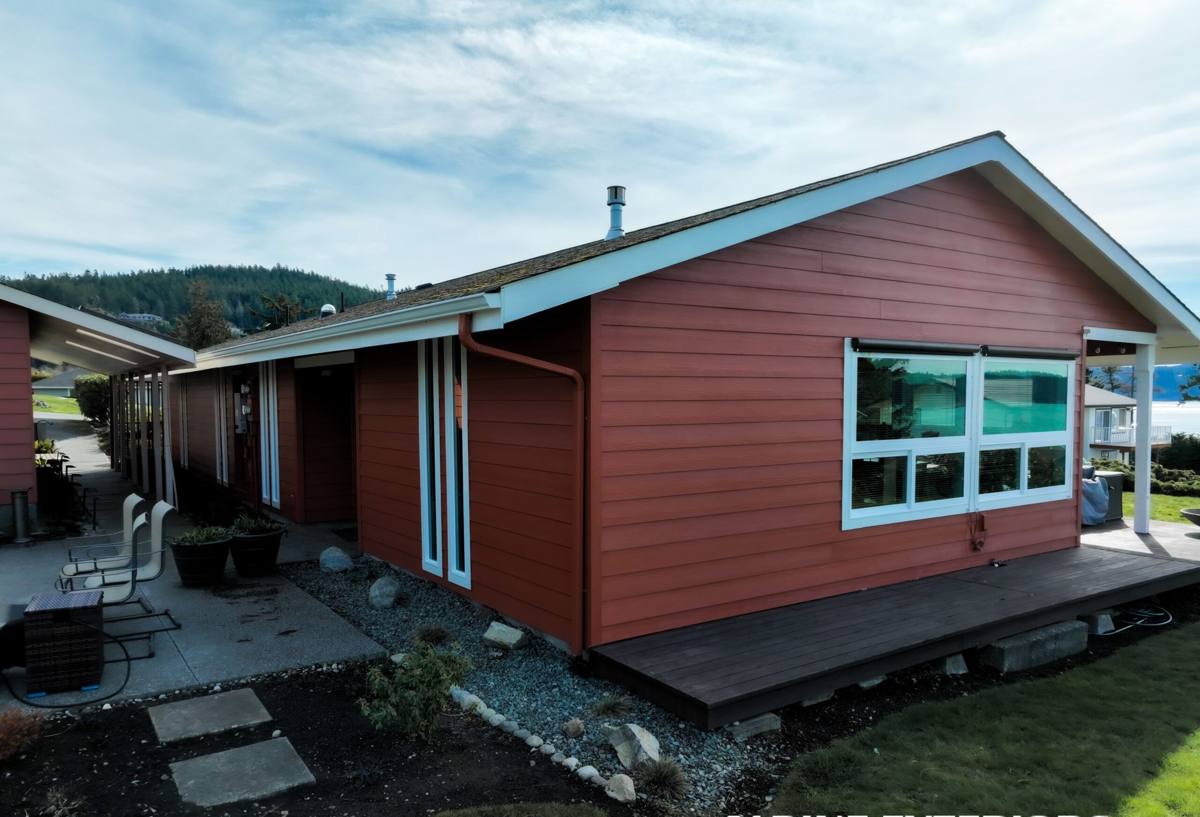
Guemes Island sits out in the water off Anacortes, reachable only by ferry, and that isolation shapes everything about how a home's exterior ages here. Homes on the island take on salt-laden air coming off the surrounding waters, driving rain that arrives sideways during winter storms, and long stretches of shade under fir and cedar canopy that keep north and east walls damp well after a storm has passed. Add a moss season that can run from fall through spring in Skagit County's marine climate, and you have an exterior that's working harder than a comparable home twenty miles inland.
Siding on Guemes Island doesn't fail because homeowners neglect it. It fails because the product, the install details, or both weren't matched to what the site actually demands. This page is about doing siding installation right for this specific island, not a generic version of the job.
What the Climate Actually Does to Siding
Salt Air and Corrosion
Airborne salt from the surrounding marine waters settles on exterior surfaces and accelerates corrosion of fasteners, flashing, and any exposed metal trim. Over years, this shows up as rust streaking, loosened fastener heads, and premature failure of hardware that would have lasted much longer a few miles inland. Siding materials and fastening systems need to be chosen with that in mind, not treated as an afterthought.
Driving Rain and Wind Exposure
Waterfront and elevated lots on the island catch wind off the water directly, and that wind drives rain horizontally into wall assemblies rather than letting it simply run down the face of the siding. This is a different load than most siding products and installation details are designed around, and it's where a lot of otherwise decent-looking siding jobs quietly fail behind the surface — water finds its way past laps, seams, and penetrations that weren't detailed for that kind of exposure.
Moss, Shade, and Moisture Cycling
Wooded and north-facing sections of many Guemes Island properties stay shaded most of the day, which slows drying after every rain event. That prolonged dampness is exactly what moss and algae need to establish, and once moss gets a foothold on siding it holds moisture directly against the surface, which is worse than the rain itself. Homes with long shaded runs need siding and installation details that account for slower drying, not just a paint job that looks good on install day.
Why We Only Install James Hardie Fiber Cement Here
We install James Hardie siding exclusively — we don't install vinyl, LP SmartSide, cedar, primed spruce, or other fiber cement brands. On an island climate like this, that's not a marketing preference, it's a practical one. Hardie's fiber cement is non-combustible, dimensionally stable in wet-dry cycling, and factory-finished with ColorPlus coating that's baked on rather than field-applied, which matters a great deal when a home is going to spend a lot of its life damp. Hardie's HZ5 product line is engineered specifically for wet, freeze-prone climates, and it's the version we spec for Guemes Island's more exposed sites.
That doesn't mean every product we've turned down is a bad product in every setting. It means that after years of servicing homes in this specific climate, we've seen which materials hold up to salt air, driving rain, and shaded moisture cycling without an aggressive maintenance schedule — and we've standardized on the one that does.
What a Correct Installation Actually Involves
Good siding installation is mostly invisible once the job is done — it's in the layers you don't see. On Guemes Island specifically, we pay close attention to:
- A properly lapped and sealed weather-resistive barrier behind the siding, with extra attention at wall penetrations, since driving rain will find any gap over time
- Correct flashing at windows, doors, and roof-to-wall intersections, sized and lapped to shed water outward rather than trap it
- Stainless or hot-dip galvanized fasteners appropriate for salt-air exposure, set to Hardie's specified depth and spacing so panels aren't over- or under-driven
- Proper clearance between the bottom of the siding and grade, decks, or roof lines, so splash-back and standing moisture don't sit against the material
- Tight, correctly caulked joints at trim and corners, using sealants rated for the temperature swings and moisture load of a marine environment
- Ventilation behind the cladding where wall assemblies call for it, so shaded, slow-drying walls aren't trapping moisture against the sheathing
Any one of these done wrong won't necessarily show up in the first year. It shows up in year six or eight, as a callback nobody wants — including us.
Our Process for a Guemes Island Project
Working on an island changes the logistics of a siding job, and we plan around that rather than treating it as an inconvenience.
Assessment and Scope
We start with an on-site walk of the home to assess current siding condition, exposure on each elevation, existing moisture or moss damage, and any trim, window, or flashing issues that need to be addressed as part of the re-side rather than papered over.
Material Staging and Ferry Scheduling
Because every trip to the island runs on ferry schedules, we plan material deliveries and crew scheduling in batches rather than making repeated small trips. That means ordering full material counts up front, confirming color and product selections early, and building a realistic project timeline around ferry capacity — not showing up short a box of trim and losing a day waiting on the next sailing.
Removal and Inspection
Old siding comes off in sections so we can inspect the sheathing and framing underneath before anything new goes up. On homes with a shaded or moss history, this step often reveals moisture issues that need to be dealt with before new siding goes on — no point installing a durable product over a wet wall.
Installation to Spec
Hardie panels, lap, or shingle siding go up following manufacturer installation requirements and the marine-climate details described above — correct fastening, flashing, clearances, and joint treatment throughout.
Final Walkthrough
We walk the finished job with the homeowner, cover basic care, and make sure everything meets the standard we'd want on our own home.
Cost Factors for Guemes Island Siding Projects
Every home is different, but these are the factors that most often move the price on an island siding installation:
| Factor | Why It Matters |
|---|---|
| Ferry access and logistics | Material delivery and crew scheduling are built around sailing times, which affects project sequencing more than it does the base labor rate |
| Existing siding removal | Tear-off, disposal, and any sheathing repair found underneath add time versus a straightforward re-side over sound sheathing |
| Exposure level of the site | Waterfront or wind-exposed elevations may call for additional flashing detail and fastener upgrades versus a sheltered, wooded lot |
| Home size and wall complexity | Number of corners, windows, dormers, and roof-to-wall intersections drives labor time more than square footage alone |
| Siding profile and trim selection | Lap, shingle, and panel profiles, plus trim width and color, affect material cost and installation time |
| Moss or moisture remediation | Shaded homes with existing moss or rot damage may need sheathing repair or added ventilation detail before new siding goes on |
Signs Your Guemes Island Home May Need New Siding
- Visible moss or algae growth on shaded walls, especially north- and east-facing elevations
- Soft spots, bubbling, or delamination in the siding surface
- Rust streaking below fasteners or trim, a common early sign of salt-air corrosion
- Persistent paint failure or peeling despite regular repainting
- Gaps or separation at seams, corners, or trim joints where wind-driven rain can get behind the material
- Visible warping or cupping on cedar, wood-composite, or older engineered wood siding
Why Hiring a Crew That Already Works Guemes Island Matters
A contractor unfamiliar with island logistics will underbid the scheduling reality and either run late or cut corners to make up time. A crew that already knows how to stage materials for the ferry, how exposed a given shoreline lot really is, and how differently a shaded interior lot ages compared to a waterfront one is going to give you a more accurate estimate and a tighter installation the first time. That familiarity with Skagit County's marine conditions — not just general siding experience — is what keeps a Guemes Island siding job from becoming a recurring maintenance problem.
If your home's siding is showing moss, corrosion, or moisture damage, or you're planning ahead for a re-side, we're happy to walk the property and give you a straightforward, no-pressure estimate using James Hardie fiber cement siding built for exactly this kind of exposure. Fill out the form below to get started.