 Anacortes Siding
 Siding Installation Built for March Point's Exposure
March Point sits out on the water between Fidalgo Bay and Padilla Bay, which means homes here take a different kind of weather than houses tucked a few miles inland in Anacortes proper. Wind comes off the water with little to slow it down, salt air settles on every exterior surface, and the long gray stretch of a Skagit County winter keeps siding damp for weeks at a time. A siding installation out here isn't a cosmetic upgrade — it's the difference between a wall system that sheds water and salt for decades and one that starts failing at the seams within a few years.
We install James Hardie fiber cement exclusively, and on March Point specifically, we've had to get particular about details that wouldn't matter as much on a more sheltered lot: fastener spacing on exposed elevations, how flashing ties into window and door openings, and how much clearance siding gets from grade and roof lines where moss and standing moisture like to collect. This page walks through what correct installation actually involves here, and why it's worth hiring a crew that already understands this stretch of Anacortes.
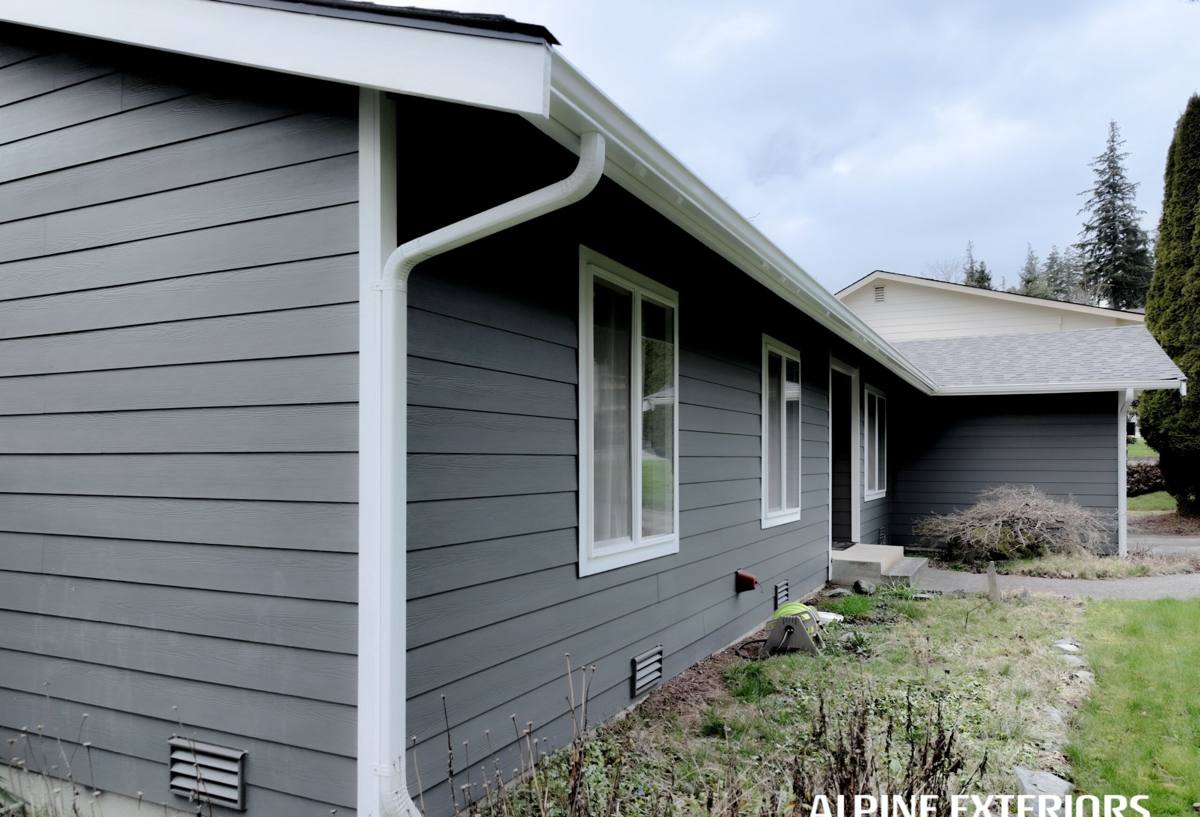
What Living on the Water Does to a House
Salt Air and Corrosion
Salt-laden air is persistent in a way that's easy to underestimate. It doesn't just affect paint color over time — it accelerates corrosion on anything metal: nails, flashing, hose bibs, light fixtures mounted to the wall. Siding installed with the wrong fasteners, or fasteners left exposed instead of properly set and sealed, will show rust streaks and loosen faster on a March Point home than almost anywhere else in Skagit County. This is one reason fastener selection and installation technique matter more here than the marketing on any siding product's box.
Wind-Driven Rain
Rain that falls straight down is a much easier problem to manage than rain that's being pushed sideways into a wall. March Point's open exposure means driving rain gets forced up under laps, into gaps around trim, and into any seam that wasn't sealed or lapped correctly. Siding that looks fine on a calm day can still be failing behind the surface if the water-resistive barrier and flashing details weren't done right during installation.
Moss and Algae Season
Western Washington's moss season runs long, and shaded, north-facing walls near the water hold moisture even longer than similar walls inland. Moss and algae growth on siding isn't just an appearance issue — sustained dampness under organic growth is exactly the condition that rots wood-based siding and degrades paint film. Fiber cement resists this kind of moisture damage far better than wood or wood-composite products, but even Hardie siding needs the right clearance and drainage plane behind it to avoid trapping moisture against the wall.
Why Installation Quality Matters as Much as the Material
The best siding material on the market will still fail early if it's installed poorly. On a house exposed the way March Point homes are, the margin for error is smaller. A few details we treat as non-negotiable:
Moisture Management Behind the Cladding
Every installation starts with the water-resistive barrier and drainage plane, not the siding itself. Water that gets past the cladding needs a way to drain and dry out before it reaches sheathing or framing. Skipping or shortcutting this layer is the single most common cause of hidden rot behind siding that looks perfectly good from the street.
Flashing at Every Penetration
Windows, doors, hose bibs, vents, and deck ledgers are all places water can get behind siding if flashing isn't installed correctly and lapped in the right order — top piece over the one below it, every time. On an exposed site like March Point, we treat flashing details as the part of the job that determines whether the siding lasts 30 years or 10.
Fastening to Manufacturer Spec
James Hardie publishes specific fastener type, spacing, and placement requirements for each product line and each exposure category. Following that spec — rather than a generic "close enough" approach — is what keeps panels secure in wind and prevents the kind of nail popping and edge lifting that shows up first on exposed elevations.
Why We Install Only James Hardie Fiber Cement
We made the decision years ago to install James Hardie fiber cement exclusively, and we don't deviate from that for homes on March Point or anywhere else we work. Fiber cement is non-combustible, doesn't rot or feed insects the way wood-based products can, and holds its factory-applied ColorPlus finish far longer than field-painted alternatives — which matters in an area where salt air and UV exposure both work against paint film. Hardie's HZ5 product line in particular is engineered for harsher climate zones, which is a better match for an exposed, waterfront-adjacent site than a general-purpose siding product.
We also value that Hardie backs its ColorPlus finish and substrate with a strong transferable warranty, which carries real weight for homeowners who may sell in the years after installation. Other products on the market — vinyl, LP SmartSide, primed wood — all have legitimate uses and reasonable price points, but we've chosen not to install them because we've standardized on one system we can install to spec, warranty with confidence, and stand behind fully.
What a Correct Siding Installation Involves, Step by Step
- Inspection and tear-off: Remove existing siding and inspect sheathing for hidden rot or moisture damage, especially around window openings and low wall sections near grade.
- Sheathing repair: Replace any compromised sheathing before anything else goes back on the wall — covering a problem doesn't fix it.
- Water-resistive barrier: Install house wrap or building paper correctly lapped, shingle-style, so water is always directed outward and down.
- Flashing: Flash all penetrations and openings in the correct sequence before siding installation begins.
- Furring or drainage plane: Where called for, create a gap behind the siding so bulk water can drain and the wall assembly can dry.
- Hardie panel installation: Install to manufacturer fastener spacing and clearance requirements, keeping proper gaps from roofing, decks, and grade.
- Caulking and touch-up: Seal joints per Hardie's specifications and touch up cut edges with matching ColorPlus touch-up product.
- Final walkthrough: Check reveals, fastener lines, and trim details before calling the job complete.
Cost Factors for Siding Installation on March Point Homes
Every home is different, but these are the factors that most often move the price of a siding installation on a site like this one:
| Factor | Why It Matters on March Point | What This Affects |
|---|---|---|
| Existing wall condition | Wind-driven rain and moss exposure increase the odds of hidden sheathing damage | Repair scope discovered during tear-off |
| Wall exposure and elevation | Waterfront-facing walls need stricter fastening and flashing attention | Labor time per elevation |
| Siding profile chosen | Lap, shingle, and panel styles install at different rates and price points | Material and labor cost |
| Trim and detail work | Windows, corners, and penetrations all need individual flashing attention | Time and material for trim package |
| Access and staging | Site layout and driveway access affect how efficiently material and equipment move | Project timeline |
Signs a March Point Home May Need New Siding Soon
- Persistent moss or algae staining that returns shortly after cleaning
- Soft or spongy spots when you press on the siding, especially near the bottom courses
- Paint that's peeling or bubbling rather than just fading
- Visible gaps, warping, or separation at seams and corners
- Rust streaking below nail heads or fasteners
- Rising energy bills that suggest the wall assembly is no longer holding its line against outside air and moisture
Our Process, From First Call to Final Walkthrough
We start with an on-site assessment, not a phone estimate — on an exposed site like March Point, we want to see wall condition, sun and wind exposure on each elevation, and any existing moisture issues before quoting the job. From there we give a written estimate that spells out product, prep work, and any repairs the inspection turned up. Once scheduled, we handle tear-off, sheathing repair, moisture barrier and flashing work, and Hardie installation as one continuous process rather than handing pieces off between subcontractors, which keeps the details consistent from the first panel to the last.
Why a Crew That Already Works March Point Matters
Every part of Skagit County gets rain, but not every part gets the specific combination of wind, salt air, and sustained dampness that a peninsula site like March Point deals with. A crew that's worked this area before knows which elevations tend to take the worst of the weather, where moss problems tend to concentrate, and how much clearance and drainage detail actually holds up here versus what's technically code-minimum. That experience shows up in fewer callbacks and a siding job that's still doing its job fifteen or twenty years out, not just at the final walkthrough.
If you're weighing a siding replacement on March Point, we're happy to take a look and give you a straight, no-pressure estimate — what your walls actually need, what it will cost, and why. There's a form below to get that conversation started.