 Anacortes Siding
 Siding Replacement Built for Fidalgo Island's Climate
Fidalgo Island sits where saltwater, wind, and the wet Skagit County winter all meet a home's exterior at once. That combination is harder on siding than most inland neighborhoods ever see. Salt-laden air off Rosario Strait and the surrounding waterways speeds up corrosion on fasteners and trim. Driving rain, pushed sideways by wind off the water, finds every gap in a wall system that wasn't built to shed it. And the long, damp moss season here means anything organic — wood, wood-based composites, even some cement products with the wrong finish — stays wet longer than it should between dry spells.
None of that means siding on Fidalgo Island is doomed to fail early. It means the material and the installation both have to be right for this environment, not just for a generic Pacific Northwest spec sheet. That's the whole reason we focus on siding replacement as a specialty here rather than treating it as a generic add-on service.
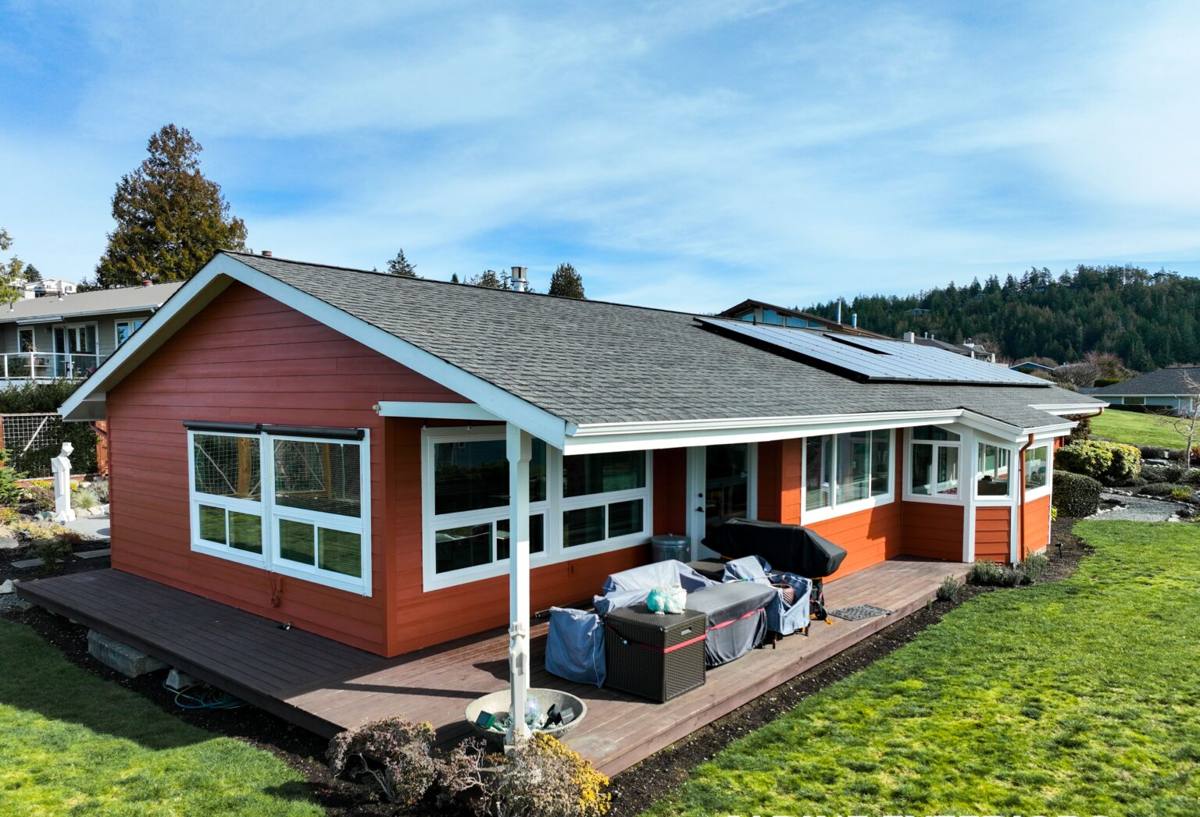
Why Fidalgo Island Homes Wear Out Siding Differently
Salt Air and Coastal Exposure
Homes closer to the water take the brunt of salt spray, especially on west- and south-facing walls that catch prevailing wind. Salt accelerates corrosion on nails, screws, and any exposed metal trim, and it can degrade cheaper paint finishes faster than inland weathering alone would. Fastener corrosion is one of the most common hidden failure points we find when we pull old siding off homes in this area — the boards look fine from ten feet away, but the fasteners holding them are compromised.
Driving Rain and Wind-Driven Moisture
Anacortes and the surrounding island get plenty of rain, but the bigger issue is how it arrives. Wind off the water pushes rain sideways into wall assemblies, which stresses horizontal laps, corner details, and window and door trim far more than a straight-down rain event would. A siding system with weak lap coverage or poor flashing details will eventually let water behind the cladding, even if the face of the siding looks intact.
Moss, Mildew, and a Long Wet Season
Skagit County's overcast, moist stretch of the year runs long. Anything on a wall that holds moisture — including some fiber cement products with a chalky or matte factory finish and definitely wood-based siding — gives moss and mildew more time to take hold before a dry spell knocks it back. Siding that sheds water well and dries quickly between storms holds up better and stays cleaner-looking with less maintenance.
What Correct Siding Replacement Actually Involves
Replacing siding isn't just removing old boards and nailing up new ones. Done right, it's a full envelope job:
- Full removal of old siding and trim, with the sheathing underneath inspected for rot, soft spots, or prior water damage
- Repair or replacement of any damaged sheathing before new material goes up — covering rot with new siding just hides the problem
- Installation of a weather-resistive barrier (house wrap) with correctly lapped and taped seams
- Proper flashing at windows, doors, and any wall penetrations, so water is directed out and down, never trapped behind the cladding
- Correct fastener selection and placement — spacing, penetration depth, and fastener material all matter for coastal exposure
- Rain-screen or drainage gap detailing where appropriate, so incidental moisture can escape rather than sit against the wall
- Caulking and sealing only where the manufacturer specifies it — over-caulking can trap moisture just as easily as under-caulking lets it in
Skipping any one of these steps is how a siding job looks good for a year or two and then starts showing problems at seams, corners, and trim — exactly the spots where Fidalgo Island's wind-driven rain concentrates its attack.
Why We Install Only James Hardie Fiber Cement
We standardized on James Hardie fiber cement siding and don't install vinyl, LP SmartSide, Cemplank, Allura, or primed wood products like spruce or cedar. That's a deliberate professional line, not a sales preference, and it's worth explaining honestly.
Vinyl siding is affordable and low-maintenance in mild climates, but it's a plastic product that can warp or crack in wind-driven impact events and doesn't hold up to the freeze-thaw and UV cycling as well as fiber cement over a multi-decade lifespan. Wood-based composite sidings like LP SmartSide use engineered wood strand technology that performs reasonably in dry climates, but wood-based cores are inherently more moisture-sensitive than cement-based ones — a real concern in an area with Fidalgo Island's wet season length. Other fiber cement brands like Cemplank and Allura are legitimate cement products, but James Hardie's ColorPlus factory-applied finish, its climate-engineered HZ5 product line built specifically for Pacific Northwest moisture exposure, and its long, transferable warranty are the specific combination we've chosen to stand behind. Primed cedar or spruce siding requires field-applied paint and ongoing maintenance that most homeowners underestimate, and untreated wood is the material most vulnerable to the moss and mildew cycle described above.
James Hardie fiber cement is non-combustible, dimensionally stable in wet-dry cycling, and the HZ5 formulation is specifically engineered for the kind of damp, moderate climate Fidalgo Island sits in. The ColorPlus finish is baked on at the factory under controlled conditions, which gives it better fade and chip resistance than field-applied paint, and it comes backed by a strong transferable warranty when installed to Hardie's specifications. We only install one product because we can guarantee our crews know it inside and out — every flashing detail, every fastener spec, every lap requirement — rather than splitting expertise across five different systems.
Comparing Siding Options for a Coastal Skagit County Home
| Material | Moisture Behavior in Coastal Climate | Maintenance | Typical Lifespan |
|---|---|---|---|
| James Hardie Fiber Cement (HZ5) | Engineered for wet climates; dimensionally stable | Low — factory finish, occasional washing | 30+ years with proper install |
| Vinyl Siding | Doesn't rot, but can warp/crack under wind and impact | Low, but fading and brittleness increase over time | 20-30 years, shorter in harsh coastal exposure |
| LP SmartSide / Wood Composite | Moisture-sensitive at cut edges and seams | Moderate — seam sealing and inspection needed | 20-30 years if maintained closely |
| Primed Cedar / Spruce | Most moisture-sensitive; prone to moss and rot without upkeep | High — repainting and sealing on a recurring cycle | Varies widely; heavily maintenance-dependent |
Our Process for Fidalgo Island Siding Replacement
Every home on the island faces the water and the weather a little differently depending on elevation, tree cover, and orientation, so we start with an on-site look rather than a phone estimate. That means:
- An in-person inspection of the existing siding, trim, and any visible signs of moisture intrusion or fastener corrosion
- An honest assessment of what's underneath — we don't know the sheathing condition until old siding comes off, but we flag likely risk areas up front based on age and exposure
- A written estimate covering material, labor, and any anticipated repair contingencies, with no pressure to sign on the spot
- A install plan sequenced around weather windows, since fiber cement installation has manufacturer-specified temperature and moisture conditions for best results
- Final walkthrough covering caulking, trim, and paint lines before we consider the job done
Because we work Fidalgo Island and greater Anacortes regularly, we already know which orientations tend to take the worst weather exposure and where prior installations in this area commonly show early wear. That local pattern recognition shortens the inspection process and helps us flag problems a crew unfamiliar with the island might miss.
Why Hiring a Local Crew Matters Here
Siding contractors who don't regularly work coastal Skagit County jobs sometimes apply techniques and product choices tuned for drier inland climates. That mismatch shows up later — in fastener corrosion, in premature moss growth, in caulking that was applied where a drainage gap should have been left open instead. A crew that works Fidalgo Island and the surrounding Anacortes area consistently has already seen how salt air, wind-driven rain, and the long wet season interact with different siding systems over real time, not just on a spec sheet.
Permitting and inspection expectations can also vary by jurisdiction, and a crew familiar with local requirements avoids delays that an out-of-area contractor might not anticipate. It's a smaller detail than the material choice, but it adds up over the course of a project.
Signs Your Fidalgo Island Home May Need Siding Replacement
- Visible cracking, warping, or separation at seams and corners
- Soft or spongy spots when pressed gently, which can indicate moisture behind the siding
- Persistent moss or mildew staining that returns quickly after cleaning
- Peeling or bubbling paint, especially on walls facing prevailing wind and rain
- Rusted or failing fasteners visible at board edges
- Rising energy bills that may point to a compromised building envelope
Any one of these on its own isn't necessarily urgent, but a combination is usually a sign the siding system is past the point where patching makes sense.
If you're seeing any of these signs on your Fidalgo Island home, or you just want an honest read on how your current siding is holding up, we're happy to take a look. Estimates are free, there's no pressure, and you'll get a straight answer about what your home actually needs — the form below is the easiest way to get started.