 Anacortes Siding
 Roofing at Similk Beach: A Different Set of Demands
Similk Beach sits along the shoreline outside Anacortes, in Skagit County, and homes out here take a version of Pacific Northwest weather that's harder on a roof than what you'll find a few miles inland. The water brings salt-laden air, the open exposure brings driving rain and wind gusts, and the tree cover many properties enjoy for privacy also means shade — which means moss. None of that makes asphalt shingle roofing a bad choice for this setting. It just means the installation has to account for conditions that a generic roofing job often overlooks.
This page covers what a correctly installed asphalt shingle roof looks like for a Similk Beach home, what the local climate actually does to roofing materials over time, and how our process is built around those realities rather than around a one-size-fits-all install.
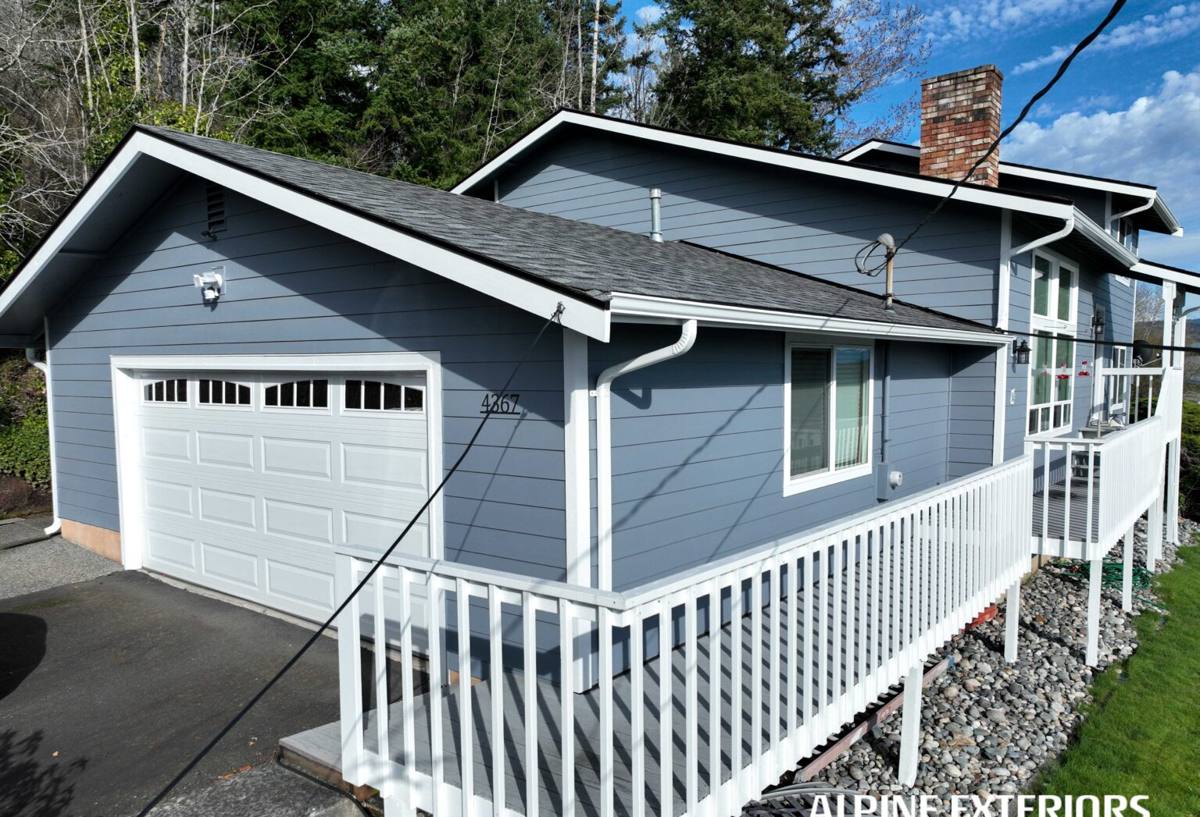
What Salt Air, Rain, and Moss Actually Do to a Roof
Salt Air and Corrosion
Shoreline air carries fine salt particulate that settles on every exposed surface, including roofing metal. Exposed nail heads, cheap flashing, and low-grade fasteners corrode faster near the water than they would a few miles east. Over years, corroded fasteners lose their grip and corroded flashing develops pinholes — both of which lead to leaks that show up long after the roof was installed, not on day one.
Wind-Driven Rain
Open water exposure means wind isn't just blowing across the roof — it's driving rain sideways and upward under shingle edges, at rakes, and around any penetration that wasn't sealed and flashed correctly. A roof that would perform fine in a sheltered inland yard can leak at Similk Beach simply because the wind is pushing water where gravity alone wouldn't take it.
Moss, Algae, and Shade
Trees and marine moisture together create long stretches of damp shade, which is exactly what moss and algae need to take hold. Beyond the cosmetic streaking, moss holds moisture against the shingle mat, lifts shingle edges as it grows, and works its way into nail holes and laps. A roof that stays wet longer than it should will age faster regardless of the shingle brand on it.
Choosing the Right Asphalt Shingle for This Setting
Not every asphalt shingle is built the same way, and the differences matter more at Similk Beach than they would somewhere sheltered and dry. We steer homeowners toward products with wind ratings and algae-resistant granules appropriate to a waterfront property, and we're upfront when a lower grade of shingle simply isn't a good match for this exposure — not because the product is bad everywhere, but because it wasn't designed for what this location throws at it.
| Shingle Type | Typical Wind Rating | Algae Resistance | Best Fit |
|---|---|---|---|
| Standard 3-tab | Lower end of rated range | Minimal unless specified | Sheltered, inland lots |
| Architectural / laminate | Higher rated with proper nailing | Available with algae-resistant granules | Most Similk Beach homes |
| Premium laminate/designer | Highest rated in the shingle category | Algae-resistant standard on most lines | Full shoreline exposure, high-visibility roofs |
Wind rating on paper only holds up if the shingle is actually installed to the nailing pattern and fastener count that rating assumes. A correctly rated shingle, under-nailed, performs like a cheaper product the first time the wind really blows off the water.
What a Correct Installation Includes
The shingle itself is one layer of a roofing system. On a Similk Beach home, we pay particular attention to the parts of the system that are invisible once the job is done but determine whether it lasts:
- Deck inspection at tear-off — soft, delaminated, or moisture-damaged sheathing gets replaced, not covered over.
- Ice and water shield at eaves, valleys, and around penetrations, where wind-driven rain and moss buildup cause the most trouble.
- Synthetic underlayment across the full deck as a secondary water barrier beneath the shingles.
- Corrosion-resistant flashing and fasteners at chimneys, walls, and roof-to-wall transitions — standard-grade metal has a shorter service life this close to salt air.
- Drip edge at eaves and rakes to control water runoff instead of letting it wick back under the shingle edge.
- Manufacturer-specified nailing pattern so the shingle's rated wind resistance is actually real once installed.
Ventilation: The Detail That Determines How Long the Roof Lasts
A roof that traps warm, moist air underneath it will fail early no matter how good the shingle is. Balanced ventilation — intake at the eaves, exhaust at or near the ridge — keeps the attic close to outdoor temperature and moisture levels. Without it, condensation builds on the underside of the deck, which rots sheathing from below while the shingles on top look fine. In a marine climate like Anacortes and the surrounding Skagit County coastline, where humidity is already a constant, ventilation isn't an upgrade — it's part of doing the job correctly the first time.
Our Process for Similk Beach Roofing Projects
- On-site inspection. We walk the roof, check the attic where accessible, and look at how the property is exposed to wind and shade before recommending anything.
- Written, itemized estimate. Scope, materials, and any deck repair contingencies are spelled out before work starts — no surprise change orders for things we could have caught up front.
- Material selection. We walk through shingle options suited to the exposure at your specific lot, not a default catalog pick.
- Tear-off and site protection. Landscaping, siding, and gutters are protected during tear-off; debris is contained and hauled off daily on multi-day jobs.
- Installation. Deck repair as needed, underlayment, flashing, ventilation, and shingles installed to manufacturer specification for the wind rating to actually hold.
- Cleanup and magnetic nail sweep. The property is swept for stray fasteners before we consider the job finished.
- Final walkthrough. We go over the finished roof with you and provide warranty paperwork for both materials and labor.
Maintenance After Installation — What to Watch For
A correctly installed roof still benefits from basic attention, especially in a shoreline setting where moss and wind are ongoing rather than one-time concerns:
- Check valleys and low-slope areas for moss or debris buildup after the wet season, especially under tree cover.
- Walk the property after any significant windstorm and look for lifted or missing shingles, not just obvious damage.
- Keep gutters clear so water isn't backing up under the eave line.
- Watch for granule buildup in gutters or downspouts, which can signal accelerated shingle wear.
- Have flashing around chimneys and walls checked periodically — this is where corrosion and leaks tend to start first.
- Don't pressure-wash the roof to remove moss; it damages the shingle mat. Gentle treatment methods protect the surface instead.
Cost Factors for a Similk Beach Re-Roof
Every roof is priced on its own specifics, but the same factors tend to move the number up or down on shoreline properties:
| Factor | Why It Matters Here |
|---|---|
| Roof size and pitch | More surface area and steeper pitches take more labor and material |
| Number of existing layers | Multi-layer tear-offs add disposal cost and deck inspection time |
| Deck condition | Moisture-related sheathing repair is more common on shaded, shoreline-adjacent homes |
| Shingle grade selected | Higher wind rating and algae resistance cost more up front, save on premature wear |
| Flashing and penetration count | Chimneys, skylights, and wall transitions each add detail work and material |
| Site access | Waterfront lots with limited staging area or steep driveways can affect setup time |
Why a Crew That Already Works Similk Beach Matters
A roofing crew that only occasionally works near the water will default to standard practice — the same underlayment, the same flashing grade, the same shingle line they use everywhere. A crew that regularly works Similk Beach and the surrounding Anacortes shoreline has already seen which details fail first in this exact microclimate: which flashing corrodes early, which shaded roof sections hold moss longest, and which wind exposures need the fuller nailing pattern rather than the minimum. That familiarity shows up as fewer callbacks and a roof that performs the way it's supposed to for the length of its expected life, not just at the final walkthrough.
It also matters for the practical side of a project — knowing how Skagit County and City of Anacortes permitting and inspection typically run, and not treating a shoreline property's access and staging as an afterthought the morning work starts.
If you're weighing a repair against a full replacement, or just want a straight answer on what your roof actually needs, we're happy to take a look. Reach out for a free, no-pressure estimate using the form below.