 Anacortes Siding
 Why West Anacortes Homes Are Hard on Windows
West Anacortes sits closer to open water than most of Skagit County, and that changes what a window has to survive. Salt-laden air corrodes exposed metal hardware and fasteners faster than it does even a few miles inland. Wind-driven rain gets pushed sideways against west- and south-facing walls instead of just falling straight down, which means it finds any gap in flashing or caulking that a calmer climate would never expose. And the long, damp stretch of fall through spring that Puget Sound homeowners know as "moss season" keeps wood trim and sills wet for weeks at a time, which is exactly the condition that rot and mold need to get started.
None of this is exotic — it's just what happens on a marine-exposed island, and it's the reason a window that performs fine in a drier part of the state can fail early here. A correct installation for a West Anacortes home accounts for all three factors from the start: material selection, flashing detail, and sealant choice all shift when the house is this close to the water.
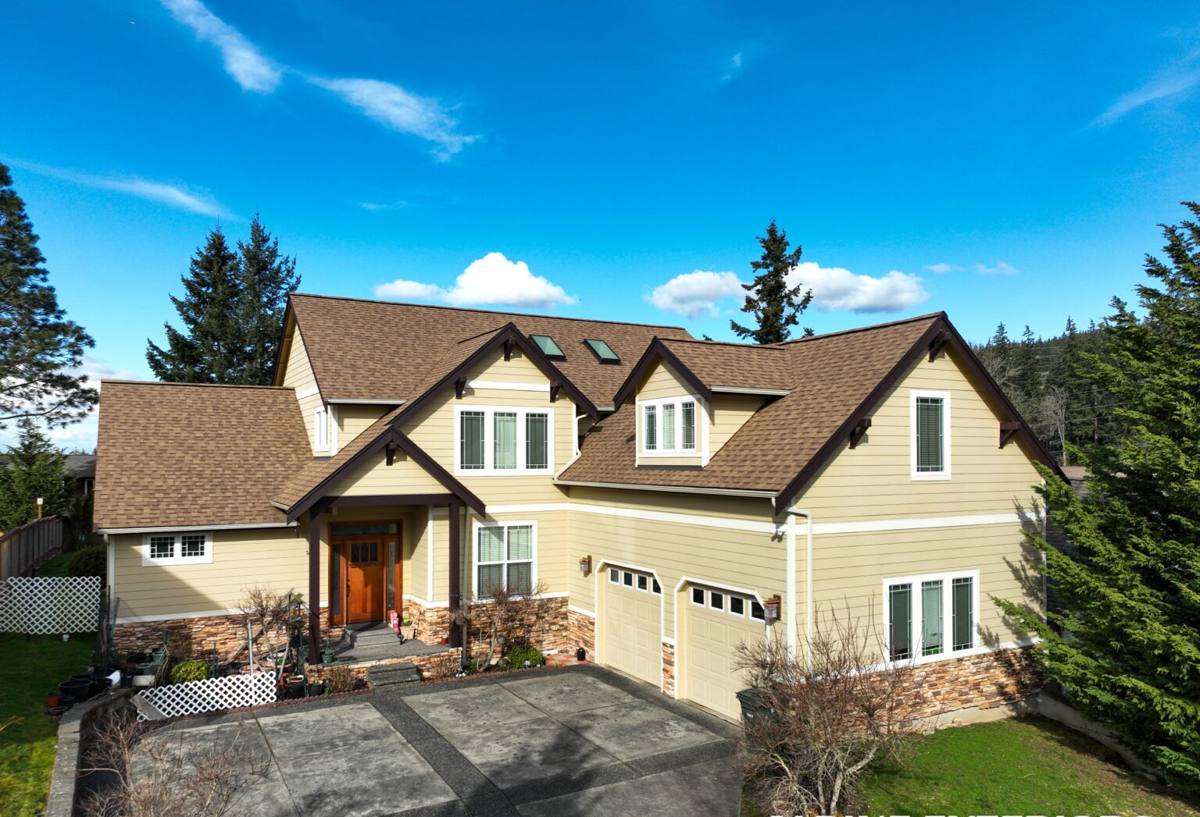
Signs a West Anacortes Home Needs New Windows
Older windows in this part of town rarely fail all at once. They usually give a few warning signs first, and catching them early keeps a window replacement from turning into a wall or framing repair.
- Fogging or a permanent haze between the panes of a double-pane window — the seal has failed and the gas fill is gone
- Soft or spongy wood at the sill, jamb, or exterior trim, especially on walls that take the brunt of driving rain
- Visible corrosion, pitting, or a chalky white residue on aluminum frames or hardware
- Drafts you can feel by hand along the frame edge on a windy day
- Green or black staining on the exterior casing that keeps coming back no matter how often it's cleaned
- Windows that have gotten hard to open, close, or lock — often a sign the frame has swelled or shifted
- Rising heating bills with no other explanation
Any one of these on its own might just mean a window needs attention. Several at once, especially on the sides of the house exposed to weather off the water, usually means it's time to plan a replacement before the moisture damage spreads into the wall framing.
What a Correct Custom Window Installation Involves
Measuring the Actual Opening, Not a Standard Size
"Custom" isn't a marketing word here — it's a practical necessity. Many homes in this area were built or added onto over several decades, and rough openings are frequently a bit out of square or off standard dimensions. A crew that just orders stock sizes and shims the gap ends up with a window that's caulked into place rather than properly flashed, which is exactly where driving rain finds its way in. Correct work means measuring the actual opening, checking it for square and level, and ordering (or building) a window sized to fit that opening with the right reveal for flashing and insulation.
Flashing and the Moisture Barrier
This is the single most important — and most commonly rushed — part of a window installation in a wet marine climate. The window needs a sill pan to catch and direct any water that gets past the frame, a weather-resistant barrier integrated with the wall's house wrap, and head flashing that sheds water down and away rather than trapping it against the top of the frame. Skipping or shortcutting this step is the number one reason "new" windows still leak two winters later.
Sealant and Hardware Choices
Standard caulk breaks down faster in salt air and UV exposure near the water. We use exterior sealants rated for marine and coastal exposure, and we look at hardware finish — stainless steel or coated hardware holds up far better here than bare or lower-grade coated aluminum, which can start pitting within a few seasons.
Glass and Insulation Package
Double-pane, low-E glass with an argon or krypton fill is the practical standard for this climate — it cuts heat loss, reduces condensation on the interior glass surface (a common complaint in cold, damp winters), and helps with the west-facing afternoon sun some of these homes get off the water. Foam or low-expansion insulation around the frame, not just fiberglass batting, also helps seal out the wind that comes off open water.
Choosing the Right Frame Material for This Climate
Every frame material has trade-offs. For a house exposed to salt air and sustained rain, some of those trade-offs matter more than they would a few miles inland.
| Material | How It Handles Salt Air & Rain | Maintenance | Typical Lifespan |
|---|---|---|---|
| Vinyl | Won't corrode or rot; performs well near water | Low — occasional cleaning | 20-30+ years |
| Fiberglass | Excellent — very stable, resists moisture and salt exposure | Low | 30-40+ years |
| Wood (unclad) | Attractive but vulnerable — needs consistent upkeep to avoid rot in this climate | High — regular painting/sealing | Varies widely with maintenance |
| Wood-clad (vinyl or aluminum-clad exterior) | Good — exterior shell protects the wood core from rain and salt | Moderate | 25-35 years with proper cladding integrity |
| Bare Aluminum | Prone to corrosion and pitting in salt air over time; conducts cold, increasing condensation risk | Moderate to high | Varies; corrosion often shows within 10-15 years |
We don't push one material on every homeowner — a wood-clad window can be the right call for a house where the look matters and the owner is comfortable with the upkeep, while vinyl or fiberglass makes sense where low maintenance is the priority. What we won't do is install an unclad wood or bare aluminum frame on a west-facing wall that takes direct salt spray and driving rain without being upfront about the maintenance that choice will demand.
Our Installation Process, Start to Finish
- On-site assessment — we look at every window opening individually, check for existing moisture damage, and measure actual rough openings rather than assuming stock sizes
- Product selection — we walk through frame material, glass package, and hardware options based on which side of the house the window faces and how exposed it is
- Careful removal — old windows come out without unnecessary damage to trim or siding, and we inspect the framing underneath for hidden rot before anything new goes in
- Framing repair if needed — any soft or damaged wood gets replaced before a new window is installed; there's no point sealing a new window into a compromised opening
- Sill pan, flashing, and moisture barrier installation — done in the correct order so water sheds outward at every layer
- Window installation and shimming — set plumb, level, and square, with proper reveal maintained around the frame
- Insulation and sealing — low-expansion foam or appropriate insulation around the frame, exterior sealant rated for marine exposure
- Trim and finish work — interior and exterior trim reinstalled or replaced to match the home
- Final walkthrough and cleanup — every window is opened, closed, and locked to confirm proper operation before we consider the job done
Cost Factors for Custom Windows in West Anacortes
There's no single price that applies to every home — cost depends on several factors that vary house to house. In general terms, homeowners should expect the following to move the number up or down:
| Factor | Why It Affects Cost |
|---|---|
| Number of windows replaced | Per-window cost typically drops with larger projects due to shared labor and setup |
| Frame material | Fiberglass and clad-wood generally cost more upfront than vinyl but need less maintenance over time |
| Window size and configuration | Larger openings, bay/bow windows, and custom shapes require more material and labor |
| Full-frame vs. insert replacement | Full-frame replacement (removing down to the framing) costs more but is often necessary where there's existing rot or a non-standard opening |
| Hidden framing damage | Rot discovered once the old window is out adds repair cost that can't be quoted until the wall is opened up |
| Glass and hardware upgrades | Upgraded glass packages, tempered glass where required by code, and corrosion-resistant hardware add cost but pay off in this climate |
| Access and site conditions | Second-story windows, tight side yards, or windows requiring scaffolding add labor time |
We'd rather walk a homeowner through these factors honestly during an on-site estimate than quote a number sight unseen — especially on older homes where the condition behind the old window is the biggest unknown.
Why Hire a Crew That Already Works in West Anacortes
A window installer who mostly works drier, more inland parts of Skagit County isn't necessarily wrong for the job — but they're guessing at things a crew familiar with this specific stretch of the island already knows: which wall orientations take the worst of the driving rain, how fast moss and moisture build up on north- and west-facing trim, and how older homes in this area were typically framed. That familiarity shows up in small decisions — how much reveal to leave for flashing, which sealant actually holds up to salt exposure, whether a given opening needs full-frame replacement instead of an insert — that add up to the difference between a window that lasts decades and one that needs attention again in a few years.
It also means fewer surprises during permitting and inspection, since local code requirements (like tempered glass near doors and low sills, or egress sizing in bedrooms) are second nature rather than something looked up mid-project.
Maintaining Your New Windows Through Moss Season
A properly installed window in this climate still benefits from some basic upkeep, especially through the wet months.
- Rinse salt residue off exterior frames and glass periodically, particularly after windy weather off the water
- Keep gutters and downspouts clear so overflow doesn't run down onto window heads and trim
- Check exterior caulking once a year and touch up any cracked or separated sealant before winter rains set in
- Wipe down tracks and weep holes so they don't clog with debris and trap water against the frame
- Watch for moss or algae buildup on north- and west-facing trim and clean it off before it holds moisture against the wood
- Operate locks and hardware a few times through the year so moving parts don't seize up from disuse plus humidity
None of this is heavy maintenance — it's the kind of seasonal check most homeowners already do for gutters and siding, just extended to the windows.
Get a Straight Answer for Your Home
Every house on this side of Anacortes takes weather a little differently depending on its orientation, age, and how it was originally built. Rather than guess at what your windows need from a description, we'd rather come look at them. If you're in West Anacortes and dealing with drafts, fogged glass, soft trim, or windows that just don't work well anymore, reach out for a free, no-pressure estimate — we'll give you a straight read on what's going on and what it would take to fix it right.