 Anacortes Siding
 Why Siding Fails Faster on Anacortes' West Side
Homes on the west side of Anacortes face a tougher stretch of weather than most inland Skagit County properties. That exposure toward Rosario Strait and Guemes Channel means more direct salt-laden wind, more driving rain during fall and winter storms, and longer stretches of shaded, damp conditions that keep siding wet well after a storm has passed. Salt air corrodes fasteners and trim faster than dry inland air, wind pushes rain into seams and laps that were never meant to hold standing water, and Skagit County's mild, overcast winters give moss and algae months to take hold on north- and west-facing walls.
None of that means siding is doomed on this side of town — it means the margin for installation error or deferred maintenance is smaller. A lap joint that would sit fine for years on a sheltered inland wall can fail within a couple of seasons here if it wasn't flashed or caulked correctly to begin with. That's the pattern we see most often: damage that looks minor on the surface but traces back to a detail that wasn't built for this exposure.
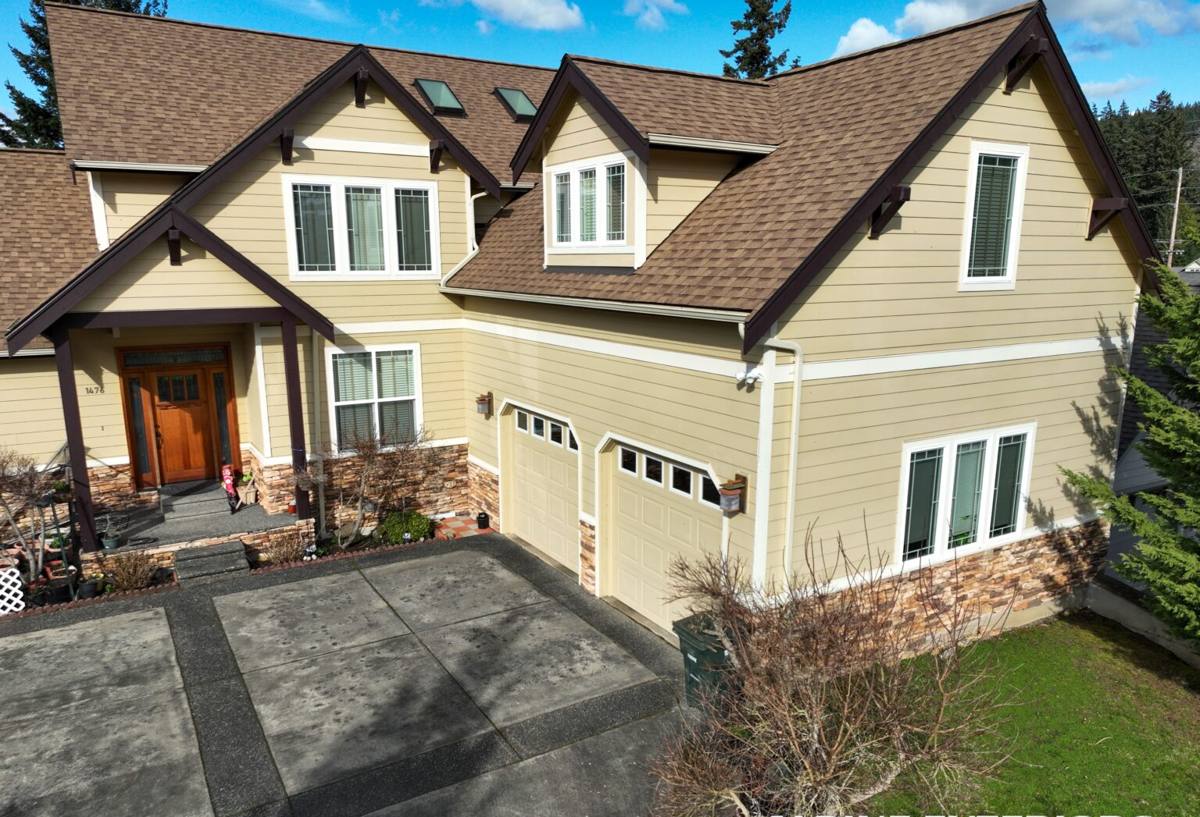
Signs Your Siding Needs Repair, Not Just a Repaint
A lot of siding problems get "fixed" with a fresh coat of paint that hides the symptom for a season or two while the underlying issue keeps working. Before you repaint, walk the exterior — especially west- and north-facing walls — and check for these:
- Soft or spongy spots when you press on a panel
- Dark staining or streaking running down from seams or trim
- Paint that's bubbling, peeling, or alligatoring rather than just fading
- Visible gaps opening up at seams, corners, or window trim
- A running band of moss or algae that keeps coming back after cleaning
- Cracked, splitting, or delaminating panel edges
- Boards that look warped, bowed, or slightly separated from the wall
- Nail heads popping through the surface
- A musty smell along an interior wall near an exterior corner
Any one of these on its own might be cosmetic. Two or three together, especially clustered on a west-facing wall, usually means moisture is getting past the surface.
What Goes Wrong Behind the Siding
The damage you can see is rarely the whole story. Siding is the outer layer of a moisture management system that includes house wrap, flashing, and properly lapped joints designed to shed water — not seal it out entirely. When any one of those pieces fails, water finds its way behind the panels and starts working on the sheathing and framing underneath, often for a long time before it shows up as a stain or soft spot on the outside.
On west-facing walls in Anacortes, wind-driven rain is the usual culprit. It doesn't just fall on siding, it gets pushed sideways and upward into laps and joints that were only designed to handle water running straight down. Older siding, or siding installed without attention to this kind of exposure, is especially vulnerable at butt joints, around window and door trim, and at any point where a fastener or gap wasn't properly sealed or flashed. This is why an honest repair estimate almost always starts with opening up the affected area rather than just patching what's visible.
Repair Issues We See by Siding Material
| Siding Material | Common Problem on Exposed Walls | What a Real Repair Involves |
|---|---|---|
| Cedar | Rot at butt joints and cut ends where the wood absorbs moisture fastest; repeated repainting as the finish fails | Cutting back to sound wood, treating exposed end grain, and matching the existing board profile |
| OSB-based lap siding (e.g. LP-style products) | Edge swelling once the factory seal is compromised; damage tends to spread under the surface before it's visible | Removing affected panels since swollen edges don't reliably reseal, and checking neighboring panels for hidden moisture |
| Vinyl | Cracking or warping under wind load, faded color that can't be touched up, popped seams that let water track behind the panel | Full panel replacement, since cracked or faded vinyl can't be patched invisibly and color-matching aged vinyl is nearly impossible |
| Older or uncoated fiber cement | Chalking finish, fastener corrosion from salt exposure, occasional hairline cracking at cut edges left unsealed during installation | Resealing cut edges, replacing corroded fasteners, and patching or repainting as needed |
How We Diagnose and Repair Siding Damage
A repair that only addresses the visible panel is a repair that comes back. Our process is built to catch what's happening underneath before we close anything up:
- Inspect the full wall visually and probe suspect areas for soft or delaminated spots
- Check flashing and caulking at every penetration — windows, doors, hose bibs, light fixtures
- Determine whether the damage is isolated or has traveled under adjoining panels
- Open up the affected section to check the condition of the sheathing and house wrap
- Repair or replace any compromised sheathing or wrap before new siding goes back on
- Install replacement siding matched in material, profile, and finish as closely as possible
- Reflash and reseal correctly — caulk at true joints only, proper flashing everywhere water needs to be directed rather than sealed
Skipping straight to step six is how a lot of siding repairs end up failing again within a year or two. It looks finished, but the moisture source that caused the original damage is still there.
Repair or Replace?
Not every damaged wall needs a full re-side, and not every problem can be solved with a patch. The honest answer depends on a few factors we walk through with every homeowner:
| Factor | Leans Toward Repair | Leans Toward Replacement |
|---|---|---|
| Extent of damage | Isolated to one or two panels or a single wall section | Spread across multiple walls or repeated in the same areas |
| Age of existing siding | Siding is well within its expected service life | Siding is near or past the end of its practical life |
| Sheathing condition | Sheathing behind the damage tested dry and sound | Rot or moisture damage found in the sheathing itself |
| Material match | Compatible replacement panels are available | Original product is discontinued or won't visually match |
| Repair history | First repair on this wall | This is the second or third repair to the same area |
If we open up a wall and find the framing is sound and the damage is contained, a targeted repair is the right call — there's no reason to re-side a whole house over one bad joint. But if we're looking at the third repair on the same stretch of wall, or the sheathing itself is compromised, we'll say so plainly rather than patch over a problem that's going to keep resurfacing.
Why We Repair and Rebuild With James Hardie
When a repair calls for replacement panels, we use James Hardie fiber cement for the patch whenever it's a viable match — and when a homeowner decides a full re-side makes more sense than repeated repairs, James Hardie is the only product we install. That's a deliberate standard, not a default. Hardie's ColorPlus factory finish holds its color and resists the chalking and peeling that drives most repaint cycles, and it doesn't absorb and swell moisture the way wood-based and OSB-core products can at cut edges and joints — a real advantage on walls that take wind-driven rain directly. It's also non-combustible, which matters on a property near dry summer conditions inland, and Hardie's climate-engineered HZ product lines are built specifically for wet, coastal exposure like Anacortes gets.
None of that means every material we've discussed above is a bad product — cedar, engineered wood, and vinyl siding all have legitimate uses and reasonable installations. It means that after years of opening up damaged walls, we've settled on the material that gives homeowners on this coastline the fewest repeat problems, and we'd rather build that into every repair and replacement than install something we know is more likely to bring us back out in two years.
Why Hiring a Crew That Already Works West Anacortes Matters
A repair crew that mostly works drier, more sheltered neighborhoods will diagnose a wall differently than one that regularly opens up siding on west-facing exposures near open water. Knowing which joints and details tend to fail first in this specific wind and moisture pattern means less exploratory demolition, a faster and more accurate estimate, and a repair that accounts for the exposure the wall actually gets — not a generic fix. It also means scheduling around the realities of Skagit County's wet season instead of working against it.
If you're seeing staining, soft spots, moss that won't stay gone, or paint that's failing faster than it should on a west-facing wall, it's worth getting a straight answer on what's actually happening behind the siding before it spreads. We'll walk the exterior with you, tell you honestly whether you're looking at a repair or something bigger, and put together a free, no-pressure estimate so you can decide what makes sense for your home.