 Anacortes Siding
 Windows Built for the Skagit Valley, Not Just Any Climate
Mount Vernon sits in the Skagit River valley, a few minutes inland from Anacortes and the saltwater shoreline of the Salish Sea. That location gives the area its own weather pattern: heavy, sustained rain events moving up the valley, high humidity off the river and surrounding farmland, and marine air that carries a faint salt content even this far from open water. Add in a long gray season where moss and algae get months to establish themselves on north-facing surfaces, and you have a climate that is genuinely hard on window assemblies, frames, and the flashing details around them.
A window that performs fine in a dry inland climate can fail early here if it wasn't installed with this weather in mind. Water doesn't have to be dramatic to cause damage — it just has to find one weak seal and repeat that same path, week after week, for years. Correct window installation in Mount Vernon is less about the window itself and more about how it's tied into the wall, flashed, and sealed against that pattern.
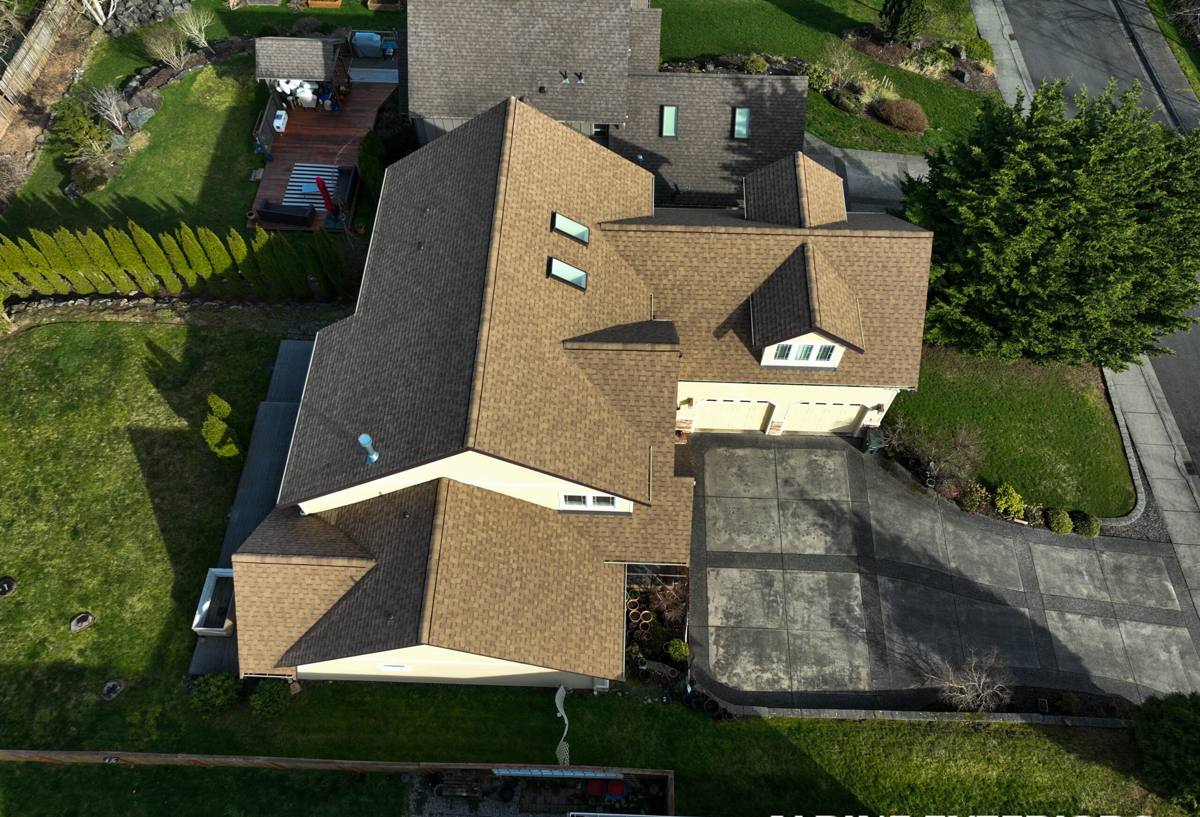
What Skagit County Weather Does to Windows Over Time
Homeowners in Mount Vernon typically don't see one dramatic failure. They see a slow accumulation of small problems that eventually add up to a real repair:
- Wind-driven rain pushed sideways into the top and side flashing of a window, especially on exposures that catch storms coming up the valley
- Condensation between panes as seals age and lose their gas fill, showing up as a permanent haze or fogging that cleaning won't fix
- Wood rot at the sill and jambs where water has been sitting rather than draining out
- Moss and algae staining on horizontal trim and sills that stay damp under tree cover or on shaded north walls
- Swollen or sticking sashes on older wood windows that have absorbed moisture over multiple wet seasons
- Soft or discolored siding and trim around the window opening, often the first visible sign that water has been getting behind the frame
None of these problems mean a window was a bad product. Most of them trace back to how the opening was flashed and sealed at installation, or to original construction-grade windows that were never built for a 20-plus-year service life in this kind of weather.
What a Correct Window Installation Actually Involves
The Opening Matters More Than the Window
Any window is only as good as the opening it sits in. Before a new window goes in, the old unit has to come out cleanly, and the rough opening needs to be inspected for rot, soft framing, or old flashing that's failed. Skipping this step and simply dropping a new window into a compromised opening is one of the most common ways a replacement job fails within a few years.
Flashing and Water Management
Proper installation layers flashing so that any water that does get past the window sheds down and out, never inward. That means a sill pan or sloped sill flashing, side flashing that laps over it correctly, and head flashing integrated with the house wrap or building paper above the window — installed in the correct shingle-lap order so gravity does the work. This detail is invisible once the trim goes back on, which is exactly why it's the detail that gets rushed on lower-quality jobs.
Air Sealing and Insulation
The gap between the window frame and the rough opening needs to be sealed against air infiltration without trapping moisture. Low-expansion window foam or backer rod and sealant around the perimeter, sized and applied correctly, keeps out drafts and reduces the chance of condensation forming inside the wall cavity — a problem that shows up as hidden rot long before it's visible from either side.
Exterior Sealant and Trim
The visible bead of sealant around the window is the last line of defense, not the first. It has to be applied to clean, compatible surfaces and tooled properly, and it needs to be checked periodically since exterior sealants are a wear item, not a permanent fix.
Choosing a Window for a Mount Vernon Home
Frame material affects how well a window holds up to sustained damp and how much upkeep it needs. There's no single right answer for every home — it depends on your siding, your budget, and how much maintenance you want to take on.
| Frame Material | How It Handles This Climate | Maintenance |
|---|---|---|
| Vinyl | Won't rot; performs well against sustained moisture and humidity | Low — occasional cleaning |
| Fiberglass | Very stable in temperature and moisture swings; strong long-term option | Low |
| Wood (unclad) | Classic look, but needs consistent upkeep to resist rot in a wet climate | High — regular painting/sealing |
| Wood-clad | Wood interior with a protective exterior shell; good balance if detailed correctly | Moderate |
| Aluminum | Durable but conducts cold and moisture readily; less common for residential retrofits here | Low, but condensation-prone |
We'll also talk through glass packages during your estimate — double-pane with a low-E coating is the standard baseline for this region, and argon-filled or triple-pane upgrades can make sense depending on the exposure of your home and your energy goals. What matters most for Mount Vernon's climate isn't the glass alone, it's making sure the seals around that glass and the frame stay intact for the life of the window.
Full-Frame Replacement vs. Insert Windows
There are two general approaches to replacing an existing window, and which one is right depends on the condition of your current opening:
- Insert (pocket) replacement: A new window is fitted inside the existing frame, which stays in place. Faster and less disruptive, but it only works well if the existing frame and flashing are still sound and dry.
- Full-frame replacement: The old window and its frame are removed down to the rough opening, exposing the flashing and framing for inspection and repair. This is the right call whenever there's any sign of past water intrusion, rot, or if you're changing window size or style.
We'll tell you honestly which approach your home needs rather than defaulting to whichever is faster. If a pocket replacement would seal water damage behind a new window instead of fixing it, that's not a shortcut we'll recommend.
Our Installation Process
- On-site assessment — we look at each opening individually, not just the window count, and flag any rot, moss staining, or flashing issues we find
- Product selection — we walk through frame material, glass package, and style options that fit your home and budget, without pushing a single "house brand"
- Old window removal — removed carefully to protect surrounding siding and trim
- Opening inspection and repair — any soft framing or old failed flashing gets addressed before the new window goes in, not after
- Flashing and installation — sill pan, side and head flashing, and window set to manufacturer specs
- Air sealing, insulation, and exterior sealant — completed to keep both air and water where they belong
- Trim and cleanup — interior and exterior trim reinstalled or replaced, site cleaned up and old windows hauled off
What Drives the Cost of a Window Project
Every home is different, so we won't quote a number without seeing the job, but these are the main factors that move the price up or down:
| Factor | Why It Matters |
|---|---|
| Number and size of windows | More material and labor per opening |
| Full-frame vs. insert replacement | Full-frame involves more labor and often trim/siding repair |
| Frame material | Vinyl, fiberglass, and wood-clad carry different material costs |
| Glass package | Low-E coatings, gas fills, and triple-pane options add cost |
| Existing rot or water damage | Framing repair is priced separately from the window itself |
| Access and height | Second-story or hard-to-reach windows take more time and equipment |
We'd rather walk your home and give you an accurate number than a rough estimate that changes once we open the wall. If there's hidden damage, we'll show it to you before we touch it.
Why It Matters to Hire a Crew That Already Works This Area
Window installation done to a generic standard can still fail in Skagit County's specific weather pattern. A crew that regularly works Mount Vernon and the surrounding Anacortes area knows which exposures take the worst wind-driven rain, which older home styles in this region tend to have particular flashing or framing quirks, and how much margin to build in against a climate that stays wet for months at a time. That local pattern recognition is the difference between an installation that looks right on day one and one that's still performing correctly ten winters from now.
We're not asking you to take our word for it sight unseen — we'll walk your home, explain exactly what we see and what we'd do, and give you a straightforward estimate with no pressure to sign anything on the spot.
After Installation: Keeping Windows Performing
New windows still benefit from a little seasonal attention, especially in a climate like this one:
- Check exterior sealant beads yearly for cracking or separation, particularly after the first winter
- Clear moss and debris from sills and tracks before it holds moisture against the frame
- Make sure weep holes on vinyl and fiberglass frames stay clear so water can drain out
- Watch for condensation between panes, which signals a failed seal rather than a cleaning issue
A correctly installed window shouldn't need more than that. If you're seeing drafts, fogging, sticking sashes, or soft trim around your current windows, it's worth having them looked at before another wet Skagit County winter works on that damage further.
If you'd like an honest look at your windows and a free, no-pressure estimate, we're happy to walk your Mount Vernon home and talk through what actually makes sense for it — no obligation, just a straight answer. Use the form below to get started.