 Anacortes Siding
 Why Guemes Island Is Harder on a Shingle Roof Than It Looks
Guemes Island sits just off Anacortes, reachable only by a short ferry crossing across Guemes Channel, and that separation from the mainland matters more than most homeowners realize when it comes to roofing. The island catches the same Salish Sea weather system as the rest of Skagit County — salt-laden air off the water, wind-driven rain that comes in sideways off the channel, and long stretches of gray, damp weather that keep roofs wet for days at a time. Add in the heavy tree cover found on much of the island, and you get a roofing environment that ages shingles faster than a typical inland home would experience.
None of this means Guemes Island homes need exotic materials or unusual construction. It means the details — underlayment, flashing, ventilation, and fastening — have to be done correctly and matched to what this specific environment actually does to a roof over time. A shingle roof installed the same way you'd install one in a dry inland climate will show problems on Guemes Island years before it should.
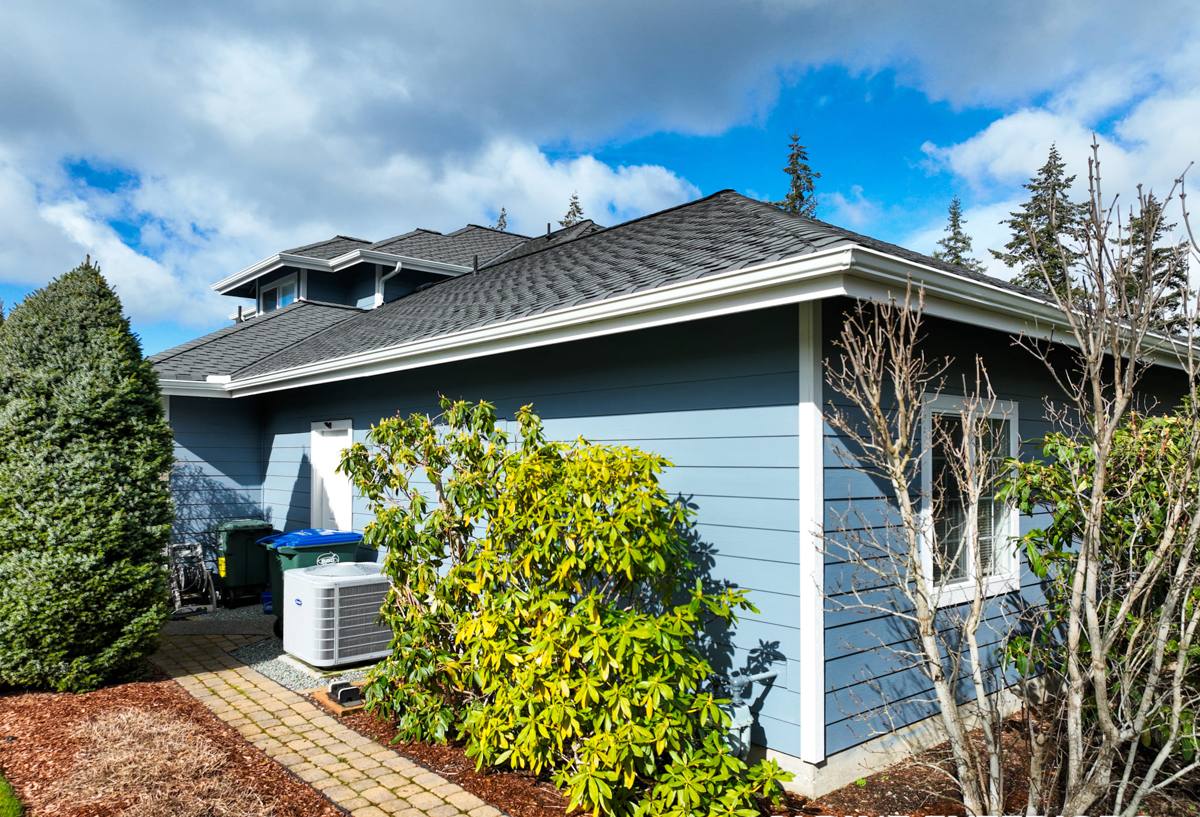
What Salt Air, Rain, and Moss Actually Do to a Roof
Salt Air and Metal Components
Marine air carries fine salt particles that accelerate corrosion on any exposed metal — flashing, fasteners, gutter hardware, and vent caps. Standard galvanized fasteners and untreated metal flashing corrode faster near saltwater than they would even a few miles inland. This doesn't ruin a roof overnight, but it shortens the life of the metal components that keep water out at the edges, valleys, and penetrations — which is exactly where most roof leaks actually start.
Wind-Driven, Sideways Rain
Anacortes and the surrounding islands get plenty of rain, but the bigger issue is often the direction it comes from. Storms moving through the channel push rain sideways under shingle tabs and around flashing that would stay dry in a calmer climate. That's why underlayment coverage and flashing laps matter so much more here than the manufacturer's minimum specs might suggest — a roof built to the bare code minimum is more likely to let water find its way in during a wind event.
Moss, Shade, and Moisture That Never Fully Dries
Where a home sits under mature evergreen cover — common across much of Guemes Island — the roof stays shaded and damp far longer after every rain. That's the exact condition moss needs to establish. Moss holds moisture against the shingle surface, lifts tabs as it grows, and can work its way under the shingle edge over a few seasons, creating small entry points for water that aren't visible from the ground.
What a Correctly Built Shingle Roof Needs Here
Underlayment That Does More Than the Minimum
A synthetic underlayment with full coverage, plus self-adhered membrane at eaves, valleys, and any low-slope transitions, gives a roof a real second line of defense. On a marine-exposed roof, that backup layer is what keeps a wind-driven rain event from becoming an interior leak.
Flashing Sized and Sealed for the Long Term
Step flashing at walls, proper counter-flashing, and corrosion-resistant metal at valleys and chimneys matter more here than in a dry inland climate, since salt air is actively working against cheaper or thinner metal from day one. This is one area where we don't cut corners — flashing failures cause a disproportionate share of the roof leaks we get called out to fix.
Ventilation That Matches the Attic
Balanced intake and exhaust ventilation keeps moisture from condensing inside the attic, which is a bigger risk in a consistently damp, shaded climate. Poor ventilation traps moisture that can rot sheathing from underneath — a problem that has nothing to do with the shingles themselves but will still be blamed on the roof.
Fastening for Wind Exposure
Correct nail placement, count, and pattern — not staples, not high-nailing to save time — keep shingles locked down through the wind events that come through the channel every winter. This is a detail that costs nothing extra in materials but everything in performance if it's done wrong.
Choosing a Shingle for a Marine, Moss-Prone Environment
Not every asphalt shingle product is built the same way, and for a Guemes Island roof, a few specific features are worth prioritizing over pure upfront cost.
| Shingle Type | Best For | Trade-Off on Guemes Island |
|---|---|---|
| Standard 3-tab | Budget-conscious re-roofs | Lower wind rating and shorter lifespan under constant damp/shade conditions |
| Architectural / laminate | Most Guemes Island homes | Better wind resistance and durability; higher upfront cost, longer service life |
| Algae-resistant (copper-granule) laminate | Shaded, tree-covered lots | Slower moss/algae growth on the surface; slightly higher material cost |
| Impact-resistant (Class 4) laminate | Homes with heavy tree limb exposure | Better resistance to debris strikes; premium pricing, may qualify for insurance discounts |
For most homes on the island, an architectural laminate shingle with algae-resistant granules is the honest middle ground — it costs more than a basic 3-tab up front, but it directly addresses the two things that shorten roof life here: constant moisture and moss growth. We'll walk through the real trade-offs for your specific roof rather than steering you toward the most expensive option by default.
How We Handle a Guemes Island Roofing Project
Working on an island reachable only by ferry changes how a project gets planned, even if it doesn't change how the roof itself is built. We account for this up front rather than letting it become a delay mid-project.
- On-site inspection and honest assessment of the existing roof's condition, including a look at decking, flashing, and ventilation — not just the shingles.
- A written scope and estimate that spells out materials, underlayment system, flashing approach, and disposal plan, with no vague allowances.
- Material staging and scheduling built around the ferry crossing, so the crew and materials arrive together and the job isn't held up waiting on a load that missed a sailing.
- Tear-off, deck inspection, and repair of any soft or rotted sheathing before a single new shingle goes down.
- Installation of underlayment, flashing, and shingles to the standard we'd want on our own roof — not the bare code minimum.
- Final walkthrough and cleanup, including magnetic sweep for stray fasteners around the property.
Moss Prevention and Ongoing Maintenance
A well-built roof still needs some upkeep in this climate, especially under tree cover. The good news is that maintenance here is simple and inexpensive compared to the cost of a moisture-related repair down the road.
- Have moss and debris removed from the roof surface and gutters at least once a year, more often under heavy tree cover
- Keep overhanging branches trimmed back to reduce shade and let the roof surface dry between rain events
- Check and clear gutters and downspouts before the fall rains set in so water isn't backing up under the shingle edge
- Have flashing and pipe boots inspected periodically, since these fail well before the shingles themselves typically do
- Avoid pressure washing the roof surface — it strips granules and shortens shingle life; soft brushing or a low-pressure treatment is safer
Why Local Experience on Guemes Island Actually Matters
A crew that already works on the island understands the ferry schedule, plans deliveries accordingly, and doesn't treat the crossing as an unexpected obstacle that derails a timeline. More importantly, we've seen how roofs actually perform here over time — which flashing details hold up, which shingle products handle the moss and moisture load well, and which shortcuts show up as leaks two or three years later. That's knowledge you don't get from a crew that only occasionally crosses over for a single job.
Anacortes and the surrounding Skagit County waterfront share a lot of this same exposure, but Guemes Island's combination of tree cover, shoreline proximity, and limited access makes it its own case. We treat it that way in how we plan, price, and build every roof out here.
What Drives the Cost of a Guemes Island Roofing Project
Costs vary by roof size, pitch, layers of existing roofing to remove, and how much deck repair is needed once the old roof comes off — we won't quote a firm number without seeing the roof in person. In general, expect the shingle product selected, the amount of flashing and valley work involved, and any necessary sheathing repair to be the biggest swings in price. A straightforward re-roof with a standard architectural shingle typically runs less than one that requires extensive deck repair, complex roof lines, or premium impact-resistant materials. We'll break down exactly where your money is going in the written estimate, so there are no surprises once the tear-off starts.
Ready for a Straight Answer on Your Roof
If your Guemes Island roof is showing moss, granule loss, or you just want an honest read on how much life it has left, we're glad to come take a look. The estimate is free, there's no pressure attached to it, and you'll get a clear explanation of what we see and what your real options are. Use the form below to get started.