 Anacortes Siding
 Roofing in a Salt-Air, Rain-Heavy Corner of the Sound
Oak Harbor sits close enough to Anacortes and the rest of Skagit County that homes here deal with the same coastal punishment: salt-laden air drifting off the water, long stretches of driving rain through fall and winter, and a moss season that seems to start earlier every year. Asphalt shingle roofs are the most common roofing system in this part of Washington for good reason — they're proven, repairable, and reasonably priced — but "proven" only holds up when the installation actually accounts for what this climate does to a roof over time. A shingle roof installed the same way you'd install one in a dry inland climate will not perform the same way out here.
We work Oak Harbor as part of our regular service area alongside Anacortes, so this isn't a one-off job for us. We see the same failure patterns repeat on older roofs across the region, and we build every new installation to avoid them.
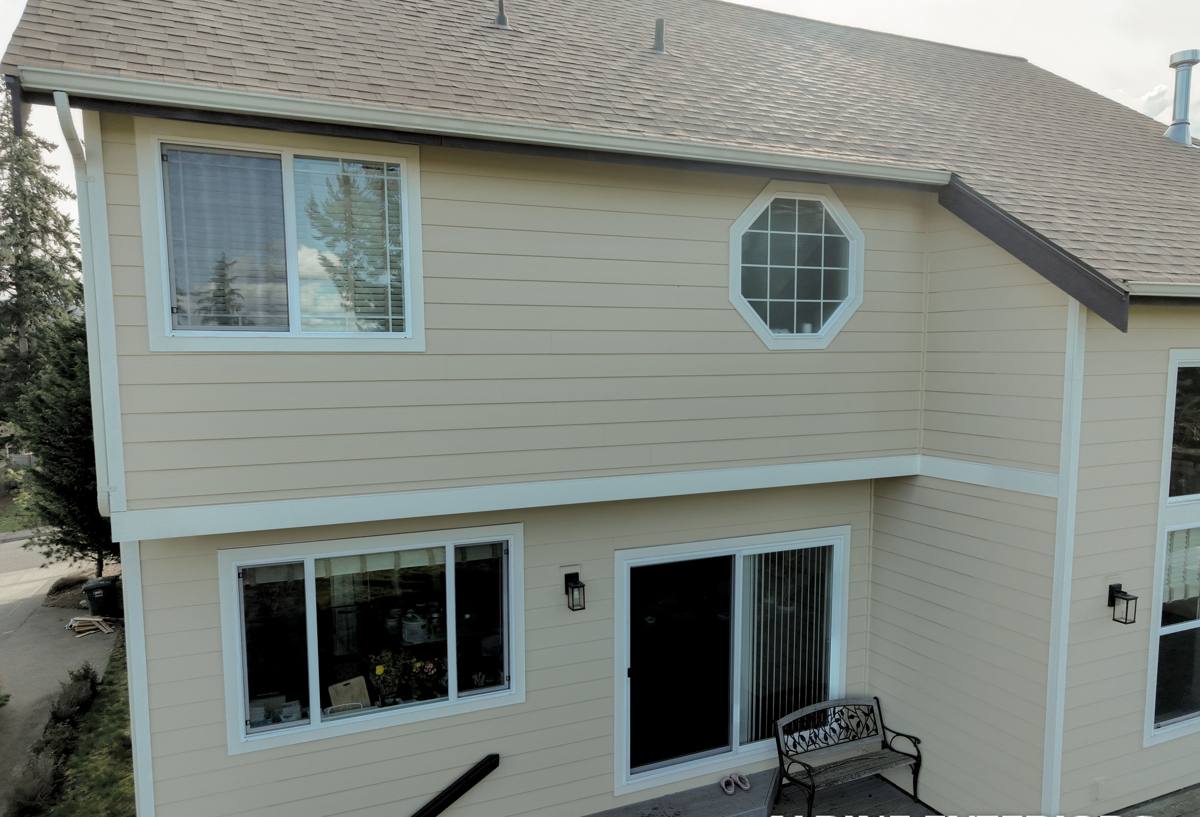
What Local Homes Actually Put a Roof Through
Salt Air and Metal Fatigue
Airborne salt accelerates corrosion on any exposed metal — flashing, nail heads, vent stacks, gutter hardware. On a roof near the water, corrosion-resistant fasteners and flashing aren't an upgrade, they're the baseline. Standard galvanized nails or thin flashing can start showing rust streaks and pinholing years before they should in a drier, inland climate.
Driving Rain and Wind-Driven Water
Rain here rarely falls straight down. Wind off the water pushes it sideways, up under shingle tabs, and into any gap in the flashing or underlayment. A roof that only sheds water well when it's falling vertically is going to leak eventually. Underlayment choice, shingle nailing pattern, and flashing detail all matter more here than they would in a calmer climate.
Moss, Algae, and a Long Wet Season
Shade, moisture, and mild temperatures are exactly what moss and algae need to establish on a roof, and Skagit and Island County give them plenty of all three for much of the year. Moss doesn't just look bad — it holds moisture against the shingle surface, lifts tabs as it grows, and works its way toward the fasteners and decking underneath if it's left alone.
Temperature Swings and Shingle Flexibility
The region doesn't see extreme heat, but shingles still go through daily expansion and contraction cycles, and cold, damp mornings can make shingles more brittle during installation or repair work. Timing the work and handling materials correctly in these conditions is part of doing the job right, not an excuse for cutting corners.
Choosing the Right Shingle for This Climate
Not every asphalt shingle product is built the same way, and the differences matter more in a wet, salt-exposed climate than they would somewhere drier. We walk homeowners through the realistic trade-offs rather than pushing whatever has the best margin.
| Shingle Type | Typical Lifespan Here | Best For | Trade-Offs |
|---|---|---|---|
| 3-Tab Shingles | Shorter end of the range in coastal conditions | Budget-conscious re-roofs, rental or resale properties | Less wind resistance, shows algae staining sooner |
| Architectural (Laminate) Shingles | Longer, more consistent performance | Most owner-occupied Oak Harbor homes | Higher upfront cost, but better wind and impact resistance |
| Algae-Resistant (AR) Shingles | Comparable to standard architectural, with slower staining | Shaded lots, north-facing slopes, tree cover | Slightly higher cost; resistance fades over the life of the roof |
| High Wind-Rated Shingles | Full rated lifespan when installed to spec | Open, exposed lots near the water | Requires correct nailing pattern to actually deliver the rating |
For most Oak Harbor homes, we recommend a mid-to-upper-tier architectural shingle with algae resistance built in. It costs more than 3-tab up front, but it holds its appearance longer and needs less attention in a climate that's actively working against it.
What a Correct Installation Actually Involves
A shingle roof is a system, not just a layer of shingles nailed to plywood. In this climate, every layer underneath the visible shingle earns its keep.
Tear-Off and Deck Inspection
We remove the old roofing down to the deck rather than layering over it. That's the only way to actually see the condition of the sheathing — soft spots, old leaks, or rot don't show up until the old shingles are off, and covering them up doesn't make them go away.
Ice and Water Barrier at Vulnerable Points
Self-adhering waterproof membrane goes down along eaves, valleys, and around penetrations — the places wind-driven rain is most likely to find a way in. This is one of the details that matters more here than in a drier climate, and it's not optional on our installs.
Synthetic Underlayment Across the Field
Over the rest of the deck, synthetic underlayment gives a second line of defense against wind-driven moisture and holds up better than old-style felt paper through a wet install season.
Corrosion-Resistant Flashing and Fasteners
Given the salt exposure, we use flashing and fasteners rated to resist corrosion, not the cheapest available option. Rusted flashing is one of the most common causes of slow, hidden leaks we find on older roofs in this area.
Proper Nailing Pattern and Fastener Count
Wind rating on a shingle package is only real if the shingle is installed with the correct number of nails, placed correctly. Under-nailing is invisible from the ground and is one of the most common shortcuts in roofing — and one of the first things that fails in a coastal windstorm.
Ventilation That Matches the Attic
Balanced intake and exhaust ventilation keeps moisture from building up in the attic, which matters in a climate this wet. Poor ventilation shortens shingle life from underneath, even when everything on the surface looks fine.
Our Process, Start to Finish
- On-site inspection and estimate. We look at the existing roof, the deck condition where visible, ventilation, and any problem areas before quoting anything.
- Written scope and material selection. You know exactly what shingle, underlayment, and flashing package you're getting, and why, before work starts.
- Scheduling around the weather. We plan tear-off and dry-in around forecast windows rather than leaving a deck exposed to Puget Sound rain overnight.
- Tear-off, deck inspection, and any needed sheathing repair. We flag issues and get sign-off before covering anything up.
- Underlayment, flashing, and shingle installation to the standards above.
- Cleanup and magnetic sweep for nails and debris around the property.
- Final walkthrough so you can see the finished work before we consider the job done.
Keeping a Shingle Roof Healthy in This Climate
Even a well-installed roof needs some basic attention in a climate that grows moss this readily. None of this requires a contractor visit every time — most of it is homeowner-level upkeep between inspections.
- Keep gutters and downspouts clear so water isn't backing up under the shingle edge
- Trim back overhanging branches to cut down on shade and debris buildup
- Have moss physically removed rather than power-washed, which can strip granules and shorten shingle life
- Check attic ventilation isn't blocked by insulation or storage
- Look for granules collecting in gutters, a sign a shingle surface is wearing down
- Address small flashing or sealant issues promptly, before a minor gap becomes a deck-level leak
- Schedule a roof check after any major windstorm off the water
What Drives the Cost of a Shingle Roof Here
Every roof is different, so we quote based on the actual job rather than a flat per-square rate, but these are the factors that move the number up or down.
| Factor | Why It Matters |
|---|---|
| Roof size and number of layers being removed | More tear-off labor and disposal, more material |
| Roof pitch and access | Steeper or harder-to-access roofs take longer and need more safety setup |
| Deck condition | Rot or soft sheathing found during tear-off adds repair cost, but skipping it isn't an option |
| Shingle tier chosen | 3-tab, standard architectural, and algae-resistant/high-wind lines all price differently |
| Number of valleys, penetrations, and flashing details | Each one needs individual attention and adds labor time |
| Ventilation upgrades | Adding or correcting intake/exhaust vents where the existing setup is inadequate |
We'd rather walk you through the real range for your specific roof during an estimate than quote a number that doesn't hold up once we're actually up there.
Signs Your Roof Needs a Closer Look
Most shingle roof failures give some warning before they turn into an interior leak. Worth calling someone about if you notice:
- Shingle tabs curling, cracking, or missing after a windstorm
- Heavy moss growth, especially on north-facing or shaded slopes
- Granules building up in gutters or at downspout outlets
- Dark streaking that doesn't wash off, which is usually algae rather than dirt
- Soft spots, sagging, or discoloration on interior ceilings below the roof
- Daylight visible through the attic decking
Why It Matters That We Already Work Oak Harbor
A crew that only occasionally travels out to Oak Harbor doesn't get the same feedback loop a local crew does. We're back in this area regularly, which means we actually see how our own installations — and other roofs in the area — hold up over multiple wet seasons, not just at the final walkthrough. That's how we know which flashing details, underlayment choices, and shingle lines are worth the extra cost out here and which upgrades are marketing rather than performance.
It also means scheduling isn't a guessing game. We're not routing a single Oak Harbor job around a schedule built for a different region, and callbacks for warranty or minor adjustment work don't mean waiting on a crew to make a special trip.
Get a Straight Answer on Your Roof
If you're dealing with an aging shingle roof in Oak Harbor, or you're just not sure whether what you're seeing is normal wear or something that needs attention, we're happy to take a look. The estimate is free, there's no pressure, and you'll get a straight answer about what your roof actually needs — use the form below to get started.