 Anacortes Siding
 Custom Windows Built for Bow's Coastal-Country Climate
Bow sits in that in-between stretch of Skagit County — close enough to Samish Bay and the Sound to catch salt-laden air off the water, but rural enough that homes also take the full brunt of open-field wind and driving rain with nothing to break it up. That combination is harder on windows than either condition alone. Salt air accelerates corrosion on hardware and fasteners, wind-driven rain finds every gap in a tired seal, and the long gray stretch of fall through spring keeps moss and algae established on anything that stays damp. A window that was "good enough" when it was installed twenty or thirty years ago is usually not the window a Bow home needs today.
Custom windows aren't about upsizing everything to picture windows or chasing a trend. They're about specifying the right glass package, frame material, and installation detail for this specific site — orientation to weather, exposure to wind-driven rain, and how the house is built. We've done that work across Skagit County long enough to know which shortcuts fail here and which upgrades actually earn their keep.
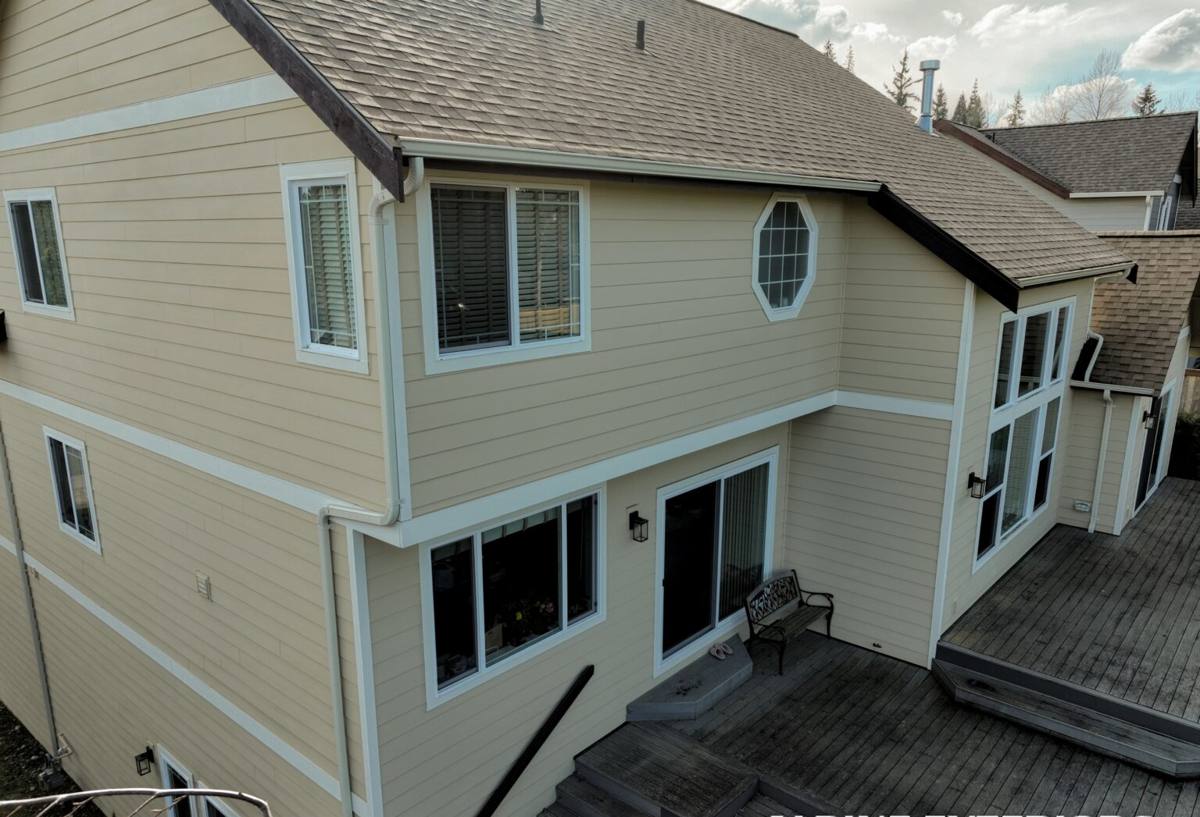
What "Custom" Actually Means for a Bow Home
Custom doesn't mean expensive for its own sake. It means the window is chosen and built to match the opening, the exposure, and the house — not pulled off a generic size chart and forced to fit.
Common reasons Bow homeowners go custom
- Older farmhouses and rural properties with non-standard or slightly out-of-square openings that stock sizes don't fit cleanly
- Additions or outbuildings where window styles need to match an existing home's look
- Rooms facing prevailing wind and rain that need a higher-performance glass and seal package than the rest of the house
- Replacing failed or fogged units where the original frame depth or design is no longer available off the shelf
- Homeowners wanting a specific look — divided lites, a particular trim profile, a color that isn't in a standard catalog
In each case, the goal is the same: a window that fits the opening correctly the first time, seals properly, and holds up to what this stretch of Skagit County throws at it.
What This Climate Demands From a Window
Salt air and hardware corrosion
Proximity to Samish Bay and the broader Puget Sound means airborne salt is a real factor, even a few miles inland. Cheap hardware — hinges, locks, cranks, fasteners — corrodes faster here than in drier inland parts of the state. We spec corrosion-resistant hardware and fastener types on custom installs specifically because we've seen what standard-grade hardware looks like after a decade of coastal exposure.
Driving rain and seal integrity
Wind-driven rain doesn't just fall on a window, it pushes into it. That means the flashing detail and the seal between the window and the wall assembly matter as much as the window itself. A premium window installed with a sloppy flashing job will leak. A modest window installed correctly, with proper head flashing and sealant sequencing, won't. Installation quality is not a secondary concern — it's the difference between a window that performs and one that fails quietly behind the trim for years before anyone notices water damage.
Moss, algae, and prolonged moisture
Skagit County's extended damp season keeps north-facing and shaded window surfaces wet longer than homeowners in drier climates ever deal with. That favors frame materials and finishes that don't hold moisture or feed organic growth, and it argues against deep sill profiles or trim details that trap standing water and debris.
Frame Materials: What We Recommend and Why
| Material | How It Handles Bow's Climate | Trade-Offs |
|---|---|---|
| Vinyl (quality-grade) | Won't corrode, low maintenance, good moisture resistance | Fewer custom color options than fiberglass; lower-end vinyl can warp with age |
| Fiberglass | Excellent dimensional stability in wet, temperature-swinging conditions; holds paint well | Higher upfront cost |
| Wood-clad | Classic look for older farmhouse-style homes; clad exterior protects the wood | Requires attention to clad seams and sill flashing; more maintenance if the clad is compromised |
| Aluminum | Strong and slim sightlines | Poor thermal performance and prone to condensation in our damp winters — we rarely recommend it for residential replacement here |
We don't push one material on every job. We walk the specific opening, talk about maintenance appetite and budget, and recommend what actually holds up on that wall, in that orientation, on that house.
Glass and Seal Packages That Make Sense Locally
For most Bow homes, we're specifying dual-pane units with low-E coatings and argon fill as the baseline — not because it's the fanciest option, but because it's the right balance of energy performance and moisture control for our winters. On rooms with heavier wind-driven rain exposure, we'll talk through upgraded weatherstripping and multi-point locking hardware, which improves both the seal and the compression that keeps rain from finding its way in around the sash.
We're honest about diminishing returns too. Triple-pane glass has its place, but it's not automatically worth the added cost on every opening — we'll tell you when the upgrade earns its keep and when your money is better spent elsewhere, like on flashing detail or a better install crew.
Our Installation Process
- On-site assessment — We measure every opening individually, check for square, and evaluate the existing flashing, sheathing, and any signs of past water intrusion before quoting anything.
- Custom specification — Windows are ordered to the actual opening dimensions and the performance package that fits that specific location on the house, not a one-size answer for the whole project.
- Removal and prep — Old units come out carefully, and we inspect the rough opening for rot or damage that needs to be addressed before a new window goes in. This step gets skipped by rushed crews and it's usually where hidden problems live.
- Flashing and air-sealing — Proper head, jamb, and sill flashing sequencing, plus correct sealant placement, so wind-driven rain sheds away from the opening instead of into it.
- Installation and adjustment — Windows are set, shimmed, and fastened to spec, then operated and adjusted to confirm smooth function and full seal contact.
- Interior and exterior finish — Trim, caulking, and touch-up work completed to match the home.
- Final walkthrough — We check operation, sightlines, and seal on every window with you before calling the job done.
Signs a Bow Home's Windows Need Attention
- Visible fog or moisture between panes (a failed seal on double-pane glass)
- Drafts you can feel near the frame, especially during wind-driven storms
- Soft or discolored trim or sill material, which often points to water getting behind the frame
- Windows that are difficult to open, close, or lock — often a sign of a warped frame or failed hardware
- Persistent moss, algae, or black staining around the frame or sill that keeps returning after cleaning
- Noticeably higher heating bills without another clear explanation
What Custom Windows Typically Cost
Pricing depends on opening size, frame material, glass package, and how many windows are done at once — a whole-house replacement generally brings a better per-window cost than piecemeal work. As a rough guide, quality vinyl replacements tend to run at the lower end of the range, fiberglass and wood-clad custom units run higher, and unusual shapes or sizes add cost regardless of material. We'll give you a specific, itemized number after seeing the actual openings — we don't quote sight-unseen and we don't pad estimates with vague allowances.
Why a Crew That Already Works Bow Matters
Bow isn't a big town, but it has its own building patterns — older farmhouses, a mix of custom and production-built homes, and properties that sit exposed to wind and rain in ways a subdivision closer to town doesn't. A crew that's already worked this area knows what to check for in older rough openings, understands how the local weather actually behaves through the seasons, and isn't learning on your house. We're a Skagit County-based crew, and jobs in Bow and the surrounding rural areas around Anacortes are routine work for us, not a special trip.
That familiarity shows up in small decisions — how we sequence flashing on an exposed wall, which hardware grade we default to given the salt air, how we handle an out-of-square opening on an older structure. Those are the details that separate a window installation that lasts fifteen-plus years from one that starts leaking in year three.
Get a Free, No-Pressure Estimate
If your windows in Bow are drafty, fogged, hard to operate, or just due for an honest look, we're happy to come take a look and give you a straight answer — whether that means a full custom replacement or just fixing what's actually wrong. Fill out the form below to schedule a free estimate with no pressure and no sales pitch.