 Anacortes Siding
 Why Siding Repair in Bow Has to Account for the Coast
Bow sits in the part of Skagit County where open water, farmland, and wind all meet, and that combination is hard on exterior siding. Homes here take on salt-laden air off the bay, long stretches of driving rain pushed sideways by wind, and a moss season that can run most of the year in shaded or north-facing spots. None of that is unusual for this corner of Washington, but it does mean siding repair in Bow needs to be done with the local conditions in mind, not treated like a generic patch job pulled from a national playbook.
A repair that looks fine the day it's finished but doesn't account for how water moves behind siding, or how salt air accelerates corrosion on fasteners and trim, is a repair you'll be paying for again in a few years. We work on homes in Bow regularly enough to know which failure patterns show up here and why, and that shapes how we approach every repair — not just patching the visible damage, but figuring out what caused it.
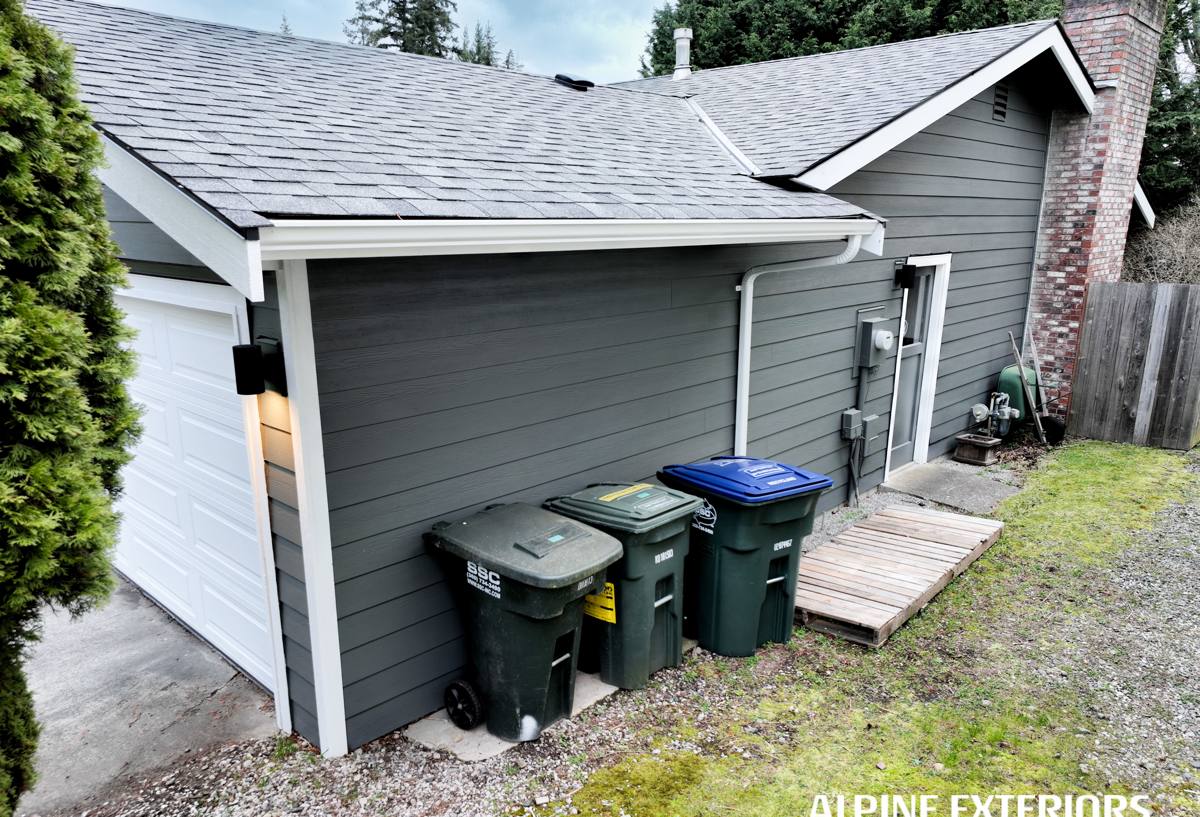
What Salt Air, Driving Rain, and Moss Actually Do to Siding
Salt Air and Corrosion
Airborne salt doesn't just sit on the surface of your siding — it gets into every metal component of the system: nails, screws, flashing, and trim fasteners. Over years, that accelerates corrosion, especially on lower-quality or improperly coated fasteners. Once a fastener starts to fail, the siding panel it's holding loses its grip, and that's often the first visible sign something's wrong: a panel that's slightly loose, a corner that's lifted, or a streak of rust bleeding through paint.
Driving Rain and Wind-Driven Moisture
Bow gets its share of storms that push rain sideways rather than straight down. Siding systems are designed to shed water that hits them head-on, but wind-driven rain finds every gap, seam, and unsealed joint. Where caulking has failed, where a butt joint wasn't flashed correctly, or where trim wasn't installed with the right clearances, that rain works its way behind the siding and into the wall assembly — often without any obvious sign from the outside until the damage is already significant.
Moss, Shade, and Prolonged Dampness
On north-facing walls, under eaves, and anywhere tree cover keeps siding shaded, moss and algae get a long growing season in this climate. Beyond the cosmetic green-black staining, moss holds moisture directly against the siding surface for extended periods. On wood-based or improperly sealed products, that constant dampness accelerates rot and swelling. Even on materials that resist moisture better, moss buildup traps debris in seams and can interfere with how water is supposed to drain off the wall.
Signs Your Bow Home May Need Siding Repair
Most siding problems don't announce themselves loudly. They show up as small details that are easy to write off as cosmetic — until they aren't. Walk your exterior and look for:
- Panels or boards that flex, feel loose, or have visibly pulled away from the wall
- Rust streaking near nail heads, screws, or metal trim and flashing
- Persistent moss or algae growth that comes back soon after cleaning
- Soft, spongy, or swollen spots, especially near the bottom of walls or around windows
- Cracked, peeling, or bubbling paint that keeps recurring in the same spots
- Gaps opening up at butt joints, corners, or where siding meets trim
- Water stains or musty smells on interior walls that back up to exterior siding
- Visible daylight or drafts around penetrations like hose bibs, vents, or light fixtures
Any one of these on its own might be minor. Several together, especially on a wall that takes direct weather, usually means water has already gotten past the surface and the repair needs to address more than what's visible.
What a Correct Siding Repair Actually Involves
There's a real difference between a repair that solves the problem and one that just covers it up. A lot of "quick fix" work in this climate ends up being redone within a few years because it treats the symptom rather than the entry point for moisture.
| Surface Patch Approach | Proper Repair Approach |
|---|---|
| Caulks over visible gaps without checking what's behind them | Removes affected material to inspect sheathing, house wrap, and framing underneath |
| Replaces only the damaged board or panel | Replaces damaged material and corrects the flashing or drainage detail that let water in |
| Reuses corroded fasteners | Replaces fasteners with corrosion-resistant hardware appropriate for coastal exposure |
| Matches paint color by eye | Matches factory-finished color and texture so the repair doesn't stand out over time |
| Treats moss with a one-time wash | Identifies the shade or drainage issue causing recurring moss and addresses it where possible |
A proper repair starts by figuring out how water or damage got in, not just where it's showing up. That often means opening up a section wider than the visible damage to check the condition of the wall behind it. If the sheathing or framing underneath has already started to soften or rot, patching the siding alone won't stop the problem — it just hides it again.
Repair vs. Replacement — How We Help You Decide
Not every siding problem in Bow calls for full replacement, and not every problem is fixable with a patch. The right call depends on how far the damage has spread and how the existing siding is holding up overall.
| Factor | Favors Repair | Favors Replacement |
|---|---|---|
| Extent of damage | Isolated to one or two areas | Spread across multiple walls or sides of the house |
| Age of existing siding | Relatively recent, otherwise sound | Near or past its expected service life |
| Underlying wall condition | Sheathing and framing intact | Rot or moisture damage found behind multiple sections |
| Material match | Matching product or color still available | Discontinued product with no reasonable match |
| Root cause | A single, fixable failure point (flashing, caulk, fasteners) | A systemic issue affecting the whole installation |
We'll always tell you honestly which side of that table your home falls on. If a repair will genuinely hold up, that's what we recommend — there's no reason to sell a full replacement when a targeted fix solves the problem.
Our Siding Repair Process
- Inspection. We look at the damaged area and the surrounding wall, including a check of trim, flashing, and any penetrations nearby, since problems rarely stay isolated to a single board.
- Diagnosis. We identify the actual cause — a failed seal, a fastener issue, a drainage problem, or moisture that's been building behind the surface — before deciding on a repair plan.
- Scope and explanation. We walk you through what we found, what needs to be opened up, and what the repair will involve, in plain terms, before any work starts.
- Removal and inspection behind the siding. Damaged material comes off so we can check the condition of the sheathing and water-resistive barrier underneath.
- Repair of the underlying issue. Any compromised sheathing, flashing, or sealant gets corrected — this is the step that determines whether the repair actually lasts.
- Siding replacement and finish match. New material goes in, matched to the existing siding's profile and factory finish as closely as possible.
- Final check. We confirm the repair sheds water correctly and that fasteners, caulking, and trim details are done to hold up under Bow's weather.
Why We Repair With James Hardie
We install James Hardie fiber cement siding exclusively, and that carries over into how we handle repairs. When a section of Hardie siding needs replacing, the ColorPlus factory finish gives us a real shot at matching the existing color and sheen, rather than trying to hand-match paint on-site and hoping it weathers the same way. Hardie's fiber cement construction also doesn't absorb moisture and swell the way wood-based products can, which matters directly in a climate with this much sustained dampness and moss exposure.
If your home currently has a different siding product — vinyl, LP SmartSide, cedar, or another fiber cement brand — we'll still repair what's there when a repair makes sense, and we'll tell you honestly what to expect from that material going forward. But when a wall's damage is extensive enough that replacement is the better call, Hardie is what we put on, because it's the product we trust to hold up to salt air, driving rain, and a long moss season without becoming a recurring repair.
Why Hiring a Crew That Already Works Bow Matters
Siding repair looks different in coastal Skagit County than it does in a drier inland climate, and a crew that hasn't worked this specific mix of salt exposure, wind-driven rain, and moss can miss details that matter here — like using fasteners rated for coastal corrosion, or recognizing that a moss stain on a north wall is a symptom of a drainage issue, not just a cleaning problem. Working in Bow and the surrounding area regularly means we've already seen how these failure patterns show up on real homes, and we build that into every repair instead of relearning it on your house.
It also means straightforward logistics — someone who can get out to look at the damage without a long delay, and who understands local permitting and inspection expectations if the repair is significant enough to require them.
Getting a Repair Estimate
If you're seeing loose panels, recurring moss, soft spots, or water stains on a wall in your Bow home, it's worth having it looked at before the next round of storms makes the problem bigger. We offer free, no-pressure estimates — we'll inspect the damage, explain honestly what we find, and give you a straightforward recommendation on repair versus replacement, with no obligation to move forward. Use the form below to get started.