 Anacortes Siding
 Roofing in Burlington: A Different Set of Conditions
Burlington sits close enough to the water and to the Skagit Valley's damp lowland air that roofs here age differently than they would inland. Between salt-laden wind off the Salish Sea, long stretches of driving rain through fall and winter, and a moss season that can run eight months or more, an asphalt shingle roof in this part of Skagit County is under near-constant low-grade stress. None of that means shingle roofing is a bad choice for the area — it's still the most practical, cost-effective option for the vast majority of homes here. It just means the installation has to account for the local climate instead of following a generic, one-size-fits-all approach.
We work on roofs throughout Burlington and the surrounding Anacortes area regularly, so we're not guessing at what holds up here. We're describing what we actually see on tear-offs: where moss gets a foothold first, which flashing details fail early, and which shortcuts cause callbacks two or three winters down the road.
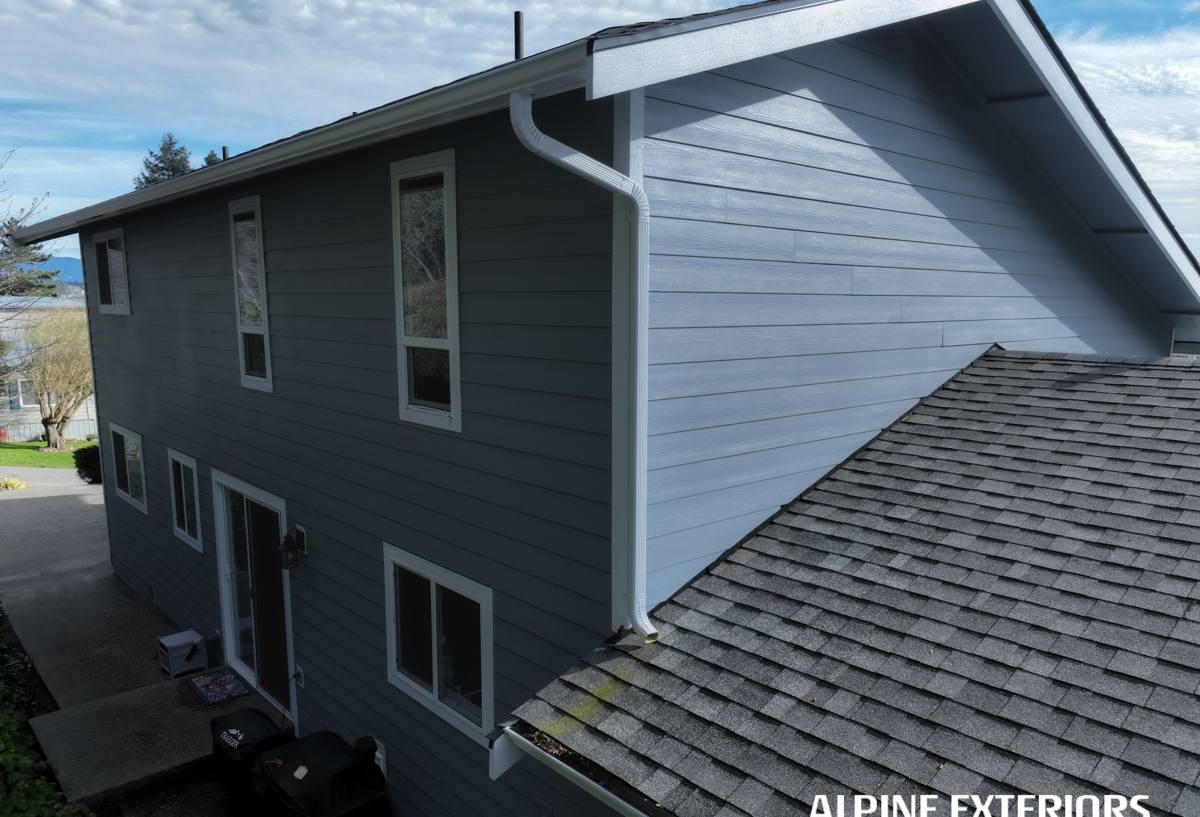
What Salt Air, Rain, and Moss Actually Do to a Roof
Salt Air
Homes closer to the water deal with airborne salt that accelerates corrosion on exposed metal — nail heads, flashing, vent stacks, and gutter hardware. Left unaddressed, corroded fasteners and flashing are one of the more common causes of hidden leaks, because the shingles above them can still look fine while the metal underneath is failing.
Driving Rain
Wind-driven rain doesn't just fall straight down — it pushes sideways and can work its way under shingle edges, around penetrations, and into valleys if those areas weren't detailed correctly. A roof that would perform fine in a calmer climate can leak here simply because the underlayment and flashing weren't built for wind-driven water.
Moss and Moisture
Shaded, north-facing, and low-slope sections of roof stay damp longer in this climate, and that moisture is exactly what moss needs to establish itself. Once moss takes hold, it holds water against the shingle surface, lifts shingle edges as it grows, and can shorten the life of an otherwise sound roof by years if it's never addressed.
What a Correct Asphalt Shingle Installation Involves
A shingle roof is a system, not just a layer of shingles nailed to plywood. Every layer underneath the visible surface matters, especially in a climate like this one.
- Deck inspection and repair — soft, delaminated, or water-damaged sheathing gets replaced before anything new goes down, not covered up.
- Ice and water shield at eaves, valleys, and around penetrations — the self-adhering membrane that stops wind-driven rain and ice damming from reaching the deck.
- Synthetic underlayment across the full roof as a second line of defense beneath the shingles.
- Properly lapped flashing at chimneys, walls, skylights, and valleys — most leaks trace back to flashing, not the shingles themselves.
- Balanced intake and exhaust ventilation so the attic can actually dry out between rain events instead of trapping moisture.
- Correct nailing pattern and fastener count per manufacturer specification, using corrosion-resistant fasteners suited to a coastal climate.
- Starter strip and ridge cap detailing done to spec, not just eyeballed, since these are common wind-lift failure points.
Skip any one of these and the roof may still look correct from the ground for a season or two. The problems usually show up later, as a slow leak, premature granule loss, or moss and moisture damage in the areas that were shorted.
Choosing the Right Shingle for a Skagit County Roof
Not every asphalt shingle is built for the same conditions. For a Burlington roof, we generally steer homeowners toward products with algae-resistant (AR) granules and a solid wind rating, since those two factors matter more here than in a drier, calmer climate.
| Shingle Type | Typical Lifespan | Best Suited For | Trade-Offs |
|---|---|---|---|
| 3-Tab Shingle | 15–20 years | Budget-conscious re-roofs, simple roof lines | Lower wind rating, less algae resistance in standard lines, flatter appearance |
| Architectural / Laminate Shingle | 25–30+ years | Most Burlington homes; the current standard choice | Higher upfront cost than 3-tab, but better wind and weather performance |
| Premium / Designer Shingle | 30+ years | Steep, highly visible roofs; homeowners prioritizing appearance and longevity | Highest material cost; benefits are mostly aesthetic plus extended warranty terms |
For most homes in this area, a mid-to-upper architectural shingle with algae-resistant granules and a wind rating suited to coastal exposure offers the best balance of upfront cost, appearance, and how well it actually holds up to the local weather.
Ventilation: The Part Most Roofs Get Wrong
Attic ventilation doesn't get much attention from homeowners because it's invisible, but it's one of the biggest factors in how long a shingle roof lasts in a wet climate. An attic that can't breathe traps humid air against the underside of the roof deck, which contributes to premature shingle aging from below and creates the kind of persistent dampness that invites rot and mold.
We check intake (soffit vents) and exhaust (ridge or box vents) as a matched pair, not in isolation — exhaust vents without enough intake air just pull moist household air through the attic instead of venting it. On re-roofs, this is often the single most impactful correction we make, and it's one that's completely hidden once the job is done.
Signs a Burlington Roof Needs Attention
Because moss and moisture damage tend to build slowly, a lot of roof problems in this area go unnoticed until they show up as an active leak. Worth checking for:
- Moss growth on shaded or north-facing slopes, especially in valleys and along the bottom edge
- Granules collecting in gutters or at downspout outlets
- Shingle edges that look curled, cupped, or lifted
- Dark streaking that isn't just moss (a sign of algae growth)
- Soft spots or sagging when walked, viewed, or inspected from the attic
- Rusting or corroded flashing, vent stacks, or exposed fasteners
- Daylight visible through the roof deck from inside the attic
- Water stains on interior ceilings, especially after a windy rainstorm
Any one of these on its own isn't necessarily an emergency, but it's worth having a professional look before the next wet season rather than after.
How Our Process Works
Inspection and Estimate
We start by actually getting on the roof — not just estimating from the ground or a photo. We check the deck condition, flashing, ventilation, and moss or moisture damage, then walk the homeowner through what we're seeing before recommending a scope of work.
Material Selection
We help match the shingle to the roof's exposure, slope, and the homeowner's budget, with a clear explanation of why we're recommending a given product for that specific house rather than a blanket recommendation.
Tear-Off and Deck Repair
Old roofing comes off down to the deck so we can actually see what's underneath. Any damaged sheathing gets replaced — this isn't an upsell, it's the only way to know the new roof has something sound to attach to.
Installation
Ice and water shield, underlayment, flashing, shingles, and ridge detailing are installed to manufacturer specification, with the fastening and lapping details built for wind-driven rain rather than a fair-weather install.
Cleanup and Final Walkthrough
We clear debris and nails from the yard and driveway, then walk the finished roof with the homeowner and go over warranty coverage on both materials and workmanship.
What Affects the Cost of a Burlington Re-Roof
Every roof is different, so exact pricing depends on a site visit, but these are the factors that move the number most:
| Factor | Why It Matters |
|---|---|
| Roof size and number of layers to remove | More tear-off labor and disposal, especially if there's an existing layer already down |
| Roof pitch and access | Steeper or harder-to-access roofs require more safety equipment and time |
| Deck condition | Rotted or delaminated sheathing found during tear-off adds material and labor |
| Shingle tier chosen | 3-tab, architectural, and premium products carry different material costs |
| Number of penetrations and valleys | Chimneys, skylights, and valleys each require additional flashing work |
| Ventilation upgrades | Adding or correcting intake/exhaust venting adds labor but pays off long-term |
We'd rather give a homeowner an accurate number after actually seeing the roof than a rough figure over the phone that changes once we're up there.
Why It Matters That We Already Work in Burlington
A roofing crew that's unfamiliar with this area is working from general assumptions. A crew that already works Burlington and the greater Anacortes area knows which roof orientations in this pocket of Skagit County collect moss fastest, understands local permitting expectations, and isn't caught off guard scheduling around the region's wet-season weather windows. That local familiarity shows up in fewer surprises during the job and a roof that's actually built for the conditions it has to survive, not just a generic install.
It also matters for accountability. A local crew is still around the following year if a warranty question comes up — not a name that showed up for one storm season and moved on.
If your roof is due for a look, or you're just not sure whether what you're seeing is normal wear or something that needs attention, we're happy to come take a look. Estimates are free and there's no pressure to move forward — just a straight assessment of what your roof actually needs.