 Anacortes Siding
 Decking in Burlington Has to Handle More Than Most People Expect
Burlington sits close enough to Skagit Bay and the Salish Sea that homes here deal with a version of coastal exposure even a few miles inland doesn't get. Add in the amount of rain Skagit County sees over a typical fall through spring stretch, and a deck that looks fine at installation can start showing problems within a couple of seasons if it wasn't built with this climate in mind. We've worked on decks throughout the Anacortes and Burlington area long enough to know which failures are avoidable and which ones are just the cost of using the wrong material or skipping a step most people never see once the boards are down.
This page is specifically about composite decking for Burlington properties — what the climate does to a deck over time, what a correct installation actually involves, and how our process works for homeowners in this area.
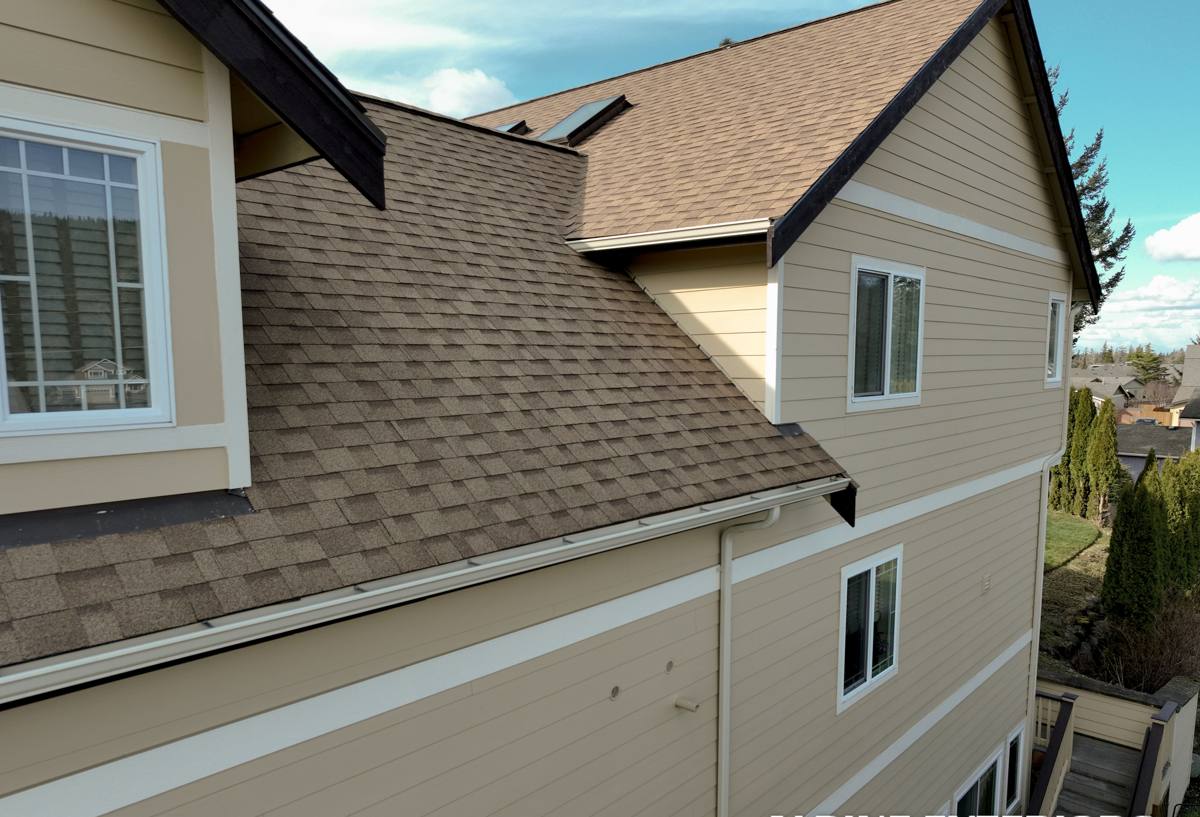
What Salt Air, Rain, and Moss Actually Do to a Deck
Three things drive most of the deck problems we see in this part of Skagit County:
Salt-Laden Air
Even homes that aren't waterfront pick up airborne salt on breezy days. Over years, that salt accelerates corrosion on exposed metal fasteners, hinges, and hardware, and it can dull or degrade certain finishes faster than a dry-climate deck would experience.
Driving Rain
Rain that comes in at an angle, pushed by wind off the water, gets under railings, into end grain, and into any gap where boards weren't spaced or fastened correctly. Standing water and trapped moisture are the real enemy — not rain itself, but rain that has nowhere to go.
Long Moss Season
Skagit County's damp, mild winters are ideal moss and algae growing conditions. Moss holds moisture against a deck surface for weeks at a time, and on shaded or north-facing decks it can build up almost year-round. Beyond looking bad, a mossy surface stays wet longer, which matters for how a deck ages and how safe it is underfoot.
Why We Recommend Composite Decking for Burlington Properties
Wood decking isn't wrong everywhere, but for the conditions Burlington homes actually face, composite decking solves problems that wood decking constantly fights. Composite boards — made from a blend of wood fiber and recycled plastic, often with a cap layer for weather and stain resistance — don't absorb water the way wood does, don't need annual staining or sealing, and hold up better against the freeze-thaw and wet-dry cycling that's common here.
That doesn't mean composite decking is maintenance-free or immune to every issue. It still needs the right substructure, the right fasteners, and the right installation details to perform well over its warranty period. The material solves the surface-level moisture and rot problems; the installation determines whether the deck stays structurally sound underneath.
Composite vs. Wood Decking for This Climate
| Factor | Wood Decking | Composite Decking |
|---|---|---|
| Moisture absorption | Absorbs water, prone to swelling and checking | Minimal absorption, especially capped boards |
| Moss and algae resistance | Rough grain traps moisture, feeds growth | Denser, often textured surface sheds moisture faster |
| Annual maintenance | Staining or sealing typically needed every 1-3 years | Periodic washing; no staining or sealing |
| Splintering / warping | Common as boards age and dry unevenly | Rare under normal use |
| Upfront cost | Lower material cost | Higher material cost, often offset by lower upkeep |
| Typical lifespan | 10-15 years with regular maintenance | 25-30+ years, warranty-backed |
What a Correct Composite Deck Installation Involves
Composite boards get most of the attention because they're what you see, but a deck's long-term performance in a wet, salty climate is decided by what's underneath and how it's fastened together.
Substructure and Joists
We build to joist spacing that matches the specific composite product being used — many composite boards require tighter joist spacing than traditional wood decking, especially on angled or diagonal layouts. Skipping this is one of the most common causes of bounce, sag, or premature board fatigue we see on decks installed by crews unfamiliar with composite requirements.
Fasteners and Hardware
Given the salt exposure in this area, we use corrosion-resistant, coated or stainless fasteners rated for coastal-adjacent use, along with joist tape or flashing on the framing to protect wood substructure from moisture even where it's covered by decking.
Drainage and Airflow
Proper board spacing, ledger flashing where the deck meets the house, and clearance underneath for airflow all matter more here than in a drier climate. A deck that can't shed water and dry out between rain events will hold onto moss, mildew, and moisture-related wear no matter how good the boards themselves are.
Railings and Fastening Points
Railing posts and connection points are common weak spots for water intrusion. We flash and seal these penetrations properly rather than relying on caulk alone, since caulk-only seals tend to fail first in a climate with this much sustained moisture.
Our Process for Burlington Deck Projects
- Site visit and assessment — We look at sun exposure, prevailing wind and rain direction, existing structure (if replacing an old deck), and drainage around the foundation before recommending a layout or material.
- Material selection — We walk through composite board options, color and texture choices, and railing systems based on your budget and how exposed the deck will be to weather.
- Permitting — Most deck projects in this area require a permit, particularly for elevated structures or anything attached to the home. We handle that process rather than leaving it to the homeowner.
- Demolition and substructure build — Old decking is removed, framing is inspected and repaired or rebuilt as needed, and joist spacing is set to the composite manufacturer's spec.
- Installation — Boards, fasteners, and flashing go in per manufacturer requirements, with attention to expansion gaps that composite decking needs as it shifts with temperature.
- Final walkthrough — We go over the finished deck with you, including basic care so it holds up through its first few wet seasons.
Cost Factors for Composite Decking in Burlington
Composite decking costs vary based on several factors specific to each project. Here's what typically moves the number:
| Factor | How It Affects Cost |
|---|---|
| Deck size and shape | Larger decks and complex angles or multi-level designs increase material and labor |
| Board tier | Entry-level capped composite vs. premium/high-end lines varies significantly |
| Substructure condition | Replacing rotted or undersized framing adds cost but is not optional if found |
| Railing system | Composite, cable, or metal railing systems price very differently |
| Height and access | Elevated decks require additional structural work and sometimes stairs |
| Removal of old decking | Tear-off and disposal of an existing wood or old composite deck |
We give homeowners a real number after seeing the site — not a phone-quote estimate — because the substructure condition alone can shift a project's scope significantly once we're actually under the old deck.
Maintaining a Composite Deck Through Skagit County's Wet Season
Composite decking cuts maintenance dramatically compared to wood, but "low maintenance" isn't "no maintenance," especially with the moss pressure this area sees. A simple seasonal routine keeps a composite deck looking and performing the way it should:
- Sweep debris and standing organic matter (leaves, needles, moss spores) off the deck regularly through fall and winter
- Wash the surface with a mild soap-and-water scrub or a composite-safe cleaner a couple of times a year, more often on shaded sections
- Avoid high-pressure power washing directly on board surfaces — it can damage the cap layer on many composite products
- Keep planters and rugs from sitting in one spot for long stretches, which traps moisture underneath
- Check railing posts, stair connections, and ledger flashing annually for any sign of water intrusion
- Trim back overhanging trees or shrubs that keep sections of the deck shaded and slow to dry
Why Hiring a Crew That Already Works in Burlington Matters
Composite decking installation isn't identical everywhere. A crew used to building in a dry inland climate can do a technically fine install by their own standards and still miss details that matter specifically here — fastener corrosion resistance, joist spacing for a wetter environment, drainage planning around moss-prone shaded areas, and flashing details that account for driving, wind-pushed rain rather than straight-down rain.
Working regularly in Burlington and the surrounding Anacortes area means we're not guessing at how this climate treats a deck over time — we're building to what we've actually seen hold up and what hasn't, on homes with the same salt air, rain patterns, and moss exposure yours has.
If you're planning a new deck or replacing one that's showing its age, we're happy to take a look and put together a straightforward, no-pressure estimate — just fill out the form below and we'll get in touch.