 Anacortes Siding
 Siding Built for Burlington's Wet, Green Corner of Skagit County
Burlington sits low in the Skagit Valley, close enough to Anacortes and Puget Sound to catch the marine air rolling in off the water, but flat and open enough to hold onto valley moisture longer than the hillier ground around it. That combination is hard on siding. Homes here deal with long stretches of driving rain, heavy morning dew and fog off the farmland, and a moss season that can run most of the year in shaded, north-facing spots. Siding that isn't built for that mix ends up soft, streaked, or peeling well before it should.
We install James Hardie fiber cement siding exclusively, and this page is about what that looks like specifically for a Burlington home — not siding in general, but the product, prep, and installation details that matter for houses sitting in this particular stretch of the valley.
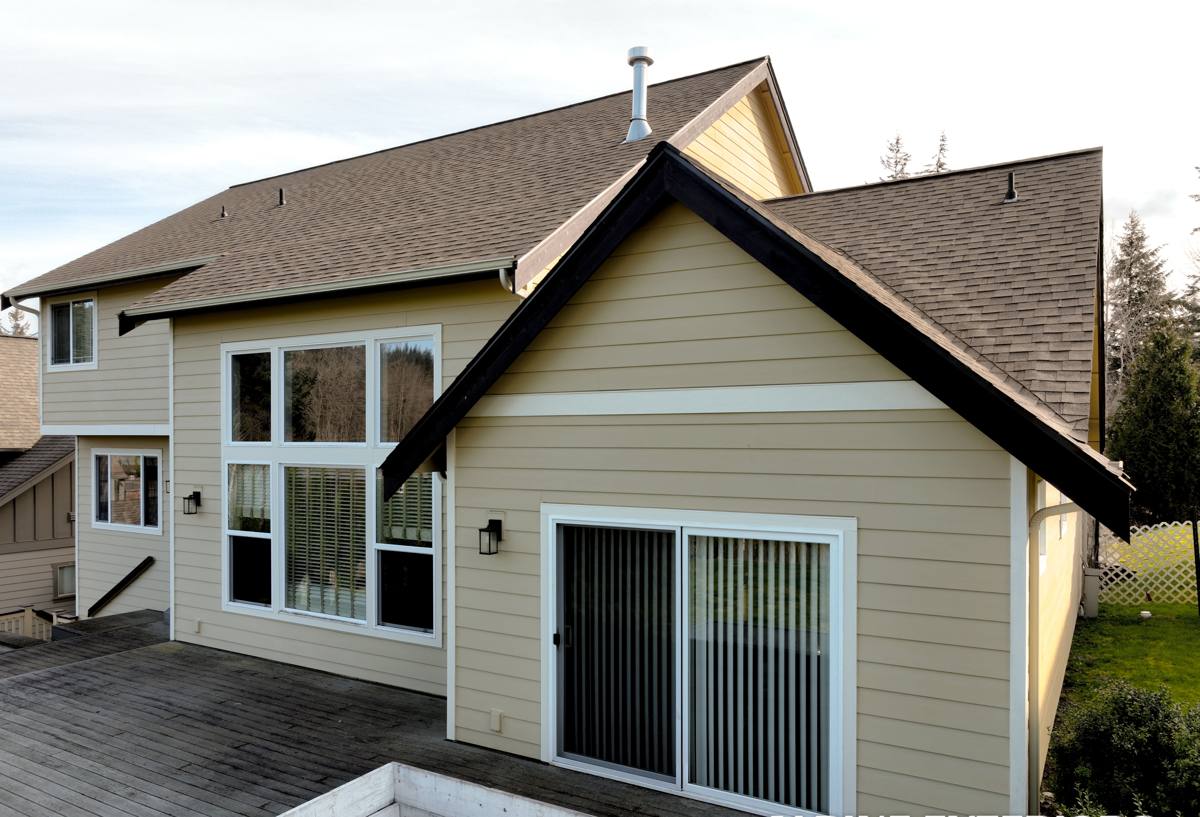
What Burlington's Climate Actually Does to Siding
Driving Rain and Wind-Driven Moisture
Storms coming off the Sound don't just drop rain straight down — wind pushes it sideways into wall assemblies, seams, and trim joints. Siding that relies on face-sealing (caulk and paint alone to keep water out) tends to fail first at these pressure points. Water finds its way behind the cladding, and once it's trapped against sheathing that can't dry out quickly, rot and mold follow.
Moss, Mildew, and Organic Growth
Shaded walls, tree-lined lots, and the valley's damp air give moss and algae exactly what they need to take hold. On wood-based or fiber-composite products with a softer surface, that organic growth can work into the material itself over time, not just sit on top of it. Removing it aggressively — pressure washing, scrubbing — can also strip factory coatings and shorten the life of the siding underneath.
Salt Air and Coastal Exposure
Burlington isn't right on the water, but it's close enough that salt-laden air moving inland off Puget Sound and the Anacortes side of the county reaches homes here, especially on days with a steady onshore wind. Salt air accelerates corrosion in exposed fasteners and metal trim, and it breaks down lower-grade paint finishes faster than an inland climate would.
Why Fiber Cement Is the Right Material Here
Fiber cement isn't a fad choice for this region — it's a practical answer to the three problems above. It's non-combustible, it doesn't swell and rot the way wood-based products can when they take on moisture, and a factory-applied finish holds up to UV and salt exposure far better than field-applied paint. That's also why we don't install vinyl, LP SmartSide, or primed wood siding: each of those has a specific weak point — heat distortion, edge-swelling, or repaint cycles — that shows up faster in a climate like Skagit County's than it would somewhere drier and milder.
James Hardie specifically engineers different siding formulations for different climate zones (their HZ5 and HZ10 systems), and the Pacific Northwest falls into the wetter, cooler HZ5 zone. That matters more than most homeowners realize — it's the difference between a product formulated for this rainfall pattern and one that simply happens to be available at a supply yard.
What Correct Installation Involves
Fiber cement siding is only as good as the assembly it's installed over. Most of the siding failures we get called out to inspect in this area aren't a materials problem — they're an installation shortcut that let water get behind the cladding. A correct install includes:
- A drainage gap (rain screen) between the siding and the weather-resistive barrier, so any moisture that does get past the surface can drain and the wall can dry
- Properly lapped and sealed house wrap or building paper underneath, with flashing at every horizontal transition — window heads, door trim, deck ledgers, roof-to-wall intersections
- Fasteners driven to Hardie's specified pattern and depth, not overdriven or underdriven, using corrosion-resistant nails or screws appropriate for coastal-influenced air
- Correct clearance from grade, decks, patios, and roof lines so splashback and standing water can't wick into the bottom courses
- Factory-mitered or properly caulked joints at corners and butt seams, using sealants rated for the product and the climate
- ColorPlus panels handled and cut with techniques that protect the factory finish, rather than field-painted after standard installation
Skip any one of these and the siding can still look fine for a year or two before problems show up — which is exactly why so many moisture issues in this region trace back to installation, not the product itself.
James Hardie Products We Install in Burlington
We spec products by wall exposure, not a single blanket choice for the whole house. A wall that takes direct wind-driven rain gets treated differently than a covered or sheltered elevation.
| Product | Best Use on a Burlington Home | Why It Fits |
|---|---|---|
| HardiePlank Lap Siding (HZ5) | Primary field siding on most elevations | Climate-engineered for Pacific Northwest moisture and temperature swings |
| HardiePanel Vertical Siding | Accent walls, gables, modern facades | Clean lines with the same moisture and fire performance as lap siding |
| HardieTrim Boards | Corners, window and door surrounds, fascia | Resists the swelling and splitting that wood trim shows in damp corners |
| ColorPlus Factory Finish | Any exposed elevation, especially shaded or moss-prone walls | Baked-on finish holds color and resists mildew staining far longer than field paint |
Our Process for a Burlington Job
The steps don't change much house to house, but how we apply them does — a shaded, moss-prone wall on a tree-lined lot gets different attention than a sun-exposed elevation facing the wind.
- Walkthrough and assessment. We look at existing siding condition, moisture points, roofline drainage, and which walls take the worst weather exposure.
- Tear-off and sheathing check. Old siding comes off and we inspect sheathing underneath for rot or soft spots before anything new goes up — this is where hidden moisture damage gets caught.
- Weather barrier and rain screen install. House wrap, flashing, and drainage gap go in first, sealed at every penetration and transition.
- Siding installation. Panels and planks go up to Hardie's fastening and clearance specs, with trim and corners fitted to shed water rather than trap it.
- Final detailing. Caulking, touch-up, and a walkthrough so you know what maintenance (if any) to expect going forward.
What Drives Cost on a Job Like This
Every home is different, but the same handful of factors move the price up or down on most Burlington projects:
| Factor | Why It Matters |
|---|---|
| Amount of tear-off and sheathing repair | Hidden rot from a previous moisture-trapping install adds labor before new siding can go up |
| Wall complexity (gables, dormers, trim detail) | More cuts, corners, and flashing points mean more labor time |
| Product line and finish selection | Panel vs. lap profile, and standard vs. premium ColorPlus colors, carry different material costs |
| Site access and exposure | Second-story work, tight lot lines, and heavily shaded/wet elevations affect scheduling and prep |
| Trim and accessory scope | Full trim replacement vs. reusing sound existing trim changes the total materials list |
We walk every property before quoting so the number reflects your actual home, not a generic per-square-foot estimate.
Keeping Fiber Cement Siding Looking Right in This Climate
James Hardie siding is low-maintenance compared to wood or repainted composite products, but "low-maintenance" isn't "no-maintenance" in a climate like this one. A short annual routine keeps it performing the way it's supposed to:
- Rinse siding with a garden hose (not a pressure washer) once or twice a year to clear pollen, dust, and early moss growth
- Check caulking at trim joints and window surrounds annually — sealant is the first thing to wear out, well before the siding itself
- Keep gutters clear so overflow doesn't run down the face of the siding repeatedly
- Trim back vegetation and tree cover that keeps a wall shaded and damp longer than the rest of the house
- Watch for moss starting at butt joints or the bottom courses — that's usually the first sign a wall isn't drying between rain events
Why It Matters to Hire a Crew That Already Works in Burlington
Siding installation isn't one-size-fits-all across a region. A crew used to installing in a dry inland climate will often skip or shortcut rain-screen detailing that's non-negotiable here — and it won't show up as a problem until a wet winter or two down the road. Working regularly in Skagit County means knowing which elevations on a typical local lot take the worst wind-driven rain, where moss tends to establish first, and how to detail flashing so it actually performs through a real Pacific Northwest winter, not just a mild one.
It also means being reachable if a question comes up after the job is done — not a crew that installed once in the area and moved on.
If you're planning a siding project in Burlington, we're glad to walk the property, look at what your home is actually dealing with, and put together a straightforward, no-pressure estimate using the form below.