 Anacortes Siding
 Roof Replacement in Burlington, Washington
Burlington sits inland from Anacortes but shares the same Skagit County weather pattern that wears down roofs faster than most homeowners expect: long wet winters, a moss season that never fully ends, and enough marine-influenced humidity to keep shingles damp for days after a storm passes. A roof that looks fine from the driveway can already be losing granules, holding moisture under the felt, or growing moss colonies that lift shingle edges. We replace roofs in Burlington as part of our regular Skagit County service area, and we build every roof for this specific climate rather than a generic weather profile.
This page covers what a Burlington roof replacement actually involves — the decisions that matter, the materials that hold up here, and the process we follow from first estimate to final cleanup.
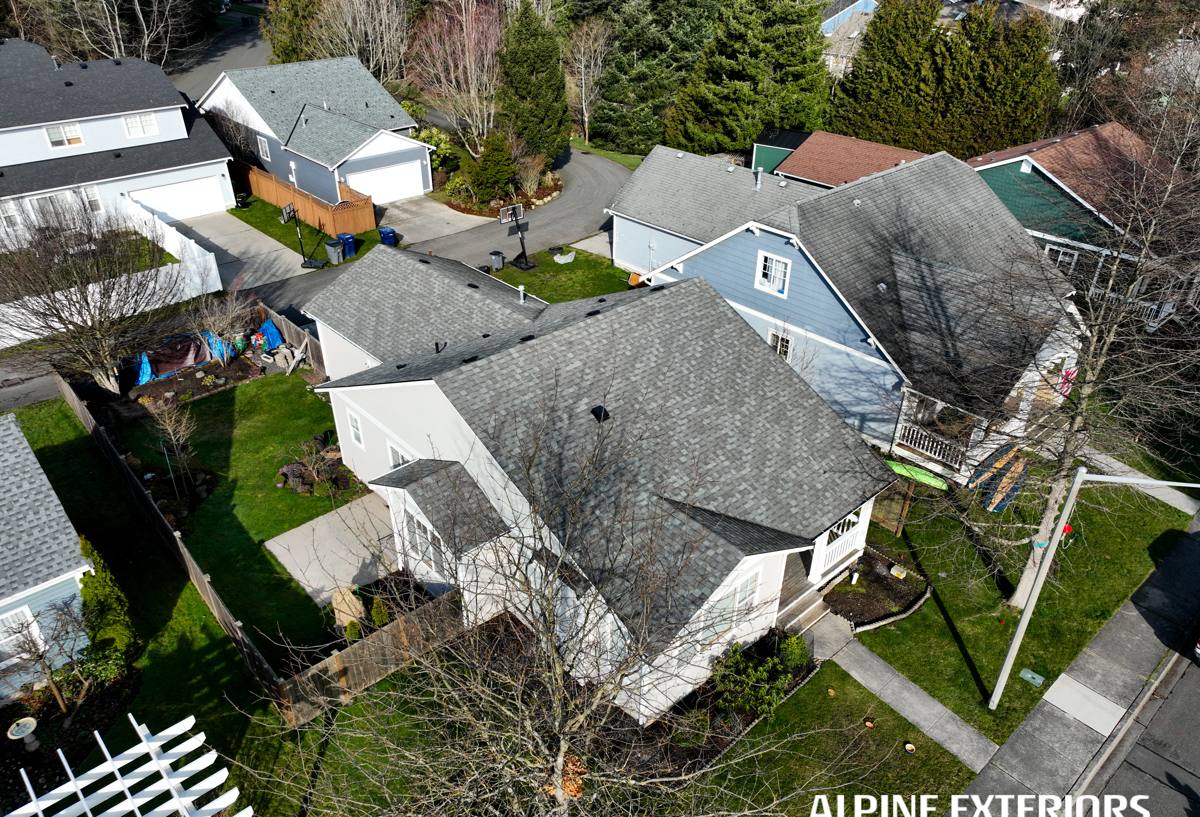
Why Burlington Roofs Wear Differently
Burlington doesn't get direct salt spray the way waterfront Anacortes properties do, but it sits close enough to Puget Sound and the Skagit River valley to get a steady dose of moisture-laden air, driving rain off the water, and the same moss pressure that affects the whole region. A few things we see consistently on Burlington roofs:
- Moss and algae staining on north-facing slopes and shaded sections, especially roofs near mature trees or with limited sun exposure
- Granule loss on older asphalt shingles from repeated wet-dry cycling through the winter months
- Soft or delaminating decking where a slow leak went unnoticed under moss or debris for one too many seasons
- Undersized or clogged ventilation that traps humidity in the attic, which speeds up shingle aging from underneath
- Flashing failures around chimneys, skylights, and valleys — the first place driving rain finds a way in
None of these are unusual for the area. They're just what happens to a roof that sits through 20-plus years of Skagit County winters. A correct replacement addresses all of them, not just the shingles on top.
What a Correct Roof Replacement Includes
A roof replacement is more than swapping old shingles for new ones. The parts underneath the shingles do most of the work of keeping a house dry, and they're the parts most often shortchanged on a rushed job.
Tear-Off and Deck Inspection
We remove the old roofing down to the deck rather than layering over it. That's the only way to actually see the plywood or plank sheathing underneath — and in a climate like ours, hidden rot under an old roof is common enough that skipping this step is a gamble. Any soft or delaminated decking gets replaced before anything new goes down.
Underlayment
This is the layer that protects the house if wind-driven rain ever gets past the shingles — which, in a Skagit County storm, it eventually will at some point over the life of the roof. We use synthetic underlayment as standard and install self-adhered ice-and-water membrane in valleys, around penetrations, and along eaves, where wind-driven rain and ice damming are most likely to cause problems.
Flashing
Chimneys, skylights, sidewall intersections, and valleys all need properly formed and step-flashed metal, not just caulk and hope. Flashing is where most "roof leaks" actually start, and it's an easy place to cut corners on a quick job.
Ventilation
Balanced intake and exhaust ventilation keeps attic moisture from condensing against the underside of the decking. In our climate, poor ventilation is a slow, quiet cause of premature roof failure — it doesn't show up as a dramatic leak, just gradually shortened shingle life and possible mold or wood rot in the attic.
Shingles or Roofing Material
The visible layer, and the one most homeowners focus on — but it only performs as well as everything installed underneath it.
Choosing Materials for a Burlington Climate
We don't push one product as universally "best." Every roofing material is a set of trade-offs, and the right call depends on the home, the budget, and how long the owner plans to stay.
| Material | Typical Lifespan | How It Handles Our Climate | Considerations |
|---|---|---|---|
| Architectural asphalt shingles | 25–30 years | Good moisture resistance with proper underlayment; algae-resistant granule options help with moss/staining | Most common choice; wide style and color range; moderate cost |
| 3-tab asphalt shingles | 15–20 years | Adequate but thinner profile wears faster under repeated wet-dry cycling | Lower upfront cost; shorter lifespan in this climate |
| Metal roofing (standing seam) | 40–50+ years | Sheds moss and moisture well; minimal maintenance | Higher upfront cost; different installation skill required |
| Composite/synthetic shingles | 30–50 years | Resists moisture absorption and moss better than standard asphalt | Higher material cost; fewer installers experienced with it |
Whatever material we install, we treat algae-resistant granules and a properly ventilated deck as close to non-negotiable in this region — moss and staining are a matter of when, not if, on a shaded roof without them.
Signs a Burlington Home Needs Roof Replacement Soon
- Shingles that are cupping, curling, or losing granules visibly from the ground
- Moss growth that keeps returning within a season or two of cleaning
- Daylight visible through the attic roof deck, or damp insulation after a storm
- Roof age over 20–25 years for asphalt shingles, even without obvious damage
- Missing, cracked, or lifted flashing around chimneys, vents, or valleys
- Rising energy bills that may point to attic ventilation or insulation problems tied to roof condition
Any one of these on its own isn't necessarily an emergency. Several together usually mean the roof is past the point where patching makes financial sense.
Repair vs. Replacement: A Practical Way to Decide
Not every roof problem means a full replacement, and we'll tell you honestly when a repair is the smarter call. A few questions we walk through with homeowners:
- How old is the roof? A 6-year-old roof with one damaged section is a repair. A 24-year-old roof with the same damage is usually a sign the whole system is near the end of its service life.
- Is the damage isolated or spread across multiple slopes? Widespread granule loss or moss coverage across the whole roof points to replacement; a single damaged area points to repair.
- Is there decking damage? Soft or rotted sheathing under one area is repairable. Rot found in multiple areas during inspection often means the underlayment has been failing broadly.
- What's the plan for the house? Selling in the next year or two versus staying long-term changes what's worth investing in.
We inspect before we recommend either way — we're not going to sell a full replacement when a targeted repair solves the problem.
Our Process for a Burlington Roof Replacement
- On-site inspection and estimate. We walk the roof, check the attic where accessible, and give you a written, itemized estimate — no pressure, no artificial deadlines.
- Material selection. We go over the options that fit your budget and the home's exposure (shade, tree cover, slope orientation) and help you land on the right one.
- Scheduling around weather. Skagit County's wet season means timing matters. We plan tear-off in windows that minimize the home's exposure to open weather.
- Tear-off, deck repair, and dry-in. Old roofing comes off, the deck is inspected and repaired as needed, and underlayment goes down the same day whenever possible.
- Flashing, ventilation, and final roofing installation. Every penetration is properly flashed and ventilation is balanced before the final layer goes on.
- Site cleanup and walkthrough. Magnetic sweep for nails, debris removal, and a final walkthrough so you know exactly what was done.
Why Hire a Crew That Already Works Burlington
A roofing crew based in and around Anacortes has already dealt with the specific combination of moss, moisture, and driving rain that defines this part of Skagit County. That's not a small thing — a crew used to drier or more inland climates will sometimes underbuild ventilation or skip ice-and-water membrane in spots where it genuinely matters here. We're not traveling in from out of the area to bid a job and disappear; we're working roofs across this same region on an ongoing basis, which means our workmanship warranty is backed by a crew that's easy to reach if a question comes up later.
Get a Straightforward Estimate
If your Burlington-area roof is showing its age, showing moss you can't get ahead of, or you just want an honest read on how many years it's got left, we'll come take a look. The estimate is free, there's no pressure, and you'll get a straight answer about whether it's time to replace or whether a repair will hold you over — just fill out the form below to get started.