 Anacortes Siding
 Building Decks for the Cap Sante Waterfront
Homes on and around Cap Sante sit close to open water, elevated above Fidalgo Bay and the Guemes Channel, which means they catch weather that inland Anacortes properties rarely see in the same intensity. Salt-laden air moves off the water and onto every exposed surface of a deck, wind-driven rain hits at angles that flat, inland decks never have to shed, and shaded north- and west-facing sections stay damp long enough for moss and algae to take hold every fall and winter. A deck built to a generic spec sheet, without accounting for that combination, tends to show corrosion at the hardware, soft spots at the ledger, and slick, moss-covered boards well before its time.
We build decks specifically for this kind of site. That means choosing materials and fasteners rated for marine-adjacent exposure, framing details that shed water instead of trapping it, and a finished surface that stays safe to walk on through a wet Skagit County winter. This page covers what that actually involves — not marketing language, just what a correctly built deck near Cap Sante needs.
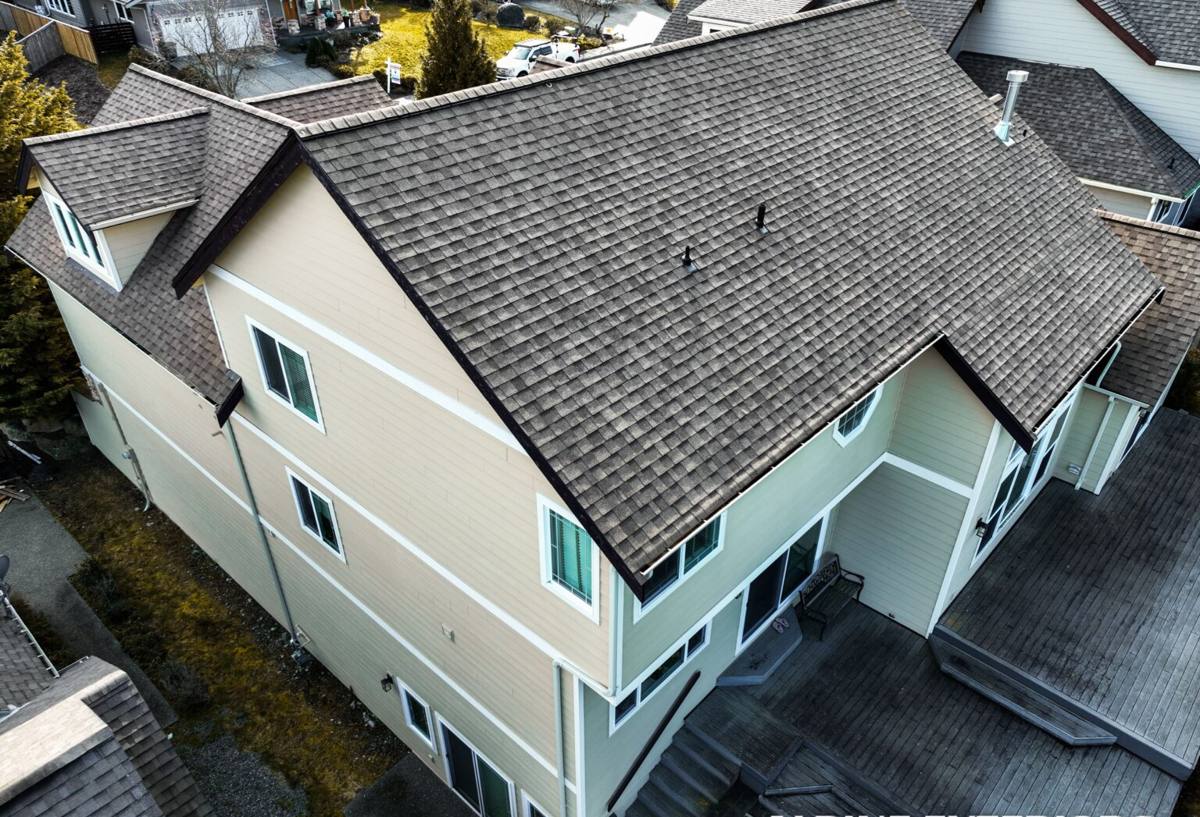
What Cap Sante's Climate Actually Does to a Deck
Salt Air and Corrosion
Airborne salt from the surrounding water accelerates corrosion on any metal it touches — screws, joist hangers, bolts, and railing brackets included. Standard electro-galvanized fasteners can start showing rust streaks within a couple of seasons in this kind of exposure. Once a fastener starts to corrode, it loses holding strength long before it looks bad enough to worry most homeowners, which is exactly why hardware selection matters more here than it would on a deck ten miles inland.
Driving Rain and Wind
Weather coming off the water tends to arrive with wind behind it, driving rain sideways into ledger boards, fascia, and any gap in the flashing. On a standard build, water finds its way behind the ledger and into the rim joist or house sheathing, where it does damage you won't see until the wood is already soft. Anacortes gets a real wet season, and a deck attached to the house needs flashing details that assume rain will hit it from more than one direction.
Moss, Algae, and Shade
Anacortes' long moss season isn't unique to Cap Sante, but shaded, water-facing decks are some of the worst spots for it. Moss holds moisture against the board surface, which speeds up wood decay and turns composite decking slick in a way that's genuinely dangerous on stairs and sloped sites. Board spacing, airflow underneath the deck, and surface texture all affect how much moss you'll be dealing with year over year.
Choosing the Right Decking Material for a Cap Sante Home
There's no single "best" decking material — the right choice depends on how much upfront cost you want to take on, how much yearly maintenance you're willing to do, and how close you are to direct salt exposure. Here's how the common options actually compare for this kind of site:
| Material | Upfront Cost | Maintenance | Salt Air / Moisture Behavior |
|---|---|---|---|
| Pressure-treated fir/hem-fir | Lowest | Annual cleaning and re-sealing recommended | Prone to checking and fastener staining if not maintained |
| Cedar | Moderate | Regular oiling or staining to hold color and resist moisture | Naturally rot-resistant but still needs upkeep near water |
| Composite (capped) | Moderate-High | Occasional washing, no sealing or staining | Won't rot or splinter; can be slick when mossy if not textured |
| PVC decking | Highest | Lowest — wash as needed | Fully moisture-resistant, best for direct salt spray exposure |
Pressure-Treated and Cedar
Real wood still has a place on Cap Sante homes, especially where the budget calls for it or the look is what the homeowner wants. It just needs an honest conversation about upkeep — a wood deck in this climate that isn't cleaned and resealed on a regular schedule will gray, check, and eventually soften faster than the same deck built inland.
Composite and PVC
Capped composite and PVC boards hold up well against salt air and constant moisture because they don't absorb water the way wood does, and they won't rust or corrode internally. The trade-off is upfront cost and, on lower-grade composite products, a surface that can get slippery when damp or mossy — which is why we're selective about which composite lines we install and how we detail airflow underneath the deck.
Framing and Fasteners: The Part You Don't See
The decking surface gets all the attention, but the framing underneath — and the fasteners holding it together — is what actually determines how long a deck lasts on a site like this. We use stainless steel or heavy hot-dip galvanized fasteners and connectors rather than standard electro-galvanized hardware, because the difference in corrosion resistance is significant once you're within a mile or two of the water. Ledger boards get proper flashing and a water-resistant barrier behind them, not just caulk, and joist tops get protective tape to keep water from soaking into end grain over time.
On sloped or elevated lots, which describes a lot of the terrain around Cap Sante, footing depth and post spacing also need to account for the grade itself, not just the deck's square footage. Cutting corners on framing is the single biggest reason decks in this area fail early — and it's the part almost no one checks before signing a contract.
Design Considerations for Elevated, View-Facing Lots
A lot of homes near Cap Sante are built to take advantage of water views, which usually means an elevated deck, taller railings, and more direct wind and rain exposure than a ground-level deck would see. That changes a few things about how we design and build:
- Railings need to meet code height and baluster spacing while still holding up to wind load at elevation
- Stair stringers and landings need extra attention to drainage so ice and standing water don't become a fall hazard
- Board orientation and gapping are adjusted to shed wind-driven rain rather than let it pool
- Under-deck drainage or skirting is considered where the space below is walked through or stored under
None of this is exotic — it's just detail work that matters more on an exposed, elevated site than it would on a flat, sheltered backyard deck.
Our Deck Building Process
We keep the process straightforward and give you a clear picture of what's happening at each stage:
- Site assessment — we look at exposure, slope, existing structure (for attached decks), and drainage before recommending materials
- Design and permitting — layout, railing plan, and permit submittal handled before any work starts
- Framing — footings, posts, beams, and joists built with corrosion-resistant hardware and proper flashing
- Decking and railing installation — surface material installed with attention to gapping, fastening pattern, and drainage
- Final walkthrough — we go over the finished deck with you, including what maintenance it needs and when
Maintaining a Deck Through a Salt Air, Moss-Prone Winter
Even a well-built deck needs seasonal attention in this climate. A short annual routine goes a long way toward avoiding early repairs:
- Sweep and rinse the deck surface regularly through fall and winter to keep organic debris from feeding moss growth
- Check fastener heads and metal connectors once a year for early rust or staining
- Keep gutters and downspouts near the deck clear so runoff isn't draining directly onto or under it
- Reseal or restain wood decking on the schedule the manufacturer recommends — don't wait until it's visibly gray
- Trim back vegetation that's shading the deck and keeping it damp longer than necessary
Why Local Cap Sante Experience Matters
A contractor who's worked around Cap Sante and elsewhere in Anacortes already knows how the wind comes off the water on this stretch of Fidalgo Island, what the City of Anacortes expects on permit submittals for elevated and waterfront-adjacent structures, and which fastener and material choices actually hold up here versus what looks fine on paper. That's not something you get from a crew that mostly builds decks in drier, inland parts of Skagit County. It shows up in the small decisions — flashing details, hardware grade, board spacing — that you won't notice until years later, when a deck built for this climate is still solid and one that wasn't isn't.
If you're planning a new deck or replacing one that's showing its age near Cap Sante, we're happy to take a look and give you a straightforward, no-pressure estimate. Fill out the form below and we'll get in touch.