 Anacortes Siding
 Cap Sante Decks Take a Different Kind of Beating
Decks in Cap Sante sit close enough to the water that salt air is part of daily life, not an occasional weather event. Combine that with Skagit County's long wet season, driving rain off Rosario Strait, and a moss season that can stretch from fall through spring, and you have a structure that's under nearly constant moisture stress for most of the year. A deck built or repaired without that reality in mind will fail years before it should — not dramatically, but quietly, in the places you don't look at until something gives way underfoot.
We repair decks throughout Anacortes, and the ones in Cap Sante consistently show a specific pattern of wear: fastener corrosion, ledger board rot where the deck meets the house, moss and algae buildup that traps moisture against the boards, and joist deterioration hidden under decking that still looks fine from above. None of this is unusual for the area — it's just what salt air and sustained dampness do over time. The fix isn't complicated, but it does require knowing what to actually check.
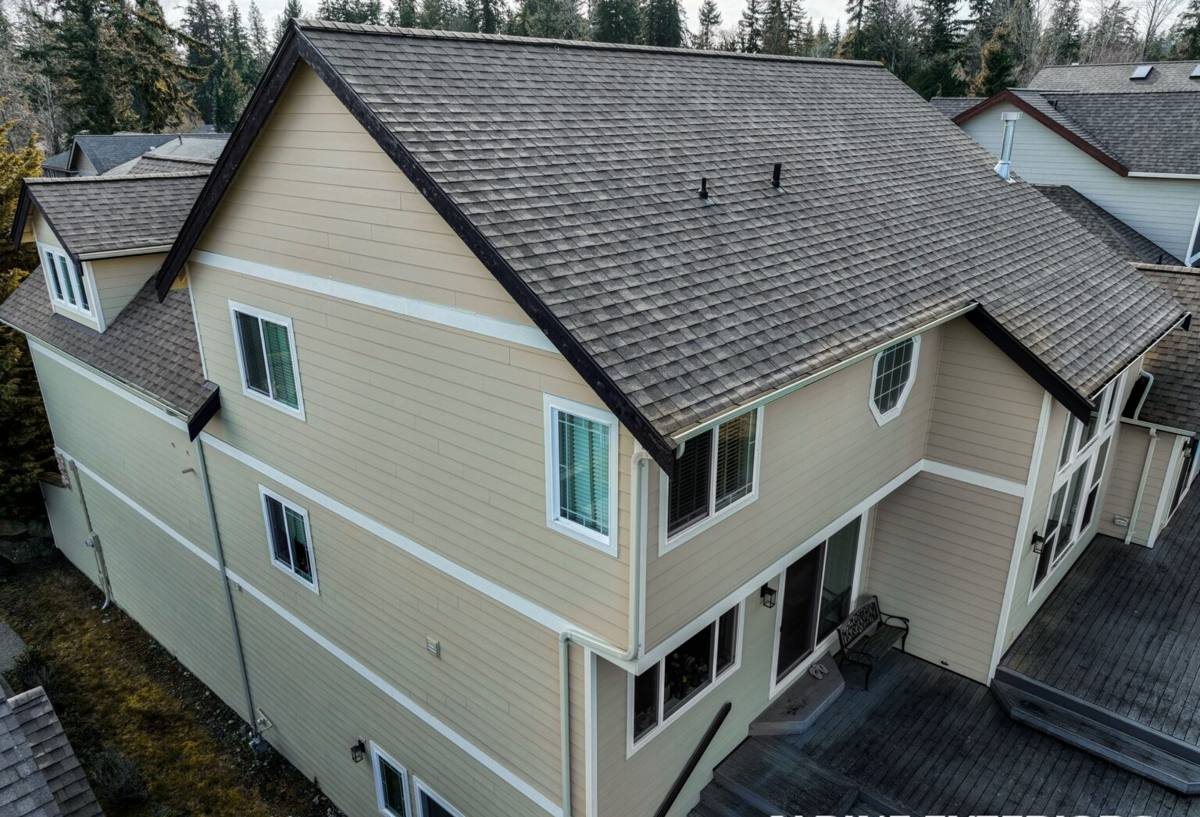
Signs a Cap Sante Deck Needs Repair — Not Just Cleaning
A pressure wash and a coat of stain can make a tired deck look better without addressing what's actually wrong underneath. Before you spend money on cosmetics, it's worth knowing which signs point to structural issues that a cleaning won't touch.
- Boards that feel spongy, springy, or noticeably softer in one area than the rest of the deck
- Rust streaks bleeding out from screw or nail heads — a sign the fastener itself is corroding
- Gaps opening up where the ledger board attaches to the house, or dark staining along that seam
- Persistent green or black growth in shaded corners that comes back within weeks of cleaning
- Railings that wiggle more than they should, which often points to post rot below the surface
- Visible daylight or separation between deck boards and the joists beneath them
- A musty smell coming from underneath the deck, especially after a stretch of rain
Any one of these on its own might be minor. Two or three together usually means the moisture has been getting past the surface for a while, and it's worth having someone look at the framing, not just the boards.
What a Correct Deck Repair Actually Involves
Starting Below the Decking, Not Above It
The visible boards are the last thing we look at, not the first. Most of the deck failures we see in this area start at the ledger board, the joists, or the post bases — the parts that stay wet longest and dry out slowest. A repair that only replaces a few worn boards without checking what's underneath is a cosmetic fix on a structural problem, and it won't hold up through another wet Skagit County winter.
The Full Inspection Sequence
A proper repair job walks through the deck in a specific order: the ledger connection to the house first, since that's the single point of failure that can bring the whole structure down if it lets go; then the posts and footings, checking for rot at ground contact and any movement in the concrete; then the joists, probing for soft spots especially near the rim and anywhere water tends to pool; then the decking boards themselves; and finally railings, stairs, and fasteners throughout. Skipping steps in that sequence is how a repair ends up covering a problem instead of fixing it.
Fasteners Matter More Here Than Almost Anywhere Else
Standard galvanized screws and nails corrode faster near salt water. In Cap Sante specifically, we default to stainless steel or high-grade coated fasteners rated for coastal exposure, even when it costs more up front, because replacing rusted-out fasteners twice costs more than doing it right once.
Repair Materials: What Holds Up and What Doesn't
Every material has trade-offs in this climate. None of them are "bad" — they just behave differently under sustained moisture, and the right choice depends on your existing deck, your budget, and how much upkeep you want to commit to.
| Material | How it handles salt air & rain | Maintenance burden |
|---|---|---|
| Pressure-treated lumber | Good rot resistance when properly sealed; needs the cut ends and fastener holes treated too | Re-seal or re-stain every 1-2 years in this climate |
| Cedar | Naturally moisture and insect resistant, but softer and can gray or split without upkeep | Annual cleaning and periodic oil or sealant |
| Composite decking | Doesn't rot, but can trap moisture against the substructure if drainage isn't planned for | Low — occasional washing, no staining |
| Structural framing (joists, posts) | Best protected with proper flashing and ground clearance, regardless of species | Inspect annually, especially after moss season |
We'll match repair materials to what's already on your deck where that makes sense, and tell you honestly when a different material would hold up better in a specific spot — for example, swapping a rotted wood ledger flashing detail for a more durable option even if the rest of the deck stays as-is.
Our Repair Process
1. On-Site Inspection
We walk the full structure — top, underside, and connection points — and show you what we find in plain terms, including anything that's fine and doesn't need work. You don't get a sales pitch for a full replacement when a targeted repair will genuinely do the job.
2. A Written, Itemized Estimate
You'll know what's being replaced, why, and roughly what it costs before any work starts. If we find something worse once we open things up — which happens more often with hidden rot than most homeowners expect — we stop and talk to you before proceeding, not after.
3. The Repair Itself
Work proceeds from the structure outward: framing and structural issues first, then decking, then railings and finish details. We match fastener and flashing choices to the exposure your deck actually gets, since a shaded, moss-prone corner needs different detailing than a sun-exposed section.
4. A Straight Answer on What's Next
Some repairs buy you several more years; others are a stopgap on a deck that's nearing the end of its useful life. We'll tell you which one you're getting so you can plan accordingly, rather than being surprised later.
What Drives the Cost of a Deck Repair
Costs vary enough between projects that we won't quote a number without seeing the deck, but these are the factors that move the price up or down.
| Factor | Why it matters |
|---|---|
| Extent of hidden rot in framing vs. just surface boards | Structural repairs (joists, ledger, posts) cost more than replacing decking alone |
| Access and deck height | Decks over sloped ground or with limited underside access take longer to inspect and repair |
| Material choice | Composite and cedar cost more up front than pressure-treated lumber but change long-term upkeep costs |
| Fastener and flashing upgrades | Coastal-grade hardware costs more than standard hardware but prevents repeat corrosion issues |
| Railing and stair condition | Code-compliant railing repair or replacement adds cost but is a safety non-negotiable |
Most Cap Sante repair jobs land somewhere between a modest fastener-and-board touch-up and a more involved framing repair — the range is wide because deck problems are rarely identical from one house to the next.
Keeping a Repaired Deck Ahead of the Weather
A good repair only stays good if the deck gets basic seasonal attention afterward. This is the short version of what we tell every Cap Sante customer once the work is done.
- Sweep debris and standing water off the deck surface regularly through fall and winter
- Clear moss and algae as soon as it appears — don't wait for it to spread
- Check the ledger board seam and any flashing once a year for gaps or staining
- Keep gutters and downspouts clear so runoff isn't draining directly onto or under the deck
- Re-seal wood decking on the schedule appropriate to the product, not just when it looks faded
- Look underneath the deck once a year, not just at the top surface
Why a Crew That Already Works Cap Sante Is Worth Hiring
Deck repair isn't identical from one region to the next. A crew used to drier inland conditions may not default to coastal-grade fasteners, may under-detail flashing at the ledger board, or may not think to check for the specific moss and moisture patterns that show up in a place like Cap Sante. Working this area regularly means we've already seen how these decks fail and where — so the inspection is faster, more targeted, and less likely to miss something that only shows up after another wet Anacortes winter.
It also means honest answers about what's worth repairing versus what's approaching the end of its life, based on what we've actually seen hold up in this climate over time — not a generic checklist written for a different part of the country.
If your deck in Cap Sante has soft spots, rusting fasteners, or persistent moss that keeps coming back, we're happy to take a look and give you a straight, no-pressure estimate — just fill out the form below.