 Anacortes Siding
 Why Cap Sante Puts Extra Demands on Siding
Cap Sante sits up on the high ground above the water, which is exactly why homes there take a harder hit from the weather than siding in a more sheltered part of Anacortes. The elevation that gives these homes their view also means more direct exposure to wind off the water, more wind-driven rain hitting the walls at an angle instead of falling straight down, and a steady drift of salt-laden air working its way into every seam, fastener, and joint in the exterior envelope. Add Skagit County's long gray season, where north-facing and shaded walls can stay damp for weeks at a stretch, and you have a siding environment that punishes anything not built and installed for it.
We install James Hardie fiber cement exclusively, and Cap Sante is a good example of why. This is not a neighborhood where a mid-grade product gets away with a mediocre install. Salt air accelerates corrosion on fasteners and trim hardware, driving rain finds every place where flashing or caulk was an afterthought, and moss and algae take hold fast on any surface that stays wet and shaded. A siding system that isn't built for that combination will show it within a few years — not necessarily as a dramatic failure, but as fading, staining, soft spots, and paint that won't hold.
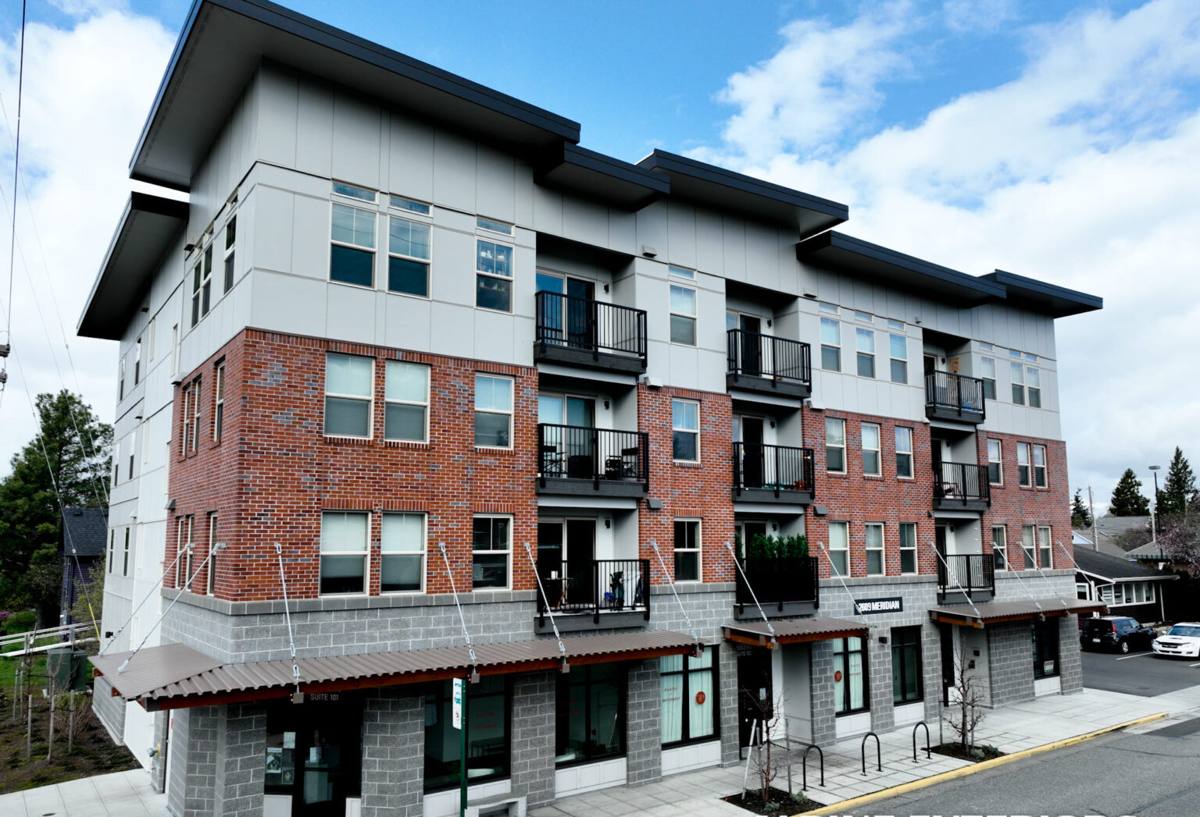
What Cap Sante Homes Actually Need From Their Siding
Moisture Management Comes First
More siding failures on the water side of Anacortes trace back to moisture management than to the siding material itself. Wind-driven rain doesn't just hit a wall — it gets pushed into laps, seams, and penetrations that a calm-weather install might get away with ignoring. That means correct water-resistive barrier work, properly lapped and taped seams, and flashing at every window, door, and roofline intersection that actually sheds water outward instead of behind the cladding.
Salt Air and Fastener Corrosion
Homes with an unobstructed line to the water deal with airborne salt settling on every exterior surface. Over time, that accelerates corrosion on anything less than corrosion-resistant fasteners and trim hardware. It also means factory-cured finishes hold up better than field-applied paint, because a factory finish isn't relying on adhesion to a porous cut edge or a hand-brushed coat to keep salt and moisture out of the substrate.
Standing Up to Moss Season
Western Washington's moss season runs long, and shaded, north-facing walls in a hillside neighborhood like Cap Sante can stay damp for much of the fall and winter. Moss and algae need organic material to feed on and consistent moisture to take hold. A dense, engineered fiber cement panel gives them far less to grab onto than wood-based sidings, but it's not automatic — proper drainage gaps, clearance at grade, and gutter and downspout performance all matter just as much as the siding material itself.
Why We Only Install James Hardie
We made a deliberate call years ago to stop installing anything other than James Hardie fiber cement, and a neighborhood like Cap Sante is a clear illustration of why. We used to install other products — vinyl, engineered wood, primed wood trim — and we watched how they performed in exactly this kind of marine-exposed, high-moisture environment over years, not just at the one-year callback.
- Non-combustible core: Hardie's fiber cement composition doesn't feed a fire the way wood-based sidings can, which matters anywhere near vegetation and during Washington's dry-season wildfire smoke events.
- Factory-cured ColorPlus finish: baked on under controlled conditions rather than brushed on-site, so it resists the fading and peeling that salt air and UV accelerate on field-painted surfaces.
- HZ5 engineered for the Pacific Northwest: Hardie's HZ5 product line is formulated for climates with sustained moisture exposure, which is the entire Skagit County coastline.
- Dimensionally stable: fiber cement doesn't swell, cup, or rot the way wood and wood-composite products can when they stay damp for weeks at a time.
- Real transferable warranty: backed by a manufacturer with decades of track record, not a warranty that depends on a smaller company staying in business.
We're not going to tell you every other siding product is junk — some of them perform reasonably well in mild, sheltered conditions. But we don't install mild-condition products on a bluff facing Rosario Strait. We install what we can stand behind after the tenth Anacortes winter, not just the first.
What a Correct James Hardie Install Involves Here
Prep and Water-Resistive Barrier
Before any siding goes up, the wall needs a continuous, properly lapped water-resistive barrier with all seams taped and every penetration sealed. On a wind-exposed lot, gaps or shortcuts here are exactly where driving rain finds its way behind the cladding.
Flashing at Every Transition
Windows, doors, decks, roof-to-wall intersections, and any horizontal trim need flashing that directs water back out, not just caulk relying on adhesion to hold forever. Caulk fails; flashing sheds. On a home taking direct wind-driven rain, this step is not optional trim work — it's the difference between a dry wall cavity and a slow rot problem you don't see until the drywall shows it.
Fastening and Fasteners
James Hardie specifies fastener type, spacing, and embedment for a reason — get it wrong and you either void the warranty or create a thousand tiny entry points for moisture. In a salt-air environment, we use fasteners rated for corrosion resistance, not whatever was in the truck.
Clearance and Drainage
Hardie panels need proper clearance from grade, roofing, and decks, plus a drainage gap behind the siding so any moisture that does get in can get back out instead of sitting against the panel. This is one of the most commonly skipped details on rushed installs, and it's a major factor in moss and staining showing up early.
Caulking and Sealant Details
Correct sealant at butt joints and trim intersections, using products compatible with Hardie's finish, keeps water out without trapping it in. Over-caulking is as much a problem as under-caulking — sealed joints still need somewhere for incidental moisture to escape.
Comparing Approaches: Why Details Matter More Than Material Alone
| Install Factor | Minimum-Standard Approach | Correct Approach for Cap Sante |
|---|---|---|
| Water-resistive barrier | Basic wrap, unsealed seams | Fully lapped and taped, all penetrations sealed |
| Flashing | Caulk-only at trim and windows | Metal or engineered flashing plus sealant at every transition |
| Fasteners | Standard galvanized | Corrosion-resistant fasteners rated for coastal exposure |
| Clearance/drainage | Siding tight to grade or roofing | Manufacturer-spec clearance plus rear drainage gap |
| Finish | Field-primed and painted trim | Factory ColorPlus finish on siding and trim where possible |
Our Process for Cap Sante Projects
- On-site assessment: we walk the exterior, check current siding condition, look at wind and rain exposure by wall orientation, and inspect for any existing moisture damage.
- Scope and product selection: we specify the right Hardie plank, panel, or shingle profile and HZ rating for the exposure level of each side of the house.
- Prep and tear-off: old siding and trim come off, sheathing gets inspected for hidden damage, and any rot or compromised framing gets addressed before anything new goes up.
- Barrier and flashing installation: water-resistive barrier, flashing, and drainage details go in first, since this is the layer that actually keeps water out long-term.
- Hardie installation to spec: siding installed per manufacturer fastening, spacing, and clearance requirements — the details that keep the product warranty valid.
- Final detailing and walkthrough: trim, caulking, and touch-up finished, then a walkthrough so you know exactly what was done and why.
A Quick Checklist for Homeowners Getting Bids
- Ask whether the crew is installing to James Hardie's written fastening and clearance specifications, not just "similar to."
- Ask what water-resistive barrier and flashing details they use at windows, doors, and roof lines.
- Ask about fastener type and whether it's rated for coastal/salt-air exposure.
- Ask how they handle drainage gap and clearance from grade and roofing.
- Ask whether the bid includes ColorPlus factory-finished product or field-painted trim, and why.
- Ask for a written scope, not just a total price — the details above should be spelled out.
Why Hiring a Crew That Already Works Cap Sante Matters
Siding installation isn't uniform across Anacortes. A crew that mostly works inland, sheltered lots can do fine work there and still underestimate what a wind- and salt-exposed hillside home needs. Working regularly in Skagit County's coastal conditions means we already know which walls take the worst of the weather, where flashing details get skipped on rushed jobs, and what actually holds up after a few winters of driving rain and moss season — not just what looks right on install day.
If you're thinking about James Hardie siding for a home in Cap Sante, we're happy to walk the exterior with you, look at your specific exposure, and put together a straightforward, no-pressure estimate using the form below.