 Anacortes Siding
 Roofing on the Cap Sante Hill: A Different Set of Problems
Cap Sante sits up on the bluff overlooking the marina and Guemes Channel, which means homes here get the view — and the weather that comes with it. Elevation and open water exposure add up to more wind-driven rain, more salt-laden air, and less protection from tree cover than you'll find a few blocks inland. A roofing material that performs fine in a sheltered Anacortes neighborhood can wear noticeably faster up here if it isn't matched to the site.
Metal roofing has become a common answer to that problem for Cap Sante homeowners, but "metal roofing" covers a wide range of products, coatings, and installation quality. Choosing the right combination — and installing it correctly — matters more here than almost anywhere else in Skagit County.
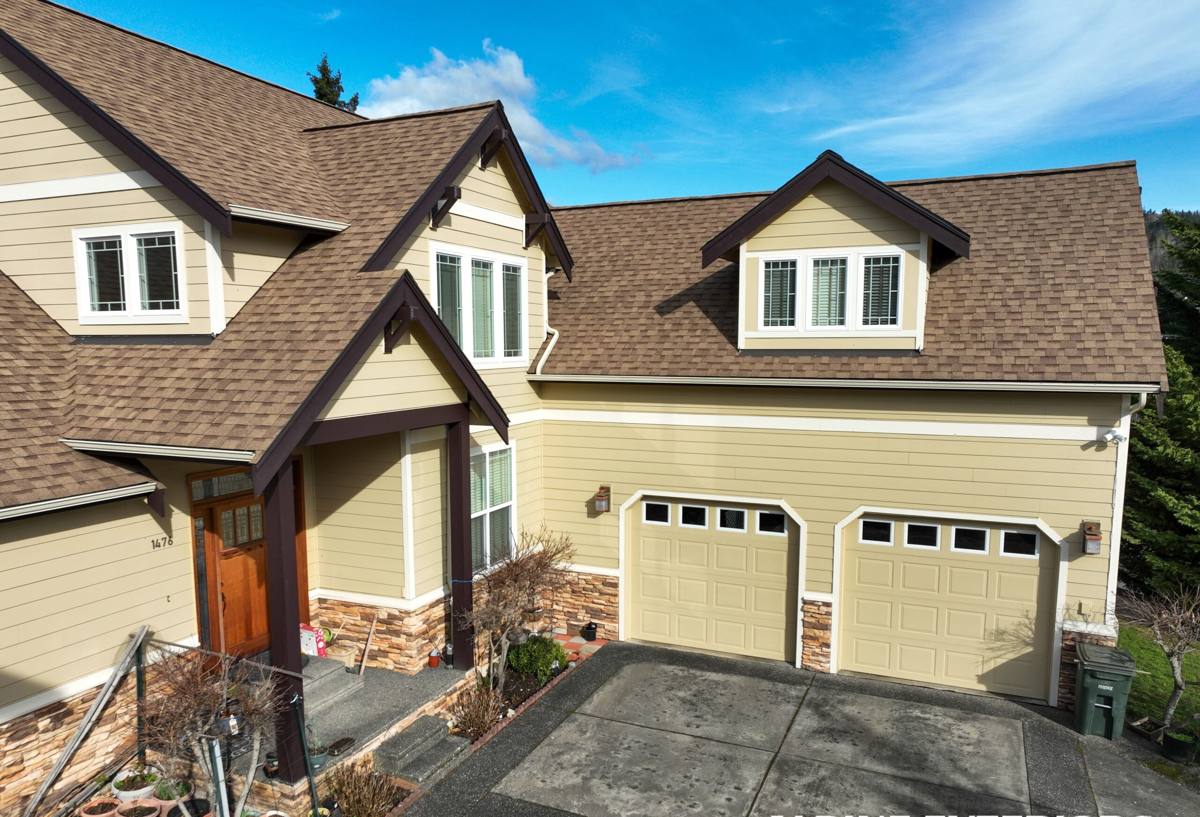
What Cap Sante's Climate Actually Does to a Roof
Salt Air and Corrosion
Homes within view of the water are exposed to airborne salt that settles on roofing, flashing, and fasteners year-round. Salt accelerates corrosion on unprotected steel and on lower-grade fastener heads long before the roof field itself shows any wear. It's usually the small metal parts — screws, nails, flashing edges — that fail first, not the panels.
Wind-Driven Rain
Because Cap Sante is elevated and exposed to open water, rain doesn't just fall straight down — it drives sideways under wind. That pushes water into laps, seams, and flashing details that would stay dry on a more sheltered roof. Underlayment and flashing choices that are "good enough" in a low-exposure setting can leak here.
A Long Moss Season
Anacortes' wet, mild winters and cool, damp shoulder seasons give moss a long window to establish itself, especially on north-facing slopes and shaded roof sections. Moss holds moisture against roofing material and can work its way under laps and around fasteners if it isn't kept in check.
Temperature Swings and Marine Air Moisture
Skagit County's marine climate means roofs cycle through damp, cool mornings and warmer afternoons for much of the year. That daily cycle matters for how metal roofing expands and contracts, and it's part of why fastening method and panel design have to allow for movement rather than fight it.
Why Metal Roofing Suits This Environment — When Done Right
Correctly specified metal roofing holds up well against everything above: it doesn't absorb water the way some roofing materials do, it sheds moss more readily than rougher-textured surfaces, and quality coatings are built to resist coastal corrosion. That's the appeal for Cap Sante homeowners.
The catch is that "metal roofing" isn't one product. The base metal, the coating system, the panel style, and the fasteners all affect how well a given roof will actually perform in salt air and driving rain. A roof built with the wrong combination of those choices can still have problems within a handful of years, even though it's technically "metal."
Choosing Metal, Finish, and Fasteners for a Salt-Air Site
For a property in Cap Sante, we weigh these choices differently than we would for a roof further inland. The table below outlines the main trade-offs we walk homeowners through.
| Factor | Better fit for Cap Sante | Worth understanding |
|---|---|---|
| Base metal | Aluminum, or steel with a heavy-duty protective coating | Aluminum doesn't rust and handles salt air well; coated steel is a strong, more budget-friendly option if the coating is rated for coastal use |
| Panel style | Standing seam (concealed fastener) | Fewer penetrations through the panel face means fewer places for wind-driven rain to find a way in |
| Fasteners | Stainless steel or coated fasteners rated for coastal/marine exposure | Ordinary fasteners are usually the first thing to corrode near saltwater, well before the panels themselves |
| Finish/coating | A factory finish with a strong coastal corrosion warranty | Not all paint or coating systems are rated the same for salt exposure — this is worth confirming in writing, not assuming |
| Underlayment | A high-quality synthetic or self-adhered underlayment at eaves, valleys, and penetrations | Underlayment is the backup layer that protects the deck if wind-driven rain does get past the panel laps |
None of these choices are about brand loyalty — they're about matching the product to what a Cap Sante roof actually has to withstand. We'll walk you through the real trade-offs, including where a lower-cost option is genuinely fine and where it isn't, rather than defaulting to the most expensive spec on every job.
What a Correct Metal Roof Installation Involves
Panel quality only matters if the installation around it is done correctly. On a Cap Sante roof, we pay particular attention to:
- Proper underlayment coverage at eaves, valleys, and any roof penetration, sized for wind-driven rain exposure rather than minimum code requirements
- Flashing details at walls, chimneys, skylights, and roof-to-roof transitions — the majority of roof leaks trace back to flashing, not the field panels
- Correct fastener type, spacing, and torque, so panels can expand and contract with temperature swings without working loose or over-compressing
- Ventilation that lets the roof deck breathe, reducing trapped moisture that can lead to rot or condensation underneath the metal
- Panel seams and laps oriented and lapped correctly for the prevailing wind and water flow direction on that specific roof
- Edge and rake details that resist wind uplift, which matters more on an exposed, elevated site like Cap Sante
Any one of these done poorly can undercut a good material choice. This is where installation experience matters as much as the product itself.
Living With Moss on a Metal Roof
Metal roofing generally resists moss better than shingles or wood because it doesn't give moss much to grip, and it sheds water faster. But it isn't moss-proof, especially on shaded, low-slope sections that stay damp through Anacortes' long wet season. A few practical points:
Debris that collects in valleys or against a chimney can hold moisture and give moss a foothold even on metal. Keeping gutters, valleys, and any flat transitions clear during fall and winter goes a long way. If moss does establish itself, it should be removed with methods appropriate for the specific coating on your roof — some cleaning approaches can scratch or dull a factory finish, which then becomes a corrosion risk in salt air. We can advise on safe moss management for the specific product on your roof as part of an inspection.
Our Process for a Cap Sante Metal Roof
We approach every metal roofing job in Cap Sante the same structured way:
- On-site inspection. We look at your current roof, deck condition, ventilation, and exposure — wind direction, shading, proximity to salt water — before recommending anything.
- Honest material recommendation. We explain the real trade-offs between metal options for your specific site and budget, including where a mid-range choice is a smart call and where it isn't worth the risk.
- Written estimate. Clear scope, materials, and pricing before any work starts — no surprise add-ons mid-project.
- Correct tear-off and deck prep. We address any rot, soft spots, or ventilation issues found once the old roofing is removed, rather than covering problems up.
- Installation to the details above. Underlayment, flashing, fastening, and ventilation done to the standard the site actually requires.
- Final walkthrough. We review the finished roof with you, including basic care and what to watch for going forward.
Keeping a Metal Roof Sound in This Climate
A well-installed metal roof in Cap Sante needs less maintenance than most roofing materials, but "less" isn't "none." A simple seasonal routine catches most problems before they become expensive ones:
- Clear gutters, valleys, and any low-slope areas of leaves, needles, and debris each fall
- Check for moss or algae growth on shaded, north-facing sections once or twice a year
- Look at flashing around chimneys, skylights, and walls after major storms for any signs of movement or gaps
- Confirm fasteners and panel edges look sound, especially after high-wind events off the water
- Have the roof professionally inspected every few years, or sooner after any significant storm damage in the area
Why Local Experience in Cap Sante Matters
A roofing crew that regularly works Cap Sante and the surrounding Anacortes waterfront already knows how differently this site behaves compared to a roof a mile inland. That means fewer surprises: the right coating spec from the start, flashing details sized for wind-driven rain rather than average conditions, and fasteners chosen for salt exposure instead of general-purpose hardware. It also means we've seen how different products actually hold up here over time, not just how they're rated on paper.
Skagit County's building requirements and typical wind/exposure conditions also factor into how a roof should be detailed, and that's easier to get right when it's not the first coastal roof a crew has handled.
If you're weighing metal roofing for a home in Cap Sante, we're glad to take a look and give you a straightforward, no-pressure estimate — including which materials genuinely make sense for your roof and which upgrades aren't necessary. Use the form below to get started.