 Anacortes Siding
 Asphalt Shingle Roofing Built for Conway's Climate
Conway sits in the lower Skagit Valley, close enough to the water that homes here deal with the same weather patterns that shape Anacortes and the rest of Skagit County: salt-laden air moving in off the Sound, long stretches of driving rain through fall and winter, and a moss season that can run nine months out of the year in shaded, north-facing sections of a roof. Asphalt shingle roofing is still the most practical, cost-effective choice for most homes in this area — but only when it's installed with this specific climate in mind. A shingle roof that would hold up fine in a dry inland climate can fail early here if the underlayment, ventilation, and flashing details aren't matched to the moisture load Conway actually sees.
This page covers what a correctly installed or repaired asphalt shingle roof looks like for a Conway home, what tends to go wrong with roofs in this specific area, and how we approach the work.
What Conway's Weather Actually Does to a Roof
Moss and Organic Growth
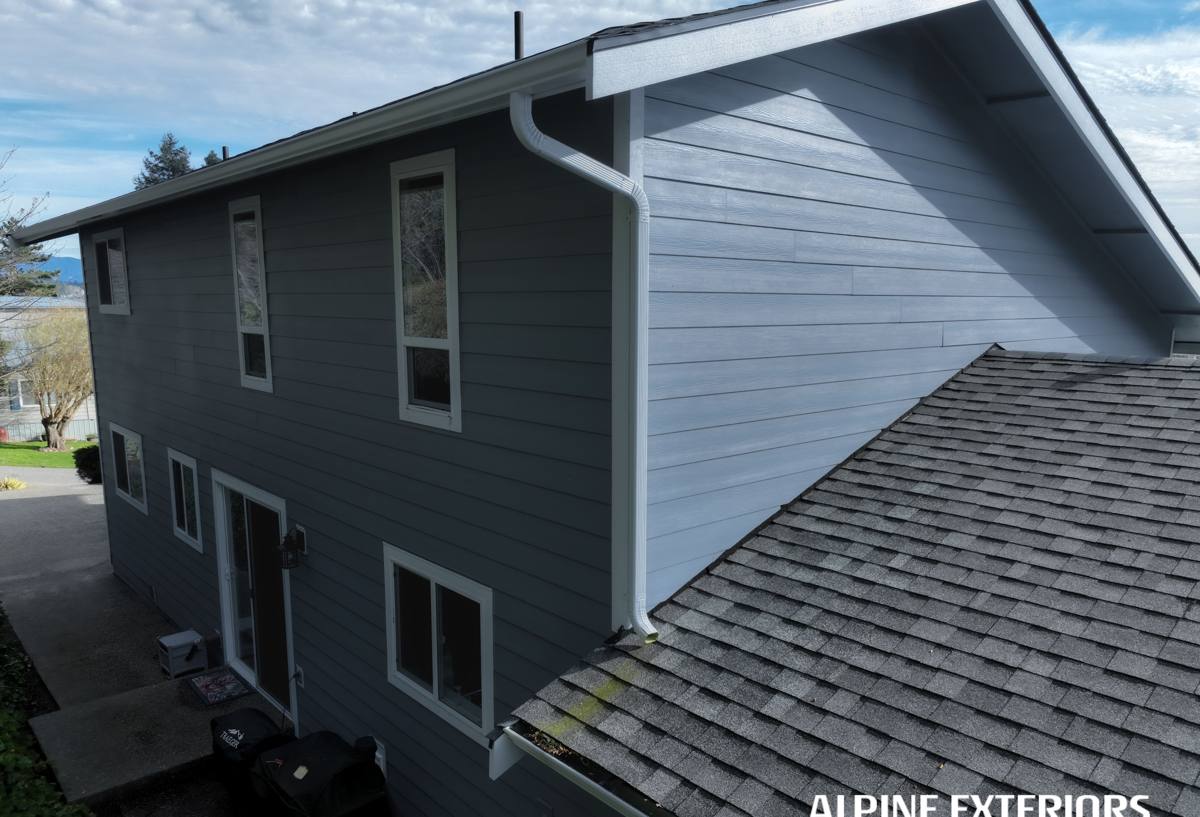
Moss is the single biggest asphalt shingle issue we see in this part of Skagit County. Shaded roof sections — under tall conifers, on north-facing slopes, anywhere airflow is limited — stay damp for days after a storm instead of drying out between rain events. Moss and algae take hold in the granule layer, and as they spread they lift shingle edges and hold moisture directly against the mat underneath. Left unaddressed for a few seasons, this shortens the usable life of an otherwise sound roof by years.
Driving Rain and Wind-Driven Water
Storms moving through this area frequently bring rain at an angle, not straight down. That matters for roofing because wind-driven rain can work its way under shingle tabs, into nail lines, and around penetrations (vent pipes, chimneys, skylights) that would stay dry in a calmer climate. It's also why flashing detail and proper shingle nailing pattern matter more here than the shingle brand itself.
Salt Air and Corrosion
Homes closer to Skagit Bay and the Sound deal with airborne salt that accelerates corrosion on exposed metal — nails, flashing, vent caps, and gutter hardware. Standard galvanized fasteners and trim can start showing rust streaks and pinholing well before an inland roof would. We account for this in the materials we spec, not just the shingle itself.
What a Correct Asphalt Shingle Install Actually Involves
A shingle roof is a system, not a single product. In a climate like this one, every layer underneath the shingle has to be doing its job, or the shingle warranty becomes mostly theoretical.
- Deck inspection and repair — any soft, delaminating, or water-stained roof sheathing gets replaced before anything new goes down. Installing new shingles over a compromised deck just hides the problem.
- Ice-and-water shield at vulnerable points — eaves, valleys, and around penetrations get a self-adhering waterproof membrane, not just felt, given how much wind-driven rain this area sees.
- Synthetic underlayment across the field — a durable, water-resistant layer under the shingles that also holds up better than old-style felt if a roof sits exposed for a day or two during install.
- Proper flashing at every transition — chimneys, walls, skylights, and valleys are where roofs actually leak. Step flashing, counterflashing, and valley metal need to be correct, not just caulked over.
- Balanced attic ventilation — intake at the eaves, exhaust at the ridge, sized to the attic volume. Without this, moisture gets trapped under the deck from the inside, which speeds up rot regardless of how good the shingles are.
- Correct nailing pattern — six nails per shingle in the manufacturer's specified zone, not four. This is a common shortcut, and it's the difference between a roof that holds through a windstorm and one that doesn't.
- Starter strip and hip/ridge cap matched to the field shingle — these are frequently mismatched or skipped on lower-cost jobs, and they're where wind uplift failures usually start.
How We Approach a Conway Roofing Project
1. Inspection First
We start with a full roof and attic inspection — not just a look from the ground. That means checking the attic for moisture staining or inadequate ventilation, checking the deck condition where accessible, and identifying which sections of the roof are shaded enough to have an ongoing moss problem. We tell you honestly what we find, including if a full replacement isn't necessary yet and a repair or moss treatment will buy you more years.
2. A Written Scope, Not a Guess
Before any work starts, you get a clear written scope: what's being torn off, what underlayment and flashing details are included, what ventilation changes (if any) are planned, and what the shingle and warranty terms are. No verbal promises that don't make it into the paperwork.
3. Tear-Off and Deck Check
We remove the existing roofing down to the deck rather than layering over old shingles. That's the only way to actually check the sheathing for hidden rot, especially around valleys and low-slope sections where water tends to sit longest.
4. Installation to the Details Above
Underlayment, flashing, ventilation, and nailing are done to the standard described above — not the minimum needed to pass a quick visual check.
5. Cleanup and Walkthrough
Magnetic sweep for nails, full debris cleanup, and a walkthrough where we show you the completed work and go over any maintenance recommendations specific to your roof's exposure and shading.
Comparing Shingle Options for This Climate
Not every asphalt shingle product performs the same way once moss, moisture, and coastal air are in the picture. Here's how the common options compare for a home in this area:
| Shingle Type | Typical Lifespan Here | Moss Resistance | Wind Rating | Best Fit |
|---|---|---|---|---|
| 3-Tab (economy) | 15–20 years | Low unless treated | Lower | Budget-driven projects, low-slope exposure not a priority |
| Architectural / Laminate | 25–30 years | Moderate, better with algae-resistant granules | Higher (most rated 110–130 mph) | Most Conway homes — the standard recommendation |
| Algae-Resistant Architectural | 25–30 years | High — copper/zinc granules actively suppress growth | Higher | Shaded lots, north-facing roof planes, tree cover |
| Impact-Rated (Class 4) | 25–30 years | Moderate to high (usually algae-resistant too) | Higher | Homes wanting maximum durability and possible insurance premium credit |
For most Conway homes, we recommend algae-resistant architectural shingles as the baseline — the moss suppression built into the granules is worth it given how much shade and moisture this area gets, and the cost difference over a standard architectural shingle is modest relative to the roof's total lifespan.
What Drives Cost on a Conway Roofing Project
| Factor | Why It Matters Here |
|---|---|
| Roof pitch and access | Steeper roofs and limited equipment access add labor time |
| Number of layers to remove | Some older homes have two layers of shingles that need full tear-off |
| Deck repair needed | Moisture-related sheathing damage isn't known until tear-off begins |
| Valleys, penetrations, and flashing complexity | More transitions mean more flashing work, which is labor-intensive |
| Ventilation upgrades | Adding proper intake/exhaust venting where none existed is a worthwhile add, not a base-line cost |
| Shingle grade selected | Algae-resistant and impact-rated products cost more per square than economy shingles |
We don't quote a roof off a satellite photo. Pricing gets firmed up after the on-site inspection, and any surprises found during tear-off (like rotted decking) get reviewed with you before we proceed — not added to the invoice afterward.
Keeping a Shingle Roof Healthy Between Replacements
Given how much moss pressure this area sees, maintenance matters more here than in drier climates. A simple annual routine goes a long way:
- Have gutters and downspouts cleared before the fall rains start — clogged gutters back water up under the shingle edge
- Trim back overhanging branches to reduce shade and let roof sections dry out between storms
- Have moss and algae growth treated early — once it's established, it's harder and more disruptive to remove without damaging granules
- Check attic ventilation isn't blocked by insulation at the eaves — this is a common, invisible cause of premature shingle failure from the underside
- Have flashing around chimneys, skylights, and vent pipes checked every few years, since these are the first points to fail, not the shingle field itself
- Address any interior ceiling staining immediately rather than waiting for a visible roof leak
Why Local Experience Matters for This Work
A roofing crew that mainly works drier, inland climates will often under-spec ventilation and skip the moss-resistant granule upgrade because it hasn't been a problem where they usually work. In Conway and the surrounding Anacortes area, that shortcut shows up as a moss-covered north slope within two or three years and premature granule loss from shingles that never got a chance to dry out properly. Working this area regularly means knowing which roof orientations need extra attention before the first inspection even happens, and speccing materials that hold up against salt air corrosion rather than materials that just meet a generic building code minimum.
Get a Straight Answer on Your Roof
Whether you're dealing with a moss-covered roof plane, a leak you can't locate, or you're just planning ahead for a replacement, we'll give you an honest read on what your roof actually needs — not an upsell. Request a free, no-pressure estimate using the form below and we'll schedule a time to take a look.