 Anacortes Siding
 Windows Built for Conway's Delta Climate
Conway sits low in the Skagit River delta, close enough to Skagit Bay and Puget Sound that salt-laden air, wind-driven rain, and long stretches of overcast, moisture-heavy weather are just part of daily life. That combination is harder on windows than most homeowners realize. It's not one dramatic storm that causes trouble — it's the slow, steady exposure: humid air working into hardware, rain finding its way past aging seals, and moss and algae taking hold on anything that stays damp too long. A window that would hold up fine in a drier part of the state can start failing here years ahead of schedule.
Custom windows aren't a luxury upgrade for Conway homes — they're often the only realistic way to get a window that actually fits the opening, seals correctly, and stands up to Skagit County's marine climate. Off-the-shelf sizing works fine in a tract home built to modern standard dimensions. It works much less well in the older farmhouses, remodeled outbuildings, and custom-built homes common around Conway, where openings were framed by hand and rarely match today's stock sizes.
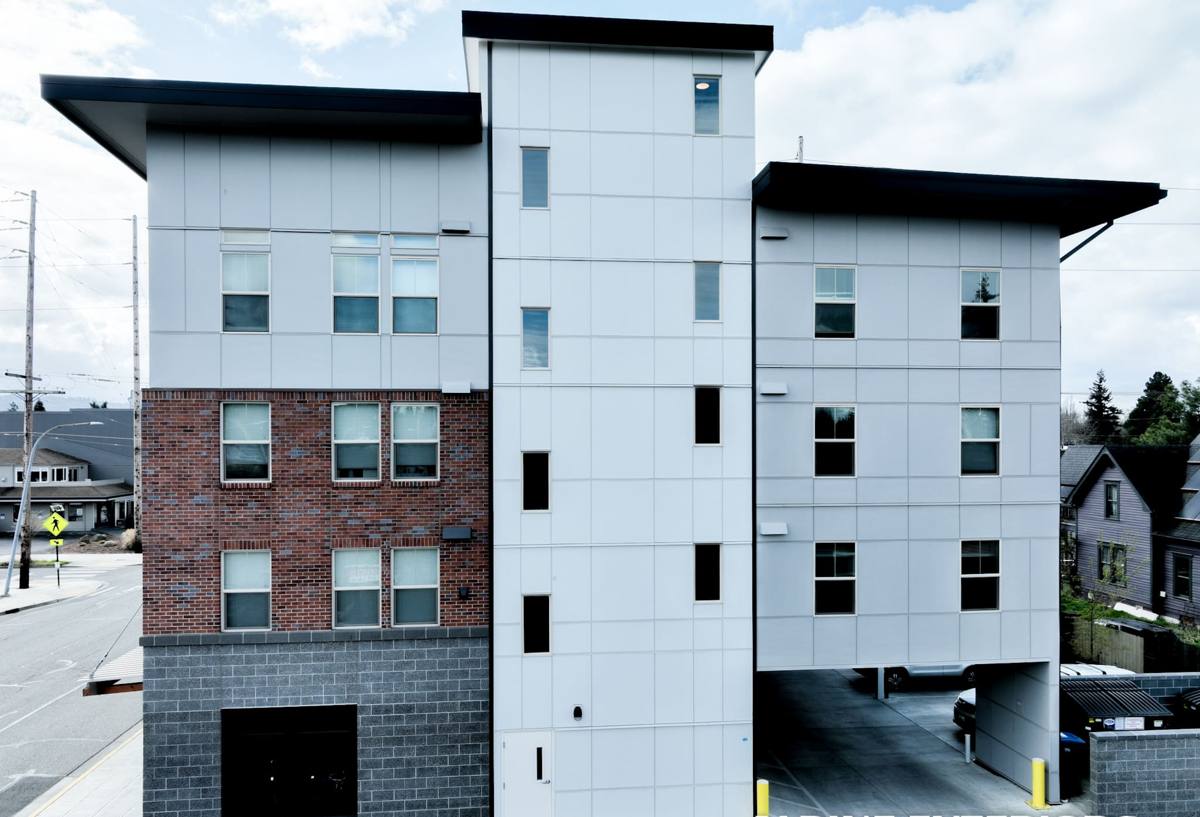
What "Custom" Actually Means Here
When we say custom windows, we mean windows built or precisely fitted to your home's actual openings — not the nearest standard size trimmed down to fit. This matters more in Conway than in newer subdivisions because:
- Older homes and farmhouses often have openings that are slightly out of square after decades of settling, which is common in the soft, low-lying soils near the river.
- Additions and remodels sometimes used non-standard framing that doesn't match any current window manufacturer's stock sizing.
- Outbuildings converted to living space — a common project in this area — rarely have openings built to residential window standards at all.
- Homeowners often want a specific look — true divided lites, a particular grille pattern, a wider sightline reduction — that only custom or semi-custom orders can deliver.
Forcing a stock window into an imperfect opening usually means extra shimming, gaps packed with foam or caulk instead of proper flashing, and a seal that's compromised from day one. In a climate that throws driving rain at a house sideways for months at a time, that shortcut shows up as a leak within a few years, not decades.
Choosing the Right Window Material for a Marine Climate
Material choice matters more here than in drier inland climates, because everything on your house is dealing with more moisture in the air and more cycles of wet-to-dry. Here's how the common options hold up under Conway conditions:
| Material | Performance in Salt Air & High Humidity | Maintenance |
|---|---|---|
| Vinyl | Good resistance to moisture and corrosion; won't rust or rot | Low — occasional cleaning, no painting or sealing needed |
| Fiberglass | Excellent dimensional stability, handles temperature and moisture swings well | Low — very durable finish, holds paint if color change is wanted later |
| Aluminum-clad wood | Attractive, but the wood interior is vulnerable if the seal ever fails and moisture gets in | Moderate — exterior cladding is low-maintenance, but any breach needs prompt attention |
| Bare wood | Classic look, but least suited to this climate without diligent upkeep | High — regular repainting/sealing required to prevent rot and moss growth |
| Standard aluminum frame | Prone to corrosion and condensation in salt air; poor thermal performance | Moderate, but corrosion issues tend to be permanent once they start |
We don't push bare-wood or standard aluminum-frame windows on Conway homes as a rule. It's not that either product is defective — it's that both demand a level of ongoing upkeep that doesn't match how most homeowners actually want to spend their weekends, and both have real failure modes tied directly to the moisture and salt exposure common in this area. Vinyl and fiberglass, or a well-detailed aluminum-clad wood window when the traditional look is important, are what we recommend and stand behind here.
Hardware and Glass Matter Too
The frame material gets most of the attention, but hardware and glazing deserve just as much thought in a salt-air environment. Look for stainless steel or corrosion-resistant coated hardware rather than basic zinc-plated components, which can start showing surface corrosion within a few seasons this close to the water. On the glass side, dual-pane units with a quality low-E coating and warm-edge spacers help with both energy performance and condensation resistance — a real issue in a climate where indoor and outdoor humidity levels are both high for much of the year.
The Installation Details That Actually Prevent Leaks
A quality window can still fail if it's installed wrong, and installation is where most window problems in this region actually start. The window unit itself is rarely the point of failure — the flashing and water-management details around it are.
What Correct Installation Looks Like
- Sill pan flashing under every opening, so any water that does get past the window has a sloped path back out rather than a place to pool against the framing.
- Proper flashing tape sequencing — sill first, then jambs, then head flashing lapped over the top — so water is always directed downward and outward, never trapped behind a layer.
- A drainage plane behind the siding that ties into the window flashing correctly, rather than the window being installed as an isolated component.
- Correct shimming and fastening so the frame stays square and the sash operates smoothly for the life of the window, instead of binding or sagging within a few years.
- Sealant used as a backup, not a primary defense — caulk breaks down under UV and constant wet-dry cycling, and a window that depends on caulk alone to stay dry will eventually leak.
This is the part of the job that doesn't show up in a brochure but determines whether your new windows are still performing well in twenty years or start showing water stains on the interior trim in three. It's also exactly the kind of detail that gets rushed when a crew is installing windows in a climate they're not used to.
Our Process for Conway Custom Window Projects
- On-site assessment. We measure every opening individually — no assuming two windows on the same wall are identical, especially on older or additions-built homes. We also check for existing moisture damage, soft framing, or signs of past leaks that need to be addressed before new windows go in.
- Material and style selection. We walk through frame material, glass package, and style options based on your home's age, exposure, and how the window will be used — a west-facing wall catching the brunt of storms gets a different conversation than a sheltered interior courtyard.
- Custom order or precision fabrication. Windows are built or ordered to the exact measured dimensions, not adjusted from a standard size after the fact.
- Removal and opening inspection. When we pull the old window, we inspect the framing and sheathing underneath for rot or moisture damage before anything new goes in. Skipping this step is how new windows end up installed over hidden problems.
- Flashing and installation. Full sill pan, jamb, and head flashing sequence, proper shimming, and correct fastening — the details covered above, done the same way every time.
- Interior and exterior finish work. Trim, sealant, and any siding tie-in restored to match, with attention to keeping the drainage plane continuous.
- Final walkthrough. We check operation, seal, and finish with you before considering the job done.
Signs Your Conway Home's Windows Need Attention
Because of how gradually moisture damage builds in this climate, window problems often go unnoticed until they're significant. Watch for:
- Visible moss, algae, or dark staining on the frame or sill, especially on shaded or north-facing walls
- Fogging or condensation between the panes of a dual-pane window, which means the seal has failed
- Soft or discolored trim and drywall around the window opening
- Windows that stick, won't stay open, or don't latch fully — often a sign the frame has shifted or swelled
- Noticeable drafts or a cold feeling near the window even when it's fully closed
- Rising heating bills without another clear explanation
- Visible daylight or gaps around the frame from outside
Any one of these on its own might be minor. Several together usually mean the window, or the flashing behind it, has been letting moisture in for a while.
Energy Performance and Comfort
Skagit County's marine climate means moderate temperatures overall, but persistent dampness and wind make drafty or poorly sealed windows feel far worse than the thermometer suggests. A properly installed, well-sealed custom window does two things at once: it keeps conditioned air where it belongs, and it keeps the moist outdoor air from working its way into wall cavities where it can cause hidden damage over time. For a Conway home, that second benefit is often just as important as the energy savings — it protects the structure, not just the utility bill.
Cost Factors Homeowners Should Understand
Custom window pricing varies more than people expect, and understanding what drives the cost helps you budget realistically and avoid surprises mid-project.
| Factor | Why It Affects Cost |
|---|---|
| Frame material | Fiberglass and clad-wood typically cost more than vinyl but offer longer service life in this climate |
| Opening condition | Rot repair or reframing behind an old window adds labor beyond the window itself |
| Number and size of openings | Larger or non-standard openings require more material and precision fabrication time |
| Glass package | Upgraded low-E coatings or laminated glass for sound or storm resistance add cost but improve performance |
| Grille and trim style | True divided lites and custom exterior trim details take more labor than a simple flat-grille install |
| Access and site conditions | Second-story openings or difficult access can add time to removal and installation |
We give straightforward, itemized estimates so you can see exactly what's driving the number — not a flat per-window price that hides what you're actually paying for.
Why Local Experience in Conway Matters
A crew that mostly works drier, inland climates can install a technically correct window and still get the flashing details wrong for what this area actually throws at a house. Working regularly in Skagit County means we're used to sizing up openings on older river-delta homes, we know which frame materials hold up and which ones fight you within a few years, and we build every installation around the assumption that wind-driven rain and constant humidity are the normal condition, not the exception. That's the difference between windows that need attention again in five years and windows that quietly do their job for decades.
If your Conway home has windows that are drafty, fogged, sticking, or just old enough that you're wondering, we're happy to take a look and talk through honest options. Reach out for a free, no-pressure estimate using the form below.