 Anacortes Siding
 Decks in Conway Take a Different Kind of Beating
Conway sits low, close to the Skagit River delta and not far off the water, which means the air here carries more salt and moisture than it does a few miles inland. Add Skagit County's long wet season — months of driving rain followed by a slow, shaded drying-out period — and you get conditions that are genuinely hard on an outdoor deck. Salt-laden air accelerates corrosion on fasteners and hardware. Persistent dampness feeds moss and algae on any surface that doesn't get direct sun or airflow. And low-lying, tree-shaded lots common around Conway mean decks often sit in shadow for a good part of the day, which slows drying time after every storm.
None of that is unusual for this part of Washington. But it does mean a deck built or repaired without those conditions in mind will fail faster here than the same deck would in a drier, sunnier part of the state. If you're noticing soft spots, persistent moss, or hardware that's rusting through, that's not bad luck — it's what this climate does to a deck over time, especially one that's past its original service life.
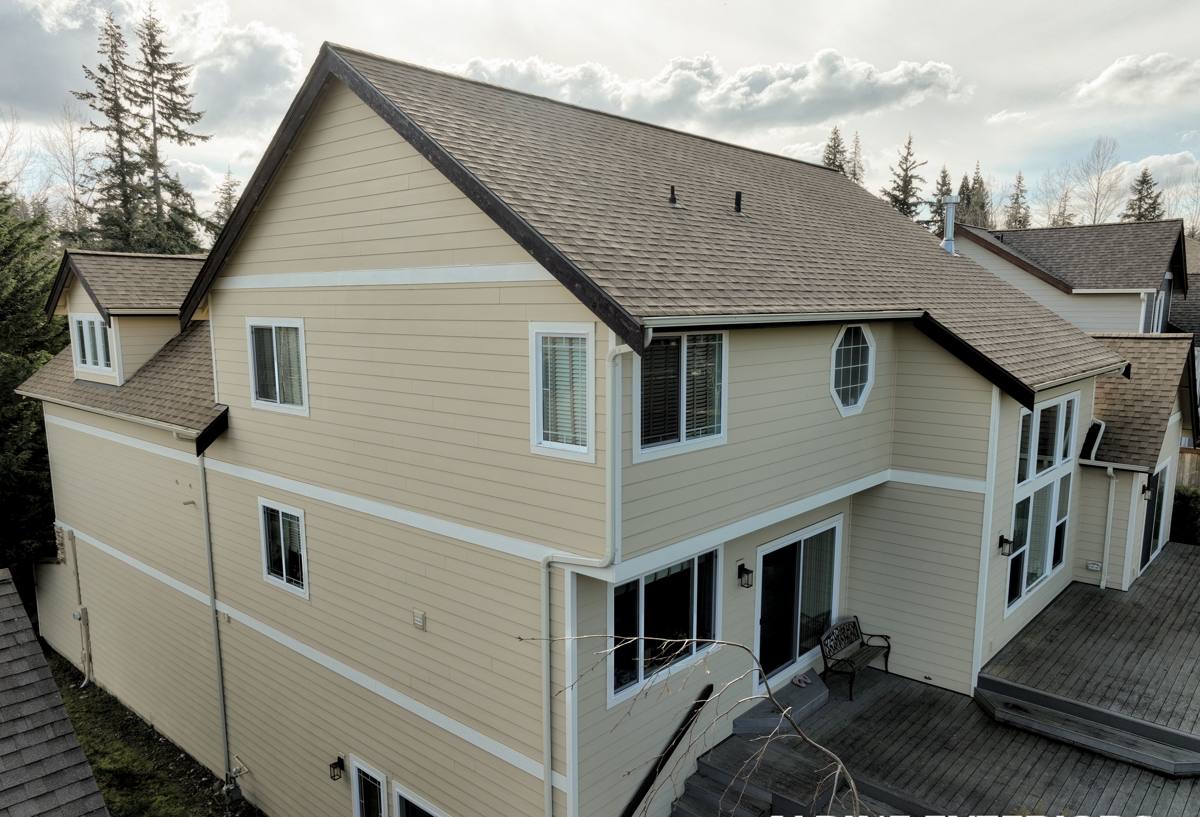
Signs a Conway Deck Needs Replacement, Not Another Repair
Not every aging deck needs to be torn out. But there's a point where patching individual boards stops making sense and a full replacement is the more honest recommendation. We look for:
- Soft, spongy, or springy decking boards — usually a sign moisture has gotten into the wood fiber itself
- Rot or dark staining where the deck ledger board meets the house
- Rusted, loosening, or corroded fasteners and joist hangers
- Posts or beams that feel soft when probed, especially near ground contact
- Persistent moss or algae that returns within weeks of cleaning
- Visible cupping, checking, or splitting across most of the deck surface, not just isolated boards
- Railings that flex or feel loose under normal weight
One or two of these on an otherwise sound deck might mean targeted repair. Several at once — especially structural issues at the ledger, posts, or framing — usually means the deck has reached the end of what repair can reasonably fix, and replacement is the more cost-effective path over the long run.
What a Correct Deck Replacement Actually Involves
Framing and Structure
The framing is what everything else depends on, and it's the part homeowners see the least. Joists, beams, and posts need to be sized correctly for the deck's span and load, set with proper spacing, and — in a climate like Conway's — protected against moisture wicking up from the ground or in from the ledger connection. We don't reuse framing members that show soft spots or rot just to save time; framing failures are the reason decks become safety issues, not cosmetic ones.
Ledger Board and Flashing
The ledger board — where the deck attaches to the house — is the single most common failure point on any deck in a wet climate, and it's almost always because flashing was skipped or done wrong. Water gets behind the ledger, the wood stays damp indefinitely because it never sees sun or airflow, and rot sets in exactly where the deck's structural connection to the house is weakest. Correct flashing detail here isn't optional trim work — it's the difference between a deck that lasts and one that quietly rots from the inside.
Decking Surface and Fasteners
Whatever material goes on top, fastener choice matters as much as the boards themselves. In a salt-air environment, standard fasteners corrode faster than they would inland, which is why we use hardware rated for the exposure, not just whatever's cheapest at the yard.
Railings and Code
Railing height, baluster spacing, and guard requirements are governed by building code, and Skagit County permitting follows the state building code for residential decks. A replacement is also the right time to bring an older deck's railings up to current code if they aren't already.
Choosing a Decking Material for Conway's Conditions
There's no single "best" decking material — there's a best fit for how much maintenance you want to do and how the deck sits relative to sun, shade, and moisture. Here's how the common options actually compare in a wet, shaded, salt-air environment like Conway's:
| Material | Moisture & Moss Resistance | Maintenance | Typical Lifespan |
|---|---|---|---|
| Pressure-treated wood | Moderate — needs sealing to perform well | Annual cleaning and re-sealing recommended | 10–15 years with upkeep |
| Cedar | Naturally moisture- and insect-resistant, but surface still needs care in shade | Periodic staining/sealing to maintain appearance | 15–20 years with upkeep |
| Capped composite | Strong — cap layer resists moisture and staining | Occasional washing, no sealing or staining | 25–30+ years, manufacturer-backed |
| PVC | Excellent — fully synthetic, no wood fiber to absorb moisture | Lowest — soap and water as needed | Comparable to or longer than composite |
Wood costs less up front and has a natural look plenty of homeowners want, but it also asks the most of you in a climate like this — regular sealing, closer moss monitoring, and a shorter clock before boards need replacing. Composite and PVC cost more initially but shed moisture and resist moss buildup with far less ongoing work, which matters most on shaded, low-airflow lots that are common around Conway. We'll walk through the honest trade-offs for your specific site rather than push one material across the board.
Our Deck Replacement Process
- On-site inspection. We check framing, ledger condition, post and footing condition, and drainage around the deck before recommending replacement over repair.
- Tear-out. Old decking, railings, and any compromised framing come out. We assess what's underneath as we go — sometimes framing looks fine from above but tells a different story once boards are off.
- Framing and ledger work. Any structural members that don't meet standard get replaced. Ledger flashing is installed correctly, not skipped.
- Decking installation. Boards go down with corrosion-resistant fasteners and proper spacing for drainage and seasonal movement.
- Railings and finishing. Railings are installed to current code, and all edges and fastener heads are checked for a clean, safe finish.
- Site cleanup. Old material and debris are hauled off — you're not left to deal with the mess.
Moss, Mildew, and Keeping a New Deck Looking Right
A well-built deck in Conway will still see moss and mildew pressure — that's just the reality of the climate. The goal of correct construction is to make ongoing maintenance manageable instead of a losing battle. A few habits go a long way:
- Sweep leaves and debris off the deck surface regularly, especially in fall — trapped organic matter is what moss feeds on
- Rinse or lightly wash shaded areas more often than sun-exposed ones
- Trim back overhanging branches where possible to improve airflow and sunlight
- Check gaps between boards periodically to make sure they haven't filled with debris that traps moisture
- For wood decks, don't let sealing lapse — once moisture gets into unsealed wood, moss and rot follow
Composite and PVC surfaces cut this maintenance list down considerably, which is part of why they've become the practical choice on a lot of the shadier, wetter lots we see in this area.
Why Hire a Crew That Already Works in Conway
A deck built the same way you'd build one in a dry inland climate will underperform here. Knowing how much flashing detail actually matters at the ledger, which fasteners hold up against salt air, and how much drying time a shaded deck realistically gets after a storm isn't generic knowledge — it comes from working this specific stretch of Skagit County. We're also familiar with the county's permitting process for residential deck work, which keeps the project moving instead of stalling on paperwork you didn't know you needed.
Just as important is what a locally experienced crew won't do: oversell a material or a repair that isn't suited to your lot's sun and moisture exposure. A deck that looks right on paper but ignores how wet and shaded your particular yard actually is will disappoint you within a few seasons, regardless of the price tag.
What Affects the Cost of a Deck Replacement
Every deck is different, so we won't quote a number without seeing the site, but the main cost drivers are consistent:
- Size and shape — square footage and complexity (multiple levels, angles, built-in seating) both add labor
- Material choice — pressure-treated wood costs less up front than composite or PVC, with the maintenance trade-offs noted above
- Framing condition — if posts, beams, or the ledger connection need rebuilding, that's structural work beyond just swapping the surface boards
- Height and railings — elevated decks need more substantial railing systems and stair work than ground-level ones
- Site access — how easily materials and equipment can reach the build site affects labor time
We'll walk through each of these factors during the on-site visit so you understand what's driving the number, not just what the number is.
If your deck is showing its age or you're planning a replacement before it becomes a safety issue, we're glad to take a look and give you a straightforward, no-pressure estimate — just fill out the form below to get started.