 Anacortes Siding
 Decks Built for Oak Harbor's Marine Climate, Not Just Its View
Oak Harbor sits close enough to the water, and close enough to Anacortes across Deception Pass, that a deck here lives a different life than one built inland. The same marine air that makes the view worth building a deck for is also what breaks decks down early: salt-laden air corroding hardware, driving rain finding its way into ledger boards and framing, and a moss season that runs long enough to turn a deck surface slick and green if it's not designed to shed water and dry out. A deck built without those specifics in mind will look fine for a season or two. The problems show up later, in the framing you can't see.
This page is about one job in one area: custom deck building and replacement for Oak Harbor homes. We're not going to cover every deck style or every material on the market — just what actually matters for a deck that has to hold up here.
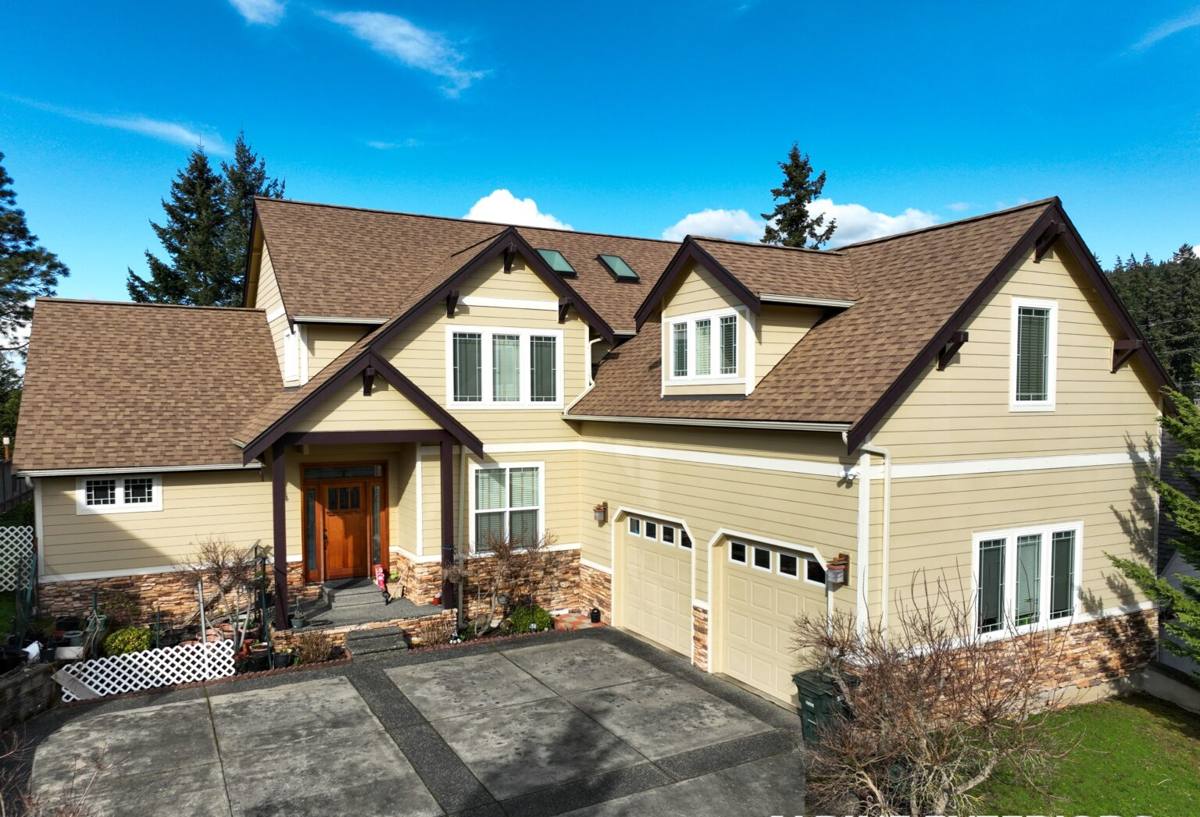
What Salt Air, Rain, and Moss Actually Do to a Deck
Salt Air and Hardware
Airborne salt speeds up corrosion on anything metal — fasteners, joist hangers, railing brackets, bolts. On a deck built inland, standard galvanized hardware might last the life of the structure. Closer to the water, that same hardware can start rusting and staining the decking around it within a few years, and rusted fasteners lose holding strength long before they look bad enough to notice from a few feet away.
Driving Rain and Hidden Rot
Wind-driven rain doesn't just fall on a deck, it gets pushed sideways into gaps — around the ledger board where the deck attaches to the house, into end-grain cuts that weren't sealed, and under railing posts where the base isn't flashed. Wood doesn't need standing water to rot; it just needs repeated wetting without a chance to fully dry. That's exactly what a long Pacific Northwest wet season provides.
Moss and Algae
Shaded decks, north-facing decks, and decks under overhangs stay damp longer, and moss and algae take hold wherever moisture sits. Beyond looking bad, a mossy deck surface is a slip hazard, and moss holds moisture against the decking material itself, which shortens the life of wood and can affect the finish on some composite products over time.
Choosing a Decking Material for This Climate
There's no single "right" material for every Oak Harbor deck — it depends on budget, how much upkeep you want to do, and how exposed the deck is to weather. Here's how the common options actually compare for a marine climate:
| Material | Upfront Cost | Maintenance | Moisture & Salt Behavior | Typical Lifespan |
|---|---|---|---|---|
| Pressure-treated wood | Lowest | Annual cleaning, periodic re-sealing | Needs consistent sealing to resist rot; end cuts are vulnerable | 10-15 years with upkeep |
| Cedar | Moderate | Regular sealing to hold color and resist checking | Naturally rot-resistant but still needs a sealed finish here | 15-20 years with upkeep |
| Composite decking | Higher | Occasional washing, no sealing or staining | Doesn't rot, but capped boards resist moisture better than uncapped | 25-30 years |
| PVC / aluminum decking | Highest | Lowest — mostly rinsing | Excellent moisture and salt resistance, doesn't support rot | 30+ years |
Composite and PVC products cost more up front, but for a deck that's going to sit in salt air and long wet winters, the reduced maintenance and better moisture behavior often make up the difference over the life of the deck. Wood isn't a wrong choice — it just needs an honest conversation about the sealing schedule it will actually require to hold up here, and most homeowners underestimate that commitment.
The Structural Details That Matter More Than the Surface
Ledger Board Attachment
The ledger board — where the deck bolts into the house — is the single most common point of deck failure nationally, and it's almost always a water problem before it's a structural one. Proper flashing between the ledger and the house, correct fastener spacing, and a gap that lets water drain instead of pooling against the siding are non-negotiable. This connection needs to be done right the first time, because once siding and finish materials are back in place, checking it means opening the wall up again.
Footings
Footings need to sit below the local frost depth and bear on undisturbed soil, not fill. Skagit and Island County soils vary block to block — some sites drain well, others hold water — and footing depth and size should be sized to the actual soil conditions on your property, not a generic assumption.
Framing and Fasteners
For anything within reach of salt air, we treat corrosion resistance as part of the structure, not an upgrade. That means hot-dip galvanized or stainless-rated joist hangers, structural screws, and connectors rated for the exposure — not standard hardware that happens to be cheaper.
Railings, Fasteners, and Hardware Built for the Air Here
Railings take more direct weather exposure than almost any other part of a deck, since they're vertical and unprotected on both faces. A few things we treat as standard, not optional, for Oak Harbor decks:
- Corrosion-rated fasteners and brackets at every post base and cap connection
- Post bases flashed or isolated from standing water, not sitting directly in a puddle-prone corner
- Cable and metal railing hardware specified for coastal/marine exposure, not interior-rated hardware
- Wood railing components sealed on all six sides, including cuts made on site
- Baluster spacing and railing height that meet current code, checked at final inspection
Permits and Local Code
Most custom decks above a certain height or attached to the house require a building permit, and the permitting authority depends on exactly where the property sits — City of Oak Harbor, Island County, or Skagit County, depending on the site. Permits aren't paperwork for paperwork's sake: the inspection catches ledger attachment, footing depth, and railing details before they're covered up, which is exactly the stuff that's expensive to fix later. We handle the permit process as part of the job rather than leaving it for the homeowner to sort out.
Our Process, Start to Finish
- On-site walkthrough: We look at sun exposure, wind, drainage, existing structure (if replacing a deck), and how the space will actually be used before talking materials.
- Design and material selection: We go over the material comparison honestly — cost, upkeep, and how each option performs in this climate — so the decision fits your budget and your tolerance for maintenance.
- Permitting: We prepare and submit the permit package for your specific jurisdiction and schedule inspections at the right points in the build.
- Demolition (if replacing): Old decking, framing, and any hidden rot around the ledger get removed and the house connection is inspected before anything new goes up.
- Footings and framing: Footings poured to the correct depth, framing built with corrosion-rated hardware sized for the exposure.
- Decking and railing installation: Surface material and railing system installed per manufacturer specs and code.
- Final inspection and walkthrough: We confirm the permit closes out clean and walk the finished deck with you before calling it done.
Checklist: What a Correctly Built Oak Harbor Deck Needs
- Flashed, properly fastened ledger board attachment (or a freestanding design if the house connection isn't sound)
- Footings sized and depth-checked for the actual soil on site, below frost depth
- Corrosion-rated fasteners and connectors throughout, not just at visible points
- Decking material chosen with an honest maintenance conversation, not just upfront price
- Slope and gapping that let the surface actually dry between rain events
- Railing hardware rated for marine/coastal exposure
- A closed-out permit with inspections passed at framing and final
Why It Matters That We're a Local Crew, Not a Fly-In Job
A crew that only builds a handful of decks in this area every year doesn't have a feel for which lots hold water, which sites get hit hardest by wind off the water, or which jurisdiction handles permits which way. Working Anacortes and Oak Harbor regularly means we've already seen how different materials and hardware hold up a few years in, not just on installation day. It also means if something needs a warranty check or a tune-up down the road, we're a short drive away, not a call center.
If you're planning a new deck or replacing one that's showing its age, we're glad to come take a look and talk through what your specific site actually needs — no pressure, no generic sales pitch. Use the form below to request a free estimate.