 Anacortes Siding
 Building a Deck That Actually Holds Up in Conway
Conway sits low in the Skagit River delta, tucked between Mount Vernon and Stanwood in Skagit County, and that location shapes almost every decision that goes into a deck built here. The air carries salt off the Sound, the rain is frequent and driving rather than light and occasional, and the moss season runs long because the ground and the air both stay damp for months at a time. A deck built the same way you'd build one in a dry inland climate will show problems within a few years here — soft spots, rusting hardware, slick moss buildup, and fasteners that back out or corrode. A deck built for this specific site holds its shape and stays safe for decades.
This page covers what actually matters for a Conway deck build: material choices that make sense for river-delta moisture, framing and footing details that prevent the failures we see most often in this area, and what our process looks like from first conversation to finished project.
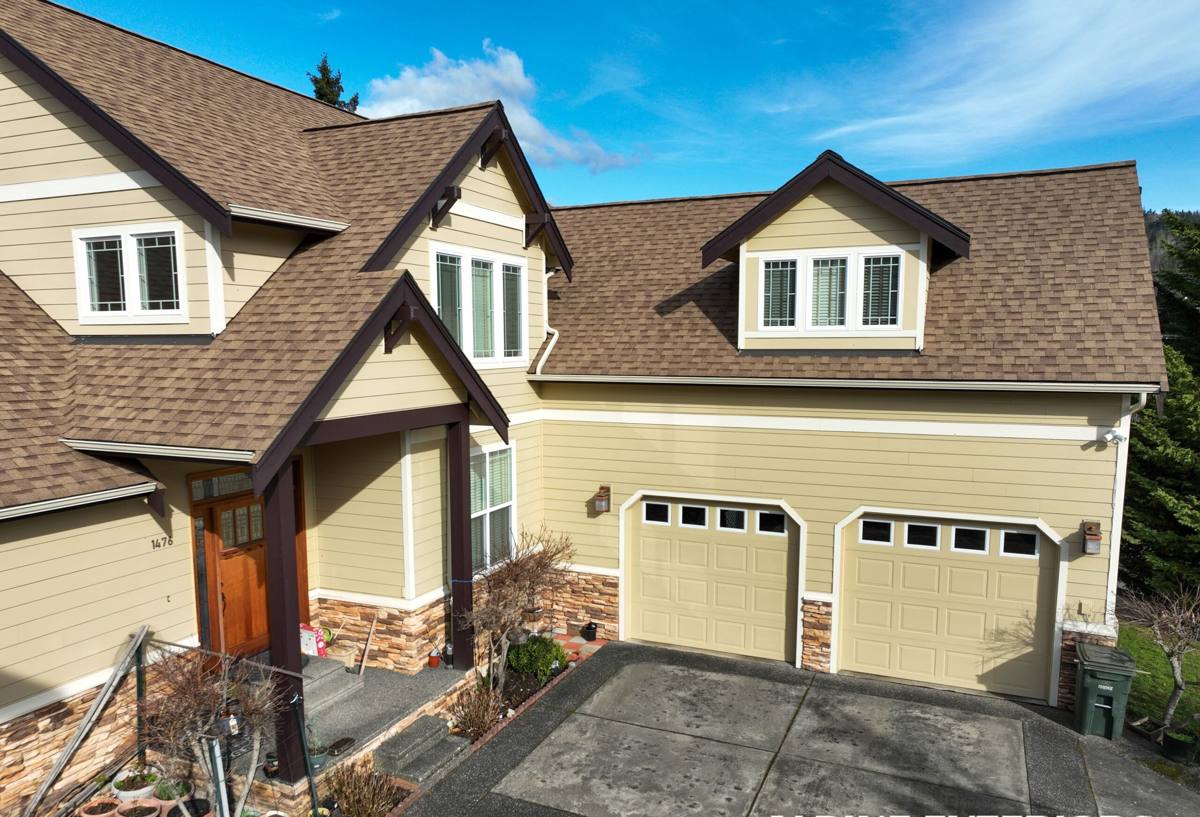
Why Conway's Location Changes the Decking Calculus
Low elevation near the Skagit River means higher ground moisture and, on some lots, a higher water table than you'd find on higher ground closer to Anacortes proper. Combined with salt-laden air moving in off the Sound, this creates a combination that's harder on wood, metal, and even some composite products than a typical inland Skagit County site. A few specific effects worth understanding before you plan a deck:
- Ground contact moisture — posts, footings, and low framing members stay damp longer after rain, which accelerates rot in untreated or poorly protected wood.
- Salt air corrosion — standard galvanized fasteners and hardware corrode faster near the delta than they would further from open water, which weakens joints over time even when the wood itself looks fine.
- Moss and algae growth — shaded, damp surfaces develop a moss layer within a season or two if the decking material and gap spacing don't allow for drying and airflow.
- Fog and low sun angle — river valley fog keeps surfaces wet longer into the morning, and lower winter sun means shaded parts of a deck may barely dry out at all during the wet months.
None of this makes a deck in Conway a bad idea — it just means the material, hardware, and framing choices need to match the conditions rather than a generic build spec.
Choosing the Right Decking Material for This Climate
There's no single "best" decking material for every budget, but for Conway's conditions some options clearly outperform others in the long run. Here's how the common choices compare when moisture and salt air are the deciding factors:
| Material | Upfront Cost | Moisture/Rot Resistance | Maintenance | Notes for This Climate |
|---|---|---|---|---|
| Pressure-treated lumber | Lowest | Good if properly sealed and maintained | Annual cleaning and re-sealing recommended | Budget-friendly, but requires real upkeep discipline in a wet climate or it stains and softens early |
| Cedar | Moderate | Naturally decay-resistant, but surface still needs care | Periodic cleaning, oiling, or staining | Handsome look but grays and can develop moss fast without regular cleaning |
| Capped composite | Higher | Excellent — the cap layer resists moisture intrusion | Occasional washing, no sealing or staining | Strong fit for river-delta moisture; better long-term value despite higher upfront cost |
| PVC decking | Highest | Best — no wood fiber to absorb moisture | Occasional washing | Fully synthetic, handles constant damp exposure well; premium price point |
For a lot of Conway homeowners, capped composite hits the right balance — it costs less than full PVC, resists the moisture and salt exposure far better than untreated or lightly treated wood, and doesn't demand the yearly sealing schedule that keeps a wood deck looking good. We'll walk through the honest trade-offs for your specific site and budget rather than push one product line.
What We Steer Clients Away From
Untreated or low-grade decking boards, standard (non-stainless, non-coated) fasteners, and any framing plan that traps water against wood are the three things we won't put our name on in this area. It's not that these products are unusable everywhere — it's that Conway's combination of ground moisture and salt air shortens their working life to the point where the maintenance burden or early replacement cost outweighs the initial savings.
Framing and Structure: Where Decks Actually Fail Here
Most deck failures we get called out to inspect aren't decking-surface problems — they're structural problems that started underneath, out of sight, and were left unaddressed until they became visible or unsafe. In a climate like this, the framing details matter as much as the surface material.
The Ledger Board Connection
Where a deck attaches to the house is the single most common failure point in wet Pacific Northwest climates. Without correct flashing, this connection lets water track behind the ledger board and into the house rim joist, which can rot both the deck framing and the structure it's attached to. We flash this connection properly on every attached deck we build, and we'll flag it immediately if we're asked to repair or extend a deck where it wasn't done right the first time.
Fasteners and Hardware
In salt-influenced air, the difference between standard galvanized hardware and stainless steel or high-grade coated fasteners shows up within a few years, not decades. Joist hangers, structural screws, and post connectors all see faster corrosion here than they would inland. We use hardware rated for coastal and treated-lumber exposure as a standard practice, not an upgrade option, because replacing corroded structural hardware later means tearing into a finished deck.
Joist Spacing and Airflow
Tighter joist spacing than the minimum code allows, combined with a small gap between decking boards, helps water shed and air move underneath the deck surface. In a spot where fog and rain keep the underside damp for long stretches, that airflow is what keeps framing from staying wet long enough to rot.
Footings in Conway's Ground
Because Conway sits low in the river delta, soil conditions and water table depth can vary noticeably from lot to lot — sometimes even across a single property. Before we set footings, we check the actual ground conditions on site rather than assuming a standard depth and spec will work everywhere. A few things we account for:
- Frost depth requirements set by Skagit County code, which determine minimum footing depth
- Soil bearing capacity, which can be softer near the river than on higher, drier ground
- Drainage around each footing, so water doesn't pool against concrete or posts
- Whether the lot falls within a mapped flood zone, which can affect footing design and permitting — this is worth checking with the county early, not after a deck is designed
Getting footings right the first time matters more here than in a lot of inland locations, because a footing that settles or heaves due to wet, unstable soil is expensive and disruptive to fix once a deck is built on top of it.
Railings and Hardware Finish
Railings and their connecting hardware take direct weather exposure with no roof or decking surface to shield them, which makes them one of the first places salt air damage shows up visibly — usually as rust streaks or a stiff, gritty post connection. We spec railing hardware the same way we spec structural fasteners: rated for the exposure this location actually sees, not the minimum a supplier will sell for a basic build. Whether you're going with wood, composite, cable, or metal railing, the connection points and fasteners deserve the same attention as the decking material itself.
Our Deck Building Process
We keep the process straightforward and give you real information at each step rather than surprises:
- On-site walkthrough — we look at the actual lot, drainage, sun exposure, and existing structure (if attaching to the house) before recommending anything.
- Material and design conversation — we go through decking material, railing style, and layout options with honest cost and maintenance trade-offs for your budget.
- Permitting — we handle the permit application through Skagit County so the project meets current code, including flood zone requirements where applicable.
- Framing and footings — built to the soil and moisture conditions on your specific lot, not a generic spec.
- Decking, railing, and finish work — installed with attention to drainage, airflow, and fastener quality throughout.
- Final walkthrough — we go over the finished deck with you, including basic maintenance guidance specific to the material you chose.
Permits and Code in Skagit County
Most new decks and many deck replacements in unincorporated Skagit County — which includes Conway — require a building permit, and the requirements can shift depending on deck height, size, and whether the property falls within a mapped flood zone near the river. We handle the permit process as part of the build rather than leaving it to the homeowner to sort out, and we won't cut corners on this step even when a client is in a hurry — an unpermitted deck can create real problems at resale or with insurance later.
Keeping a Conway Deck in Good Shape
Whatever material you choose, a little seasonal attention goes a long way in this climate. A simple maintenance checklist we give clients:
- Clear leaves and debris from between boards and off the surface before fall rains set in
- Rinse or lightly wash the deck surface a couple of times a year to slow moss and algae buildup
- Check railing posts and stair connections annually for looseness or corrosion at hardware points
- For wood decks, plan on cleaning and re-sealing or staining on a regular cycle — skipping a year in this climate shows
- Keep vegetation trimmed back from the deck edges so airflow and sun can reach the surface
Why Local Deck-Building Experience Matters Here
A deck built to a generic national spec can pass inspection and still underperform in Conway's specific combination of river-delta moisture and coastal salt air. Crews who already work regularly in this part of Skagit County know which fastener grades hold up, which footing approach fits the local soil, and which permitting details the county actually checks. That local knowledge is the difference between a deck that needs attention again in five years and one that's still solid in twenty-five.
If you're planning a new deck or need to replace one that's showing its age, we're happy to walk your property, talk through material and design options honestly, and put together a free, no-pressure estimate. There's a form below — reach out and we'll get you real answers, not a sales pitch.