 Anacortes Siding
 Similk Beach Decks Face a Different Climate Than Inland Anacortes
Similk Beach sits close to the water on Fidalgo Island, and that changes what a deck needs to survive here compared to a deck built a few miles inland. Homes along this stretch deal with salt-laden air off the bay, driving rain that comes in sideways during winter storms, and heavy tree cover that keeps moss and moisture working on wood surfaces almost year-round. A deck design that works fine in a dry inland yard can start showing corrosion, soft spots, or slick moss growth within a couple of seasons out here.
This page covers what actually matters when building or replacing a deck for a Similk Beach property: the materials, hardware, and structural details that hold up in this specific environment, and how our process is set up around those realities rather than a generic build spec.
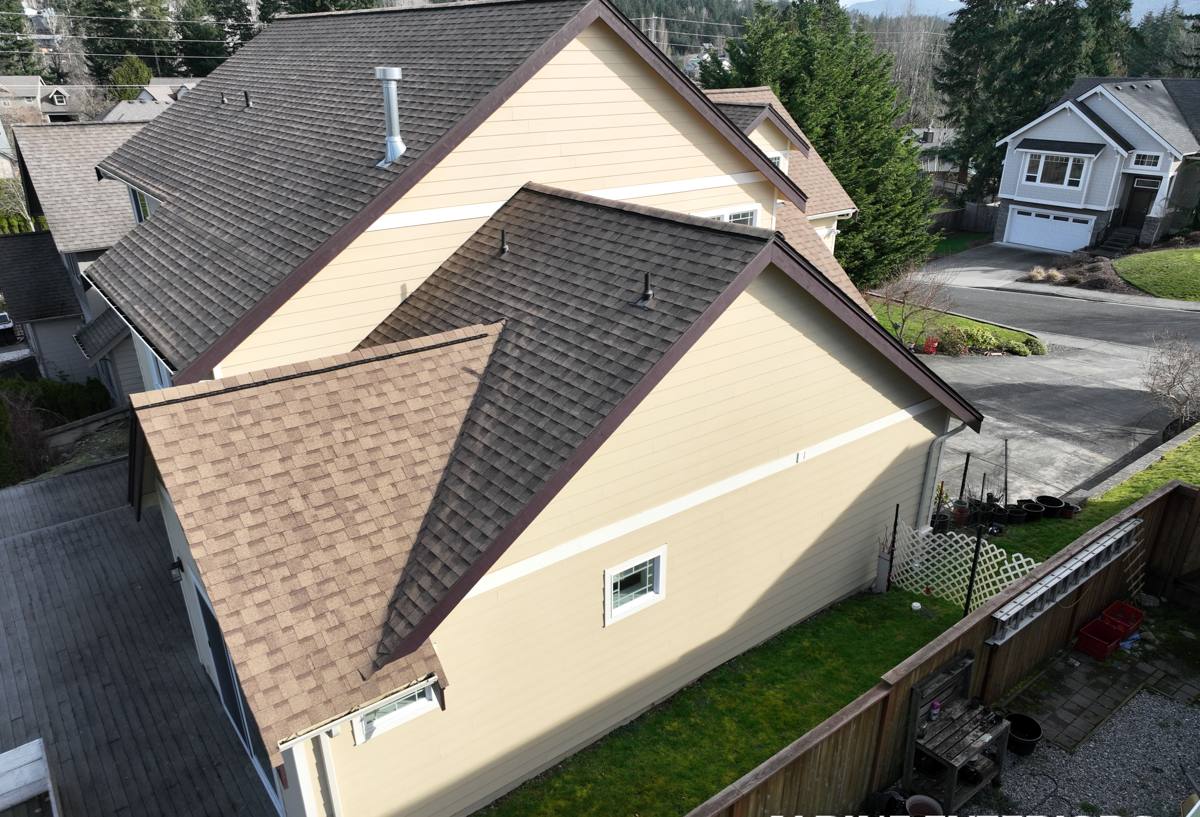
What Salt Air, Rain, and Moss Season Do to a Deck
Three things drive almost every deck problem we see in this part of Skagit County, and they compound each other.
Salt Air
Airborne salt from the bay settles on any exposed metal — fasteners, joist hangers, railing brackets — and accelerates corrosion far faster than standard hardware ratings assume. Once a fastener starts rusting, it weakens the very connections holding the deck together, often before any visible rot appears in the wood around it.
Driving Rain
Wind off the water pushes rain at an angle instead of straight down, which means it gets driven into joints, ledger connections, and end grain that a purely vertical rain would never reach. Flashing and water-shedding details that are "good enough" in a sheltered yard aren't good enough here.
Moss and Shade
Mature evergreen cover common to this area keeps decking surfaces shaded and damp longer after every rain. That extended damp period is exactly what moss and algae need to take hold, and a mossy deck surface isn't just unsightly — it holds moisture against the boards and gets dangerously slick underfoot, especially on stairs.
None of this means a deck can't last for decades at Similk Beach. It means the design, material choices, and hardware have to account for these three factors specifically, rather than following a one-size-fits-all spec sheet.
The Ledger Board Connection: Where Waterfront Decks Usually Fail First
If a deck is attached to the house, the ledger board — the piece that bolts the deck framing to the structure — is the single most important connection on the whole project. It's also the most common place we find problems on older decks in this area, because it's hidden behind the decking and easy to build wrong the first time and never notice until there's a soft spot near the house.
A correct ledger connection out here includes:
- Proper flashing that directs water out and away from the house sheathing, not just a bead of caulk behind the board
- A gap or drainage plane between the ledger and the siding so water can't sit trapped against the wall
- Structural bolts or lag screws rated for the load, sized and spaced to current code rather than "what was there before"
- Corrosion-resistant fasteners throughout, since this connection is the hardest one to inspect once the deck is finished
Skipping any of these is how a deck ends up with hidden rot at the house connection years before the visible decking shows its age. We check and rebuild this connection to current standards on every project, even when a homeowner just wants new deck boards on an otherwise sound frame.
Choosing the Right Decking Material for This Environment
There's no single "best" decking material — there's a best fit for a given budget, maintenance appetite, and exposure. For a shoreline property like Similk Beach, we weigh salt exposure and moss tolerance more heavily than we would for an inland lot.
| Material | How It Handles Salt Air | How It Handles Moss/Moisture | Maintenance |
|---|---|---|---|
| Pressure-treated wood | Good if fasteners and hardware are upgraded; the wood itself tolerates salt air fine | Needs regular cleaning and sealing or moss takes hold in shaded areas | Highest — annual cleaning, periodic sealing/staining |
| Cedar | Naturally decay-resistant, holds up well overall | Still needs periodic cleaning in shaded, damp spots | Moderate to high — sealing recommended to hold color and resist moisture |
| Composite decking | Very good — no metal to corrode in the board itself, resists salt staining | Textured composite surfaces can still grow moss in deep shade; smooth-cap boards resist it better | Low — occasional washing, no sealing or staining |
| PVC/capped polymer decking | Excellent — fully synthetic, unaffected by salt | Good moss resistance, especially with a smooth cap surface, though shaded areas still need occasional cleaning | Low — periodic washing only |
We don't push one product line over another. Our job is to lay out the honest trade-offs — upfront cost versus long-term upkeep, appearance versus maintenance burden — and help you land on the material that fits how you actually want to spend your weekends.
Fasteners, Framing Hardware, and Footings
Fasteners and Connectors
This is where we see the most corner-cutting on older decks near the water. Standard electro-galvanized fasteners and joist hangers are rated for general use, not for sustained salt air exposure. On every Similk Beach project we use stainless steel or heavy hot-dip galvanized fasteners and connectors rated for coastal exposure, because replacing a few dollars' worth of hardware up front is far cheaper than replacing rusted-out framing connections in ten years.
Footings
Waterfront and near-shore lots can have variable soil conditions — some fill, some native soil, sometimes a higher water table than you'd expect a short distance inland. Footings need to be sized and set to the actual soil conditions on your lot and to current frost depth requirements, not just poured to whatever depth looked fine on the last job. We check this on-site rather than assuming.
Permitting for Shoreline and Near-Shore Lots
Anacortes and unincorporated Skagit County both require permits for most new deck construction, and properties near the water — like many in Similk Beach — can also fall under shoreline management regulations depending on distance from the water and the scope of the project. That doesn't mean every deck triggers extra review, but it does mean the permitting path isn't always identical to a deck build a mile inland. We handle the permit application and any shoreline-related coordination as part of the job, so you're not the one trying to figure out which department needs which form.
Our Process for a Similk Beach Deck Build
- Site visit: we look at sun and shade exposure, existing drainage, soil conditions, and how close you are to the water, since all of that affects material and hardware choices.
- Design and material selection: we walk through the honest trade-offs between wood, composite, and PVC decking for your specific spot on the property, along with railing and stair layout.
- Permitting: we prepare and submit what's needed for your jurisdiction, including any shoreline-related review if your lot requires it.
- Build: footings sized to your soil, a properly flashed ledger connection (or a freestanding frame where attaching to the house isn't the right call), coastal-rated fasteners and hardware throughout, and decking installed to manufacturer spec.
- Final walkthrough: we go over the finished deck with you, including what maintenance it actually needs — not a generic care sheet, but what your specific material and site conditions call for.
Maintenance Checklist for This Climate
Whatever material you choose, a few habits go a long way toward keeping a Similk Beach deck safe and good-looking for its full lifespan:
- Rinse or sweep off standing debris (needles, leaves) in shaded areas regularly — this is where moss gets its start
- Clean visible moss or algae promptly, especially on stairs and any north-facing or heavily shaded sections
- Check exposed fasteners and railing hardware periodically for early rust staining, which shows up before structural weakening does
- Keep gutters and downspouts near the deck clear so roof runoff isn't dumping extra water onto the deck surface or framing
- If you have a wood deck, plan on resealing or restaining on the schedule your specific wood species and finish call for, not just "when it looks faded"
- Have the ledger connection and under-deck framing glanced at every few years, since that's the area most hidden from daily view
Why Hire a Crew That Already Works This Neighborhood
A contractor who mostly builds decks inland will often use the same spec they'd use anywhere — standard hardware, standard flashing details, whatever decking is popular that season. That's not negligence, it's just a different environment than the one they're used to. Similk Beach's combination of salt air, wind-driven rain, and heavy shade rewards a crew that's already made the adjustments: upgraded fasteners as a default rather than an upsell, ledger flashing built for driving rain, and material recommendations based on how a product actually performs near the water rather than how it performs in a showroom. That's the standard we hold every deck build to in this part of Anacortes.
If you're planning a new deck or need to replace one that's showing its age, we're happy to take a look and put together a straightforward, no-pressure estimate — just fill out the form below.