 Anacortes Siding
 Deck Repair in Bow, Washington
Bow sits in that stretch of Skagit County where farmland, wooded rural lots, and waterfront properties near Samish Bay and Edison all blend together. It's a beautiful place to have a deck — and a tough place to keep one in good shape. Between the salt-laden air coming off the bay, the long wet season, and the shade cast by mature trees on many Bow properties, decks in this area age differently than they would further inland. We repair decks throughout the Anacortes and Skagit County area, and Bow properties are a regular part of that work because the conditions here demand a specific kind of attention.
This page is about deck repair specifically — not a full rebuild pitch, not a generic list of services. If your deck has soft spots, loose railings, a spongy stair stringer, or boards that never seem to dry out, this is what that job actually looks like and how we approach it.
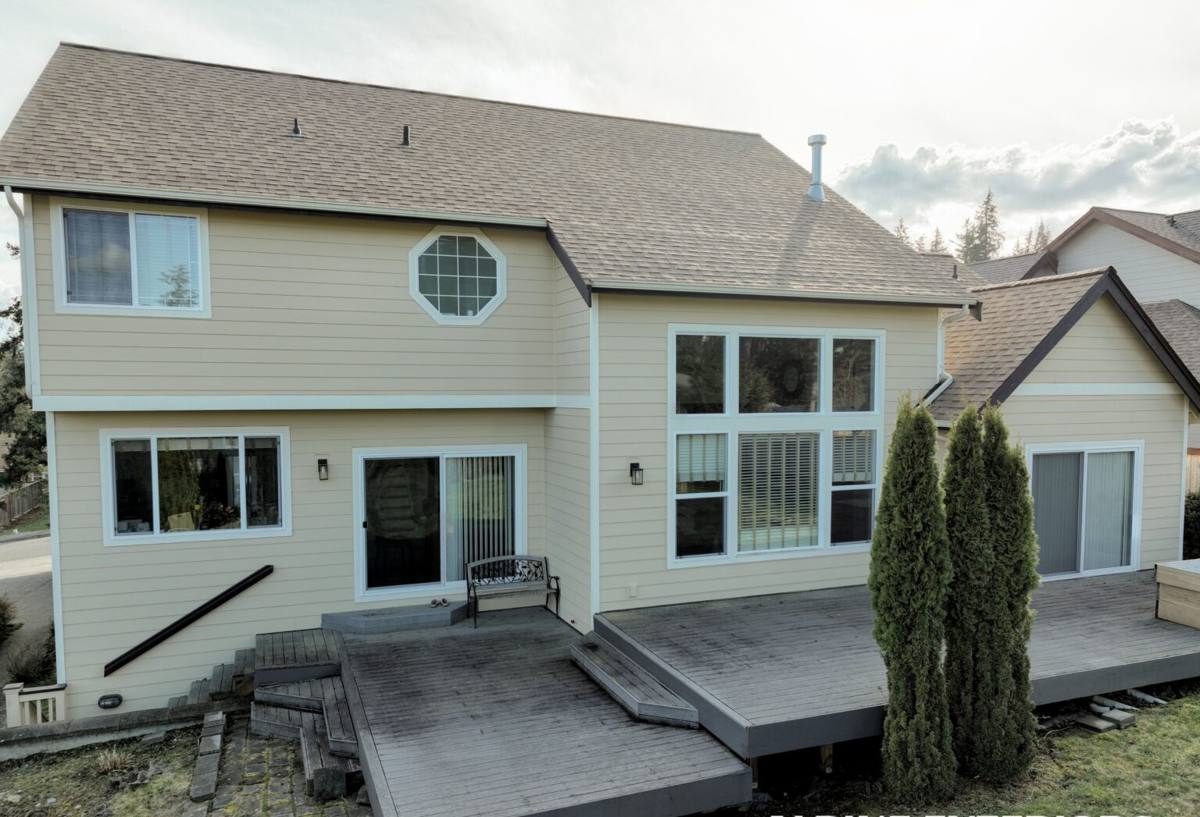
How Bow's Coastal Climate Wears Down a Deck
Every deck fails eventually. What varies is how it fails, and in Bow the pattern is pretty consistent because three environmental factors are always at work.
Salt Air and Corrosion
Properties closer to Samish Bay and the surrounding waterways deal with a fine salt content in the air that most homeowners never think about until they see it. Salt accelerates corrosion in fasteners, joist hangers, and structural screws. A deck built with the wrong hardware — or hardware that wasn't rated for exterior, coastal-adjacent use — can develop rust streaks and weakened connections years before the wood itself shows real damage. We see this most often at joist hangers and ledger bolts, which are the hardest connections to inspect without pulling boards.
Driving Rain and Moisture Intrusion
Skagit County doesn't just get a lot of rain — much of it arrives sideways, driven by wind off the water. That matters for decks because moisture doesn't just fall on the surface, it gets pushed into seams, under flashing, and behind ledger boards where the deck attaches to the house. Water that gets trapped there doesn't dry out quickly in our climate, and that's where the most serious structural rot tends to start — not on the visible decking boards, but in the framing underneath.
Moss, Shade, and Slow Rot
Wooded lots are common in Bow, and shade is great for comfort but hard on wood. Moss and algae take hold anywhere a deck doesn't get consistent sun or airflow, and once established they hold moisture against the wood surface almost permanently. Over a season or two, that turns into soft, spongy boards, black staining, and a surface that's genuinely slippery and unsafe underfoot — not just an eyesore.
Common Deck Problems We Find in Bow Homes
Most repair calls fall into a handful of categories. Knowing which one you're dealing with changes both the cost and the urgency.
- Ledger board separation or rot — where the deck attaches to the house is the single most critical connection on the entire structure, and it's also the hardest to see without removing trim or decking.
- Post and footing movement — settling, frost heave, or an undersized original footing can cause a deck to feel bouncy or slightly out of level, even when the decking boards themselves look fine.
- Cupped, split, or soft decking boards — usually the first visible sign of moisture problems, and often a symptom of a drainage or airflow issue rather than a defect in the boards themselves.
- Loose or wobbly railings — a safety issue as much as a repair issue, frequently caused by rot at the post base where it meets the frame.
- Stair stringer wear — stairs take more direct foot traffic and weather exposure than any other part of the deck, and stringers often need attention well before the deck surface does.
- Rust-stained or failing hardware — a clear sign that fasteners weren't rated for coastal exposure, or have simply reached the end of their service life.
Repair or Replace? Here's How We Decide
Not every deck problem calls for a full rebuild, and we don't push replacement when a solid repair will genuinely hold up. The decision usually comes down to where the damage is and how much of the structure it's touching.
| Factor | Repair Usually Makes Sense | Replacement Is Worth Considering |
|---|---|---|
| Framing condition | Joists and beams are sound; damage is isolated | Widespread rot in joists, beams, or the ledger connection |
| Decking surface | A handful of boards are cupped, split, or soft | Most of the surface is failing or was never rated for this exposure |
| Footings and posts | Footings are solid; one or two posts need work | Undersized or failing footings across the structure |
| Age of structure | Under 15 years old, built to a reasonable standard | Original construction is old, undersized, or non-compliant with current code |
| Your plans for the deck | You're happy with the size, shape, and layout | You want a different footprint, railing style, or material |
In a lot of Bow repair calls, the framing is actually in better shape than homeowners expect — it's the surface boards and hardware that took the brunt of the weather. That's good news, because it usually means a targeted repair rather than a ground-up rebuild.
Our Deck Repair Process
1. Inspection and Structural Check
We start below the surface, not above it. That means checking the ledger connection, probing joists and posts for soft wood, and looking at footings where accessible. A deck can look fine from the top and still have a real structural issue underneath — we'd rather find that during the estimate than after the repair is finished.
2. Identifying the Actual Cause
Replacing a rotted board without fixing the drainage or airflow problem that caused it just buys you a year or two before the same board fails again. Before we quote a repair, we identify why that spot failed — poor flashing, blocked drainage, missing ventilation, or simple age — so the fix actually holds.
3. A Clear, Written Repair Plan
You get a plan that spells out exactly what's being repaired, what materials we're using, and why. No vague line items. If we think a section needs more than a patch, we'll tell you honestly and explain the trade-offs rather than upselling a bigger job than you need.
4. The Repair Work
Depending on scope, this might mean sistering a joist, replacing a section of ledger and re-flashing it correctly, swapping out rusted hardware for stainless or coated fasteners rated for coastal exposure, or resetting a post on a new footing. We match materials as closely as possible to the existing deck so a repair doesn't stand out like a patch.
5. Finish and Protect
Repaired wood gets sealed or finished to match the rest of the structure, and we'll flag any maintenance steps — like clearing debris from drainage gaps or treating for moss — that will help the repair last given your specific lot and sun exposure.
Decking Material Considerations When Repairing
What we use to repair a deck depends heavily on what's already there and what you want going forward. Matching materials isn't always straightforward once a deck has weathered for several years, and it's worth understanding the trade-offs before you decide.
Matching Existing Wood
If your deck is cedar or pressure-treated lumber, we can usually source close matches, though new wood will look lighter until it weathers in. This is the most cost-effective route for isolated repairs and keeps the whole deck consistent in material and feel.
Upgrading Repaired Sections to Composite
Some homeowners choose to repair structural framing but replace the surface boards with composite decking, especially in shaded, moss-prone areas where wood needs more frequent attention. Composite resists moisture absorption and won't develop the soft, punky texture that shaded wood boards can get — but it's a bigger upfront cost, and it still needs a sound, dry frame underneath to perform well. We're upfront that composite isn't maintenance-free; it still needs cleaning to prevent surface algae in a climate like ours, and mismatched composite lines can be hard to source years after original installation.
Hardware Matters as Much as Boards
Whatever decking material you choose, we use fasteners and connectors rated for coastal, high-moisture exposure. This is a small line item on an estimate but one of the most common points of failure we see on older Bow decks, and it's not worth cutting corners on.
Why Hire a Crew That Already Works in Bow
A contractor who mostly works drier, inland areas can still do competent carpentry, but they may not immediately recognize the signs of salt-air corrosion or know how aggressively moss takes hold under a shaded canopy near the water. Working regularly around Anacortes and greater Skagit County means we're used to sequencing repair work around our wet season, know which fastener and flashing choices actually hold up here, and aren't guessing at how a repair will perform through a Bow winter.
It also means realistic scheduling. We're straightforward about weather windows for work like refinishing or sealing, which need dry conditions to cure properly — something that takes local judgment in a region where dry stretches aren't guaranteed.
Maintaining Your Deck After Repair
A repair holds up a lot longer with a small amount of seasonal upkeep. None of this requires special skill, just consistency.
- Sweep debris and needles out of gaps between boards regularly — trapped organic matter holds moisture and feeds moss growth.
- Keep gutters and downspouts near the deck clear so runoff isn't draining directly onto or under the structure.
- Check and re-tighten railing hardware once a year; loosening is often the first sign of movement worth investigating.
- Clean moss and algae off the surface before it builds up, using a deck-safe cleaner rather than a pressure washer set too aggressively, which can damage wood fibers.
- Reseal or refinish wood decking on the manufacturer's recommended schedule — skipping a cycle in our climate tends to shorten the life of the finish noticeably.
- Look underneath the deck once or twice a year for standing water, soft framing, or new rust staining on hardware.
If you're noticing any of these warning signs on a deck in Bow, or you just want an honest read on whether repair or replacement makes more sense for your situation, we're happy to take a look. Estimates are free, there's no pressure, and you'll get a straight answer about what your deck actually needs — use the form below to get started.