 Anacortes Siding
 Decks in Flounder Bay Take a Different Kind of Beating
Flounder Bay sits on the west side of Fidalgo Island, close enough to open water that decks here deal with a steadier dose of salt-laden air than homes further inland in Anacortes. Add Skagit County's long wet season and the moss that comes with it, and you've got a combination that ages a deck faster than most homeowners expect. A deck that would last two or three decades in a dry inland climate can start showing real problems in half that time out here if it wasn't built or maintained with this exposure in mind.
We work on decks throughout Anacortes, but Flounder Bay's mix of salt air, wind-driven rain, and shade-heavy moss growth is specific enough that it deserves its own conversation. This page covers what actually goes wrong with decks in this area, what a proper repair looks like, and how we approach the job when we're called out here.
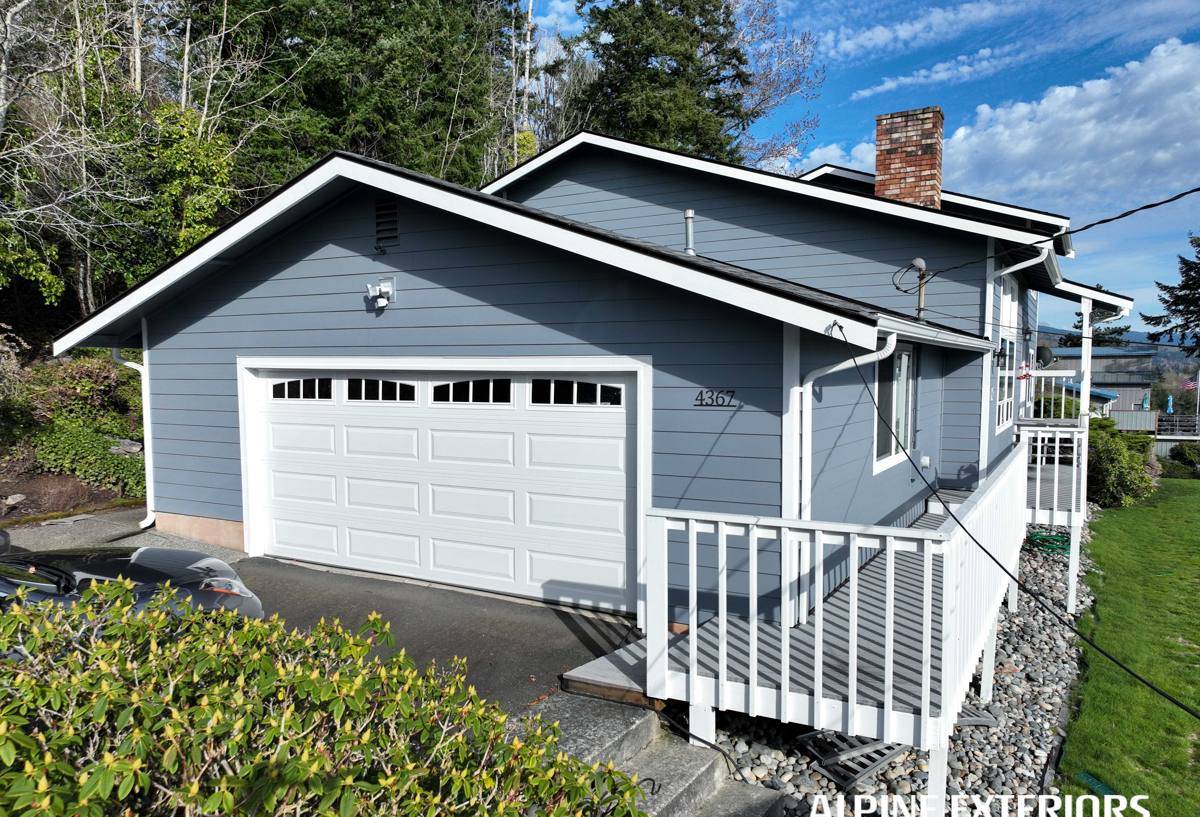
What Salt Air, Rain, and Moss Actually Do to a Deck
Salt Air and Metal Fasteners
Airborne salt accelerates corrosion on anything metal — nails, screws, joist hangers, bolts, and railing hardware. Once a fastener starts rusting, it loses holding strength long before the rust is visible from the surface. On a deck close to the water, standard fasteners can corrode noticeably faster than they would a few miles inland. This is one of the most common hidden causes of a deck that feels "loose" or squeaky even though the wood itself looks fine.
Driving Rain and Water Intrusion
Anacortes doesn't just get rain — it gets wind-driven rain that finds its way into joints, gaps, and end grain that a straight-down rain would never reach. Ledger boards (where the deck attaches to the house), stair stringers, and the tops of posts are the usual entry points. Once water gets past the surface and into a connection point, rot can develop from the inside out, which is why a deck can look okay on top while the structure underneath is failing.
Moss and Trapped Moisture
Shaded decks, north-facing decks, and anywhere tree cover blocks afternoon sun are prone to moss and algae buildup for much of the year. Moss itself doesn't rot wood, but it holds moisture against the deck surface far longer than bare boards would dry on their own. That extended wet time is what leads to soft spots, splintering, and eventually rot — especially in the gaps between boards where debris and moss collect and rarely get cleared out.
Signs a Flounder Bay Deck Needs Repair
Most deck problems don't show up as a dramatic failure — they show up as small signs that get ignored until the deck feels unsafe. Walk your deck and check for these:
- Boards that feel spongy, flex underfoot, or have visible splintering
- Rust streaks running down from screws, nails, or hardware
- Railings or posts that wiggle when pushed sideways
- Gaps or separation where the deck meets the house (the ledger board)
- Persistent moss or dark staining that doesn't dry out between rain events
- Stairs that feel less solid than the rest of the deck
- Visible daylight or soft wood around joist ends underneath the deck
- A grayed, weathered look that wasn't there a few years ago, especially on the shaded side
Any one of these on its own might just mean routine maintenance. Several at once, or anything involving the ledger board, stairs, or railing posts, means it's worth having someone look at the structure, not just the surface.
What a Correct Deck Repair Actually Involves
Structural Framing and Ledger Connection
The ledger board and the framing underneath are what keep a deck attached to the house and standing level. Any repair worth doing checks these first — no amount of new decking on top fixes a compromised ledger or rotted joist. We look for proper flashing behind the ledger, since a lot of older decks in this region were built without it, which is one of the most common sources of hidden rot.
Decking Boards
Individual boards get replaced based on condition, not automatically swapped wholesale unless the deck as a whole warrants it. Board spacing matters too — gaps that are too tight trap moisture and debris, which matters more here than in drier climates because of how long things stay wet.
Fasteners and Hardware
Given the corrosion issue covered above, hardware is not a place to cut corners on a deck this close to the water. We use fasteners and connectors rated for coastal or high-moisture exposure rather than standard-grade hardware, even if that costs a bit more up front — replacing corroded fasteners twice costs more than doing it right the first time.
Railings and Guards
Railings take direct wind load and get handled constantly, so post connections and baluster attachment points are checked for both rot and corrosion. A railing that looks fine but has a soft or rusted connection point is a safety issue, not a cosmetic one.
Repair or Replace? What Actually Decides It
| Factor | Leans Toward Repair | Leans Toward Replacement |
|---|---|---|
| Ledger board and framing | Solid, no rot found | Rot or corrosion at structural connections |
| Extent of damage | Isolated boards or hardware | Widespread soft spots across the deck |
| Deck age | Newer construction, isolated issues | Original hardware and framing decades old |
| Moss/moisture pattern | Surface-level, hasn't reached framing | Long-term trapped moisture with visible rot |
| Footings and posts | Stable, no movement | Settling, cracking, or visible instability |
In practice, most decks we look at in Flounder Bay fall somewhere in between — solid structure with specific problem areas that need targeted repair, plus some hardware upgrades to slow down future corrosion. Full replacement is usually reserved for decks where the framing itself has failed.
Our Process
1. Inspection
We check the deck from both top and underneath — surface condition, ledger and flashing, joists, posts, footings, and hardware. This is where we find the problems a homeowner usually can't see from standing on the deck.
2. A Clear Plan
You get a straightforward breakdown of what needs repair now, what's worth watching, and what your options are, in plain terms — not a pitch to replace everything by default.
3. The Repair Work
We replace what needs replacing — framing, boards, hardware, railings — using materials and fasteners suited to this area's exposure, not just whatever's cheapest at the yard.
4. Cleanup and Walkthrough
We clear debris, check that everything is solid, and walk the deck with you before we call it done.
Materials: Why We Don't Cut Corners Near the Water
For decks in salt air exposure, we favor corrosion-resistant fasteners and connectors over standard hardware, and we're selective about wood treatment ratings for anything in ground contact or close to it. If a homeowner is considering composite decking, we'll walk through the honest trade-offs — composite resists rot and doesn't need staining, but it has its own installation requirements around spacing and ventilation, and not every composite product handles this region's freeze-thaw and moisture cycle the same way. We'll tell you what fits your situation rather than defaulting to whatever's easiest to install.
Why It Matters That We Already Work in Flounder Bay
A contractor who works this specific area regularly already knows what tends to fail first on a deck exposed to this stretch of coastline, where wind-driven rain hits hardest, and which shaded spots hold moss the longest. That's not something you get from a general checklist — it comes from having seen the pattern repeat on deck after deck in the same conditions. It also means we're not guessing at what "coastal-grade" hardware actually needs to hold up to here; we've seen what standard hardware does after a few Skagit County winters.
Keeping a Repaired Deck in Good Shape
After a repair, a little regular attention goes a long way in this climate:
- Sweep debris and moss out of board gaps a few times a year, especially in fall and winter
- Rinse off salt residue and grime periodically, particularly after storms
- Check railings and stair connections for movement once or twice a year
- Reseal or restain wood decking on the manufacturer's recommended schedule, not just when it looks faded
- Keep gutters and downspouts clear so runoff isn't draining directly onto the deck
If you're noticing soft boards, rust stains, or a railing that doesn't feel as solid as it used to, it's worth a look before it gets worse. We offer free, no-pressure estimates for Flounder Bay homeowners — fill out the form below and we'll take a look at what your deck actually needs.