 Anacortes Siding
 Decks in Edison Work Harder Than Decks Inland
Edison sits low, close to the water, and surrounded by farmland — a combination that's tough on outdoor wood structures. Salt-laden air drifting in off the bay corrodes fasteners and hardware faster than it would twenty miles inland. Driving rain off Puget Sound soaks into end grain and joints. And the shade, humidity, and slow-drying ground common to this part of Skagit County mean moss and algae get a long season to take hold on anything that stays damp. A deck built the way it might be built in a drier climate simply doesn't last as long here.
We replace decks throughout the Anacortes and greater Skagit County area, and Edison's decks show a consistent pattern: the visible boards often look "just old," but the real damage is underneath — rusted fasteners, soft ledger connections, and framing that's been quietly wicking up moisture for years. A deck replacement done right addresses that hidden structure first, not just the surface.
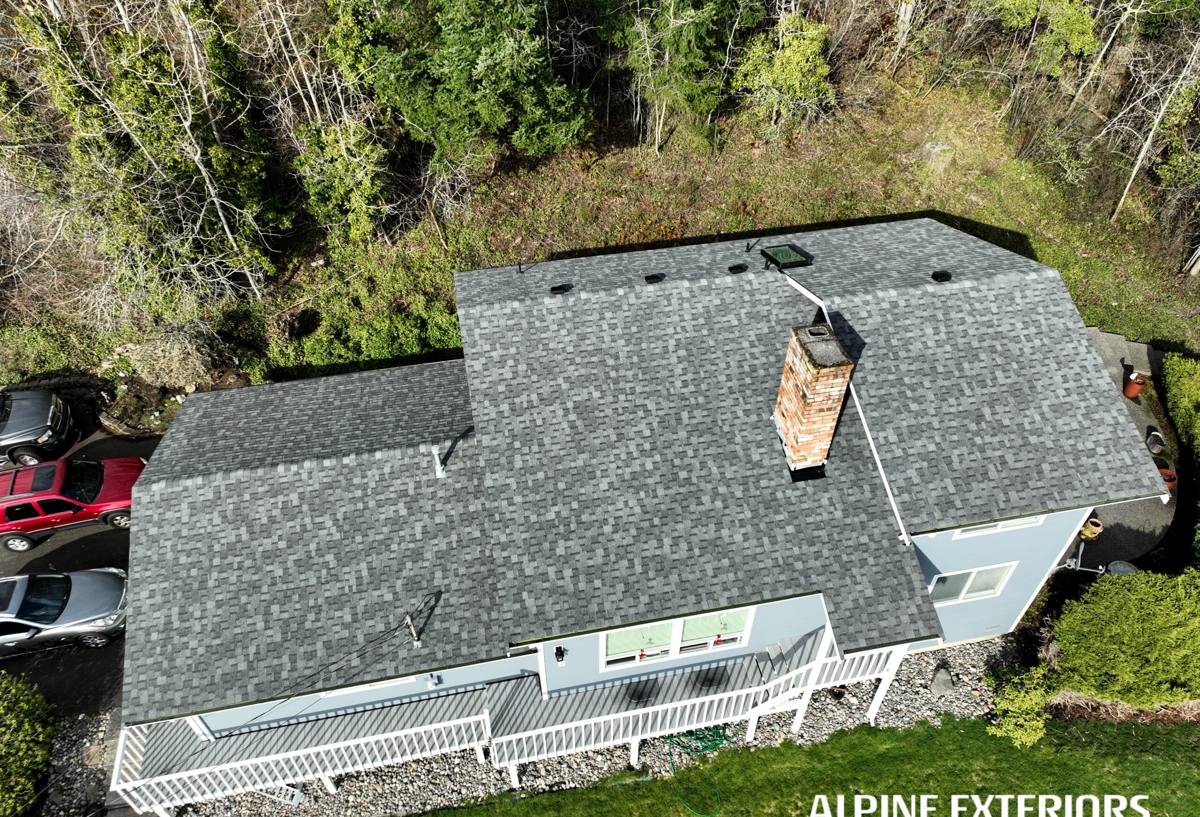
What "Correct" Actually Means for a Deck Replacement
A deck replacement isn't just tearing off old boards and screwing down new ones. Done correctly, it means evaluating and rebuilding the structure underneath so the new decking has a sound, dry, well-fastened frame to sit on. That includes:
- Checking footings and posts for rot, settling, or undersized bearing
- Confirming joist spacing and beam sizing match the actual decking material and span
- Replacing or properly flashing the ledger board connection to the house
- Using fasteners and hardware rated for the corrosive treated lumber and coastal air common here
- Grading and gapping the deck surface so water sheds instead of pooling
Skip any of these and the new deck will show the same failure points as the old one — just a few years sooner.
Signs You Need a Replacement, Not a Repair
Not every tired deck needs a full rebuild. But in this climate, a few signs point clearly toward replacement rather than patching:
- Soft or spongy spots in the decking, especially near the house or at board ends
- Visible gaps, rust streaks, or movement at the ledger-to-house connection
- Posts or beams that feel soft when probed with a screwdriver
- Persistent moss or black staining that returns within weeks of cleaning
- A deck older than its hardware — original nails or non-rated fasteners still in place
Footings and Framing on Edison's Low, Wet Ground
Edison and the surrounding flats sit low and close to sea level, with soil that stays saturated for much of the wet season. That matters for a deck's footings, which are the part homeowners never see and rarely think about until something goes wrong. Footings set too shallow, or without proper drainage around them, can shift over a few wet winters as the surrounding soil expands and contracts. On a full replacement, we check footing depth and condition against what the structure actually needs, not just what was there before — especially on older decks where the original footings may have been undersized to begin with.
Framing lumber close to grade in a damp, low-lying area also needs real airflow underneath. A deck built tight to wet ground with no ventilation is a deck that stays damp between rains, which is exactly the condition that accelerates rot and gives moss a head start.
Choosing Decking Material for a Salt-Air, High-Rain Climate
Every decking material has a different relationship with moisture, salt air, and moss. There's no single "best" choice — it depends on your budget, how much maintenance you want to take on, and how long you plan to stay in the home.
| Material | How It Handles This Climate | Maintenance |
|---|---|---|
| Pressure-treated lumber | Handles moisture well when properly sealed; still needs regular upkeep to resist mold and moss | Annual cleaning and re-sealing recommended |
| Cedar | Naturally rot- and insect-resistant, but softer and more prone to surface graying and moss without upkeep | Periodic cleaning and oil or stain every 1–2 years |
| Composite decking | Doesn't absorb moisture the way wood does, so it resists rot and reduces (not eliminates) moss growth on the surface | Occasional washing; no staining or sealing |
| PVC decking | Fully synthetic — best moisture resistance of the common options, holds up well to salt air | Lowest maintenance; higher upfront cost |
We install all of these and will walk you through the honest trade-offs for your specific deck rather than push whatever's easiest to sell. If low maintenance matters most to you, composite or PVC usually make sense despite the higher upfront cost. If you like the look and feel of real wood and don't mind the yearly upkeep, cedar or pressure-treated remain solid choices when installed and maintained correctly.
The Ledger Board: The Single Biggest Point of Failure
If there's one connection on a deck that causes more structural problems than anything else, it's the ledger board — the piece that attaches the deck to the house. Water that gets behind an improperly flashed ledger doesn't just rot the ledger itself; it can work its way into the house's rim joist and wall framing. In a climate with as much driving, wind-blown rain as this stretch of the county gets, a ledger without proper flashing is only a matter of time.
Every deck replacement we do includes correct ledger flashing — metal flashing installed to shed water away from the house, not just caulk over the gap. Caulk alone fails; it's a maintenance item, not a moisture barrier, and it's one of the most common shortcuts we find when we tear off an old deck.
Fasteners and Hardware That Hold Up Near Salt Air
Standard galvanized fasteners corrode faster in salt-influenced air than most homeowners expect, especially where a deck faces open water or gets regular onshore wind. Rust streaks running down decking boards are usually a sign the original hardware wasn't rated for the environment it was installed in.
For deck replacements in this area, we use stainless steel or heavy-duty coated fasteners and structural connectors rated for ground contact and treated lumber compatibility. It costs more than standard hardware, but it's the difference between hardware that lasts the life of the deck and hardware that starts failing in five to seven years.
Moss, Drainage, and Keeping the Deck Surface Dry
A long moss season is one of the most visible effects of this region's climate, and decks are especially prone to it because they're horizontal, often partially shaded, and slow to dry between rains. The fix isn't a one-time power wash — it's building the deck to drain properly in the first place:
- Proper board spacing so water passes through instead of sitting on the surface
- Correct slope away from the house so water doesn't pool near the ledger
- Joist tape or flashing on the framing so joists don't stay saturated under the decking
- Material selection that matches how much moss resistance you actually want long-term
None of this eliminates the need for occasional cleaning, but it dramatically reduces how often and how aggressively you have to do it.
Our Deck Replacement Process
We keep the process straightforward and give you a clear picture before any demolition starts:
- On-site assessment of the existing deck, footings, and ledger connection
- Honest discussion of material options and cost ranges based on your goals
- Written estimate covering demolition, structure, decking, railing, and hardware
- Removal of the old deck and inspection of framing and footings once exposed
- Rebuild of structure, flashing, and framing to correct any issues found
- Installation of new decking, railing, and stairs
- Final walkthrough so you understand the maintenance your chosen material needs
Costs vary widely based on size, material, height off the ground, and how much of the substructure needs rebuilding — we'll give you specific numbers after seeing the deck in person rather than a guess over the phone.
Why Hire a Crew That Already Works in Edison
A contractor who mostly works drier, inland areas can still build a technically sound deck — but they may not default to marine-grade hardware, proper ledger flashing for wind-driven rain, or drainage details tuned for a long moss season, because their usual jobs don't demand it. Working regularly in Anacortes and the surrounding Skagit County coastline means those details aren't an upgrade we suggest after the fact — they're the standard we build to from the start, because we've seen what happens to decks that skip them.
If your deck is showing its age, feels soft in places, or just hasn't held up the way you expected, we're glad to take a look and give you a straight answer about repair versus replacement. Reach out for a free, no-pressure estimate using the form below — we'll walk the deck with you and explain exactly what we find.