 Anacortes Siding
 Why Old Town Anacortes Decks Wear Out Faster Than You'd Expect
Old Town Anacortes sits close enough to the water that salt air is a daily fact of life, not an occasional nuisance. Combine that with Skagit County's long wet season and the moss and algae growth that follows, and you get a set of conditions that are genuinely hard on exterior wood and fasteners. Decks here don't fail because homeowners neglected them — they fail because the materials or the build didn't account for what this specific climate does to a structure that sits outside, low to the ground, and exposed to weather from every angle, year-round.
Homes in this neighborhood tend to be older, many with decks that were built or last replaced decades ago using standards that don't hold up to today's understanding of moisture management. When we're called out to look at a deck in this area, the same patterns show up again and again: corroded fasteners, soft or delaminating framing where water has been sitting against wood for years, and surface boards that look fine from a distance but are cupping, splitting, or spongy underfoot once you get close.
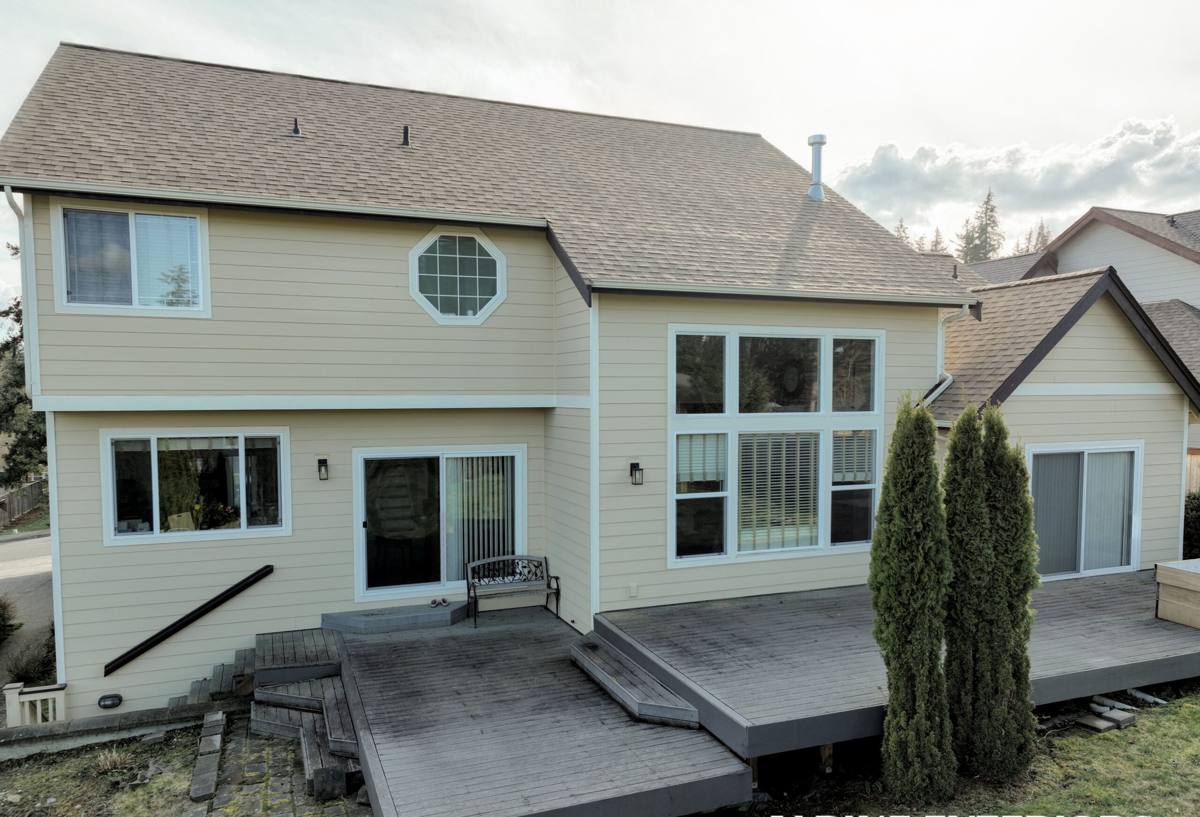
What Salt Air, Rain, and Moss Actually Do to a Deck
Salt Air and Metal Fasteners
Airborne salt accelerates corrosion on nails, screws, joist hangers, and structural connectors — especially anything that isn't rated for coastal exposure. Once a fastener starts corroding, it loses holding strength long before it looks obviously bad. That's a structural problem hiding under a cosmetic one, and it's one of the main reasons a deck can look "mostly fine" while actually being unsafe.
Driving Rain and Water Intrusion
Anacortes gets a lot of rain that doesn't fall straight down — wind-driven rain finds its way into ledger connections, under railings, and into any gap where flashing was skipped or done poorly. Water that gets trapped against a house band board or pools on a poorly sloped surface doesn't just sit there; it works its way into wood fiber and framing connections, where it causes rot that's invisible until a board gives way.
The Long Moss Season
Skagit County's moss season runs long, and a deck's horizontal surfaces are prime real estate for it. Moss and algae hold moisture against the wood surface constantly, which speeds up decay and also makes boards dangerously slick. A deck that's shaded by trees or the house itself — common in an older, established neighborhood like Old Town — will need more attention to moss control than one in full sun.
Signs Your Deck Needs Replacement, Not Just Repair
- Soft, spongy, or bouncy spots anywhere on the decking or stairs
- Fasteners with visible rust bleed or corrosion stains on the wood
- Gaps or separation where the deck ledger meets the house
- Persistent moss or algae that returns within weeks of cleaning
- Railings that wiggle or posts that feel loose at the base
- Visible daylight or gaps between joists and beams where they connect
- A deck older than 20-25 years that has never had structural fasteners upgraded
A handful of rotten boards can sometimes be repaired. But when the framing, ledger connection, or multiple structural fasteners are compromised, patchwork repair just delays a failure — and on a deck, failure means someone gets hurt. We'll always tell you honestly which situation you're in.
What a Correctly Built Deck Replacement Involves Here
Ledger Attachment and Flashing
The ledger board — where the deck attaches to the house — is the single most common failure point on decks anywhere, and it's even more critical in a climate that sees this much rain. Proper flashing that directs water away from the house-to-deck connection, along with corrosion-resistant structural screws or bolts rated for the load, is not optional. This is the detail that separates a deck that lasts decades from one that starts rotting from the inside within a few years.
Fasteners and Hardware Rated for Coastal Exposure
Given the salt air this close to the water, we use fasteners and structural connectors rated for coastal or high-corrosion environments, not standard interior-grade hardware. It costs a little more up front and saves you from hidden structural decay down the road.
Framing Layout and Spacing
Joist spacing and beam sizing need to match the decking material you choose and the actual loads the deck will see — furniture, hot tubs, gatherings. We build to current code requirements, not to whatever spacing happens to match the old structure being torn out.
Drainage and Slope
A deck surface should shed water, not hold it. That means correct slope away from the house and attention to how water moves off the surface and away from framing below — especially important given how much rain this area gets across the year.
Surface Material Selection
Whether you go with a quality wood, a composite, or another decking material, the right choice depends on your budget, how much upkeep you want to do, and how much sun or shade the deck gets. We'll walk through the honest trade-offs for your specific site rather than pushing one product for everyone.
Comparing Common Decking Materials for This Climate
| Material | Moisture & Moss Resistance | Maintenance | Typical Lifespan |
|---|---|---|---|
| Pressure-treated lumber | Good if sealed regularly; needs consistent upkeep | Annual cleaning and periodic sealing | 15-20 years with maintenance |
| Cedar | Naturally decay-resistant but still needs sealing near salt air | Regular cleaning, periodic staining/sealing | 15-20 years with maintenance |
| Composite decking | Strong moisture and moss resistance; low absorption | Periodic washing, no sealing or staining | 25-30+ years, manufacturer-dependent |
| PVC/synthetic decking | Excellent moisture resistance; doesn't support rot | Occasional washing only | 25-30+ years, manufacturer-dependent |
None of these is automatically "right" — a lot of homeowners in this area choose composite or PVC specifically because they don't want to keep up with sealing schedules given how much wet weather we get. Others prefer the look and feel of real wood and are fine doing the upkeep. We'll give you the honest maintenance picture for whichever direction you're leaning.
How Our Deck Replacement Process Works
1. On-Site Assessment
We come out, get under and around the existing deck, and check the framing, ledger connection, posts, and footings — not just the surface boards. This tells us whether you're looking at a straightforward like-for-like replacement or whether structural issues need addressing as part of the job.
2. Honest Scope and Estimate
You get a clear breakdown of what needs to happen and why, including any structural or code-related items that go beyond a simple resurfacing. No surprise change orders for things we could have identified up front.
3. Demolition and Disposal
Old decking, framing, and hardware are removed and hauled off. We check the ledger area and any framing that's staying in place for hidden damage once the old surface is off.
4. Structural Rebuild
New or reinforced framing, corrosion-resistant fasteners, proper ledger flashing, and code-compliant footings and post bases go in first — this is the part that determines how long the deck actually lasts, even though it's mostly invisible once the job is done.
5. Decking, Railings, and Finish Work
Surface material, railings, stairs, and any trim go in to your specification, with attention to drainage and slope throughout.
6. Final Walkthrough
We walk the finished deck with you, point out anything you should know for upkeep, and answer questions before we consider the job done.
Deck Replacement Checklist for Old Town Anacortes Homeowners
- Confirm the ledger board and flashing are being addressed, not just reused as-is
- Ask what fastener and hardware grade is being used given the salt air here
- Get clarity on joist spacing and whether it meets current code for your decking choice
- Discuss drainage and slope, especially if your lot has shaded or low-lying areas
- Decide on maintenance level you're willing to commit to before choosing material
- Ask about permitting — most deck replacements in this area require one
- Get the scope and pricing in writing before work starts
Permits and Local Requirements
Most deck replacement projects in Anacortes and unincorporated Skagit County require a building permit, particularly when framing, footings, or the ledger connection are being replaced rather than just the surface boards. Permit requirements exist to make sure the structural work meets current safety standards — which matters even more on a deck given how much weight and foot traffic they see. We handle the permitting process as part of the job so you're not left figuring out city or county requirements on your own.
Why Local Experience on This Specific Job Matters
A deck replacement in a dry inland climate can get away with shortcuts that simply don't work here. A crew that hasn't dealt with the combination of salt air corrosion, sustained wet-season moisture, and heavy moss growth may not know to spec coastal-rated hardware, may not flash the ledger as carefully as this climate demands, or may not think through drainage the way an older, tree-shaded Old Town lot actually needs. We've seen what happens when those details get skipped — it usually shows up as hidden rot or hardware failure years down the line, well after the crew that built it is gone. Building it right the first time, with materials and methods matched to this specific climate, is what keeps a deck safe and low-hassle for decades instead of years.
Get a Free, No-Pressure Estimate
If your deck is showing its age, feeling soft in places, or you're just planning ahead, we're happy to come take a look and give you an honest read on what it needs — repair or full replacement. There's no obligation and no pressure, just a straight assessment from a crew that knows what Old Town Anacortes conditions do to a deck over time. Fill out the form below to get started.