 Anacortes Siding
 Edison's Climate Is Harder on Siding Than It Looks
Edison sits in the Samish Flats, close enough to Samish Bay and Padilla Bay that salt-laden air is a constant, low-grade presence on every exterior surface in the area. Add Skagit County's long wet season, frequent driving rain off the water, and the shaded, damp conditions that come with the area's farmland and tree cover, and you get a combination that wears out the wrong siding material faster than most homeowners expect. It's not one dramatic weather event that causes problems here — it's the slow, repeated cycle of moisture, salt, and shade, month after month, year after year.
Wood-based sidings absorb that moisture and eventually rot, warp, or delaminate. Vinyl can hold up structurally but rarely looks good doing it, chalking and fading under the UV and salt exposure. Moss and algae find a foothold anywhere siding stays damp too long, especially on north-facing walls and under tree cover, which describes a lot of property in and around Edison. Any siding decision for a home here needs to start with an honest look at what the material actually does when it's wet for weeks at a time, not just how it looks on a sunny install day.
Why Fiber Cement Is the Right Material for This Area
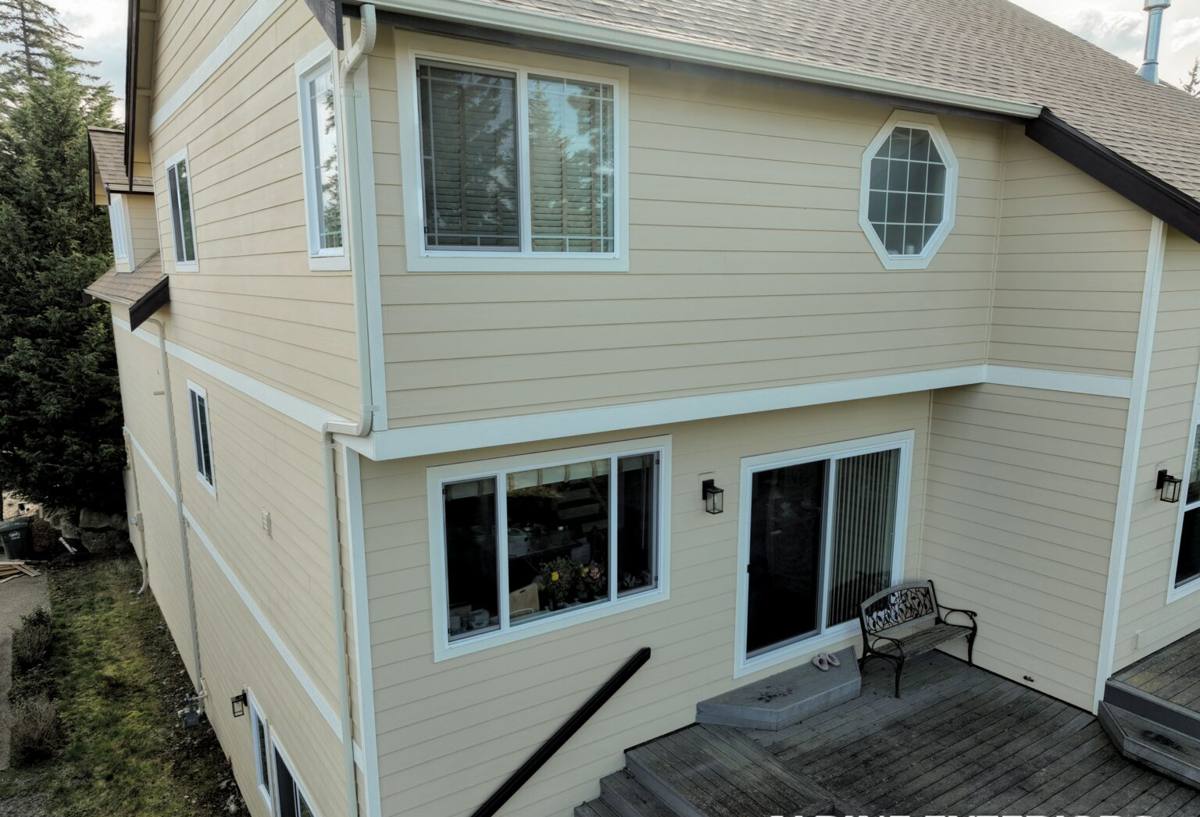
We install James Hardie fiber cement siding exclusively, and Edison is a good example of why. Fiber cement is a non-combustible blend of cement, sand, and cellulose fiber — it doesn't rot, it doesn't provide food for insects, and it doesn't swell and shrink with moisture the way wood-based products do. That matters directly here: a material that shrugs off repeated wetting and drying cycles is exactly what a marine-influenced, high-rainfall climate calls for.
HardieZone HZ5: Engineered for This Exact Climate
James Hardie builds its siding in different formulations for different climate zones, and Skagit County falls into the HZ5 zone — engineered for regions with cold, wet winters and significant moisture exposure. HZ5 product is formulated for better resistance to moisture-related damage in exactly the kind of coastal, rain-heavy environment Edison sits in. This isn't a marketing detail; it's the reason we don't treat "fiber cement" as a single generic product and move on. The specific formulation installed on your home should match the specific climate it has to survive.
ColorPlus Factory Finish vs. Field-Painted Siding
James Hardie's ColorPlus finish is baked on and cured at the factory under controlled conditions, which gives it substantially better fade and moisture resistance than siding painted on-site after installation. In an area with this much salt air and UV exposure off the water, a factory finish holds its color longer and resists the chalking that field-applied paint often shows within a few years.
What a Correct Installation Actually Involves
Fiber cement is only as good as its installation. A rushed or improperly detailed job can trap moisture behind the siding, which defeats the entire purpose of choosing a moisture-resistant material in the first place. Here's what we treat as non-negotiable on every job, Edison included:
- A drainable rainscreen gap behind the siding so any moisture that gets past the cladding can drain and dry instead of sitting against the wall assembly
- A continuous, properly lapped weather-resistant barrier underneath, with all seams and penetrations sealed before a single piece of siding goes up
- Correct flashing at every window, door, deck ledger, and roof-to-wall transition — the majority of siding failures we see trace back to flashing, not the siding material itself
- Manufacturer-specified fastener placement, spacing, and nail penetration depth, following James Hardie's published installation instructions rather than generic siding practice
- Proper clearance at grade, decks, and patios so siding isn't sitting in standing water or direct soil contact
- Factory-cut and factory-primed edges wherever possible, with any field cuts sealed per manufacturer spec to protect against moisture wicking into raw edges
Skip any one of these steps and you can still end up with moisture problems behind fiber cement siding, even though the material itself is doing its job. This is where hiring matters as much as the product choice.
Our Process for an Edison Project
Assessment and Planning
We start by walking the exterior and identifying the areas most exposed to wind-driven rain and prevailing weather off the water, along with any shaded or low-airflow sections where moss and algae are already established. That assessment shapes decisions on flashing details, ventilation, and trim before any material orders go out.
Tear-Off and Wall Prep
Old siding comes off down to the sheathing so we can actually see the condition of the wall assembly underneath — this is often the first real look anyone has had at that wall in decades. Any water damage, soft sheathing, or failed flashing gets addressed before new material goes up, not covered over.
Water Management Layer
A weather-resistant barrier and rainscreen system go on next, giving the wall a drainage path and an air gap that keeps the back side of the siding from staying wet against the sheathing.
Installation and Finish Work
HardiePlank, HardieShingle, or HardiePanel goes up per manufacturer spec, with all trim, corners, and joints detailed to shed water rather than trap it. We finish with a walkthrough so you understand what was done and why, particularly around any areas we flagged during the initial assessment.
How Fiber Cement Compares to Other Siding Options in This Climate
| Material | Moisture Resistance | Moss/Algae Resistance | Salt Air Durability | Typical Lifespan Here |
|---|---|---|---|---|
| James Hardie Fiber Cement | Excellent — won't rot or swell | Good, especially with ColorPlus finish | Excellent | 30+ years |
| Vinyl | Good structurally, but seams can trap moisture | Fair — algae shows readily on the surface | Fades and chalks faster in salt/UV | 15–25 years |
| Cedar/Wood | Poor without constant maintenance | Poor — moss and rot go hand in hand | Poor without frequent refinishing | 10–20 years with upkeep |
| LP SmartSide (engineered wood) | Fair — better than solid wood, still moisture-sensitive at cut edges | Fair | Moderate | 20–30 years, install-sensitive |
We don't install vinyl, cedar, primed spruce, or LP SmartSide. Each has legitimate uses elsewhere, but for a climate that combines this much rain, shade, and salt air, we've standardized on James Hardie fiber cement because it holds up to all three factors at once without asking the homeowner to keep up with heavy maintenance.
Living with Moss Season: What Homeowners Should Know
Moss and algae growth is a fact of life on the wetter, shadier walls of most Skagit County homes, fiber cement included. The good news is that fiber cement doesn't feed the growth or get structurally damaged by it the way wood does — moss on Hardie siding is a surface and appearance issue, not a rot risk. Still, a few habits go a long way:
- Keep gutters clean and downspouts directed away from siding to reduce the amount of standing moisture running down the wall
- Trim back vegetation and tree limbs that shade siding and block airflow, especially on north-facing walls
- Rinse visibly mossy or algae-covered sections with a garden hose and soft brush periodically — avoid high-pressure washing directly at seams and edges
- Have caulking and trim joints checked every few years, since caulk failure (not the siding itself) is the most common source of hidden moisture intrusion over time
What Fiber Cement Siding Typically Costs
| Factor | Why It Affects Cost |
|---|---|
| Home size and wall complexity | More corners, gables, and dormers mean more cutting, flashing, and labor time |
| Tear-off scope | Removing old siding down to sheathing adds labor versus installing over an already-clean wall |
| Sheathing repairs | Rot or water damage found during tear-off adds material and labor before new siding goes up |
| Product line and profile | Lap siding, shingle-style, and panel systems carry different material and install costs |
| Trim and accessory work | Window/door trim, fascia, and soffit work done alongside siding affects total project scope |
Exact pricing depends on your home's size, condition, and the scope of work needed, which is why we walk every property in person before quoting rather than pricing off a phone call.
Why Hiring a Crew That Already Works in Edison Matters
A siding crew that already understands Skagit County's mix of coastal exposure, farmland shade, and heavy seasonal rain makes different decisions on flashing, rainscreen detailing, and trim than a crew used to a drier or more sheltered climate. That local pattern recognition — knowing which walls take the worst of the wind-driven rain, which areas need extra attention for moss and shade, and how salt air affects fastener and finish choices over time — comes from working this specific area repeatedly, not from a generic installation checklist.
It also matters for accountability. A local, established crew is easy to reach if a question comes up five or ten years down the road, and has a real stake in how the work in this community holds up over time.
Ready to Talk About Your Home's Siding?
If you're weighing your options for a home in or around Edison, we're glad to take a look and give you a straightforward, no-pressure estimate — what your walls actually need, what correct installation looks like for your specific property, and a clear cost picture before any work begins. Use the form below to get started.