 Anacortes Siding
 Roofing for Edison's Coastal, Shaded Climate
Edison sits in the low, wet part of Skagit County, close enough to Samish Bay and the surrounding farmland that homes here deal with a different mix of weather than a roof up on a dry ridge. Salt-laden air drifts in off the water, rain comes in sideways during winter storms, and the mature trees that give the area its character also mean a lot of shade sitting on the roof deck for months at a time. That combination — salt, moisture, and shade — is exactly what shortens a roof's life if the wrong materials or a rushed install gets used the first time around.
A roof replacement in this area isn't just about swapping old shingles for new ones. It's about building a roof system that can shed heavy rain fast, resist moss and algae growth through a long wet season, and hold up to the corrosive effect of salt air on metal fasteners and flashing. Homes closer to Anacortes proper see similar exposure. Edison's mix of tree cover and open farmland just changes where the trouble spots tend to show up.
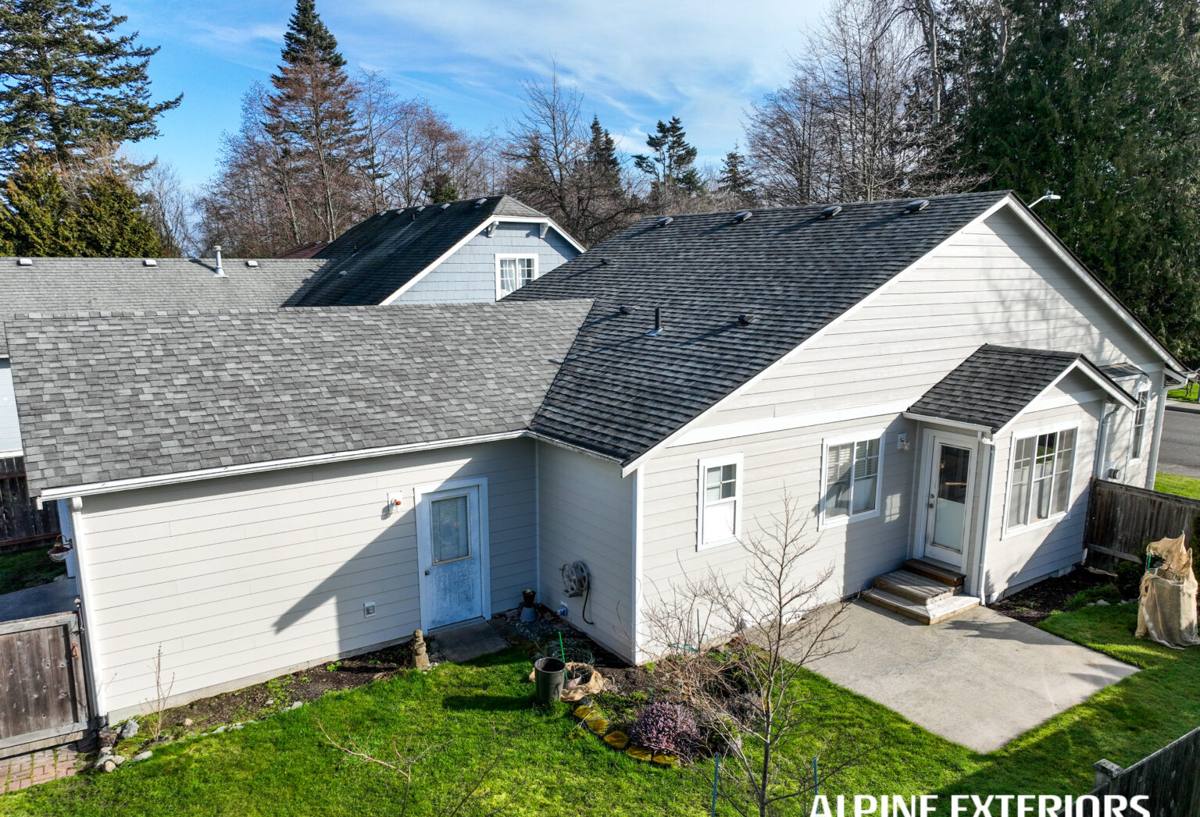
Signs an Edison Roof Is Due for Replacement
Roofs rarely fail all at once. In this climate, the warning signs usually show up gradually, and homeowners often live with them longer than they should because nothing is actively dripping into the living room yet.
- Granule loss showing up in gutters or at the base of downspouts
- Shingles that are cupping, curling at the edges, or visibly thinning
- Dark streaking or thick moss growth, especially on the shaded, north-facing slopes
- Soft spots in the decking when walked, or sagging visible from the ground
- Flashing around chimneys, skylights, and vent pipes that's rusted, lifted, or cracked
- Daylight visible through the attic sheathing, or musty smell in the attic space
- A roof that's 20+ years old and has never had a full tear-off
Any one of these on its own might just need a repair. Several together, especially on a roof already past its expected service life, usually means repair costs start adding up faster than a replacement would.
What a Correct Roof Replacement Actually Involves
Full Tear-Off, Not a Layover
We don't install new shingles over old ones. A layover traps moisture, hides deck damage, and voids most manufacturer warranties outright. A full tear-off lets us inspect the decking underneath, which matters a lot in a climate where slow leaks can rot plywood or sheathing long before it shows up as a stain on the ceiling.
Deck Repair Before Anything Goes Down
Any soft, delaminated, or water-damaged decking gets replaced before the new roofing system goes on. Skipping this step is one of the most common ways a "new roof" fails early — the covering can be perfect and the roof will still leak if it's fastened to compromised wood underneath.
Underlayment Built for Wet Winters
We use synthetic underlayment as a standard, not an upgrade, because it holds up better than old-style felt against the extended wet exposure that's normal here during a tear-off, and it performs better long-term under heavy, driving rain. Ice-and-water shield goes at eaves, valleys, and around every penetration — the places water actually pools and backs up.
Flashing That Won't Corrode Prematurely
Salt air is hard on cheap or mismatched metal. We flash chimneys, skylights, sidewalls, and vent penetrations with corrosion-resistant metal and proper step-and-counter-flashing techniques rather than relying on caulk or roof cement as the primary seal. Caulk is a backup, never the plan.
Ventilation That Actually Balances
Intake at the eaves and exhaust at the ridge need to work together. Poor ventilation traps humid air in the attic, which speeds up moss growth on the underside of the deck, accelerates shingle aging from beneath, and can lead to condensation issues that look like a roof leak but aren't. We check and correct this as part of every replacement, not as an add-on sale.
Material Options for Edison Homes
There's no single "best" roofing material — the right choice depends on budget, roof pitch, tree cover, and how much long-term maintenance a homeowner wants to take on. Here's how the common options compare for this specific climate.
| Material | Moss/Algae Resistance | Salt Air Durability | Typical Lifespan | Maintenance |
|---|---|---|---|---|
| Architectural asphalt shingle | Good with algae-resistant granules | Good | 25–30 years | Periodic moss treatment on shaded slopes |
| 3-tab asphalt shingle | Fair | Fair | 15–20 years | More frequent moss/algae attention |
| Standing seam metal | Excellent — sheds moss growth | Very good with coated/marine-grade fasteners | 40–50+ years | Low; occasional fastener/seam check |
| Synthetic composite shingle | Good | Good | 30–40 years | Low to moderate |
For heavily shaded lots — common where mature trees sit close to the house — we usually steer homeowners toward algae-resistant shingles or metal, since standard 3-tab shingles tend to show moss and streaking the fastest in those exact conditions. On more open, sun-exposed roofs, a good architectural shingle is often the most cost-effective choice without giving up much durability.
Our Process, Start to Finish
- On-site inspection. We look at the whole system — decking, flashing, ventilation, gutters — not just the shingles, so the estimate reflects what the roof actually needs.
- Written estimate. Material options, scope, and price laid out clearly, with no pressure to decide on the spot.
- Scheduling around weather. Roofing in this region means working around the rain, not pretending it isn't a factor. We plan tear-off days with realistic weather windows.
- Tear-off and deck inspection. Old roofing removed, decking checked and repaired as needed, with the homeowner informed before any extra work is done.
- Installation. Underlayment, flashing, ventilation, and roofing material installed to manufacturer specifications — the details that determine whether the warranty is actually valid if something goes wrong later.
- Cleanup and magnetic sweep. Job site cleared of debris and nails before we consider the job done.
- Final walkthrough. We go over the finished roof with the homeowner and answer questions before closing out.
Moss, Algae, and Salt Air: Ongoing Care After Replacement
A new roof still needs some upkeep in this climate, and being upfront about that is part of an honest estimate. Zinc or copper strips near the ridge can help suppress future moss growth on shaded slopes. Keeping gutters clear prevents water from backing up under the shingle edges, which is one of the more common causes of edge rot we see on older Edison roofs. And a rinse-down (not a pressure wash, which can strip granules) every couple of years keeps organic buildup from taking hold. None of this is heavy maintenance — it's the difference between a roof that reaches its full lifespan and one that starts showing problems a decade early.
What Drives the Cost
| Factor | Why It Matters |
|---|---|
| Roof size and pitch | Steeper roofs take longer to work safely and use more material |
| Layers to remove | Tearing off multiple old layers adds labor and disposal cost |
| Decking condition | Rot or soft sheathing found during tear-off adds repair cost, always disclosed before proceeding |
| Material choice | Asphalt, synthetic, and metal carry different material and labor costs |
| Number of penetrations | Chimneys, skylights, and vents each need individual flashing work |
| Access and site conditions | Tree cover, driveway access, and roof height affect setup and safety requirements |
We'd rather give a homeowner a realistic range after actually seeing the roof than a number over the phone that changes once we're up there. Every estimate spells out what's included so there's no guessing later.
Why Hire a Crew That Already Works in Edison
A roof crew that works this part of Skagit County regularly already knows which slopes on a given lot tend to hold moss, how much ventilation a shaded roof actually needs versus a sun-exposed one, and which flashing details hold up against the salt air coming off the bay. That's the kind of judgment that only comes from doing this work locally, year after year — not from a crew passing through the area for one job. It also means we're reachable if a question comes up after the job is done, not a phone number that stops answering once the invoice is paid.
Before You Sign: A Quick Checklist
- Does the estimate include a full tear-off, or is a layover being proposed?
- Is decking repair addressed as "if needed, disclosed before proceeding" rather than buried in a vague allowance?
- Does the quote specify underlayment type, not just "roofing felt" or "synthetic" with no detail?
- Is ventilation (intake and exhaust) part of the scope, or only the shingles themselves?
- Are flashing materials and methods described, especially around chimneys and skylights?
- Does the contractor carry current Washington state licensing and insurance, and will they provide proof?
- Is there a clear manufacturer warranty, and is the installer certified to honor it?
If a bid skips most of these details, it's worth asking follow-up questions before committing — the gaps in a quote are usually where the corners get cut later.
If your Edison home is due for a new roof, or you're just not sure yet how much life is left in the current one, we're happy to take a look and walk you through what we find. Fill out the form below for a free, no-pressure estimate.