 Anacortes Siding
 Storm Damage Roof Repair for Edison Homes
Edison sits out on the Skagit County flats near Samish Bay, a short drive from Anacortes, where open farmland offers almost nothing to slow down wind coming off the water. That same exposure, combined with the long wet season typical of this part of the county, is a rough combination for roofs. When a windstorm rips through, or months of standing moisture finally find a weak spot, the damage doesn't always announce itself. A missing shingle in the yard is obvious. A slow leak working its way into the decking under a patch of moss is not, and it's usually the second one that costs a homeowner the most if it goes unaddressed.
This page covers what storm damage repair actually means for a roof in Edison specifically — the kind of exposure this area sees, what a correct repair involves, and how we approach the job when a homeowner calls us after a bad storm.
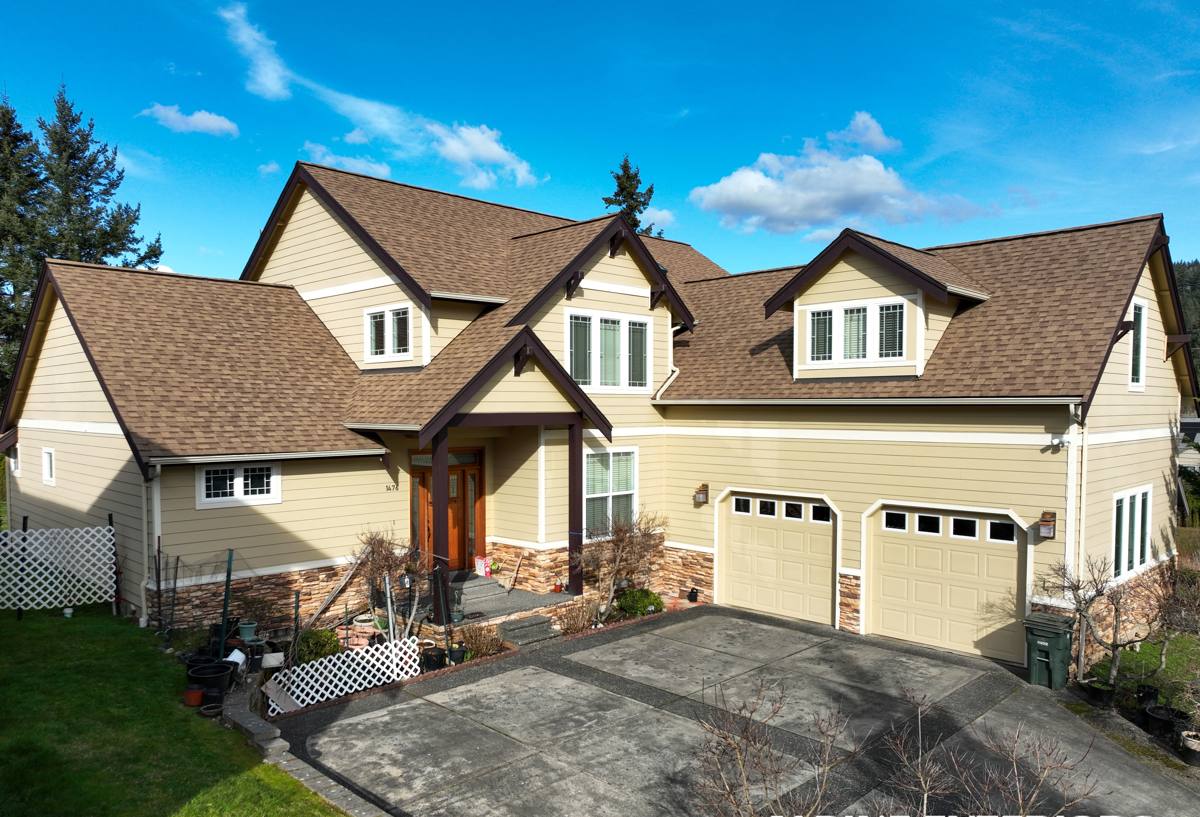
What Actually Counts as Storm Damage
Not all storm damage looks dramatic, and not everything a homeowner assumes is storm-related actually is. Sorting this out correctly at the start of a job matters — both for getting the repair right and for anyone planning to file an insurance claim.
Wind and Uplift Damage
Wind doesn't usually rip a whole roof off. More often it works at the edges and the seams — lifting a shingle tab just enough to break the seal, cracking the adhesive strip, or pulling fasteners partway out. Once a shingle's seal is broken, it can lift again and again in lower winds that wouldn't have touched it otherwise, and each lift lets a little more water underneath. Ridge caps and rake edges, which take the brunt of gusts coming off open farmland, are usually the first place we look.
Moss, Trapped Moisture, and Slow Decay
This region's long moss season is a storm-damage issue in its own right, even though it's not caused by a single storm. Moss holds water against the roofing material long after the surface has dried, which softens shingles, corrodes fasteners, and works its way under laps and flashing over time. A roof with heavy moss growth going into a windstorm is far more likely to lose material in that storm than a clean one, because the shingles underneath are already weakened.
Debris and Impact Damage
Falling branches, wind-blown debris, and occasional hail can crack shingles, dent metal flashing or gutters, and puncture underlayment. Impact damage is usually the easiest to spot but the easiest to underestimate — a cracked shingle with no visible hole can still be letting water through the fiberglass mat underneath.
Why Edison's Setting Adds Up to More Roof Wear
A few things about this area compound on each other in a way that's worth understanding if you own a home here.
- Open exposure: Edison's farmland setting means wind coming off Samish Bay and across the flats hits rooflines with little to break it up, unlike a roof tucked into a wooded neighborhood.
- Salt-influenced air: Proximity to the bay means metal roofing components, fasteners, and flashing are exposed to salt-laden air, which accelerates corrosion compared to homes further inland.
- Shade and moisture retention: Where mature trees do shade a roof, especially on north-facing slopes, moss and moisture take hold faster and dry out more slowly between storms.
- Older housing stock: Like much of rural Skagit County, Edison has a mix of older farmhouses and newer construction. Older roofs are more likely to have outdated flashing details or underlayment that wasn't built for the volume of moisture this area sees today.
None of this means every roof in Edison is in trouble. It means the margin for deferred maintenance is smaller here than in a drier or more sheltered part of the state, and storm damage that would be a minor cosmetic issue elsewhere can turn into an active leak faster.
What a Correct Storm Damage Repair Involves
A good storm repair is not just replacing whatever is visibly missing. It starts with figuring out how far the damage actually extends, because wind and water rarely stay confined to the spot that looks bad from the ground.
Inspection Before Anything Else
We look at the roof surface, the flashing around penetrations (vents, chimneys, skylights), the ridge and valleys, and the gutter and edge details. We also check the attic or roof deck from inside when accessible, since staining, damp insulation, or daylight through the sheathing tells us more about how far water has traveled than the surface damage alone.
Matching Materials Honestly
If your roof is a few years old, matching the existing shingle color and profile exactly may not be possible — manufacturers change product lines and color runs over time. We tell you upfront when an exact match isn't realistic and what the closest reasonable option looks like, rather than surprising you with a patch that stands out.
Flashing and Underlayment, Not Just Shingles
A lot of repeat leaks trace back to a repair that replaced shingles but left damaged or improperly lapped flashing and underlayment underneath. Any storm repair we do addresses what's under the surface layer, not just what's visible from the driveway.
Patch Repair vs. Fuller Section Replacement
Part of an honest estimate is telling you which category your damage falls into, and why. The table below is a general guide — every roof is different, and your inspection results are what actually determine the right call.
| Factor | Points Toward a Patch Repair | Points Toward Section Replacement |
|---|---|---|
| Extent of damage | A few isolated shingles or one localized area | Damage spread across a slope or multiple areas |
| Roof age | Roof is relatively new with matching material available | Roof is near the end of its service life |
| Underlying decking | Deck is dry and sound | Deck shows rot, soft spots, or repeated past leaks |
| Material match | Close color/profile match still available | Discontinued product, visible mismatch unavoidable |
| Underlying cause | Isolated storm event, no ongoing exposure issue | Chronic moss, moisture, or ventilation problem |
We'd rather do an honest patch that solves the actual problem than upsell a full section replacement a roof doesn't need — and we'll also tell you plainly when a patch is just delaying a bigger repair you'll need to budget for later.
Our Process, Start to Finish
- Initial call and scheduling: You describe what happened or what you're seeing (a leak, missing shingles, storm damage from a specific event), and we schedule an inspection.
- On-site inspection: We walk the roof and check attic access where possible, documenting what we find with photos.
- Written estimate: You get a clear explanation of what's damaged, what caused it, and what repair options make sense — with real cost ranges, not a vague number.
- Scheduling the repair: We work around weather windows, since roofing repairs need a reasonably dry stretch to be done correctly.
- The repair itself: Damaged material is removed, decking is checked and replaced if needed, new underlayment and flashing are installed where required, and matching roofing material is installed and sealed.
- Final walkthrough: We show you what was done and flag anything else worth keeping an eye on, like a moss patch starting elsewhere on the roof.
Common Storm-Related Scenarios We See in This Area
| Scenario | Typical Cause | How Urgent |
|---|---|---|
| Lifted or missing shingles after a windstorm | Broken shingle seal, wind uplift at edges | Address promptly — exposed underlayment fails fast in rain |
| Ceiling stain appearing after a storm | Water tracking from a compromised flashing or shingle seam | High — active water intrusion likely already in progress |
| Dented or separated gutters | Wind-driven debris or branch impact | Moderate — affects water diversion, worsens over time |
| Soft, discolored moss patches | Long-term moisture retention, not a single storm | Moderate — schedule before the next major storm, not after |
| Cracked shingles with no visible hole | Impact damage or age-related brittleness | Moderate to high depending on how many and where |
Insurance and Storm Claims
Many storm-related repairs are covered by homeowners insurance, but coverage depends on your specific policy, the cause of damage, and your insurer's own assessment. What we can do is document what we find clearly — photos, a written description of the damage, and an honest assessment of whether it matches a specific storm event or points to a longer-term maintenance issue. That documentation is what an adjuster needs to work with, but we don't handle claims negotiations or make promises about what will or won't be covered, since that's between you and your insurer.
Preventing Repeat Damage
A storm repair fixes what happened. Keeping the next storm from causing the same problem again usually comes down to a short list of maintenance items that get overlooked easily in a busy year.
- Keep gutters and downspouts clear so water isn't backing up under the roof edge during heavy rain.
- Address moss while it's light — a thin coating is a much easier and cheaper job than a thick, established mat.
- Trim back branches that overhang the roofline, both to reduce shade (which slows drying) and to cut down on impact risk during wind events.
- Check attic ventilation periodically — poor airflow traps moisture from the inside, which compounds any exterior moisture problems.
- Have flashing around chimneys, vents, and skylights checked every few years, since these are the most common points where small failures start.
- Walk the roofline visually after any significant windstorm, even if nothing seems obviously wrong.
Why It Matters to Hire a Crew That Already Works Edison
Roof repair isn't a one-size-fits-all trade. A crew that's used to working roofs in drier, more sheltered parts of the state can miss things that are routine for us here — how far moss has likely traveled under a shingle mat in this climate, how salt exposure affects fastener choice near the bay, or how quickly a small flashing gap turns into a real leak given how much rain this area gets over a season. Working in and around Edison and the greater Anacortes and Skagit County area regularly means we're not guessing at how local conditions behave — we're accounting for them from the first inspection.
It also means a faster, more realistic response after a storm. When a windstorm moves through the county, it typically affects more than one roof, and being local means we're not driving in from out of the area to get to you.
Get an Honest Look at Your Roof
If your roof took damage in a recent storm, or you've noticed moss, a stain, or lifted shingles and aren't sure how serious it is, we're glad to come take a look. The estimate is free, there's no pressure to move forward, and you'll get a straight answer about what's actually going on with your roof — use the form below to get started.