 Anacortes Siding
 Decks Built for Fidalgo Island, Not a Generic Backyard
A deck on Fidalgo Island lives a different life than a deck in a dry inland climate. Between the salt-laden air coming off the surrounding water, the long stretches of driving rain, and the moss that seems to find every shaded or north-facing surface, this environment is hard on outdoor structures. A deck built with generic, big-box specs might look fine for a year or two, then start showing rust streaks at the fasteners, soft spots at the ledger, or a slick green film across the boards by the second wet season. Building a deck that actually holds up here means making different choices at almost every stage — material, hardware, drainage, and maintenance plan — with the local climate in mind from day one.
We build and repair decks throughout Anacortes and the surrounding Fidalgo Island area, and this page focuses on exactly that: what a deck needs to hold up here, what a correctly built one looks like, and how we approach the work.
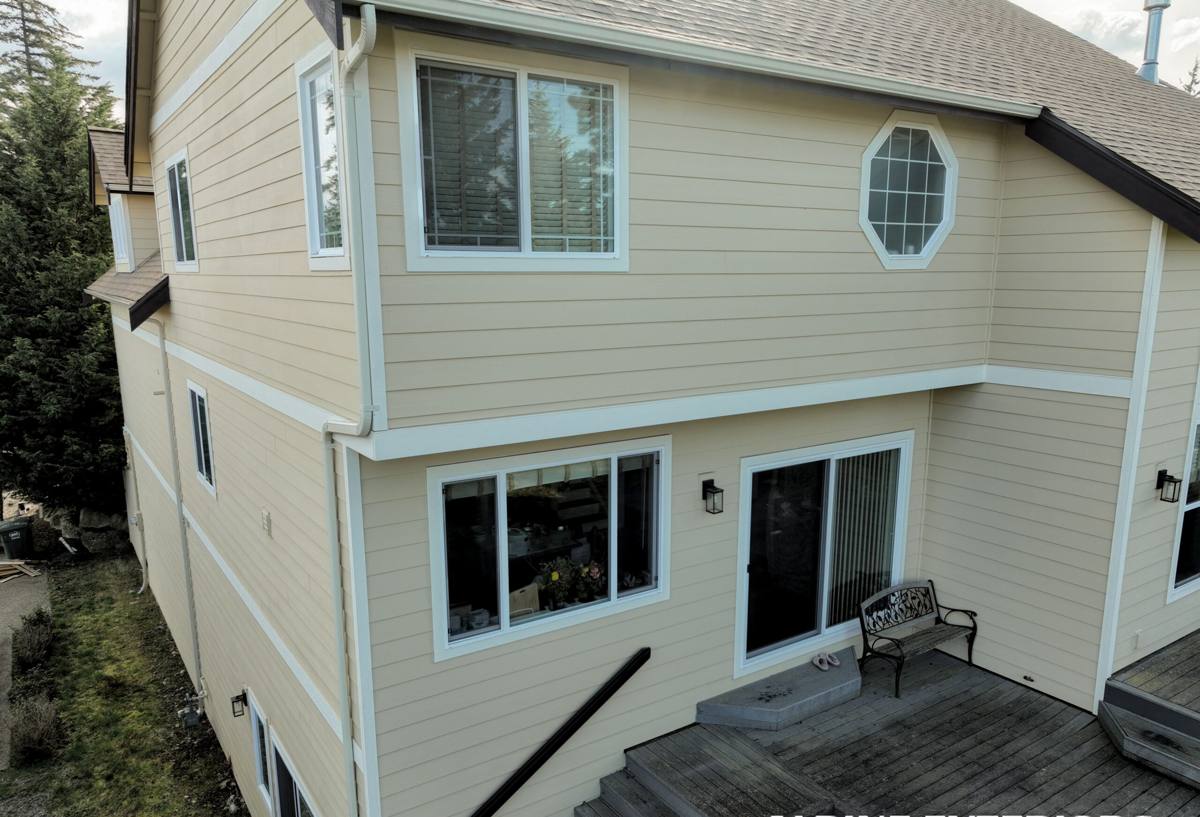
What Salt Air, Rain, and Moss Actually Do to a Deck
It helps to understand the specific ways this climate attacks a deck, because it changes what "good enough" materials and hardware actually mean.
Salt Air and Corrosion
Being close to open water means airborne salt settles on everything, including your deck's hardware. Standard zinc-plated screws, nails, and joist hangers that would last decades inland can start corroding within a few years in a marine environment. Corrosion doesn't just look bad — it weakens the metal that's holding your deck together, often in places you can't see without pulling boards.
Driving Rain and Moisture Intrusion
This region doesn't just get rain, it gets sideways rain that finds gaps most builders don't plan for. The most common failure point on any attached deck — here or anywhere — is the ledger board connection where the deck meets the house. If flashing isn't installed correctly, water works its way behind it and into the rim joist and wall framing, where it can sit and rot for years before anyone notices.
Moss, Algae, and Slick Surfaces
Shaded decks, tree cover, and near-constant dampness create ideal conditions for moss and algae growth on decking surfaces. Beyond the cosmetic issue, a mossy deck is a genuinely slippery deck, and moss holds moisture against the wood or composite surface longer than it would otherwise sit there, accelerating whatever decay process the material is prone to.
Choosing the Right Decking Material for This Climate
There's no single "best" decking material for every home — it depends on your budget, how much upkeep you want to do, and how much sun or shade your deck gets. Here's how the common options actually perform in a wet, salty, moss-prone climate.
| Material | How It Handles This Climate | Maintenance Reality |
|---|---|---|
| Pressure-treated wood | Affordable and structurally solid when properly detailed, but end grain and fastener holes are vulnerable to moisture wicking | Needs periodic sealing/staining and moss removal to look and perform its best |
| Cedar | Naturally rot-resistant and a good look for this region, but softer and more prone to surface graying and moss uptake if left unsealed | Higher upkeep — regular cleaning and refinishing extends its life significantly |
| Capped composite | A plastic-polymer cap resists moisture absorption and gives moss less to grip onto than wood grain | Low upkeep, but still needs periodic washing — composite can still host surface algae in shaded, damp spots |
| PVC decking | Fully synthetic, doesn't absorb water, generally the most resistant to rot and moss staining of the common options | Lowest maintenance of the group, though it carries the highest upfront cost |
We'll walk through these trade-offs with you honestly rather than pushing whatever has the best margin. If you've got a mostly sunny, well-drained deck location, wood can perform well for years. If your deck sits in shade or under tree cover — common on wooded Fidalgo Island lots — a capped composite or PVC product will save you a lot of scrubbing over time.
Framing and Hardware: The Part You Don't See That Matters Most
The decking boards are what you notice, but the framing and fasteners underneath are what determine whether the deck is still solid in fifteen years. In a coastal climate, this is where corners get cut most often, and where it matters most not to.
- Structural connectors (joist hangers, post bases, hurricane ties) rated for corrosive or coastal exposure, not standard interior-grade coatings
- Stainless steel or coated fasteners suited to marine environments, especially anywhere dissimilar metals meet
- Correct ledger board flashing, installed in the right sequence with the house's existing water-resistive barrier — not just caulk and hope
- Pressure-treated framing lumber rated for ground contact where posts meet grade or concrete
- Proper spacing and fastening patterns so the frame doesn't rely on any single connection point
None of this is visible once the deck boards go down, which is exactly why it's worth asking a contractor directly what hardware and flashing approach they use before you sign anything.
Footings: Getting the Foundation Right
A deck is only as good as what it's standing on. Footings need to be sized and set to the required depth for your soil and local code, with posts anchored so they're not sitting directly in standing water after a storm. Fidalgo Island lots vary quite a bit — some are on well-drained, sloped ground, others sit on heavier, slower-draining soil — and the footing approach should reflect the actual site conditions rather than a one-size-fits-all spec. We check drainage and soil conditions on-site before finalizing footing design rather than assuming a generic answer will work everywhere.
Designing Against Moss Instead of Just Fighting It Later
You can't eliminate moss risk entirely in this climate, but good design decisions reduce how much of a problem it becomes.
Airflow Underneath
Decks built low to the ground or fully enclosed underneath trap moisture and stay damp far longer after rain. Leaving room for airflow under the structure — or adding vented skirting instead of solid skirting — lets the frame dry out between storms instead of staying wet for weeks at a time.
Board Spacing and Orientation
Gapping between boards that's sized correctly for drainage, rather than tightened up purely for looks, helps water and debris clear the surface instead of sitting in the joints where moss gets started.
Sun Exposure and Tree Cover
We'll talk honestly about how your specific site's shade pattern will affect maintenance. A deck tucked under mature trees is going to need more attention regardless of material — that's just physics, not a sales pitch.
A Realistic Maintenance Plan
Whatever material you choose, an occasional wash-down (and for wood, resealing on a normal schedule) does more to prevent moss buildup than any single product claim. We'll tell you what that schedule should realistically look like for your deck before you commit to a material.
Permits and Local Code Considerations
Most attached decks in and around Anacortes require a building permit, and requirements can differ depending on whether your property is inside city limits or in unincorporated Skagit County. Permitting isn't just red tape — it's the process that confirms your footings, framing, and guardrail heights actually meet the structural and safety standards for the area. We handle the permit process as part of our normal workflow, including preparing the plans and documentation the permitting office needs, so you're not left figuring out that process on your own.
Our Deck Building Process
- Site visit and assessment — we look at sun exposure, drainage, soil, and how the deck will tie into your home before recommending anything
- Material and design conversation — an honest walkthrough of your options based on your budget, maintenance appetite, and how the space will be used
- Permit preparation and submission — plans and paperwork handled through the applicable local permitting office
- Framing and structural work — footings, ledger flashing, and coastal-rated hardware installed to hold up long-term, not just pass a first-year inspection
- Decking, railing, and finish work — installed with the drainage and spacing details that matter in this climate
- Walkthrough and maintenance guidance — so you know exactly what upkeep (if any) your specific deck needs going forward
Why a Crew That Already Works Fidalgo Island Matters
Deck-building fundamentals don't change from region to region, but the details that make a deck last do. A crew that already works this island knows what salt air does to hardware over a few winters, knows how much moss pressure a shaded, tree-covered lot is really going to see, and has already been through the local permitting process enough times to move it along efficiently rather than guessing. That local familiarity shows up less in the sales pitch and more in the small decisions — the flashing detail, the fastener spec, the footing depth — that determine whether your deck is still solid and safe in fifteen or twenty years of Skagit County weather.
Questions to Ask Before You Hire Anyone for a Deck Project
- What fastener and hardware coatings do you use, and are they rated for a marine or coastal environment?
- How do you flash and waterproof the ledger board connection to the house?
- Will you pull the required permit, and is that included in your quote?
- What footing depth and design are you planning for my specific soil and site conditions?
- What maintenance will this deck realistically need in year one, year five, and year ten?
If you're planning a new deck or need an honest look at one that's already showing its age, we're happy to come take a look. Fill out the form below for a free, no-pressure estimate — we'll tell you what your specific site actually needs, not just what's easiest to sell.