 Anacortes Siding
 Why Windows Take a Beating on Fidalgo Island
Fidalgo Island sits right at the edge of Puget Sound and the Salish Sea, which means homes here deal with a combination of weather stresses that inland Skagit County properties simply don't see. Salt-laden air moves off the water and settles on everything, including window frames and hardware. Wind-driven rain doesn't just fall straight down here — it gets pushed sideways into wall assemblies and window openings, especially on homes with direct or partial water exposure. And then there's moss season: the long stretch of mild, wet months when anything that holds moisture — wood sills, weep holes, worn weatherstripping — becomes a place for moss, algae, and mildew to take hold.
None of this is dramatic on its own. It's cumulative. A window that would last several decades in a drier climate can show real wear on Fidalgo Island in half that time if it wasn't built or installed with this environment in mind. That's the lens we bring to every window job on the island — not just "install the window," but install it in a way that holds up to what this specific location will throw at it.
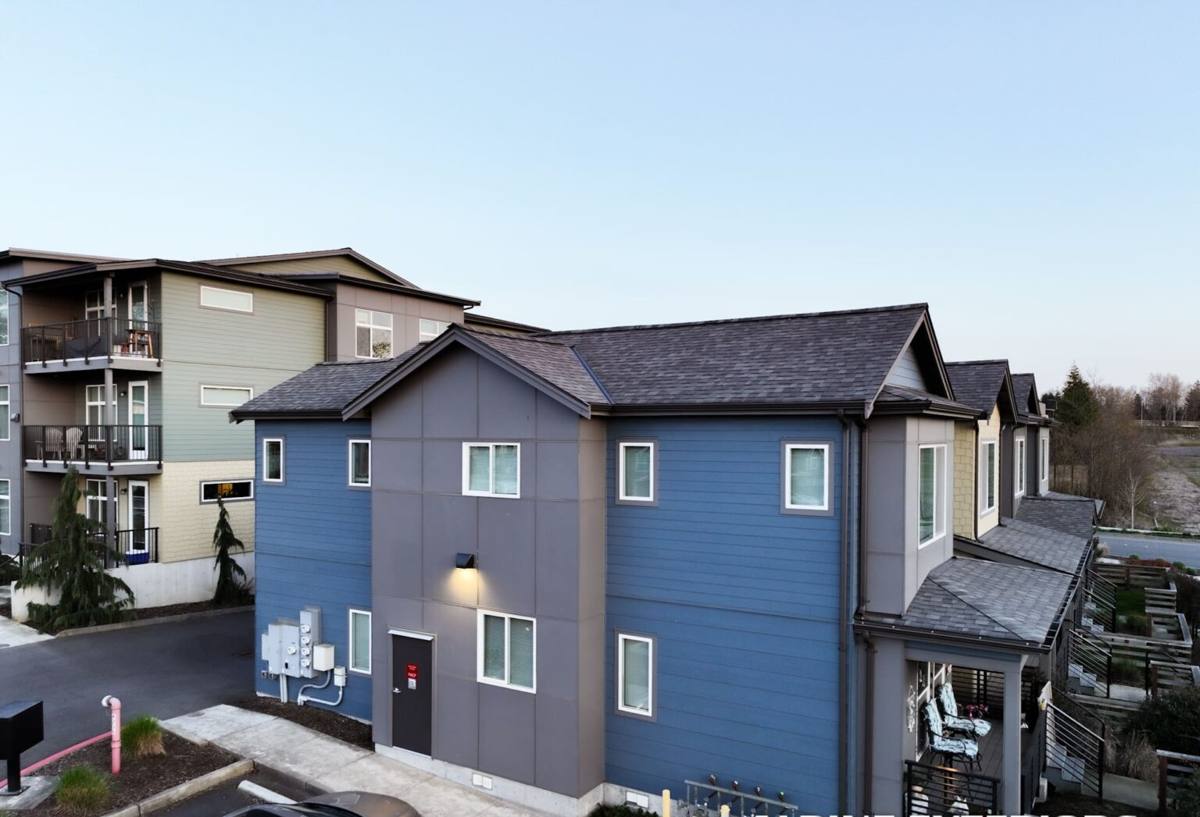
Signs Your Current Windows Are Costing You Money
Most homeowners don't think about window performance until something obvious breaks — a cracked pane, a window that won't latch. But energy loss usually shows up quietly first, in ways that are easy to write off as "just an old house."
- Noticeable draft near the window frame, especially on windy days
- Condensation or fogging between the panes (a sign the seal has failed)
- Cold spots on interior walls near windows in winter
- Frames that feel damp or show soft, discolored wood
- Difficulty opening/closing, or hardware that's stiff or corroded
- Visible gaps around the frame where you can see daylight or feel airflow
- Heating bills that feel high relative to the size of the home
If you're seeing two or more of these, it's worth having the windows looked at before deciding whether repair, resealing, or full replacement makes sense. Not every drafty window needs to be replaced — but on the island, failed seals and moisture intrusion tend to move faster than homeowners expect, so it's better to catch it early.
What Actually Makes a Window "Energy-Efficient"
"Energy-efficient" gets used as a marketing word a lot. In practical terms, it comes down to a handful of measurable factors: the glazing (how many panes, what gas fills the space between them, whether there's a Low-E coating), the frame material, and how tightly the whole unit is built and sealed. The National Fenestration Rating Council (NFRC) label on a window gives you real numbers to compare — U-factor (how well it resists heat flow) and solar heat gain coefficient are the two that matter most in our climate.
In a marine environment like Fidalgo Island, frame material matters just as much as the glass. A great double-pane window in a frame that swells, corrodes, or lets moisture behind it will underperform a well-installed, honestly-specified window over time.
Comparing Frame Materials for This Climate
| Frame Material | How It Handles Salt Air & Moisture | Maintenance | General Cost Range |
|---|---|---|---|
| Vinyl | Doesn't corrode or rot; performs consistently in coastal air | Low — occasional cleaning | Lower to mid |
| Fiberglass | Very stable in moisture and temperature swings; strong long-term option near water | Low | Mid to higher |
| Wood / Wood-clad | Attractive but needs a well-maintained exterior cladding or paint to keep moisture out of the wood core | Higher — periodic sealing/painting | Higher |
| Aluminum | Conducts heat and cold readily; can be prone to condensation and corrosion without a quality coating | Moderate | Varies |
We'll walk you through these trade-offs honestly based on your home's exposure — a house with direct water frontage and constant wind has different needs than one tucked further inland on the island.
Installation Is Where Efficiency Is Won or Lost
A high-performance window installed poorly will underperform a modest window installed correctly — this is especially true here, where wind-driven rain will find any gap in the flashing or sealing within a season or two, not years. Correct installation on Fidalgo Island means:
- Proper flashing integration with the existing wall assembly, so water is directed out and away rather than trapped behind the window
- Continuous, correctly-applied sealant at the exterior — not just caulk smeared over gaps
- Insulation packed correctly around the frame (not too loose, not overpacked, which can bow the frame)
- Level, plumb, and square setting so the sash operates smoothly and seals fully for years, not just on install day
- Interior and exterior trim work that sheds water rather than holding it against the house
This is also where a lot of energy loss claims fall apart. A homeowner replaces windows expecting a dramatic drop in their heating bill, and it doesn't materialize — often because the installation didn't actually seal the opening as well as the product spec sheet implies it should. We treat the installation, not just the window unit, as the thing we're being hired to get right.
Our Process for Fidalgo Island Window Projects
- On-site assessment — we look at your current windows, frame condition, exposure (wind, sun, water proximity), and any signs of past moisture intrusion.
- Product recommendation — based on your home's exposure and your priorities (efficiency, maintenance, appearance, budget), we recommend frame and glazing options and explain the honest trade-offs.
- Written estimate — clear scope, materials, and price before any work starts.
- Prep and removal — careful removal of existing units, checking the rough opening and sheathing for hidden rot or moisture damage before anything new goes in.
- Installation — flashing, sealing, insulating, and setting each window to the standard described above.
- Exterior and interior finish work — trim, caulking, and touch-up so the finished job looks clean and sheds water properly.
- Final walkthrough — we test operation on every window and go over care and maintenance with you before we consider the job done.
A Homeowner's Pre-Project Checklist
Whether you hire us or someone else, these are worth confirming before any window work starts on an island property:
- Has the contractor actually inspected the rough openings, not just measured for new units?
- Is flashing and sealing detail included in the written scope, not just "install windows"?
- Does the quote specify frame material, glazing type, and NFRC ratings — not just "energy-efficient windows"?
- Are they licensed and insured to work in Washington State?
- Do they have experience with marine or coastal exposure conditions specifically?
- Is there a clear warranty on both the product and the labor/installation?
- Will they identify and disclose any rot or hidden damage found during removal before proceeding?
Why a Crew That Already Works Fidalgo Island Matters
General contracting skill doesn't automatically transfer to coastal conditions. A crew that mostly works drier, inland areas of Skagit County may not think to check for the specific failure points we see repeatedly on the island — sealant that looks fine but has already lost adhesion in salt air, sill areas holding moisture behind a coat of paint, or hardware that's seized up from corrosion rather than dirt. Knowing what to look for before it becomes a bigger problem is exactly what local, repeat experience gives you.
There's also a practical side: a local crew understands how weather windows work here. Wind-driven rain events and the wet winter stretch aren't just inconvenient for scheduling — they affect when it's actually safe and effective to have openings exposed during a window swap. We plan around that instead of hoping for the best.
Maintenance After Installation
Energy-efficient windows still need some upkeep in this climate to keep performing the way they're supposed to. A little attention goes a long way:
- Rinse salt residue off frames and glass periodically, especially on wind-exposed sides of the house
- Keep weep holes clear so water can drain out rather than pool at the sill
- Check weatherstripping annually for compression or gaps
- Address any moss or algae buildup on sills promptly rather than letting it sit through the wet season
- Lubricate hardware as needed to prevent corrosion-related sticking
None of this is heavy maintenance, but skipping it is how a well-installed window ends up underperforming years before it should.
If your windows are drafty, fogged, hard to operate, or you're just planning ahead for a home on Fidalgo Island, we're happy to take a look and give you a straightforward, no-pressure estimate. Use the form below to get started.