 Anacortes Siding
 Storm Roofs on Fidalgo Island Face a Different Set of Problems
Fidalgo Island sits where the Salish Sea meets the mainland, and that location shapes everything about how a roof ages here. Homes get a steady diet of salt-laden wind, driving rain that comes in sideways off the water, and long stretches of damp shade that keep moss thriving most of the year. None of these forces are dramatic on their own, but stacked together over a Skagit County winter, they wear down a roof faster than most homeowners expect. When a windstorm or heavy rain event finally exposes a weak spot, it's rarely a roof that was fine yesterday and broken today. It's usually a roof that's been quietly losing ground for a while, and the storm just found the failure point.
That distinction matters for how we approach repairs. A storm damage repair on Fidalgo Island isn't just about patching what the wind tore loose. It's about understanding what already made that spot vulnerable, so the repair actually holds through the next one.
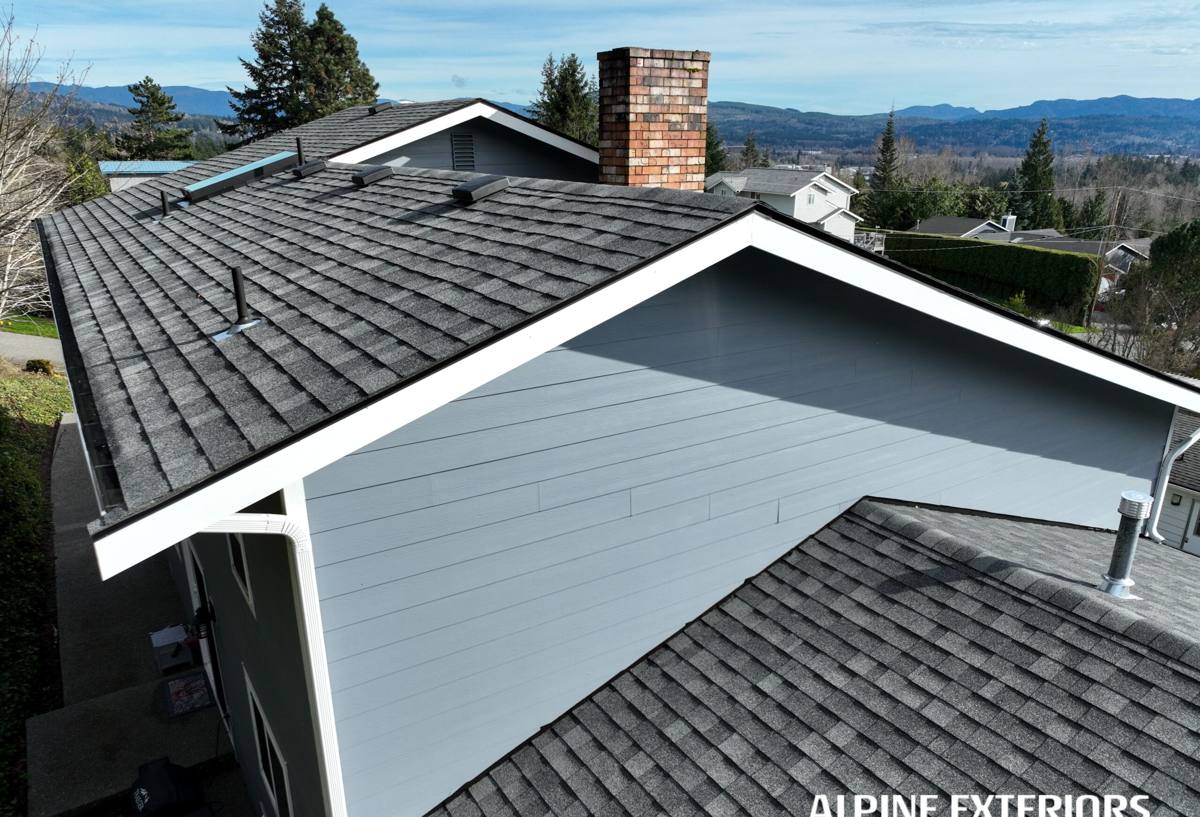
What Actually Qualifies as Storm Damage
Not every roof problem that shows up after a storm was caused by the storm. Part of doing this job honestly is telling homeowners the difference, especially since it affects whether an insurance claim makes sense.
- Genuine storm damage: shingles physically torn, lifted, or blown off; impact damage from falling branches or debris; flashing bent or pulled loose by wind; a gutter or downspout ripped away.
- Storm-revealed damage: a leak that only shows up during a storm because the roof was already compromised by age, moss, or a prior installation issue, and the storm simply pushed enough water through to make it visible.
- Pre-existing wear mistaken for storm damage: granule loss, brittle shingles, or moss intrusion that's been building for years and isn't tied to any single weather event.
We tell you plainly which category we're looking at. It affects your insurance conversation and it affects whether a targeted repair is the right call versus a larger section replacement.
The Damage You Can't See From the Ground
Salt air and moss don't announce themselves the way a missing shingle does, but they're doing more long-term damage to Anacortes-area roofs than most single storms. Salt-carrying wind off the water accelerates corrosion on exposed metal, fasteners, and flashing seams, especially on homes with more open exposure toward the water. Fasteners and flashing that look fine from a distance can be corroded enough underneath to fail during the next real blow.
Moss is the other slow problem. Fidalgo Island's tree cover and consistently damp climate give moss a long growing season, and once it establishes on a roof, it holds moisture against the shingle surface, works into seams and laps, and lifts shingle edges over time. Lifted edges are exactly what wind gets underneath during a storm. So a roof with a moss problem going into storm season is a roof primed for more storm damage than a clean one, even in the exact same weather.
When we inspect after a storm, we're not just documenting what the wind did. We're checking for these underlying conditions, because repairing the visible damage without addressing them means you're likely to be back here again after the next system rolls through.
How We Handle a Storm Damage Repair, Start to Finish
Emergency Response and Temporary Protection
If you've got an active leak or exposed decking, the first priority is stopping water from getting further into the house. That usually means tarping the affected area securely enough to hold through more wind and rain, not just a quick cover that fails on the next gusty night. This step buys time to do the real repair correctly instead of rushing it.
Full Roof Inspection, Not Just the Damaged Spot
We inspect the whole roof, not only the area that's visibly damaged. Wind damage on one slope often has a related weak point elsewhere, especially around valleys, chimney flashing, and eave edges, which take the brunt of driving rain in this area. We also check attic ventilation and any signs of moss-related moisture, since those conditions influence how the repair should be built.
Honest Repair-or-Replace Recommendation
Once we know the scope, we give you a straight answer on whether a targeted repair is enough or whether the damaged section needs a fuller tear-off and rebuild. We're not incentivized to oversell a replacement, and we're not going to patch something that's going to fail again in six months either. If a repair is genuinely the right call, that's what we recommend.
The Repair Itself
Matching materials, proper underlayment integration at the repair boundary, and flashing detail work are where storm repairs succeed or fail. A repair that looks fine on the surface but wasn't properly integrated into the existing roof system will leak at the seams within a season or two, particularly under the kind of wind-driven rain Fidalgo Island gets regularly.
Materials and What They Mean for a Marine Climate Repair
What we use to repair a storm-damaged section matters as much as the workmanship. Here's how common options hold up under Anacortes conditions specifically:
| Material | Salt Air Resistance | Moss Resistance | Repair Considerations |
|---|---|---|---|
| Asphalt composition shingle | Good with quality fasteners | Moderate; benefits from algae-resistant granules | Easiest to match and blend into existing roofs; wide availability of matching color runs |
| Metal roofing/flashing components | Requires corrosion-resistant fasteners and coatings near water exposure | Very good; sheds moisture, doesn't hold moss | Repairs must match panel profile and use compatible fastener metals to avoid galvanic corrosion |
| Cedar shake (existing installs) | Fair; needs regular maintenance in salt exposure | Poor without upkeep; retains moisture | Repair requires sourcing matching weathered shakes; higher maintenance going forward |
| Flat/low-slope membrane sections | Good if seams are properly sealed | Good on sloped sections; ponding areas need monitoring | Seam integrity at the repair edge is critical; poor seaming is a common source of repeat leaks |
For most storm repairs on shingle roofs, our standard is using algae-resistant shingle products where moss and moisture are a known issue, and using stainless or coated fasteners in flashing work anywhere the home has direct water exposure. It costs a little more upfront but avoids the repeat-repair cycle that cheaper fasteners create in this climate.
Working Through the Insurance Side
Most storm damage repairs on Fidalgo Island involve an insurance claim, and the process goes smoother when the documentation is solid from the start. We photograph and document damage clearly, provide a written scope of the repair, and can walk through what we found with your adjuster if that's helpful. We don't inflate a scope to chase a bigger claim, and we don't downplay real damage to make a quick sale. The goal is an accurate picture so your claim reflects what actually happened to your roof.
A few things worth knowing going into a claim:
- Document damage with photos as soon as it's safe to do so, before any temporary repairs change the scene.
- Keep records of any temporary tarping or emergency work, since that's typically a reimbursable cost.
- Get a written estimate that separates storm-caused damage from any pre-existing wear, since insurers will make that distinction too.
- Ask your contractor whether they're willing to meet the adjuster on-site if the scope is disputed.
Signs You Should Get a Post-Storm Inspection
Roof damage after a windstorm isn't always obvious from the driveway. If any of these apply after a significant weather event, it's worth having someone look before the next storm arrives:
- Visible shingles in the yard or gutters after high wind
- New water stains on ceilings or interior walls
- Granules collecting in downspouts or at the base of gutters
- Sagging or uneven rooflines on any section
- Daylight visible through the attic roof deck
- Sudden increase in moss or dark streaking after a wet stretch
- Loose or missing flashing around chimneys, vents, or skylights
Why Local Fidalgo Island Experience Actually Matters Here
A roofing crew that mostly works inland doesn't necessarily think about salt exposure, wind-driven rain angles, or moss growth patterns the way a crew that works this specific stretch of Skagit County does. Storm patterns on Fidalgo Island tend to hit certain roof orientations harder depending on exposure to the water, and moss pressure varies block to block depending on tree cover and how much sun a roof gets through the year. Knowing that shapes both the inspection and the repair choices, from fastener selection to where we pay closest attention on a given roof.
We also know that storm damage repair often can't wait for a convenient scheduling window. When water's getting into a house, timing is part of doing the job right, and being local means we're not driving in from out of the area to get to you.
If a recent storm has left you with damage, or you just want a roof checked over before the next system rolls through, we're happy to take a look. Reach out for a free, no-pressure estimate using the form below.