 Anacortes Siding
 Windows Built for Fidalgo Island's Marine Climate
Fidalgo Island sits right where Puget Sound weather gets tested against salt water, wind, and moisture all at once. Homes here don't fail the way houses do further inland. Windows on Fidalgo Island deal with salt-laden air off the water, wind-driven rain that hits glass and trim at an angle instead of straight down, and a long stretch of the year where moss, algae, and standing damp are just part of daily life. That combination is hard on seals, frames, and the wood or trim around a window opening. A window that would last two decades in a dry climate can start showing real wear on this island in half that time if it wasn't installed with this exact weather in mind.
We work on homes across Anacortes and the surrounding Skagit County area, and Fidalgo Island jobs come with their own pattern of problems. Understanding that pattern before we ever pull a window is what separates a replacement that holds up from one that starts leaking again in a few winters.
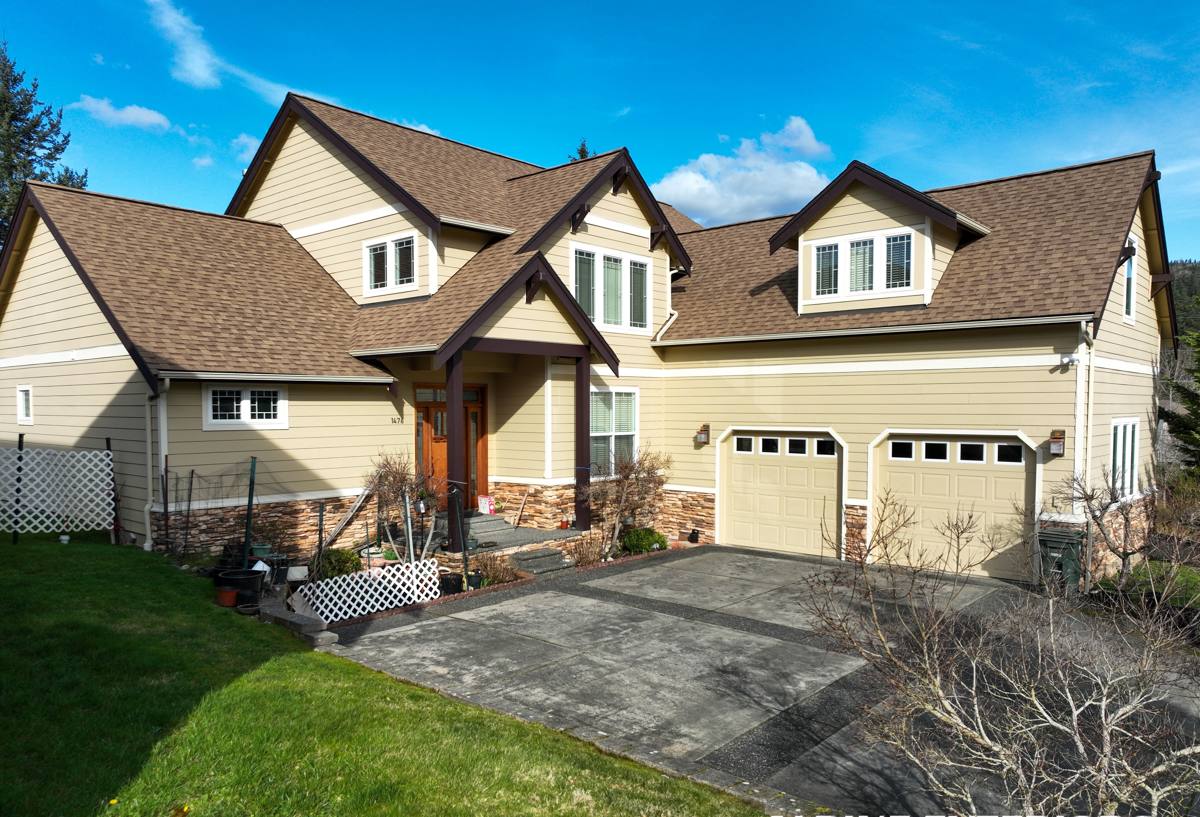
How Salt Air, Driving Rain, and Moss Season Wear Down Windows
Salt Air
Airborne salt from the surrounding water settles on everything, including window hardware, screen frames, and exposed fasteners. Over years it accelerates corrosion on lower-grade metal components and can dull or pit certain finishes faster than a homeowner would expect from the window's age alone.
Driving Rain
Wind off the water doesn't just fall on a window, it drives into it. That means water gets pushed sideways and upward into gaps that a straight-down rain would never reach. Flashing details, sill pitch, and sealant quality matter more here than in a sheltered inland lot, because the installation has to handle water coming from angles a lot of generic instructions don't account for.
Moss and Sustained Moisture
Long stretches of damp, low-sun weather feed moss and algae growth on siding, trim, and window sills. Beyond the cosmetic issue, sustained moisture sitting against wood trim or an old wood sill is exactly what leads to soft spots, rot, and eventually water finding its way past the frame and into the wall.
Signs Your Windows Are Ready for Replacement
- Fogging or a permanent haze between panes — the seal has failed and the insulating gas is gone
- Drafts you can feel near the frame even with the window fully latched
- Soft, spongy, or visibly rotted wood at the sill or lower corners
- Paint that keeps bubbling or peeling on the interior sill no matter how often it's redone
- Windows that are difficult to open, close, or lock, especially older single-hung units
- Visible moss or dark staining building up on the exterior sill or trim year after year
- A noticeable rise in heating costs compared to similar-sized homes nearby
Any one of these can be a minor fix. Two or three together on the same window, especially on a wall that takes the brunt of the weather, usually means the window and its surrounding trim are past the point where patching makes sense.
Choosing the Right Window for This Climate
There's no single "best" window for every house on Fidalgo Island, but there are trade-offs worth understanding before you decide. We'll walk through these with you based on your home's exposure, budget, and what the existing openings can support.
| Frame Material | How It Handles This Climate | Maintenance |
|---|---|---|
| Vinyl | Doesn't rot or corrode from salt air; handles moisture well | Low — occasional cleaning, no repainting |
| Fiberglass | Very stable in temperature swings and driving rain; strong seal retention over time | Low — durable finish, minimal upkeep |
| Wood | Classic look but needs real protection from sustained damp and salt exposure | High — regular repainting or staining, more vulnerable to rot at the sill |
| Wood-clad (wood interior, metal or vinyl exterior) | Exterior shell resists weather while keeping a wood interior look | Moderate — exterior is low-maintenance, interior wood still needs occasional care |
| Aluminum | Strong but conducts cold and can be prone to condensation without a thermal break | Moderate — watch for corrosion near salt air over many years |
Our general standard on this island leans toward vinyl or fiberglass frames for most homes, simply because they hold up to salt air and driving rain with the least long-term maintenance. That's not a knock on wood — it's a real, beautiful material — it's just that an all-wood exterior frame asks a homeowner here to stay on top of maintenance in a way vinyl or fiberglass doesn't. If you want the wood look, a wood-clad window is usually the better trade-off for this specific climate.
Glass Matters as Much as Frame
Double-pane glass with a low-E coating is the baseline we recommend for any Anacortes home. Triple-pane adds another layer of insulation and sound dampening, which some homeowners want on the side of the house facing open water or a busy road, but it also adds weight and cost. We'll tell you honestly whether triple-pane is worth it for your specific window openings rather than upselling it across the board.
What a Correct Installation Actually Involves
The window unit itself is only part of the job. Most leaks and premature failures we see on this island trace back to the installation details around the window, not the window itself. A correct job includes:
- Removing old trim and inspecting the framing and sill underneath for hidden rot before anything new goes in
- Repairing or replacing any damaged framing, sheathing, or sill material found during that inspection
- Installing proper flashing that directs water up and out, sloped to shed driving rain rather than trap it
- Sealing with materials rated for exterior, moisture-heavy exposure — not general-purpose caulk
- Setting the window plumb, level, and square so the sash operates correctly and seals evenly for years
- Insulating the gap between the window frame and the rough opening correctly, without over-packing it
- Finishing interior and exterior trim to fully seal and weatherproof the completed opening
Skipping the inspection step is the single most common shortcut that causes problems later. A window can be installed perfectly and still leak within a year or two if it was set into a sill that was already soft or rotted underneath the old trim.
Our Process, Start to Finish
1. On-Site Assessment
We look at each window opening individually, not just the house as a whole. Sun exposure, wind direction, and how much weather a given wall takes vary a lot even on the same home, and that affects what we recommend for that specific window.
2. Straightforward Estimate
You get options in plain language — what each choice costs, what it trades off, and why we're recommending what we're recommending. No pressure to upgrade beyond what your home actually needs.
3. Careful Removal and Inspection
Old windows come out carefully so we can see the condition of the framing and sill before anything new goes in. If there's hidden damage, we tell you before proceeding, not after.
4. Installation to Spec
Flashing, sealing, and finishing done to hold up against the driving rain and salt air this island actually sees, not a generic inland installation standard.
5. Final Walkthrough
We check operation, seals, and finish work with you before calling the job done.
Single Window Repairs vs. Whole-Home Replacement
Not every project needs to be a full-home replacement. If most of your windows are sound and only one or two on the weather-facing side are failing, replacing just those can be the right call. That said, there are a few situations where doing the whole house at once makes more sense:
- Your windows are all roughly the same age and the failing ones are simply the first to show it
- You're already planning siding or trim work and want to coordinate the timing
- Mixing old, drafty windows with new efficient ones is creating uneven comfort room to room
We'll give you an honest read on which situation you're in rather than pushing a full-house job when a partial replacement solves the actual problem.
Permits, Timing, and Working Around Anacortes Weather
Most straightforward window replacements on Fidalgo Island don't require a separate permit if the opening size isn't changing, though this can depend on your specific property and any structural changes involved — we'll confirm what applies to your job before work starts. For homes within Anacortes city limits, we handle the coordination with local requirements as part of the process.
Timing-wise, we plan around the wetter stretches of the year when possible. An open window opening needs to be closed back up the same day, so we watch the forecast closely and sequence multi-window jobs to minimize how long any one opening is exposed. This is one more reason working with a crew that installs windows on this island regularly, rather than occasionally, matters — we already know what the weather here does to an install schedule.
Why Local Experience on Fidalgo Island Matters
A contractor who mostly works dry, sheltered inland areas can still do a technically fine window install and have it fail here within a few years, simply because the standard details they're used to weren't built for salt air and driving rain. Crews that work Skagit County and specifically Fidalgo Island regularly learn which walls take the worst weather, which older homes tend to have hidden sill damage, and which materials actually hold up long-term in this specific environment. That local pattern recognition is hard to substitute for, no matter how good the window product is on its own.
We'd rather walk your home, look at the specific windows in question, and give you a straight answer than guess from a generic checklist. If you're seeing drafts, fogged glass, soft trim, or just windows that are past their working life, we're happy to take a look and put together a free, no-pressure estimate using the form below.