 Anacortes Siding
 Building Decks for Flounder Bay's Marine Exposure
Flounder Bay sits close enough to the water that homes here deal with a different set of conditions than a deck going in on the inland side of Anacortes. Salt-laden air moves through the neighborhood most days of the year, driving rain comes in sideways off the water during winter storms, and the shaded, damp stretches of many yards stay wet long after the rest of Skagit County has dried out. A deck built without those specifics in mind will look fine for a season or two and then start showing problems — corroding fasteners, soft spots at the ledger, moss creeping across the boards. A deck built for Flounder Bay specifically holds up because the material choices and construction details account for what the site actually throws at it.
This page covers what a correctly built custom deck looks like for this part of Anacortes, what goes wrong when shortcuts get taken, and how our process is set up to avoid those problems from the start.
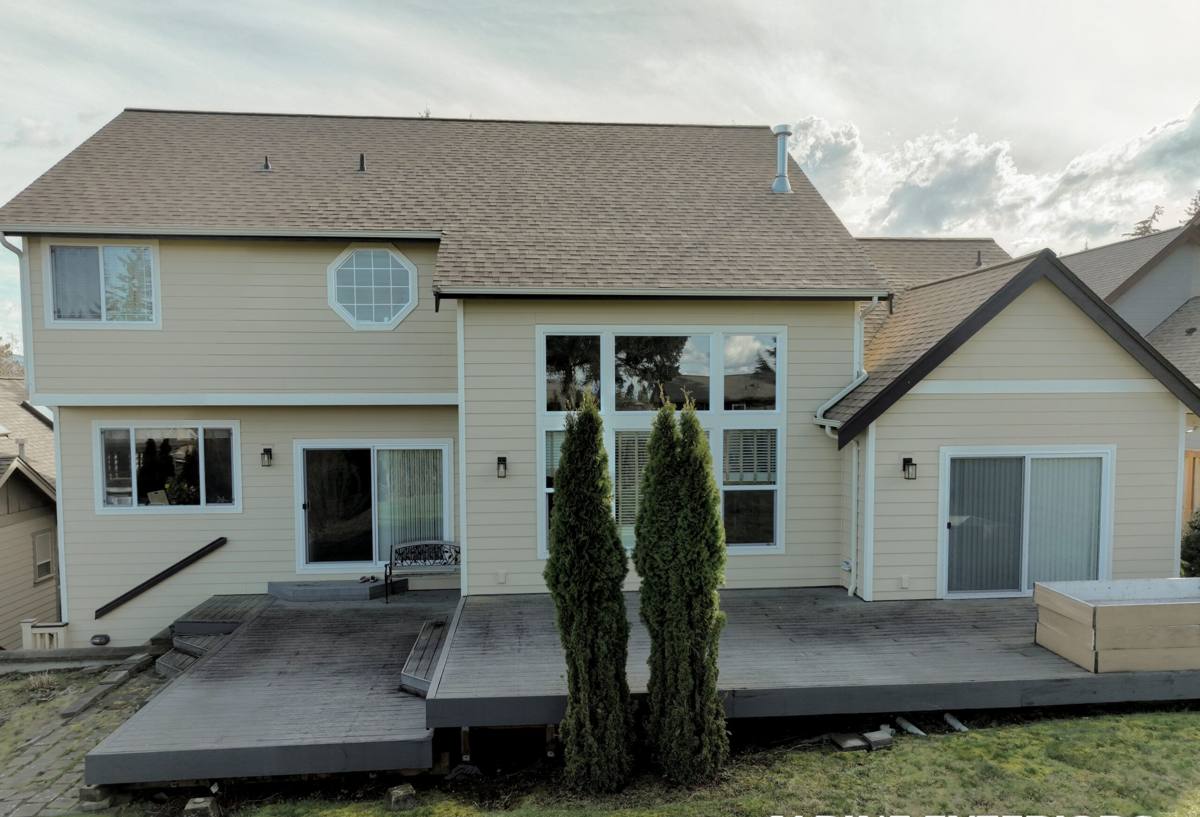
What Salt Air Does to a Deck Over Time
Salt air is corrosive to metal, full stop. It doesn't take a direct ocean-front lot to feel the effect — homes set back several blocks from the water in Flounder Bay still see faster corrosion on exposed hardware than a deck built in, say, a drier inland pocket of Skagit County. The parts most at risk are the ones people rarely think to check:
- Structural screws and joist hangers hidden under the decking
- Bolts holding railing posts to the rim joist
- Standard hinges, gate latches, and stair hardware
- Uncoated nail heads on fascia and trim boards
When cheaper, standard-grade fasteners go into a deck near the bay, the corrosion often isn't visible until it's already compromised the connection — a joist hanger can rust through from the inside while the decking above still looks acceptable. That's the real risk with salt air: it doesn't announce itself with an obvious sign until a railing feels loose or a board starts to sag.
Why We Spec Marine-Grade Hardware Here
For decks in Flounder Bay and other close-to-water parts of Anacortes, we use stainless steel or heavy hot-dip galvanized fasteners and connectors rated for coastal exposure, not the standard exterior-rated hardware that's fine for a drier, more sheltered lot. It costs more up front. It's also the single biggest factor in whether a deck's structure is still sound in fifteen years or needs framing repairs in five.
Driving Rain, Moisture, and the Long Wet Season
Anacortes gets a lot of soft, steady rain, but the storms that roll in off the water toward Flounder Bay often come with wind behind them, which pushes moisture into places a straight-down rain never reaches — up under railings, into end grain on exposed board tips, and behind ledger boards that aren't flashed correctly. Over a long wet season, that driven moisture is what causes rot, not the rain itself.
The ledger board — the framing member that attaches the deck to the house — is the single most important place to get flashing right. A ledger without proper metal flashing and a water-resistant barrier behind it will trap moisture against the house's rim joist, and that's where we most often find hidden rot when we're asked to inspect or rebuild an older deck in this area. It's invisible from the top of the deck and invisible from inside the house, which is exactly why it goes unnoticed for years.
Moss: More Than a Cosmetic Problem
Moss season in this part of Skagit County runs long, and shaded decks near mature trees or close to the house's north side are especially prone to it. Beyond making a deck surface slick and unsafe, moss holds moisture against the board surface around the clock, which accelerates wood decay and can work its way into composite boards' surface texture too, though composite won't rot the way wood does. A deck design that accounts for airflow underneath, proper board spacing, and drainage slope reduces how much moss ever gets a foothold in the first place — it's far easier to design moss out than to fight it every spring with a pressure washer.
Choosing Decking Material for This Exposure
There's no single "best" decking material for every Flounder Bay property — it depends on how much sun the deck gets, how close it sits to the water, and how much upkeep the homeowner actually wants to do. Here's how the common options compare under these specific conditions:
| Material | Salt Air Behavior | Moss/Moisture Resistance | Maintenance |
|---|---|---|---|
| Pressure-treated wood | Fasteners need marine-grade hardware; wood itself holds up if sealed | Needs regular cleaning and re-sealing to resist moss and moisture staining | Annual cleaning, re-sealing every 2-3 years |
| Cedar | Naturally decay-resistant, but surface grays and softens near salt air faster than inland | Moderate — natural oils help, but shaded areas still grow moss | Periodic cleaning and oil/stain if a natural look is wanted |
| Composite decking | Doesn't rot or corrode; check manufacturer specs for coastal-rated fastener compatibility | Good — won't absorb moisture into the core, though surface can still grow moss if shaded and dirty | Occasional washing; no sealing or staining |
| PVC decking | Fully synthetic, handles salt air and moisture well | Very good — non-porous surface sheds moss more easily than wood or composite | Lowest — occasional rinse |
We'll walk through this table with you against your specific lot — how much shade it gets, how close it sits to prevailing weather off the water — rather than pushing one product across the board. The right call for a sunny, open lot near Flounder Bay's edge can be different from the right call for a shaded yard a few streets back.
Framing: The Part That Determines How Long the Deck Actually Lasts
The decking surface gets all the attention, but the framing underneath is what determines whether the deck is still safe in twenty years. For Flounder Bay specifically, that means:
- Properly flashed ledger board with a code-compliant water-resistant barrier behind it
- Joist tape or comparable protection on top of every joist to stop water from sitting on end grain
- Coastal-rated joist hangers and structural screws throughout, not just at visible connections
- Post bases set to keep wood posts off standing water and out of direct soil contact
- Adequate slope and drainage so water sheds away from the house rather than pooling under the deck
None of this is visible once the decking is installed, which is exactly why it matters who's doing the framing. A deck can look great for the first photo and still have framing that's set up to fail early because these details got skipped.
Our Process for a Flounder Bay Deck Project
We approach every custom deck the same structured way, adjusted for what your specific lot needs:
- Site walk and assessment — we look at sun exposure, shade patterns, proximity to the water, existing drainage, and (for a replacement) the condition of the current structure down to the framing.
- Design and material conversation — layout, railing style, and decking material get discussed against your budget and how much maintenance you actually want to keep up with, using the trade-offs above as a starting point.
- Permitting — decks over a certain height or size typically require a permit through the City of Anacortes or Skagit County depending on the property; we handle that process rather than leaving it to you.
- Demolition (if replacing) — old decking and framing come out, and we inspect the ledger and rim joist area for hidden rot before anything new goes in.
- Framing build — coastal-rated hardware, proper flashing, and correct spacing and slope, done to hold up through the wet season, not just pass a quick look.
- Decking and railing install — your chosen material installed to manufacturer spec, including fastener compatibility for coastal exposure.
- Final walk-through — we go over basic care for whatever material you chose so you know what upkeep, if any, is actually needed going forward.
Maintenance Checklist for Flounder Bay Homeowners
Whatever material your deck is built from, a few habits go a long way toward getting the full lifespan out of it in this climate:
- Sweep or blow off standing leaves and debris regularly, especially in shaded spots where moss takes hold fastest
- Rinse or wash the surface a couple times a year to interrupt moss growth before it becomes established
- Check railing posts and stair connections annually for any looseness, which can signal fastener corrosion underneath
- Keep gutters and downspouts near the deck clear so roof runoff isn't dumping extra water onto or under the structure
- For wood decks, re-seal on the schedule appropriate to the product — skipping this is the single most common cause of early wood decay we see
- Have the underside and ledger area glanced at every few years, since that's where hidden moisture problems start
Why Local Experience Matters for This Job
Anyone can frame a deck on a dry, sheltered inland lot and have it hold up fine with standard materials. Flounder Bay is a different job. A crew that hasn't worked this specific stretch of Anacortes waterfront property may not think to spec coastal-rated hardware, may not flash a ledger with the driving rain patterns here in mind, or may design a layout that doesn't account for how long moss season actually runs in a shaded yard near the water. We've built and repaired decks throughout Anacortes and Skagit County long enough to know which details are optional elsewhere and which ones aren't optional here.
Get an Estimate
If you're planning a new deck or need to replace one that's showing its age, we're happy to take a look and give you a straightforward, no-pressure estimate. Fill out the form below and we'll set up a time to walk the site with you.