 Anacortes Siding
 Flounder Bay Decks Live in a Harder Environment Than Most of Anacortes
Flounder Bay sits close enough to the water that decks here take a different kind of beating than decks a few miles inland. The combination of salt-laden air off Guemes Channel, wind-driven rain, and long stretches of gray, damp weather means wood and hardware age faster here than the manufacturer's warranty paperwork usually assumes. We've replaced enough decks in this part of Skagit County to know that a deck built with "standard" assumptions about moisture and fastener corrosion tends to disappoint homeowners well before it should.
This page is specifically about deck replacement for Flounder Bay properties — not a general deck page. If your deck is showing its age, soft in spots, or was clearly built without the local climate in mind, this is what a correct replacement looks like and why it matters where you live.
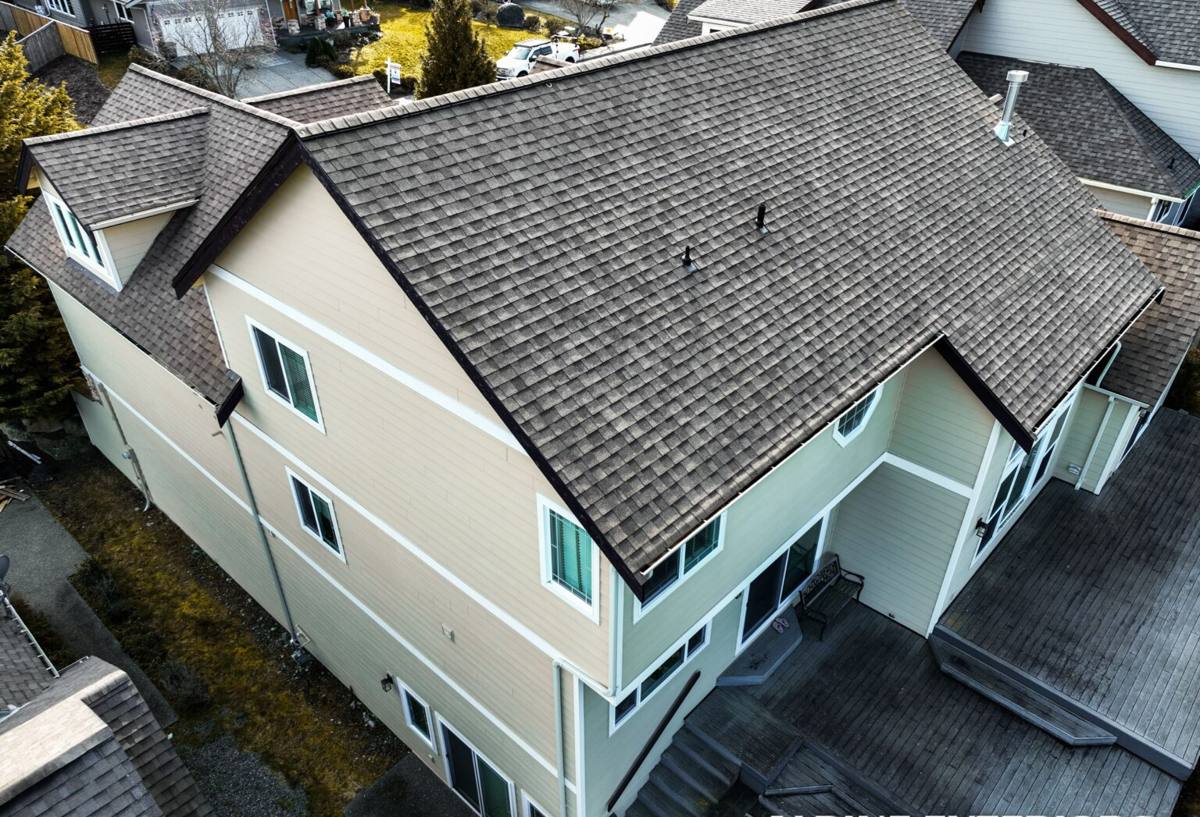
What Salt Air, Rain, and Moss Actually Do to a Deck
It helps to understand the specific mechanisms at work, because they change what "good construction" means for your property.
Fasteners and Metal Connectors
Salt air accelerates corrosion on anything metal — nails, screws, joist hangers, post bases, and structural bolts. A deck built with fasteners rated for general exterior use, rather than for coastal or salt-exposure conditions, will often show rust streaking and weakened connections years before the decking boards themselves fail. Once a hanger or bolt corrodes, the structural connection it was providing weakens quietly, often with no visible sign from the top of the deck.
The Decking Surface
Constant moisture combined with shade from trees or the house itself creates ideal conditions for moss and algae growth on horizontal wood surfaces. Beyond looking bad, moss holds moisture against the wood fibers, which speeds up rot in real wood decking and can make any decking surface slick and unsafe underfoot for months out of the year.
The Substructure Nobody Sees
The framing, ledger board, and posts underneath the visible deck surface are where the real damage usually starts. Driving rain gets pushed sideways by wind and finds its way into ledger connections, post bases, and joist ends — especially on decks that weren't flashed and sealed correctly when originally built. By the time a homeowner notices soft decking boards, the framing underneath has often been wet for years.
Signs a Flounder Bay Deck Needs Replacing, Not Just Repairing
Not every deck issue means a full replacement, but in a coastal-influenced environment, patch repairs on an aging deck often just delay a bigger problem. Here's what tells us a deck is past the point of spot repair:
- Soft, spongy, or springy decking boards in multiple areas, not just one isolated spot
- Visible rust or corrosion on structural hardware, joist hangers, or bolts
- Persistent moss or algae that returns within weeks of cleaning
- Gaps, movement, or separation where the deck attaches to the house (the ledger connection)
- Posts that feel loose or show soft wood near ground contact or the base connection
- A deck original to a home built decades ago, especially if it's never been resealed or maintained
- Railings that flex or wobble under normal pressure
- Visible daylight or gaps between boards that have widened significantly over time
If you're seeing two or more of these, it's worth getting an honest structural look before spending money on cosmetic repairs.
Decking Material Options for a Waterfront-Adjacent Property
Material choice matters more in Flounder Bay than it does in a drier, more sheltered part of town. Here's how the common options actually perform under salt air, rain, and moss pressure:
| Material | Moisture & Salt Air Performance | Moss Resistance | Maintenance |
|---|---|---|---|
| Pressure-treated wood | Good if properly sealed and resealed regularly; treatment protects against rot but not against surface weathering | Low — needs regular cleaning | Annual cleaning and resealing recommended |
| Cedar | Naturally moisture-resistant but still needs finish maintenance in coastal conditions | Low to moderate | Periodic cleaning, sealing every 1-2 years |
| Capped composite | Strong — the cap layer resists moisture absorption and salt exposure well | Higher, but not immune — still needs occasional cleaning | Low — occasional washing |
| Uncapped composite | More prone to moisture uptake at cut edges over time | Moderate | Low to moderate |
We'll talk through these trade-offs honestly during an estimate — including where your deck sits relative to sun exposure, shade, and prevailing wind, since that affects moss growth and drying time as much as material choice does.
Fasteners and Hardware Matter as Much as the Decking Itself
Whatever decking material you choose, the fasteners and structural connectors are what we upgrade the most compared to how many older Flounder Bay decks were originally built. Stainless steel or coated fasteners rated for coastal exposure cost more up front but avoid the early corrosion that undermines an otherwise good deck.
What a Correct Deck Replacement Involves Here
A deck replacement done right in this environment isn't just pulling up old boards and screwing down new ones. The parts that actually determine how long the deck lasts are mostly invisible once the project is finished:
- Ledger board flashing: Proper flashing where the deck meets the house is the single most important detail for keeping driving rain out of the structure — this is also one of the most commonly skipped or poorly done details on older decks.
- Joist protection: Sealing or taping the tops of joists before decking goes down slows moisture absorption into the framing significantly.
- Post base connections: Keeping posts off direct ground or wet contact points and using corrosion-resistant bases reduces rot at the point where most structural failures start.
- Proper board spacing: Correct gapping between boards allows water and debris to drain rather than pool, which matters more here given how much rain the deck sees annually.
- Corrosion-resistant fasteners and hardware: Rated for coastal or high-moisture exposure, not just standard exterior use.
- Grading and drainage underneath: Making sure water moving off the deck has somewhere to go, rather than sitting under the structure.
Skipping any of these is how a deck that looks fine for the first few years ends up needing structural repair a decade before it should.
Our Process for a Flounder Bay Deck Replacement
- On-site assessment. We look at the existing deck's framing, ledger connection, posts, and decking to determine what's actually failing versus what's cosmetic, and we check for the specific coastal wear patterns common in this area.
- Honest scope and material conversation. We walk through material options and trade-offs based on your home's sun exposure, shade, and how much upkeep you want to take on long-term — no upselling toward a product that doesn't fit your situation.
- Permit and code check. We confirm what permitting is required for the project scope and handle that process rather than leaving it to you.
- Full removal and structural inspection. Once the old decking is off, we inspect the framing, ledger, and posts that were previously hidden, and flag anything unexpected before proceeding.
- Rebuild with coastal-appropriate detailing. Ledger flashing, joist protection, corrosion-resistant hardware, and proper drainage are built in as standard, not offered as an upgrade.
- Final walkthrough. We go over the finished deck together, including basic maintenance guidance specific to your material choice and your property's exposure.
Permits and Local Requirements
Deck replacement projects in Anacortes and unincorporated Skagit County typically require a building permit, particularly when structural framing, footings, or ledger connections are being replaced rather than just the surface decking. Requirements can vary depending on deck height, size, and proximity to property lines or shoreline setback rules, which is a real consideration for properties near the water in Flounder Bay. We handle the permitting process as part of the job so you're not the one tracking down requirements or inspections.
Why Hiring a Crew That Already Works in Flounder Bay Matters
A contractor who mostly works inland or in drier parts of the region may not default to coastal-grade fasteners, proper ledger flashing, or moss-conscious material recommendations unless specifically asked. That's not a knock on general competence — it's just that those details matter less where they usually work. Because we regularly work on homes exposed to the same salt air, wind, and moisture patterns you deal with in Flounder Bay, those details are our starting point, not an upsell.
We also know what failure looks like here specifically — which connection points corrode first, which orientations grow moss fastest, and which shortcuts from an older build tend to cause problems years later. That's the kind of judgment that only comes from working this exact environment repeatedly, not from a general deck-building background.
Get a Straightforward Look at Your Deck
If your deck is showing rot, corrosion, persistent moss, or just feels like it's on borrowed time, we're happy to take a look and give you an honest read on whether it needs full replacement or targeted repair. Reach out for a free, no-pressure estimate — use the form below and we'll get back to you with next steps.